AQA · GCSE · Combined Science
Course version: 8464 · Version from Sept 2018
It is not only moving objects that have varying speed. The speed of sound…
Full specification wording
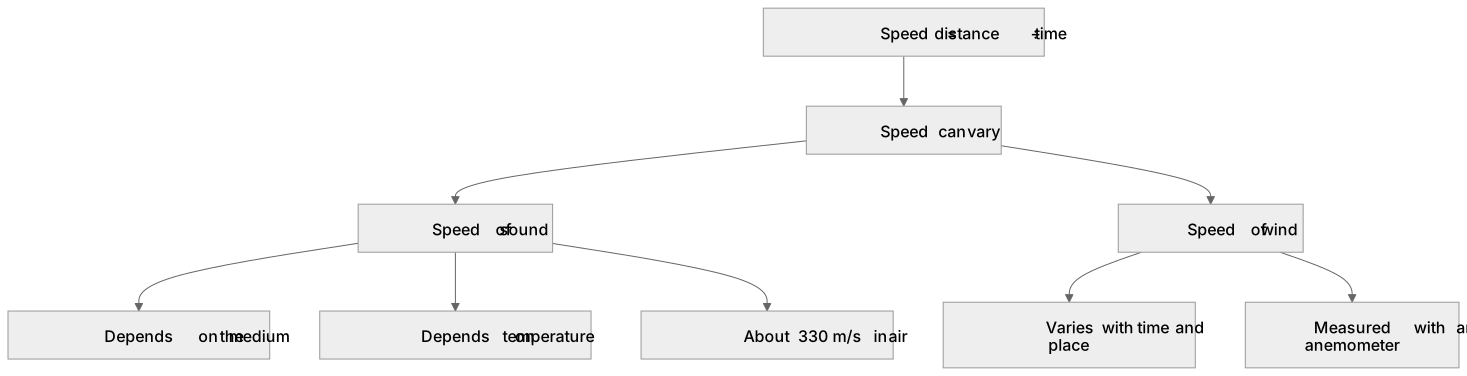
Speed: It is not only moving objects that have varying speed. The speed of sound and the speed of the wind also vary.
Speed is the rate of change of distance with time, and it is not restricted to solid objects travelling along a track.
Checked against the AQA 8464 specification (opens in a new tab) on .
- Point 9 of 18
- 4 key terms
Study notes
From the checked teaching notes for this specification point.
The idea
Speed is the rate of change of distance with time, and it is not restricted to solid objects travelling along a track. Sound travels through a medium as a wave, and its speed depends on the medium and its temperature; in air at about 20 °C the speed is roughly 330 m/s, but in warmer air it is slightly greater and in water it is much greater. Wind speed also varies with time and place, from calm conditions to gales, and is measured with an anemometer. So when you calculate speed using speed = distance ÷ time, you must recognise that the value can change during a journey or a measurement.
For example: Timing thunder and lightning gives a rough distance because the sound speed is not fixed.
What earns the marks
- State that speed is the distance travelled per unit time and is calculated using speed = distance ÷ time.
- Explain that sound is a wave travelling through a medium, so its speed depends on the medium and on temperature rather than being a universal constant.
- Give the typical speed of sound in air as about 330 m/s and note that it increases in warmer air and is greater in liquids and solids.
- Describe wind as moving air whose speed varies with time and location, and state that it is measured with an anemometer.
- Apply the idea of varying speed to a context, such as estimating the distance to a lightning strike from the time delay before thunder.
Common mistakes and how to put them right
Treating 330 m/s as the exact speed of sound in all conditions.
Put it right by saying it is a typical value for air near room temperature and that temperature and medium change it.
Assuming that only solid moving objects can have a speed.
Put it right by explaining that waves such as sound and moving fluids such as wind also travel at measureable speeds.
Using speed = distance × time instead of speed = distance ÷ time.
Put it right by rearranging the equation and checking that the units work out as m/s.
Exam tips
- Quote the equation speed = distance ÷ time and substitute values with units before calculating.
- When a question mentions sound or wind, comment on why the speed may not be constant rather than giving a single fixed number.
- Show the rearrangement clearly if you are asked for distance or time, and give the unit with your answer.
Try the lesson
The start of the Speed: It is not only moving objects that have varying speed. The speed of sound and the speed of the wind also vary. lesson, made from checked teaching notes for this specification point.
Have a go first
Which statement about the speed of sound in air is correct?
Listen
Speed is the rate of change of distance with time, and it is not restricted to solid objects travelling along a track. Sound travels through a medium as a wave, and its speed depends on the medium and its temperature; in air at about 20 °C the speed is roughly 330 m/s, but in warmer air it is slightly greater and in water it is much greater. Wind speed also varies with time and place, from calm conditions to gales, and is measured with an anemometer. So when you calculate speed using speed = distance ÷ time, you must recognise that the value can change during a journey or a measurement. For example, timing thunder and lightning gives a rough distance because the sound speed is not fixed. A strong answer earns marks for these points. State that speed is the distance travelled per unit time and is calculated using speed = distance ÷ time. Explain that sound is a wave travelling through a medium, so its speed depends on the medium and on temperature rather than being a universal constant. Give the typical speed of sound in air as about 330 m/s and note that it increases in warmer air and is greater in liquids and solids. Describe wind as moving air whose speed varies with time and location, and state that it is measured with an anemometer. A common slip: Treating 330 m/s as the exact speed of sound in all conditions. Instead, saying it is a typical value for air near room temperature and that temperature and medium change it. Exam tip: Quote the equation speed = distance ÷ time and substitute values with units before calculating.
See it
Key words
Say what each word means before you turn the card.
Speed
Try answering aloud or in your head before turning the card.
Sound
Try answering aloud or in your head before turning the card.
Wind
Try answering aloud or in your head before turning the card.
Anemometer
Try answering aloud or in your head before turning the card.
See every definition
- Speed
- The distance travelled per unit time, calculated using speed = distance ÷ time.
- Sound
- A wave travelling through a medium, so its speed depends on the medium and on temperature rather than being a universal constant.
- Wind
- Moving air whose speed varies with time and location, and which is measured with an anemometer.
- Anemometer
- An instrument used to measure wind speed.
Label the diagram
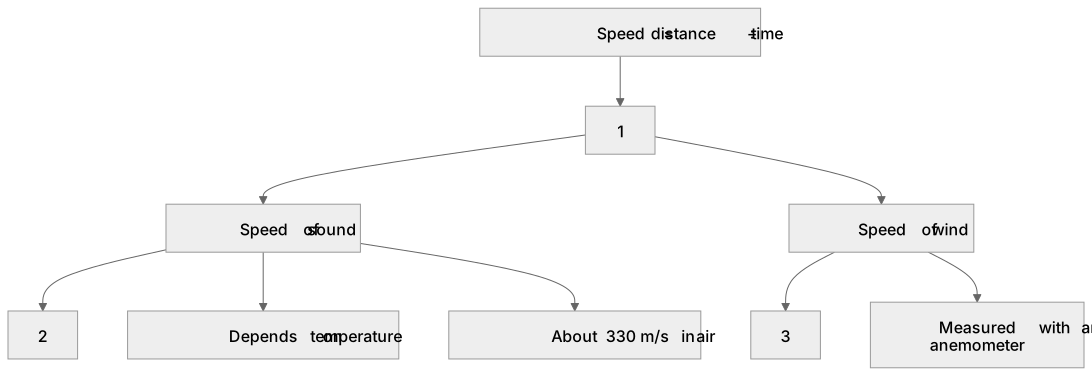
Some boxes have lost their names. Pick the right name for each number.
1Box 1
2Box 2
3Box 3
There is more to this lesson
The full lesson goes on to check your understanding and help you earn the marks. Create a free account to carry on, with your progress saved.
A week of Premium from your first lesson · Then the free plan continues · No card, no charge
Test your understanding of Speed: It is not only moving objects that have varying speed. The speed of sound and the speed of the wind also vary.
Active recall beats re-reading. Take an instant quiz now to test what you’ve learned and lock it into long-term memory.
A week of Premium from your first lesson · Then the free plan continues · No card, no charge