OCR · GCSE · Computer Science
Problem Analysis
Master the core of computational thinking for your OCR GCSE Computer Science exam. This guide breaks down Problem Analysis (3.1) into easy-to-understand concepts, showing you how to decompose problems, use abstraction, and think algorithmically to secure top marks.
- 5 min read
- 3 worked examples
- 5 practice questions
- 6 key terms
Study Notes

Overview
Problem Analysis is the bedrock of computer science. It's not about coding; it's about thinking. In this section of the OCR specification (3.1), you'll learn the essential techniques that every programmer uses before writing a single line of code. These are decomposition, abstraction, and algorithmic thinking. Mastering these skills is crucial because they are assessed in almost every programming-based question. Examiners are looking for candidates who can systematically deconstruct a complex scenario into a logical, solvable plan. This guide will teach you the precise definitions that earn AO1 marks and the application techniques that secure the higher AO2 and AO3 marks. You'll see how breaking down a problem to build a solution is a skill that connects to every other topic, from programming fundamentals to database design.
Key Concepts
Concept 1: Decomposition
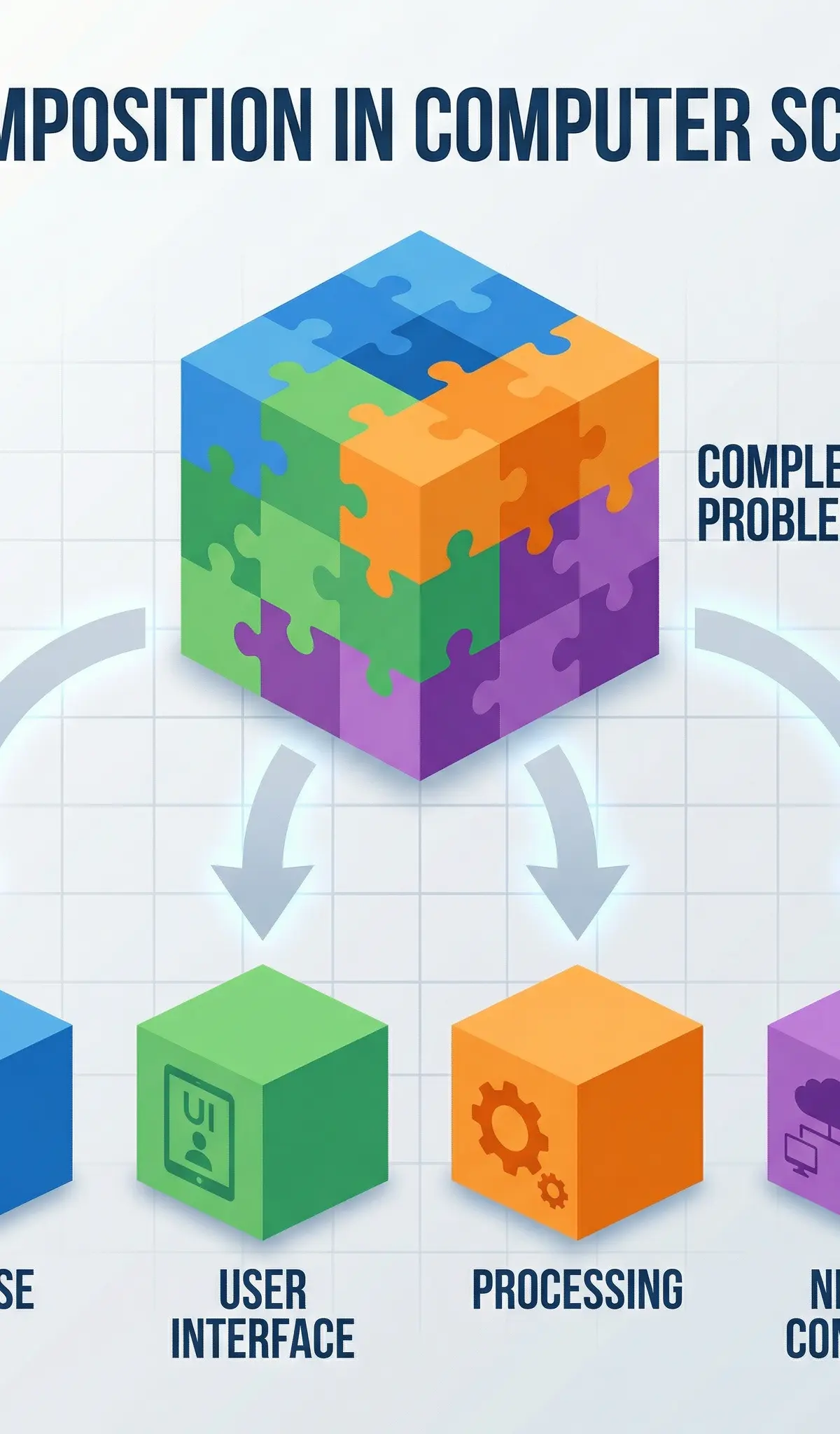
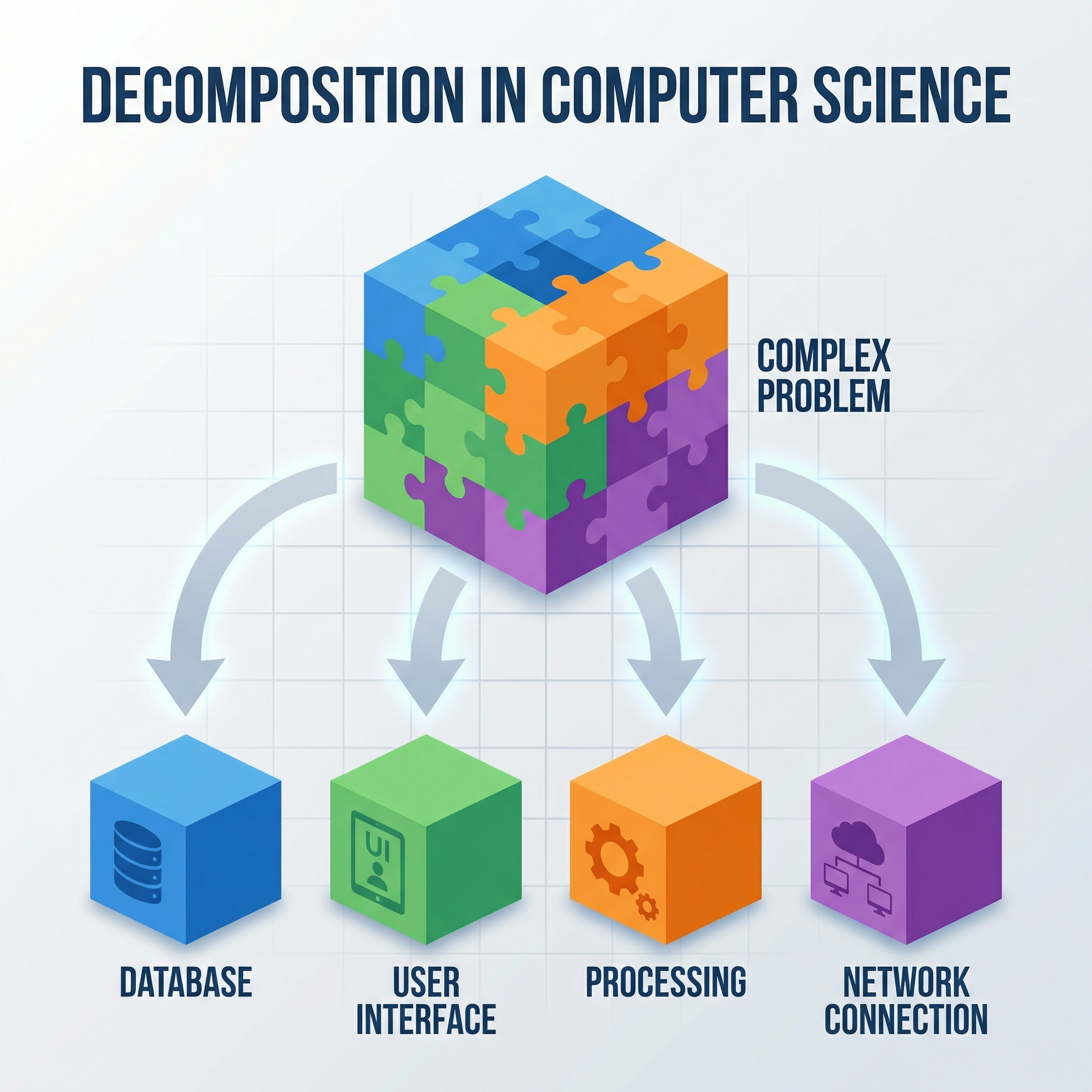
Decomposition is the art of breaking down a complex problem into smaller, more manageable parts. This is the first step in tackling any large-scale project. Instead of being overwhelmed by a huge task, you create a series of smaller, self-contained sub-problems that can be solved independently. For the exam, you must use the OCR-approved definition: "breaking down a complex problem into smaller, manageable parts." Vague answers like "making it simpler" will not be awarded marks.
Example: Imagine you are asked to create a simple game like 'Hangman'. A decomposed structure might look like this:
- Main Game Logic: Controls the overall flow.
- Word Management: Selects a random word from a list.
- User Input: Gets a letter guess from the player.
- Guess Checking: Checks if the guessed letter is in the word.
- Display Update: Shows the updated word (with correctly guessed letters) and the list of incorrect guesses.
- Win/Loss Condition: Checks if the player has won or lost the game.
By solving each of these smaller problems, you build the complete game. Examiners often test this by asking for a structure diagram, which shows the hierarchy of tasks.
Concept 2: Abstraction
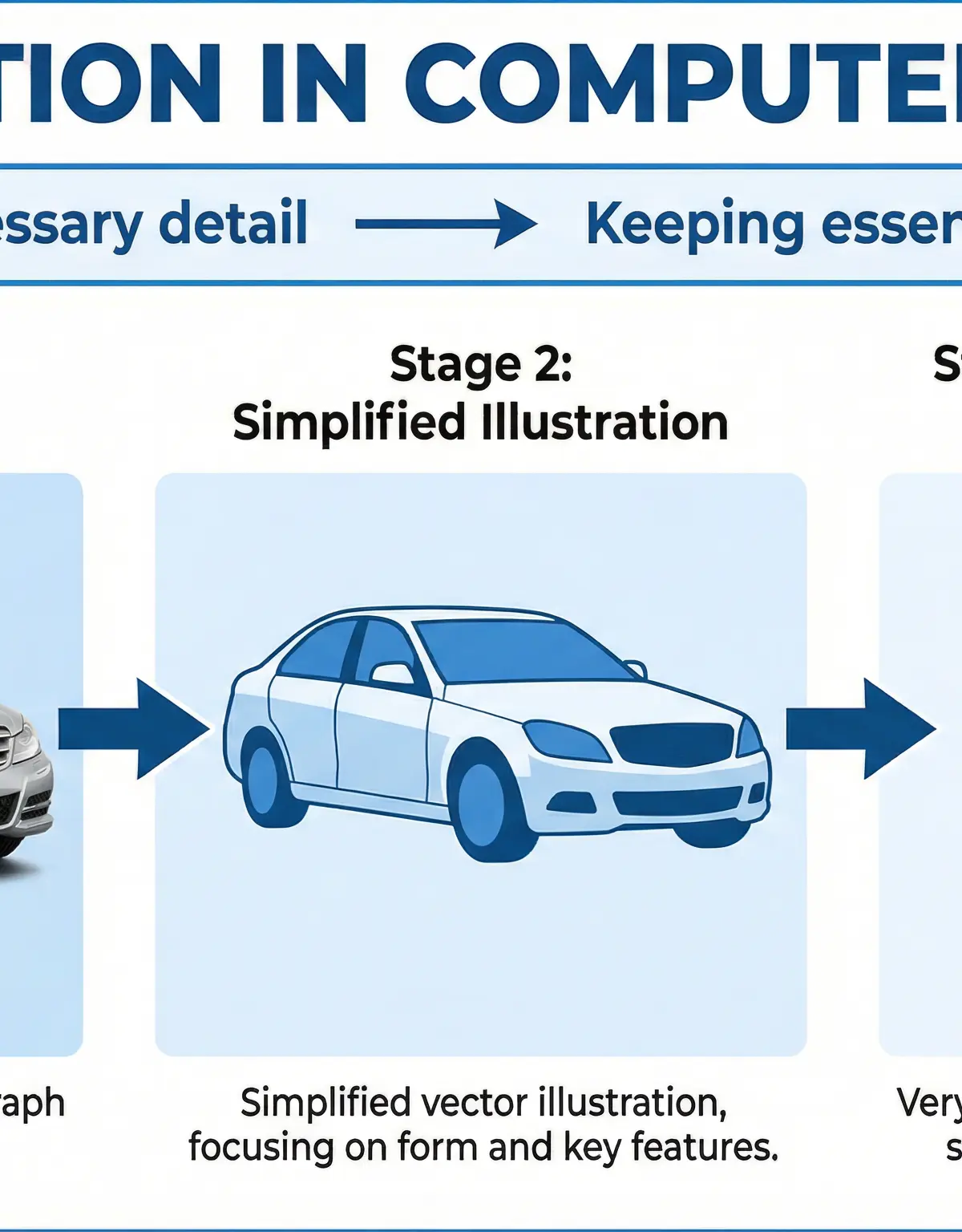
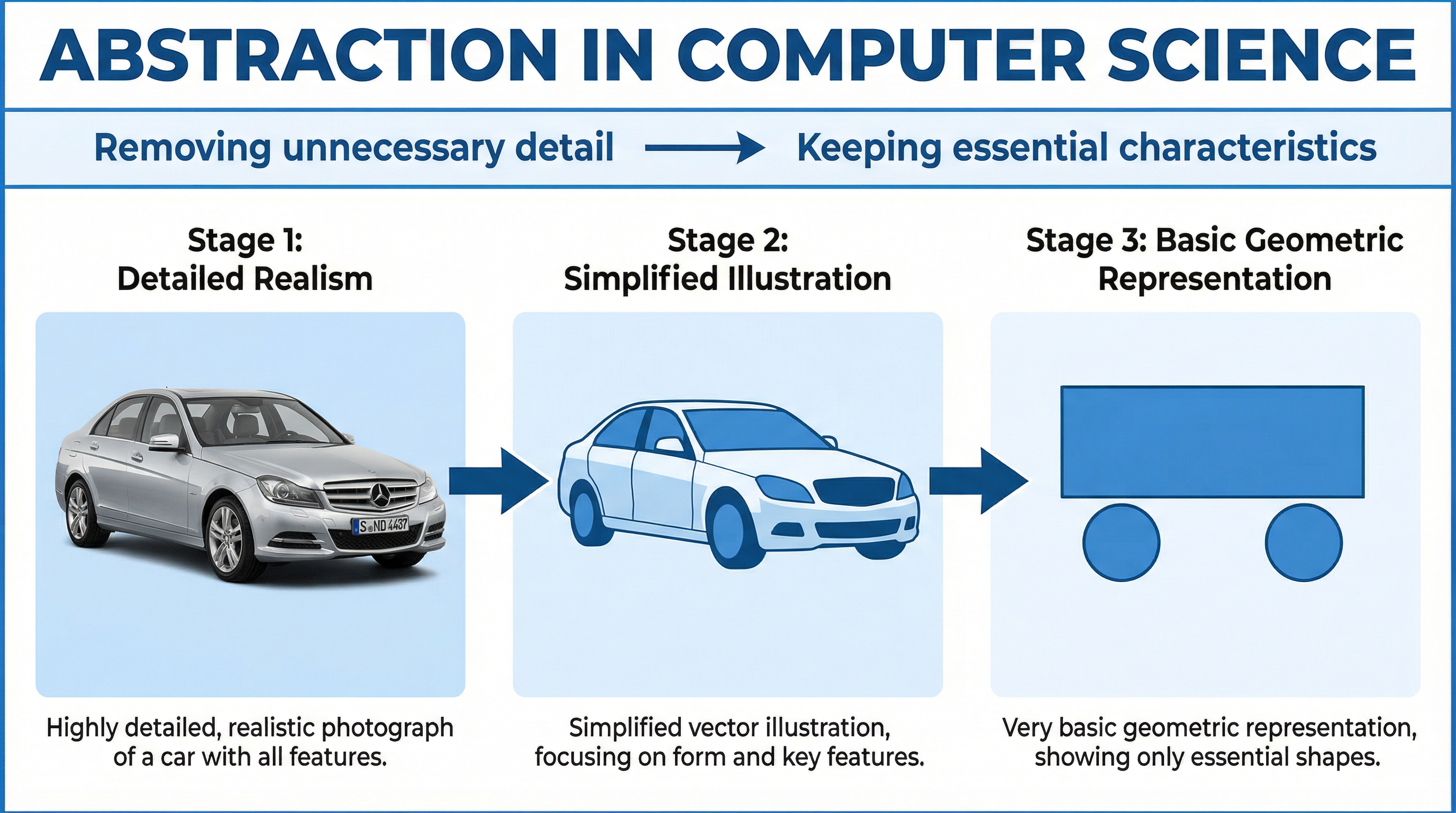
Abstraction is the process of removing unnecessary detail to focus on the essential characteristics of a problem. It's about filtering out the noise to concentrate on what truly matters for the solution. Think of it as creating a simplified model of a real-world object or system. This is a vital skill because it allows us to manage complexity. The London Underground map is a classic example of abstraction: it removes all the roads, parks, and buildings to show only the essential information—the stations, lines, and their connections.
Example: If you are designing a system to model students in a school, you need to decide what information is essential. You would likely keep student_id, name, date_of_birth, and tutor_group. You would abstract away details like hair_colour, favourite_food, or height, as they are irrelevant for a school administration system.
Concept 3: Algorithmic Thinking & The IPO Model
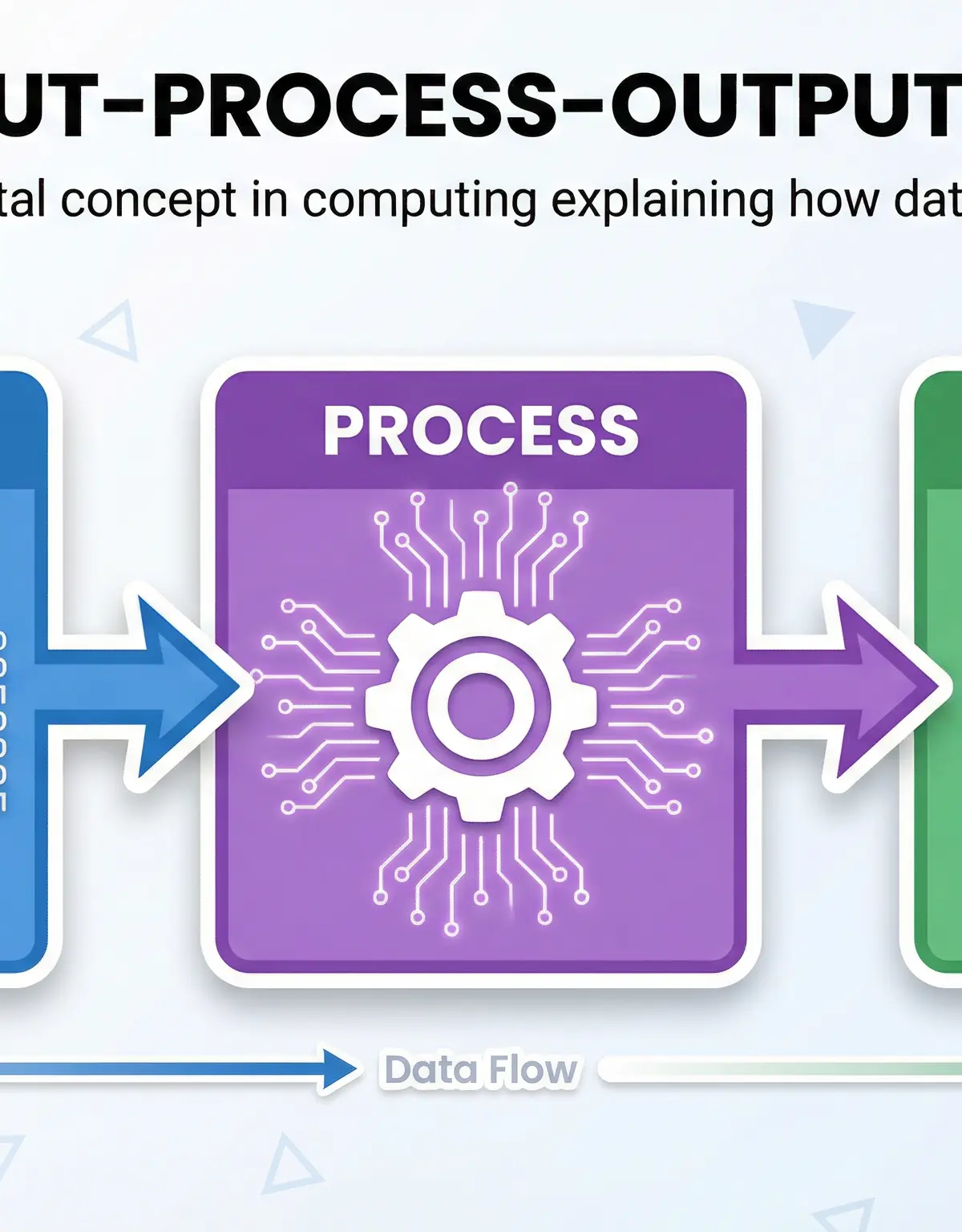
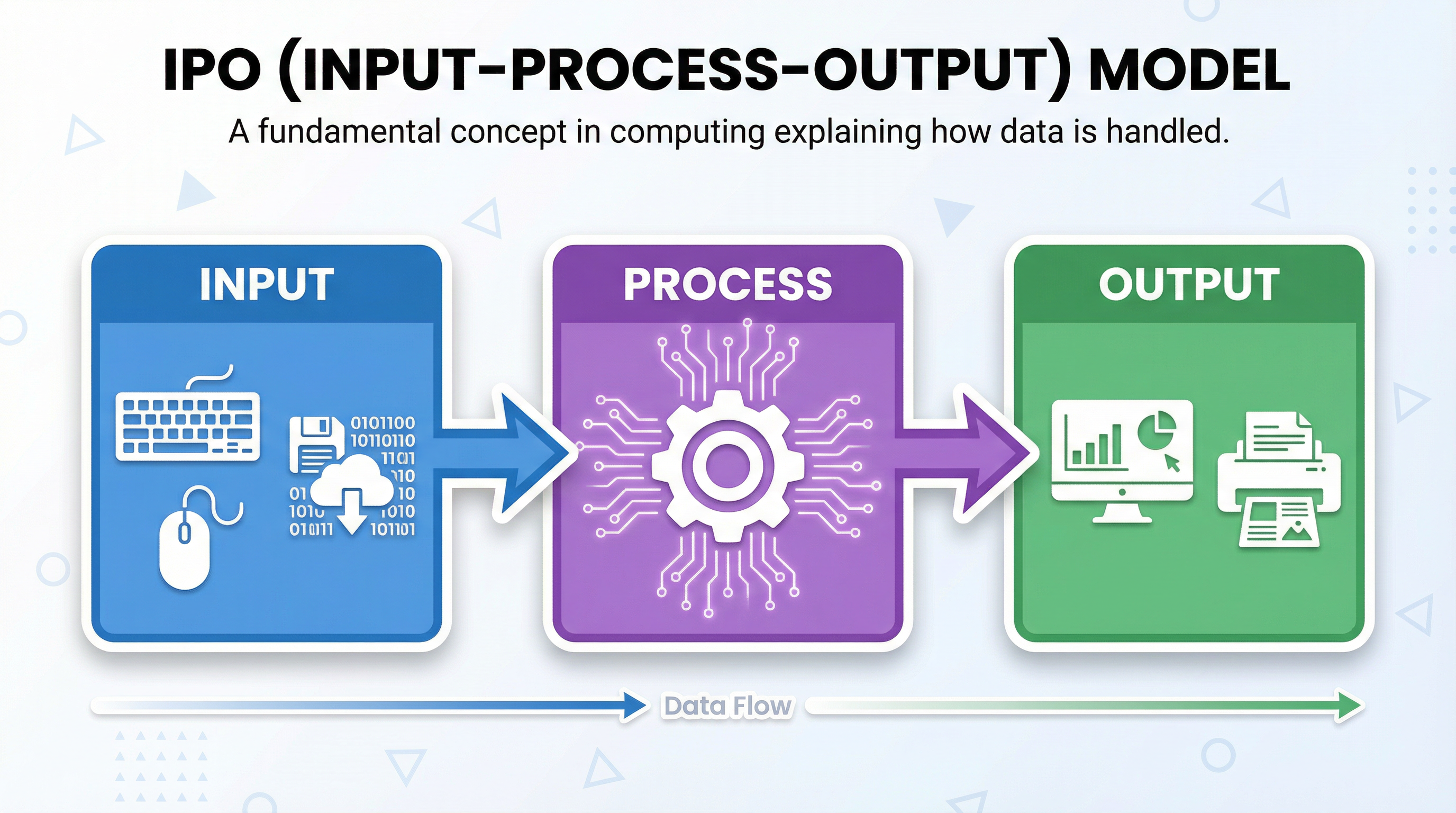
Algorithmic thinking is the process of developing a step-by-step solution to a problem. It involves identifying the exact sequence of instructions a computer must follow to achieve a specific outcome. A powerful tool for this is the Input-Process-Output (IPO) model. Before writing an algorithm, you should always define:
- Input: What data does the algorithm need to start?
- Process: What calculations or manipulations will be performed on the data?
- Output: What result will the algorithm produce?
Using an IPO table helps ensure you haven't missed any crucial steps and is a fantastic planning tool that examiners credit.
Mathematical/Scientific Relationships
This topic is conceptual and does not involve mathematical formulas. The key relationships are logical, focusing on how problems are structured and deconstructed. The primary models are the hierarchical nature of decomposition and the filtering process of abstraction.
Practical Applications
- Software Development: Large applications like Microsoft Word or social media platforms are built by huge teams, each working on decomposed modules (e.g., one team on the user interface, another on the database). Abstraction is used in creating software libraries and APIs, where complex internal workings are hidden from the end-user.
- Game Design: A game world is an abstraction. The physics engine simplifies real-world physics, and character models are abstractions of real beings. The game itself is decomposed into levels, quests, and character classes.
- Website Design: A website is decomposed into different pages (Home, About, Contact) and functional components (navigation bar, footer, contact form).
Visual Resources
3 diagrams and illustrations
Interactive Diagrams
2 interactive diagrams to visualise key concepts
Conceptual Flow Outline
A structure diagram showing the decomposition of a cinema booking system. This shows the hierarchy of tasks, not the flow of control.
Conceptual Flow Outline
A simple IPO (Input-Process-Output) model for the shopping basket problem. This clarifies the flow of data through the system.
Worked Examples
3 worked examples — open one to explore the question and available guidance.
Practice Questions
Test your understanding — click to reveal model answers
State the three main computational thinking techniques you need to know for problem analysis. [3 marks]
Hint: Think of the acronym that helps you remember the three pillars.
A school is creating a new software system to manage student attendance. Describe one way decomposition would be used to develop this system. [2 marks]
Hint: How could you break the big problem of 'managing attendance' into smaller, more specific tasks?
You are designing a computer game where a character explores a fantasy world. Explain, using two examples, how abstraction would be used to model the main character. [4 marks]
Hint: Think about what character attributes are essential for gameplay versus what details are purely cosmetic or irrelevant.
A coffee machine has a simple program to make a drink. It needs to know the type of drink (e.g., 'Espresso', 'Latte') and whether the user wants sugar. It outputs the finished drink. Create an IPO table for this system. [4 marks]
Hint: Use three clear headings. Be specific about what data is needed and what is produced.
A program needs to check if a user-supplied password meets certain criteria: it must be at least 8 characters long and contain at least one number. Decompose this problem and draw a structure diagram to represent your design. [5 marks]
Hint: Break the problem into separate checks. Your structure diagram should show the main problem at the top and the sub-problems branching below it.