Pearson Edexcel · A-Level · Economics B
Course version: 9EB0 · Version from Sept 2015
C) Characteristics of developed (mature), emerging and developing economies
Full specification wording
Developed, emerging and developing economies: c) Characteristics of developed (mature), emerging and developing economies
Developed (mature) economies, such as the UK or Japan, are characterised by high GDP per capita, high HDI scores, advanced infrastructure, and a dominant tertiary sector.
Checked against the Pearson Edexcel 9EB0 specification (opens in a new tab) on .
- Point 3 of 4
Study notes
From the checked teaching notes for this specification point.
The idea
Developed (mature) economies, such as the UK or Japan, are characterised by high GDP per capita, high HDI scores, advanced infrastructure, and a dominant tertiary sector. Emerging economies, like India or Brazil, experience rapid industrialisation, high economic growth rates, and a shift from agriculture to manufacturing, though they may face rising inequality. Developing economies often have low GDP per capita, low HDI, heavy reliance on the primary sector (agriculture), poor infrastructure, and lower life expectancy. Understanding these distinctions helps in analysing global trade patterns, investment flows, and the varying challenges each type of economy faces in achieving sustainable growth.
What earns the marks
- Identify developed economies by their high income, advanced infrastructure, and service-based industries.
- Describe emerging economies as undergoing rapid industrialisation and high rates of economic growth.
- Recognise developing economies by their low HDI, reliance on primary industries, and infrastructural deficits.
- Compare the different demographic trends, such as birth rates and life expectancy, across the three types of economies.
- Analyse the transition of an economy from developing to emerging through industrialisation and foreign direct investment.
Common mistakes and how to put them right
Assuming emerging economies have the same living standards as developed ones due to high growth rates.
Put it right: Emerging economies often have high growth but lower overall living standards and higher inequality than developed nations.
Categorising all non-developed countries as developing.
Put it right: Distinguish between developing economies (low income, primary sector focus) and emerging economies (rapidly industrialising, middle income).
Believing developed economies have the highest economic growth rates.
Put it right: Developed economies typically have slower, more stable growth rates compared to the rapid growth seen in emerging economies.
Exam tips
- Use the BRICS nations (Brazil, Russia, India, China, South Africa) as classic examples when discussing the characteristics of emerging economies.
- When comparing economies, refer to specific structural differences, such as the dominant sector (primary, secondary, or tertiary).
- Be prepared to discuss how the characteristics of an economy influence its attractiveness for foreign direct investment (FDI).
Try the lesson
The start of the Developed, emerging and developing economies: c) Characteristics of developed (mature), emerging and developing economies lesson, made from checked teaching notes for this specification point.
Have a go first
Which of the following is a typical characteristic of a developing economy?
Listen
Developed (mature) economies, such as the UK or Japan, are characterised by high GDP per capita, high HDI scores, advanced infrastructure, and a dominant tertiary sector. Emerging economies, like India or Brazil, experience rapid industrialisation, high economic growth rates, and a shift from agriculture to manufacturing, though they may face rising inequality. Developing economies often have low GDP per capita, low HDI, heavy reliance on the primary sector (agriculture), poor infrastructure, and lower life expectancy. Understanding these distinctions helps in analysing global trade patterns, investment flows, and the varying challenges each type of economy faces in achieving sustainable growth. A strong answer earns marks for these points. Identify developed economies by their high income, advanced infrastructure, and service-based industries. Describe emerging economies as undergoing rapid industrialisation and high rates of economic growth. Recognise developing economies by their low HDI, reliance on primary industries, and infrastructural deficits. Compare the different demographic trends, such as birth rates and life expectancy, across the three types of economies. A common slip: Assuming emerging economies have the same living standards as developed ones due to high growth rates. Instead, emerging economies often have high growth but lower overall living standards and higher inequality than developed nations. Exam tip: Use the BRICS nations (Brazil, Russia, India, China, South Africa) as classic examples when discussing the characteristics of emerging economies.
See it
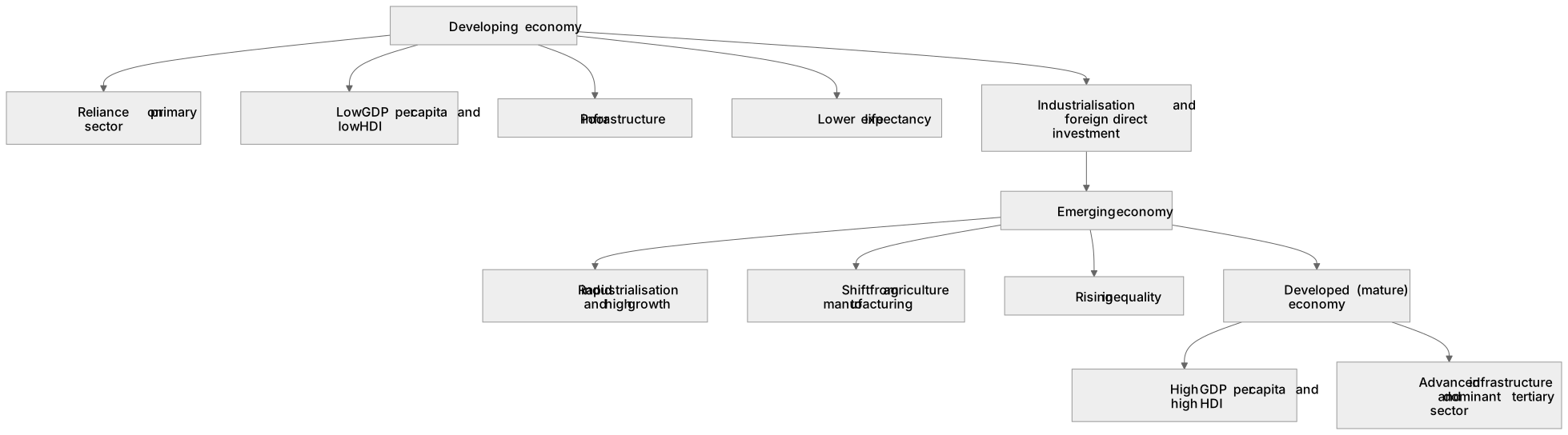
Label the diagram
Some boxes have lost their names. Pick the right name for each number.
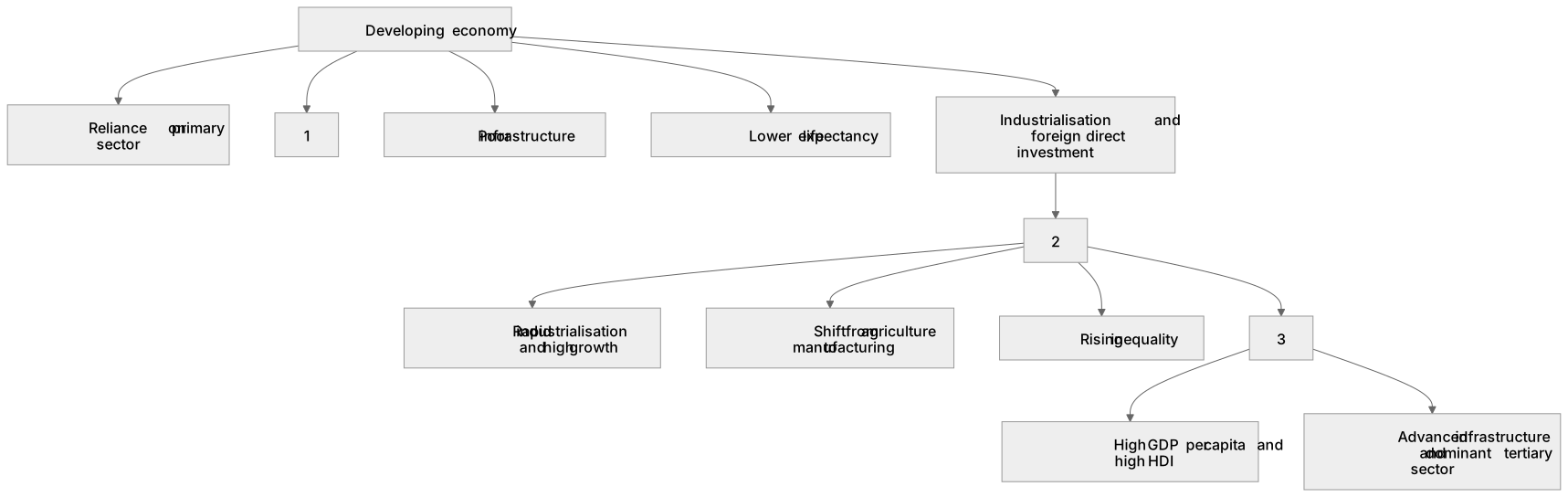
1Box 1
2Box 2
3Box 3
There is more to this lesson
The full lesson goes on to check your understanding and help you earn the marks. Create a free account to carry on, with your progress saved.
A week of Premium from your first lesson · Then the free plan continues · No card, no charge
Test your understanding of Developed, emerging and developing economies: c) Characteristics of developed (mature), emerging and developing economies
Active recall beats re-reading. Take an instant quiz now to test what you’ve learned and lock it into long-term memory.
A week of Premium from your first lesson · Then the free plan continues · No card, no charge