Pearson Edexcel · A-Level · Economics B
Course version: 9EB0 · Version from Sept 2015
Employment patterns: a) Growth of the global labour force
Full specification wording
Employment patterns: a) Growth of the global labour force
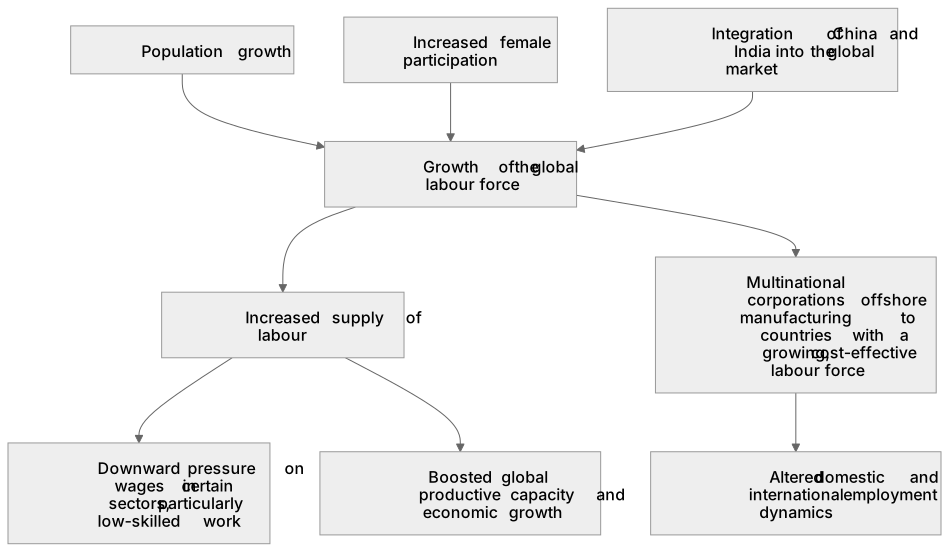
The global labour force has expanded significantly due to population growth, increased female participation, and the integration of large economies like China and India into the global market.
Checked against the Pearson Edexcel 9EB0 specification (opens in a new tab) on .
- Point 1 of 3
Study notes
From the checked teaching notes for this specification point.
The idea
The global labour force has expanded significantly due to population growth, increased female participation, and the integration of large economies like China and India into the global market. This growth increases the supply of labour, which can exert downward pressure on wages in certain sectors, particularly for low-skilled work, while simultaneously boosting global productive capacity and economic growth.
For example: Multinational corporations often offshore manufacturing to countries with a growing, cost-effective labour force, altering domestic and international employment dynamics.
What earns the marks
- Identify factors contributing to the growth of the global labour force, such as population increases and rising female participation rates.
- Explain how the integration of emerging economies expands the global labour supply.
- Analyse the impact of an increased global labour force on wage levels and global productive capacity.
- Evaluate how multinational corporations respond to a growing global labour force through offshoring and outsourcing.
Common mistakes and how to put them right
Assuming a growing global labour force only causes unemployment.
Put it right: Recognise that while it increases labour supply, it also drives economic growth and creates new markets and demand.
Confusing the global labour force with domestic employment rates.
Put it right: Distinguish between the total number of people available to work globally and the specific employment figures within a single country.
Believing wage rates will fall universally.
Put it right: Understand that wage impacts vary by sector and skill level, with high-skilled workers often seeing wage increases due to global demand.
Exam tips
- Use specific examples of countries, such as India or China, when discussing the integration of new workers into the global economy.
- Link the growth of the global labour force to shifts in supply and demand curves in labour markets.
- Consider both the positive impacts on global output and the potential negative impacts on domestic low-skilled wages.
Try the lesson
The start of the Employment patterns: a) Growth of the global labour force lesson, made from checked teaching notes for this specification point.
Have a go first
Which demographic trend is most likely to cause a direct increase in the size of the global labour force?
Listen
The global labour force has expanded significantly due to population growth, increased female participation, and the integration of large economies like China and India into the global market. This growth increases the supply of labour, which can exert downward pressure on wages in certain sectors, particularly for low-skilled work, while simultaneously boosting global productive capacity and economic growth. For example, multinational corporations often offshore manufacturing to countries with a growing, cost-effective labour force, altering domestic and international employment dynamics. A strong answer earns marks for these points. Identify factors contributing to the growth of the global labour force, such as population increases and rising female participation rates. Explain how the integration of emerging economies expands the global labour supply. Analyse the impact of an increased global labour force on wage levels and global productive capacity. Evaluate how multinational corporations respond to a growing global labour force through offshoring and outsourcing. A common slip: Assuming a growing global labour force only causes unemployment. Instead, Recognise that while it increases labour supply, it also drives economic growth and creates new markets and demand. Exam tip: Use specific examples of countries, such as India or China, when discussing the integration of new workers into the global economy.
See it
Label the diagram
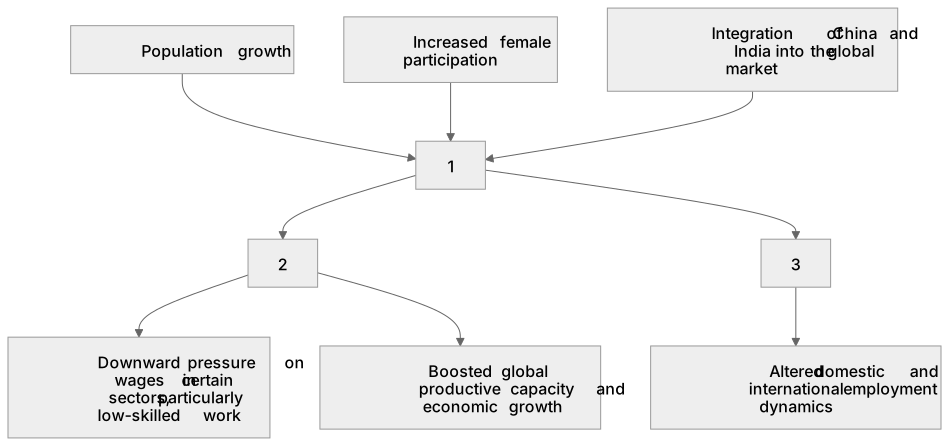
Some boxes have lost their names. Pick the right name for each number.
1Box 1
2Box 2
3Box 3
There is more to this lesson
The full lesson goes on to check your understanding and help you earn the marks. Create a free account to carry on, with your progress saved.
A week of Premium from your first lesson · Then the free plan continues · No card, no charge
Test your understanding of Employment patterns: a) Growth of the global labour force
Active recall beats re-reading. Take an instant quiz now to test what you’ve learned and lock it into long-term memory.
A week of Premium from your first lesson · Then the free plan continues · No card, no charge