Pearson Edexcel · A-Level · Economics B
Course version: 9EB0 · Version from Sept 2015
Entrepreneurial motives: a) Profit as an incentive
Full specification wording
Entrepreneurial motives: a) Profit as an incentive
Profit acts as a primary financial incentive for entrepreneurs to take the risks associated with starting and running a business.
Checked against the Pearson Edexcel 9EB0 specification (opens in a new tab) on .
- Point 1 of 2
- 4 key terms
Study notes
From the checked teaching notes for this specification point.
The idea
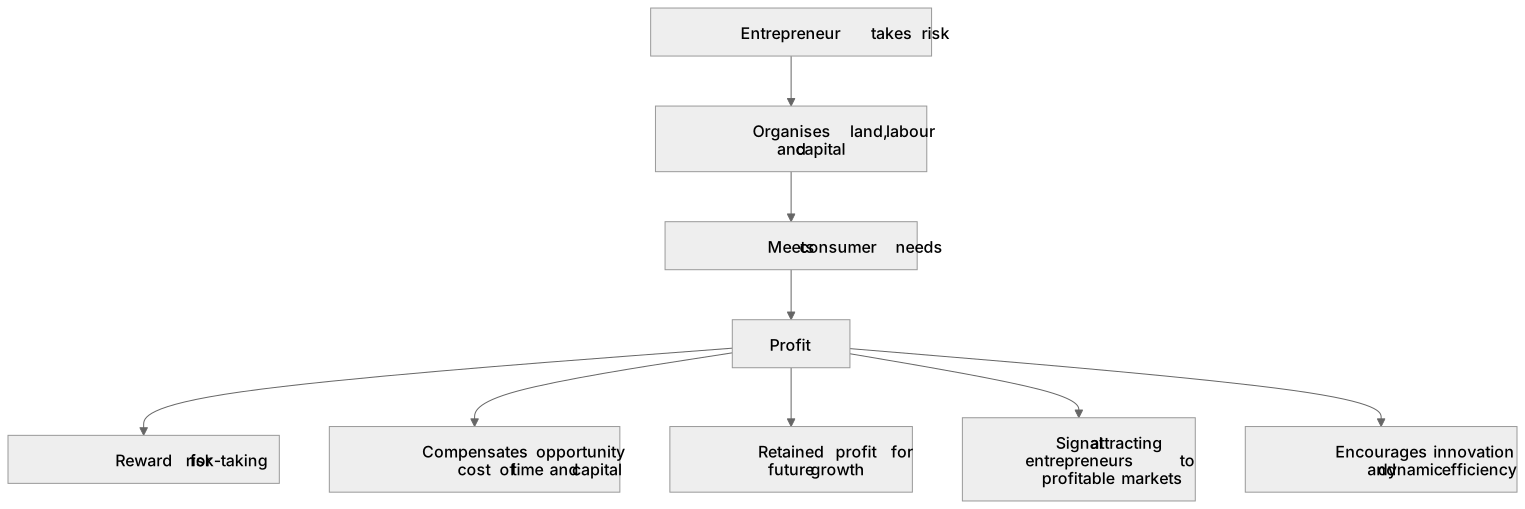
Profit acts as a primary financial incentive for entrepreneurs to take the risks associated with starting and running a business. It represents the reward for organising the other factors of production (land, labour, and capital) and successfully meeting consumer needs. Profit maximisation is often assumed to be the main objective, driving efficiency, innovation, and resource allocation. For example, an entrepreneur might invest their own savings into a new tech startup, motivated by the potential for significant future dividends and capital growth if the product succeeds. This financial return compensates for the opportunity cost of their time and the risk of losing their initial investment.
What earns the marks
- Profit is the financial reward for risk-taking and enterprise.
- Profit provides a source of internal finance (retained profit) for future business growth.
- The pursuit of profit encourages innovation and dynamic efficiency to gain a competitive advantage.
- Profit compensates the entrepreneur for the opportunity cost of their time and capital.
Common mistakes and how to put them right
Confusing profit with revenue.
Put it right: Revenue is total income from sales, whereas profit is revenue minus total costs.
Assuming profit is the only motive for all entrepreneurs.
Put it right: Many entrepreneurs are driven by a combination of financial and non-financial motives.
Believing that profit is guaranteed if a business works hard.
Put it right: Profit is a reward for successful risk-taking and meeting consumer demand, which is never guaranteed.
Exam tips
- Always define profit clearly as total revenue minus total costs when discussing financial incentives.
- Use the concept of opportunity cost to explain why entrepreneurs require a profit incentive to justify their investment of time and money.
- Link the profit motive to broader economic concepts like resource allocation and the price mechanism.
Try the lesson
The start of the Entrepreneurial motives: a) Profit as an incentive lesson, made from checked teaching notes for this specification point.
Have a go first
Which of the following best describes why profit acts as a financial incentive for an entrepreneur to start a new business?
Listen
Profit acts as a primary financial incentive for entrepreneurs to take the risks associated with starting and running a business. It represents the reward for organising the other factors of production (land, labour, and capital) and successfully meeting consumer needs. Profit maximisation is often assumed to be the main objective, driving efficiency, innovation, and resource allocation. For example, an entrepreneur might invest their own savings into a new tech startup, motivated by the potential for significant future dividends and capital growth if the product succeeds. This financial return compensates for the opportunity cost of their time and the risk of losing their initial investment. A strong answer earns marks for these points. Profit is the financial reward for risk-taking and enterprise. Profit provides a source of internal finance (retained profit) for future business growth. The pursuit of profit encourages innovation and dynamic efficiency to gain a competitive advantage. Profit compensates the entrepreneur for the opportunity cost of their time and capital. A common slip: Confusing profit with revenue. Instead, revenue is total income from sales, whereas profit is revenue minus total costs. Exam tip: Always define profit clearly as total revenue minus total costs when discussing financial incentives.
See it
Key words
Say what each word means before you turn the card.
Financial incentives
Try answering aloud or in your head before turning the card.
Risk and reward
Try answering aloud or in your head before turning the card.
Resource allocation
Try answering aloud or in your head before turning the card.
Opportunity cost
Try answering aloud or in your head before turning the card.
See every definition
- Financial incentives
- Profit acts as a primary financial incentive for entrepreneurs to take the risks associated with starting and running a business.
- Risk and reward
- Profit represents the reward for organising the other factors of production and successfully meeting consumer needs, compensating for the risk of losing the initial investment.
- Resource allocation
- Profit acts as a signal for resource allocation, attracting entrepreneurs to profitable markets.
- Opportunity cost
- Profit compensates the entrepreneur for the opportunity cost of their time and capital.
Label the diagram
Some boxes have lost their names. Pick the right name for each number.
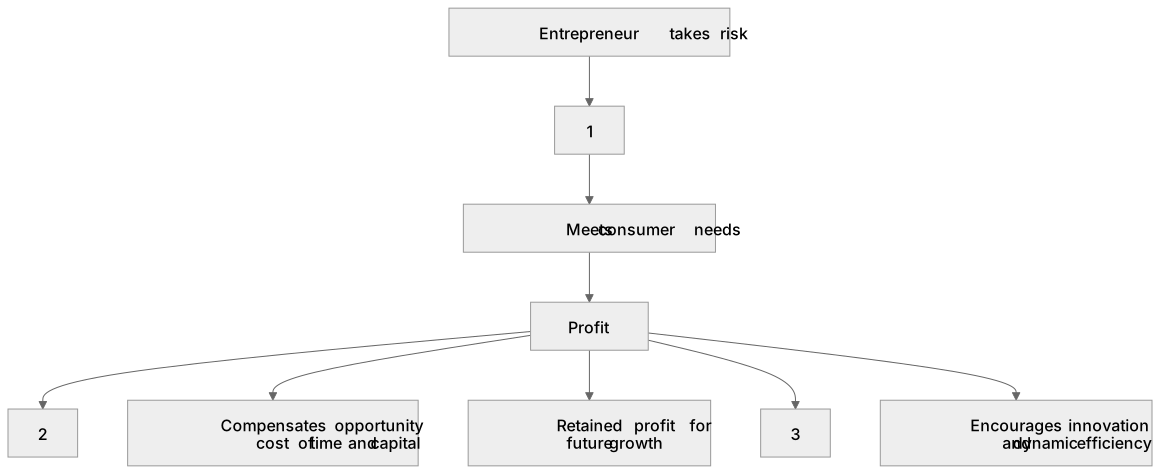
1Box 1
2Box 2
3Box 3
There is more to this lesson
The full lesson goes on to check your understanding and help you earn the marks. Create a free account to carry on, with your progress saved.
A week of Premium from your first lesson · Then the free plan continues · No card, no charge
Test your understanding of Entrepreneurial motives: a) Profit as an incentive
Active recall beats re-reading. Take an instant quiz now to test what you’ve learned and lock it into long-term memory.
A week of Premium from your first lesson · Then the free plan continues · No card, no charge