Pearson Edexcel · A-Level · Economics B
Course version: 9EB0 · Version from Sept 2015
C) Environmental considerations: o emissions o waste disposal
Full specification wording
Ethical issues: c) Environmental considerations: o emissions o waste disposal
Environmental considerations are a major ethical issue for businesses, focusing on emissions and waste disposal.
Checked against the Pearson Edexcel 9EB0 specification (opens in a new tab) on .
- Point 3 of 5
- 4 key terms
Study notes
From the checked teaching notes for this specification point.
The idea
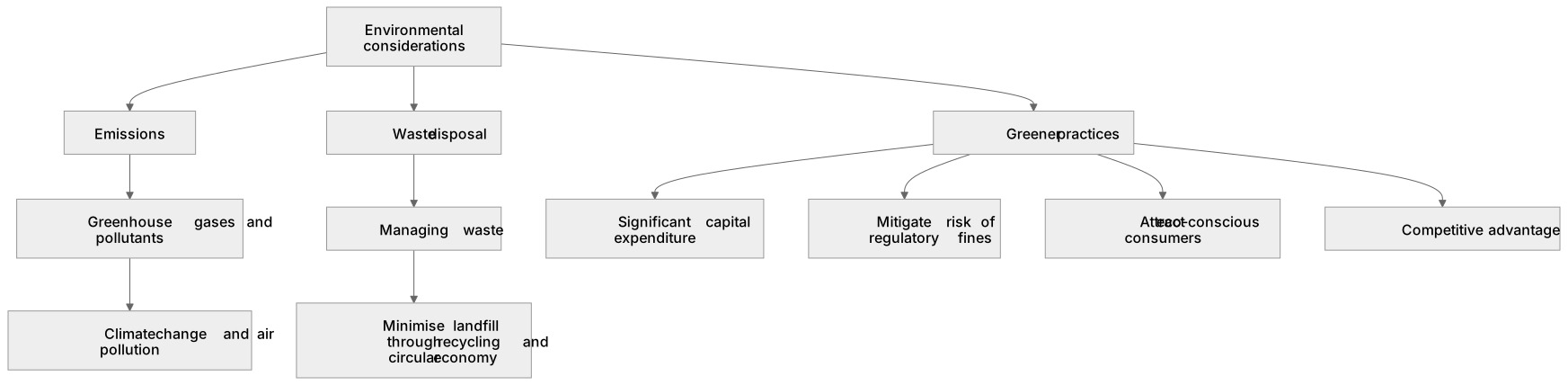
Environmental considerations are a major ethical issue for businesses, focusing on emissions and waste disposal. Emissions refer to the release of greenhouse gases and pollutants, contributing to climate change and air pollution. Waste disposal involves how a business manages its waste, with ethical firms aiming to minimise landfill use through recycling and circular economy practices. For instance, a manufacturing firm might invest in technology to reduce emissions and redesign packaging to be fully biodegradable. While adopting environmentally friendly practices often incurs significant capital expenditure, it can mitigate the risk of regulatory fines, attract eco-conscious consumers, and provide a competitive advantage.
What earns the marks
- Identification of emissions and waste disposal as key environmental ethical issues for businesses.
- Explanation of the negative externalities associated with industrial emissions and improper waste disposal.
- Analysis of the costs involved in implementing greener technologies or sustainable waste management systems.
- Evaluation of the long-term benefits of environmental ethics, such as improved brand loyalty and compliance with future legislation.
Common mistakes and how to put them right
Treating environmental ethics as cost-free.
Put it right: Acknowledge that reducing emissions and improving waste disposal usually require significant short-term investment.
Confusing emissions with waste disposal.
Put it right: Emissions typically refer to airborne pollutants and greenhouse gases, whereas waste disposal usually refers to solid or liquid physical waste.
Assuming consumers always pay a premium for ethical products.
Put it right: While some consumers are eco-conscious, price elasticity of demand often limits how much extra they will pay.
Exam tips
- Use the concept of negative externalities when discussing the impact of emissions and waste on third parties.
- Contrast the short-term costs of environmental compliance with the long-term benefits of sustainability.
- Apply real-world examples of businesses changing their waste disposal methods, such as moving away from single-use plastics.
Try the lesson
The start of the Ethical issues: c) Environmental considerations: o emissions o waste disposal lesson, made from checked teaching notes for this specification point.
Have a go first
Which of the following actions by a logistics company most directly addresses the ethical environmental consideration of emissions?
Listen
Environmental considerations are a major ethical issue for businesses, focusing on emissions and waste disposal. Emissions refer to the release of greenhouse gases and pollutants, contributing to climate change and air pollution. Waste disposal involves how a business manages its waste, with ethical firms aiming to minimise landfill use through recycling and circular economy practices. For instance, a manufacturing firm might invest in technology to reduce emissions and redesign packaging to be fully biodegradable. While adopting environmentally friendly practices often incurs significant capital expenditure, it can mitigate the risk of regulatory fines, attract eco-conscious consumers, and provide a competitive advantage. A strong answer earns marks for these points. Identification of emissions and waste disposal as key environmental ethical issues for businesses. Explanation of the negative externalities associated with industrial emissions and improper waste disposal. Analysis of the costs involved in implementing greener technologies or sustainable waste management systems. Evaluation of the long-term benefits of environmental ethics, such as improved brand loyalty and compliance with future legislation. A common slip: Treating environmental ethics as cost-free. Instead, acknowledge that reducing emissions and improving waste disposal usually require significant short-term investment. Exam tip: Use the concept of negative externalities when discussing the impact of emissions and waste on third parties.
See it
Key words
Say what each word means before you turn the card.
Emissions
Try answering aloud or in your head before turning the card.
Waste disposal
Try answering aloud or in your head before turning the card.
Negative externalities
Try answering aloud or in your head before turning the card.
Competitive advantage
Try answering aloud or in your head before turning the card.
See every definition
- Emissions
- The release of greenhouse gases and pollutants, contributing to climate change and air pollution.
- Waste disposal
- How a business manages its waste, with ethical firms aiming to minimise landfill use through recycling and circular economy practices.
- Negative externalities
- Impacts of emissions and waste on third parties.
- Competitive advantage
- A benefit that adopting environmentally friendly practices can provide to a business.
Label the diagram
Some boxes have lost their names. Pick the right name for each number.
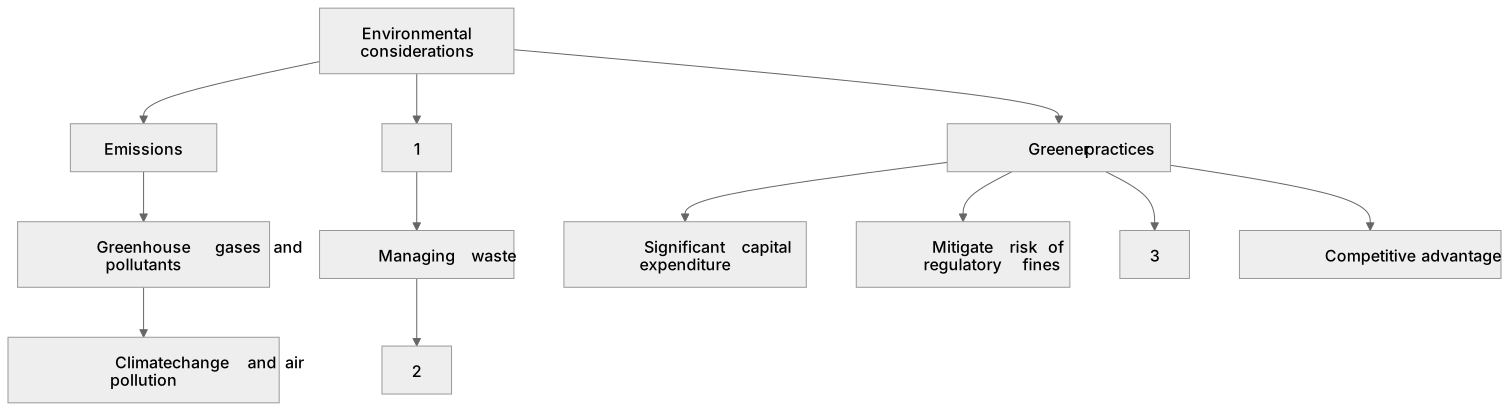
1Box 1
2Box 2
3Box 3
There is more to this lesson
The full lesson goes on to check your understanding and help you earn the marks. Create a free account to carry on, with your progress saved.
A week of Premium from your first lesson · Then the free plan continues · No card, no charge
Test your understanding of Ethical issues: c) Environmental considerations: o emissions o waste disposal
Active recall beats re-reading. Take an instant quiz now to test what you’ve learned and lock it into long-term memory.
A week of Premium from your first lesson · Then the free plan continues · No card, no charge