Pearson Edexcel · A-Level · Economics B
Course version: 9EB0 · Version from Sept 2015
E) Marketing considerations: o misleading product labelling o…
Full specification wording
Ethical issues: e) Marketing considerations: o misleading product labelling o inappropriate promotional activities
Ethical marketing requires businesses to avoid misleading product labelling and inappropriate promotional activities.
Checked against the Pearson Edexcel 9EB0 specification (opens in a new tab) on .
- Point 5 of 5
- 4 key terms
Study notes
From the checked teaching notes for this specification point.
The idea
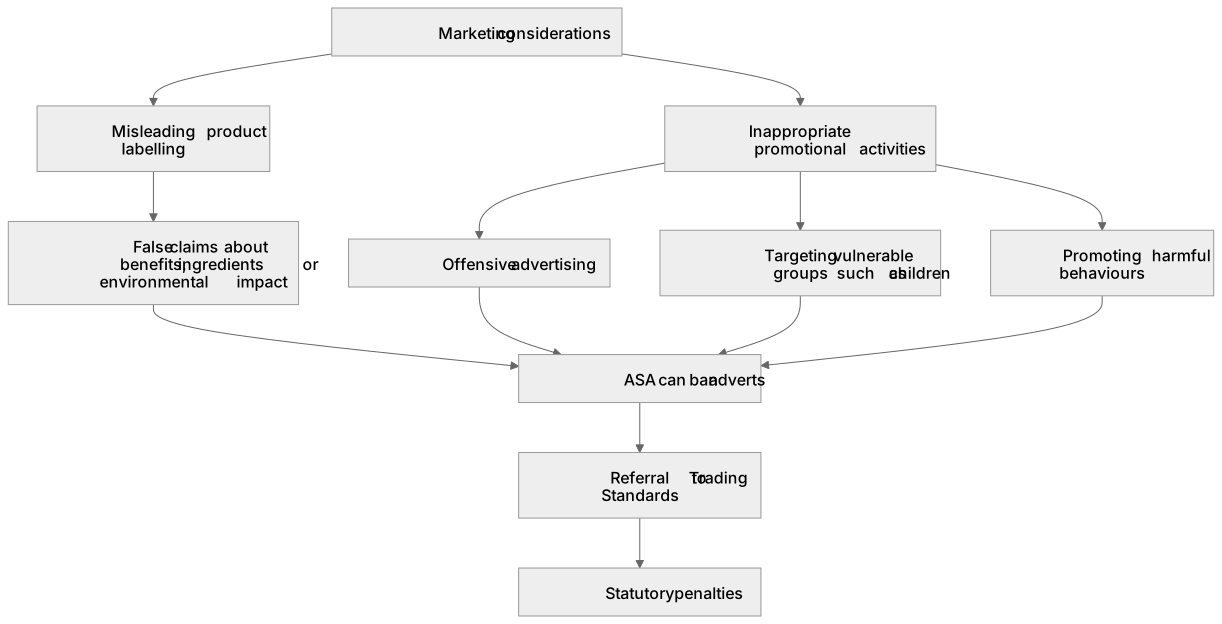
Ethical marketing requires businesses to avoid misleading product labelling and inappropriate promotional activities. Misleading labelling occurs when packaging makes false claims about a product's benefits, ingredients, or environmental impact, such as 'greenwashing' to appear eco-friendly. Inappropriate promotional activities involve advertising that is offensive, targets vulnerable groups like children, or promotes harmful behaviours. For example, a fast-food firm advertising high-sugar meals directly to children faces ethical scrutiny. While the Advertising Standards Authority (ASA) cannot impose fines, it can ban adverts and refer cases to Trading Standards, which can levy statutory penalties. Businesses must ensure their marketing strategies build genuine consumer trust rather than relying on deception.
What earns the marks
- Identify misleading product labelling as providing false or deceptive information regarding a product's characteristics or origins.
- Define inappropriate promotional activities as marketing that offends public taste, targets vulnerable demographics, or encourages unsafe behaviour.
- Explain how unethical marketing can lead to adverts being banned by the Advertising Standards Authority (ASA) and referrals to Trading Standards or Ofcom for statutory fines.
- Evaluate the impact of deceptive marketing on long-term brand equity and consumer loyalty.
Common mistakes and how to put them right
Confusing puffery (exaggerated praise) with misleading labelling.
Put it right: Puffery is legal subjective exaggeration, whereas misleading labelling involves objectively false factual claims.
Assuming inappropriate promotion only means offensive content.
Put it right: It also includes targeting vulnerable groups, such as advertising junk food to young children.
Believing that the ASA can directly fine businesses.
Put it right: The ASA is a self-regulatory body that can ban ads, but statutory fines are issued by bodies like Trading Standards or Ofcom.
Exam tips
- Look for clues in the stimulus material about target audiences to identify inappropriate promotional activities.
- Discuss the role of regulatory bodies like the ASA in banning ads and referring cases to Trading Standards when evaluating the consequences of misleading labelling.
- Contrast the short-term revenue gains of deceptive marketing with the long-term costs of lost consumer trust and legal penalties.
Try the lesson
The start of the Ethical issues: e) Marketing considerations: o misleading product labelling o inappropriate promotional activities lesson, made from checked teaching notes for this specification point.
Have a go first
Which of the following practices is an ethical issue specifically related to marketing considerations?
Listen
Ethical marketing requires businesses to avoid misleading product labelling and inappropriate promotional activities. Misleading labelling occurs when packaging makes false claims about a product's benefits, ingredients, or environmental impact, such as 'greenwashing' to appear eco-friendly. Inappropriate promotional activities involve advertising that is offensive, targets vulnerable groups like children, or promotes harmful behaviours. For example, a fast-food firm advertising high-sugar meals directly to children faces ethical scrutiny. While the Advertising Standards Authority (ASA) cannot impose fines, it can ban adverts and refer cases to Trading Standards, which can levy statutory penalties. Businesses must ensure their marketing strategies build genuine consumer trust rather than relying on deception. A strong answer earns marks for these points. Identify misleading product labelling as providing false or deceptive information regarding a product's characteristics or origins. Define inappropriate promotional activities as marketing that offends public taste, targets vulnerable demographics, or encourages unsafe behaviour. Explain how unethical marketing can lead to adverts being banned by the Advertising Standards Authority (ASA) and referrals to Trading Standards or Ofcom for statutory fines. Evaluate the impact of deceptive marketing on long-term brand equity and consumer loyalty. A common slip: Confusing puffery (exaggerated praise) with misleading labelling. Instead, puffery is legal subjective exaggeration, whereas misleading labelling involves objectively false factual claims. Exam tip: Look for clues in the stimulus material about target audiences to identify inappropriate promotional activities.
See it
Key words
Say what each word means before you turn the card.
Misleading product labelling
Try answering aloud or in your head before turning the card.
Inappropriate promotional activities
Try answering aloud or in your head before turning the card.
Advertising Standards Authority (ASA)
Try answering aloud or in your head before turning the card.
Consumer trust
Try answering aloud or in your head before turning the card.
See every definition
- Misleading product labelling
- Packaging that makes false claims about a product's benefits, ingredients or environmental impact, such as 'greenwashing' to appear eco-friendly.
- Inappropriate promotional activities
- Advertising that is offensive, targets vulnerable groups like children, or promotes harmful behaviours.
- Advertising Standards Authority (ASA)
- A body that cannot impose fines but can ban adverts and refer cases to Trading Standards, which can levy statutory penalties.
- Consumer trust
- The genuine confidence that marketing strategies should build rather than relying on deception.
Label the diagram
Some boxes have lost their names. Pick the right name for each number.
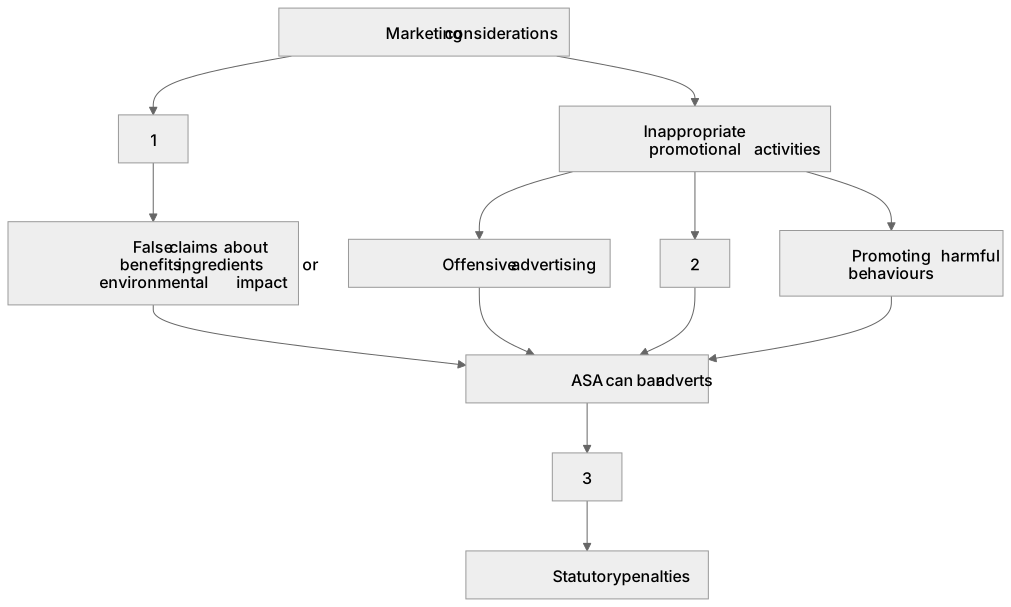
1Box 1
2Box 2
3Box 3
There is more to this lesson
The full lesson goes on to check your understanding and help you earn the marks. Create a free account to carry on, with your progress saved.
A week of Premium from your first lesson · Then the free plan continues · No card, no charge
Test your understanding of Ethical issues: e) Marketing considerations: o misleading product labelling o inappropriate promotional activities
Active recall beats re-reading. Take an instant quiz now to test what you’ve learned and lock it into long-term memory.
A week of Premium from your first lesson · Then the free plan continues · No card, no charge