Pearson Edexcel · A-Level · Economics B
Course version: 9EB0 · Version from Sept 2015
Role of banks in the economy: c) Interest rates and collateral
Full specification wording
Role of banks in the economy: c) Interest rates and collateral
Interest rates represent the cost of borrowing and the reward for saving, expressed as a percentage.
Checked against the Pearson Edexcel 9EB0 specification (opens in a new tab) on .
- Point 3 of 3
- 4 key terms
Study notes
From the checked teaching notes for this specification point.
The idea
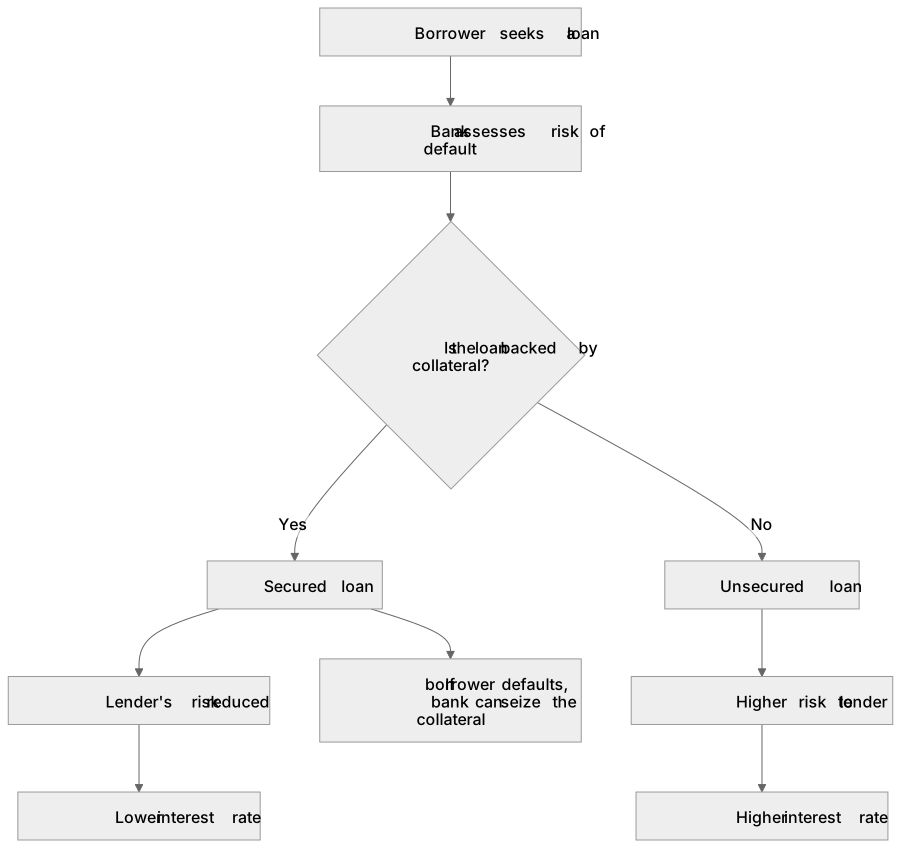
Interest rates represent the cost of borrowing and the reward for saving, expressed as a percentage. When banks provide credit, they charge an interest rate to compensate for the risk of default. Collateral is an asset, such as property or equipment, pledged by a borrower to secure a loan. If the borrower defaults, the bank can seize the collateral to recover its funds. For example, a mortgage is secured against a house. This creates a key distinction: loans backed by collateral (secured loans) typically have lower interest rates than unsecured loans (like credit cards) because the risk to the lender is significantly reduced. Understanding the relationship between interest rates, risk, and collateral is essential for analysing borrowing costs.
What earns the marks
- Interest rates are the cost of borrowing money and the reward for saving.
- Collateral is an asset pledged by a borrower to secure a loan, reducing the lender's risk.
- Secured loans, backed by collateral, generally offer lower interest rates than unsecured loans.
- If a borrower defaults on a secured loan, the lender has the legal right to seize the collateral.
- The level of interest charged reflects the perceived risk of default, inflation expectations, and the base rate.
Common mistakes and how to put them right
Confusing secured and unsecured loans.
Put it right: Secured loans require collateral and usually have lower interest rates, whereas unsecured loans do not require collateral and carry higher interest rates.
Assuming collateral guarantees loan approval.
Put it right: While collateral reduces risk, lenders also assess the borrower's income, credit history, and ability to meet interest payments.
Believing the base rate is the exact rate consumers pay.
Put it right: The base rate influences commercial rates, but banks add a margin to cover risk, administration, and profit, which varies based on collateral.
Exam tips
- Always distinguish between secured and unsecured borrowing when discussing interest rates and risk.
- Use the concept of collateral to explain why mortgage interest rates are typically lower than credit card rates.
- Consider how changes in the value of collateral (e.g., falling house prices) might affect a bank's willingness to lend.
Try the lesson
The start of the Role of banks in the economy: c) Interest rates and collateral lesson, made from checked teaching notes for this specification point.
Have a go first
When a commercial bank requires collateral before approving a business loan, what is the primary purpose of this requirement?
Listen
Interest rates represent the cost of borrowing and the reward for saving, expressed as a percentage. When banks provide credit, they charge an interest rate to compensate for the risk of default. Collateral is an asset, such as property or equipment, pledged by a borrower to secure a loan. If the borrower defaults, the bank can seize the collateral to recover its funds. For example, a mortgage is secured against a house. This creates a key distinction: loans backed by collateral (secured loans) typically have lower interest rates than unsecured loans (like credit cards) because the risk to the lender is significantly reduced. Understanding the relationship between interest rates, risk, and collateral is essential for analysing borrowing costs. A strong answer earns marks for these points. Interest rates are the cost of borrowing money and the reward for saving. Collateral is an asset pledged by a borrower to secure a loan, reducing the lender's risk. Secured loans, backed by collateral, generally offer lower interest rates than unsecured loans. If a borrower defaults on a secured loan, the lender has the legal right to seize the collateral. A common slip: Confusing secured and unsecured loans. Instead, Secured loans require collateral and usually have lower interest rates, whereas unsecured loans do not require collateral and carry higher interest rates. Exam tip: Always distinguish between secured and unsecured borrowing when discussing interest rates and risk.
See it
Key words
Say what each word means before you turn the card.
Interest rates
Try answering aloud or in your head before turning the card.
Collateral
Try answering aloud or in your head before turning the card.
Secured loans
Try answering aloud or in your head before turning the card.
Unsecured loans
Try answering aloud or in your head before turning the card.
See every definition
- Interest rates
- The cost of borrowing and the reward for saving, expressed as a percentage, charged by banks when they provide credit.
- Collateral
- An asset, such as property or equipment, pledged by a borrower to secure a loan, which the bank can seize if the borrower defaults.
- Secured loans
- Loans backed by collateral, such as a mortgage secured against a house, which typically have lower interest rates than unsecured loans.
- Unsecured loans
- Loans such as credit cards that are not backed by collateral and carry higher interest rates because the risk to the lender is greater.
Label the diagram
Some boxes have lost their names. Pick the right name for each number.
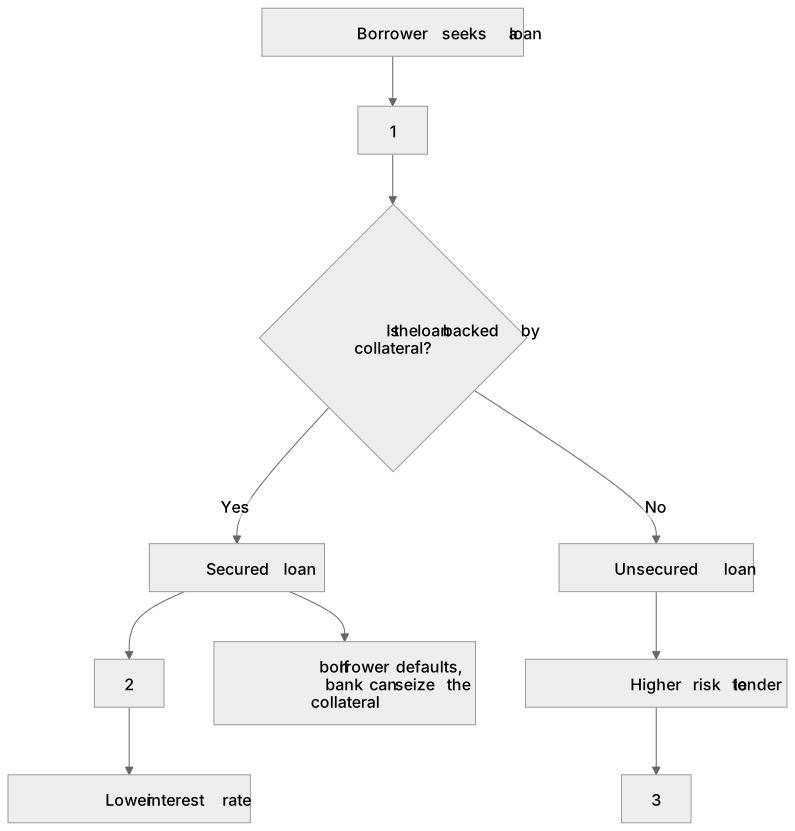
1Box 1
2Box 2
3Box 3
There is more to this lesson
The full lesson goes on to check your understanding and help you earn the marks. Create a free account to carry on, with your progress saved.
A week of Premium from your first lesson · Then the free plan continues · No card, no charge
Test your understanding of Role of banks in the economy: c) Interest rates and collateral
Active recall beats re-reading. Take an instant quiz now to test what you’ve learned and lock it into long-term memory.
A week of Premium from your first lesson · Then the free plan continues · No card, no charge