Pearson Edexcel · A-Level · Economics B
Course version: 9EB0 · Version from Sept 2015
C) Regulation of the banking industry: the Bank of England’s Financial…
Full specification wording
The role of the central bank: c) Regulation of the banking industry: the Bank of England’s Financial Policy Committee
The Bank of England regulates the UK banking industry to ensure financial stability and prevent systemic risks that could trigger economic crises.
Checked against the Pearson Edexcel 9EB0 specification (opens in a new tab) on .
- Point 3 of 4
- 4 key terms
Study notes
From the checked teaching notes for this specification point.
The idea
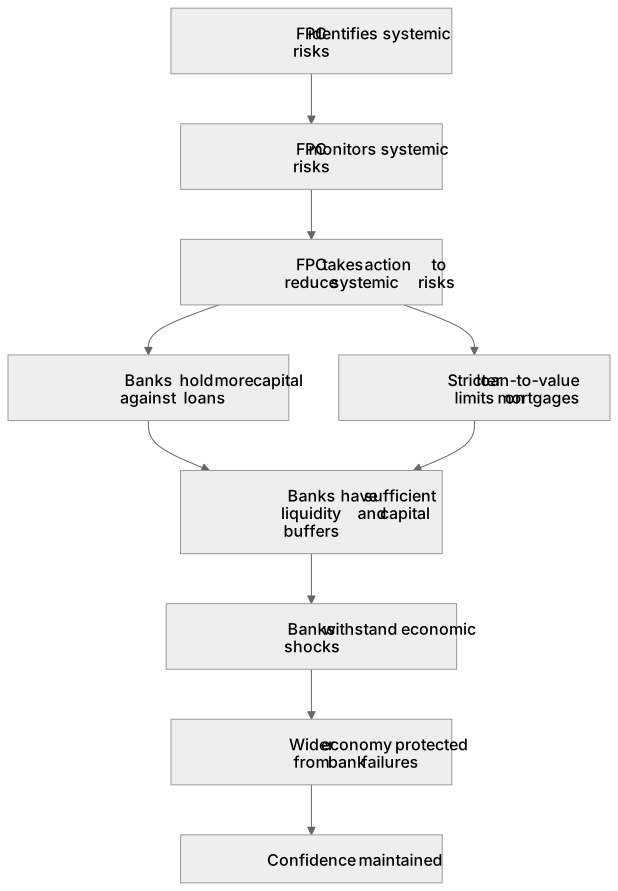
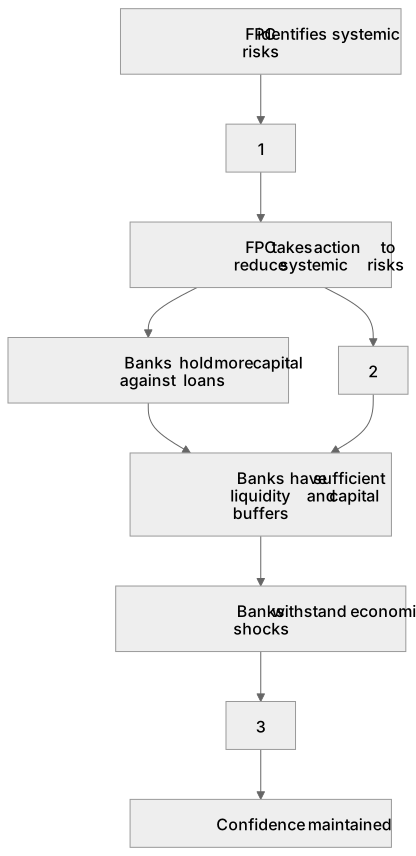
The Bank of England regulates the UK banking industry to ensure financial stability and prevent systemic risks that could trigger economic crises. The Financial Policy Committee (FPC) is responsible for macroprudential regulation. It identifies, monitors, and takes action to reduce systemic risks across the UK financial system. For example, if the FPC observes excessive household debt due to rapid mortgage lending, it can instruct banks to hold more capital against their loans or impose stricter loan-to-value limits on mortgages. By enforcing these regulations, the FPC ensures banks have sufficient liquidity and capital buffers to withstand economic shocks, thereby protecting the wider economy from bank failures and maintaining confidence.
What earns the marks
- Identifies the Financial Policy Committee (FPC) as the body responsible for macroprudential regulation in the UK.
- Explains that the FPC aims to identify, monitor, and mitigate systemic risks to the entire financial system.
- Describes regulatory tools used by the FPC, such as setting countercyclical capital buffer requirements for commercial banks.
- Links the regulation of the banking industry to the broader macroeconomic objective of maintaining economic stability.
Common mistakes and how to put them right
Confusing the roles of the FPC and the Monetary Policy Committee (MPC).
Put it right: The FPC focuses on financial stability and systemic risk, while the MPC focuses on monetary policy and inflation targeting.
Believing the FPC regulates individual consumer complaints or specific bank conduct.
Put it right: The FPC conducts macroprudential regulation of the whole system; individual conduct is regulated by the Financial Conduct Authority (FCA).
Assuming bank regulation guarantees no banks will ever fail.
Put it right: Regulation aims to make the system resilient to shocks and prevent systemic contagion, not to eliminate all individual bank failures.
Exam tips
- Clearly distinguish between macroprudential regulation (FPC) and microprudential regulation (PRA) when discussing the Bank of England's regulatory roles.
- Provide specific examples of FPC actions, such as altering capital buffers or conducting stress tests on major banks.
- Discuss how effective banking regulation prevents the severe negative externalities associated with financial crises and taxpayer bailouts.
Try the lesson
The start of the The role of the central bank: c) Regulation of the banking industry: the Bank of England’s Financial Policy Committee lesson, made from checked teaching notes for this specification point.
Have a go first
Which of the following best describes the primary objective of the Bank of England’s Financial Policy Committee (FPC)?
Listen
The Bank of England regulates the UK banking industry to ensure financial stability and prevent systemic risks that could trigger economic crises. The Financial Policy Committee (FPC) is responsible for macroprudential regulation. It identifies, monitors, and takes action to reduce systemic risks across the UK financial system. For example, if the FPC observes excessive household debt due to rapid mortgage lending, it can instruct banks to hold more capital against their loans or impose stricter loan-to-value limits on mortgages. By enforcing these regulations, the FPC ensures banks have sufficient liquidity and capital buffers to withstand economic shocks, thereby protecting the wider economy from bank failures and maintaining confidence. A strong answer earns marks for these points. Identifies the Financial Policy Committee (FPC) as the body responsible for macroprudential regulation in the UK. Explains that the FPC aims to identify, monitor, and mitigate systemic risks to the entire financial system. Describes regulatory tools used by the FPC, such as setting countercyclical capital buffer requirements for commercial banks. Links the regulation of the banking industry to the broader macroeconomic objective of maintaining economic stability. A common slip: Confusing the roles of the FPC and the Monetary Policy Committee (MPC). Instead, The FPC focuses on financial stability and systemic risk, while the MPC focuses on monetary policy and inflation targeting. Exam tip: Clearly distinguish between macroprudential regulation (FPC) and microprudential regulation (PRA) when discussing the Bank of England's regulatory roles.
See it
Key words
Say what each word means before you turn the card.
Financial stability
Try answering aloud or in your head before turning the card.
Systemic risk
Try answering aloud or in your head before turning the card.
Macroprudential regulation
Try answering aloud or in your head before turning the card.
The banking sector
Try answering aloud or in your head before turning the card.
See every definition
- Financial stability
- The Bank of England regulates the UK banking industry to ensure this and prevent systemic risks that could trigger economic crises.
- Systemic risk
- A risk across the UK financial system that the Financial Policy Committee identifies, monitors, and takes action to reduce.
- Macroprudential regulation
- The Financial Policy Committee is responsible for this, covering the whole financial system rather than individual conduct.
- The banking sector
- Regulation of this industry by the Bank of England aims to maintain confidence and protect the wider economy from bank failures.
Label the diagram
Some boxes have lost their names. Pick the right name for each number.
1Box 1
2Box 2
3Box 3
There is more to this lesson
The full lesson goes on to check your understanding and help you earn the marks. Create a free account to carry on, with your progress saved.
A week of Premium from your first lesson · Then the free plan continues · No card, no charge
Test your understanding of The role of the central bank: c) Regulation of the banking industry: the Bank of England’s Financial Policy Committee
Active recall beats re-reading. Take an instant quiz now to test what you’ve learned and lock it into long-term memory.
A week of Premium from your first lesson · Then the free plan continues · No card, no charge