Pearson Edexcel · A-Level · Economics B
Course version: 9EB0 · Version from Sept 2015
E) Challenges in obtaining credit: o role and impact of credit on the…
Full specification wording
Types and sources of credit and the impact of credit within the economy: e) Challenges in obtaining credit: o role and impact of credit on the economy
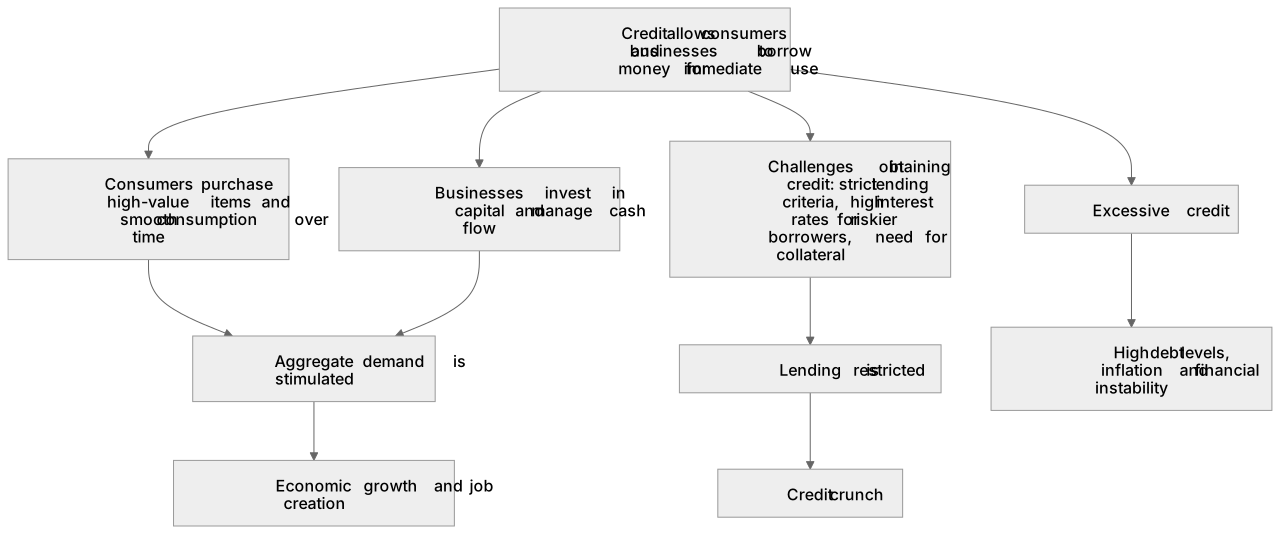
Credit plays a fundamental role by allowing consumers and businesses to borrow money for immediate use, stimulating aggregate demand.
Checked against the Pearson Edexcel 9EB0 specification (opens in a new tab) on .
- Point 5 of 5
- 4 key terms
Study notes
From the checked teaching notes for this specification point.
The idea
Credit plays a fundamental role by allowing consumers and businesses to borrow money for immediate use, stimulating aggregate demand. For consumers, credit facilitates the purchase of high-value items like houses, smoothing consumption over time. For businesses, credit is vital for investment in capital and managing cash flow. However, obtaining credit presents challenges, such as strict lending criteria, high interest rates for riskier borrowers, and the need for collateral. The impact of credit on the economy is significant: accessible credit drives economic growth and job creation, but excessive credit can lead to high debt levels, inflation, and financial instability, as seen during credit crunches when lending is restricted.
What earns the marks
- Identify the role of credit in facilitating consumer spending and business investment.
- Explain how challenges in obtaining credit, such as a lack of collateral or poor credit history, restrict business expansion.
- Analyse the positive impact of credit on economic growth through increased aggregate demand.
- Evaluate the negative impacts of excessive credit, such as inflationary pressures and the risk of financial crises.
Common mistakes and how to put them right
Assuming credit only benefits the borrower.
Put it right: Recognise that credit stimulates the wider economy by increasing aggregate demand and creating jobs.
Confusing credit with income.
Put it right: Understand that credit is borrowed money that must be repaid with interest, not a permanent increase in wealth.
Believing that all businesses can easily access credit.
Put it right: Acknowledge the challenges, such as banks requiring collateral or a strong credit history, which can exclude start-ups.
Exam tips
- When evaluating the impact of credit, always consider both the short-term boost to aggregate demand and the long-term burden of debt repayment.
- Use examples of specific challenges, such as high interest rates for subprime borrowers, to illustrate barriers to obtaining credit.
- Link the availability of credit to the macroeconomic objectives, particularly economic growth and inflation.
Try the lesson
The start of the Types and sources of credit and the impact of credit within the economy: e) Challenges in obtaining credit: o role and impact of credit on the economy lesson, made from checked teaching notes for this specification point.
Have a go first
Which of the following is a common challenge faced by small and medium-sized enterprises (SMEs) when attempting to obtain credit from commercial banks?
Listen
Credit plays a fundamental role by allowing consumers and businesses to borrow money for immediate use, stimulating aggregate demand. For consumers, credit facilitates the purchase of high-value items like houses, smoothing consumption over time. For businesses, credit is vital for investment in capital and managing cash flow. However, obtaining credit presents challenges, such as strict lending criteria, high interest rates for riskier borrowers, and the need for collateral. The impact of credit on the economy is significant: accessible credit drives economic growth and job creation, but excessive credit can lead to high debt levels, inflation, and financial instability, as seen during credit crunches when lending is restricted. A strong answer earns marks for these points. Identify the role of credit in facilitating consumer spending and business investment. Explain how challenges in obtaining credit, such as a lack of collateral or poor credit history, restrict business expansion. Analyse the positive impact of credit on economic growth through increased aggregate demand. Evaluate the negative impacts of excessive credit, such as inflationary pressures and the risk of financial crises. A common slip: Assuming credit only benefits the borrower. Instead, Recognise that credit stimulates the wider economy by increasing aggregate demand and creating jobs. Exam tip: When evaluating the impact of credit, always consider both the short-term boost to aggregate demand and the long-term burden of debt repayment.
See it
Key words
Say what each word means before you turn the card.
Aggregate demand
Try answering aloud or in your head before turning the card.
Economic growth
Try answering aloud or in your head before turning the card.
Business investment
Try answering aloud or in your head before turning the card.
Credit
Try answering aloud or in your head before turning the card.
See every definition
- Aggregate demand
- The total demand in the economy that credit stimulates when consumers and businesses borrow money for immediate use.
- Economic growth
- An expansion of the economy that accessible credit drives, alongside job creation, through increased aggregate demand.
- Business investment
- Spending on capital by firms, for which credit is vital, along with managing cash flow.
- Credit
- Borrowed money that must be repaid with interest, allowing consumers and businesses to borrow for immediate use.
Label the diagram
Some boxes have lost their names. Pick the right name for each number.
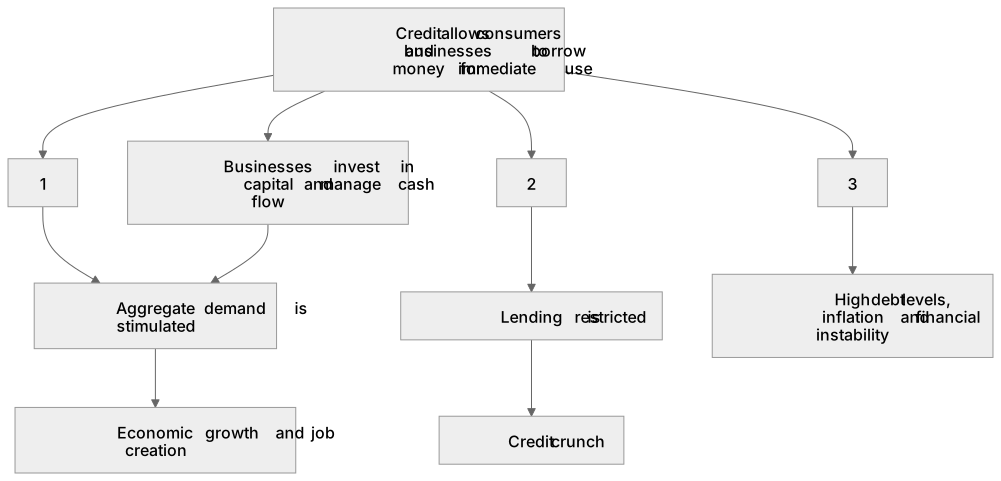
1Box 1
2Box 2
3Box 3
There is more to this lesson
The full lesson goes on to check your understanding and help you earn the marks. Create a free account to carry on, with your progress saved.
A week of Premium from your first lesson · Then the free plan continues · No card, no charge
Test your understanding of Types and sources of credit and the impact of credit within the economy: e) Challenges in obtaining credit: o role and impact of credit on the economy
Active recall beats re-reading. Take an instant quiz now to test what you’ve learned and lock it into long-term memory.
A week of Premium from your first lesson · Then the free plan continues · No card, no charge