Pearson Edexcel · A-Level · Economics
Emerging and developing economies
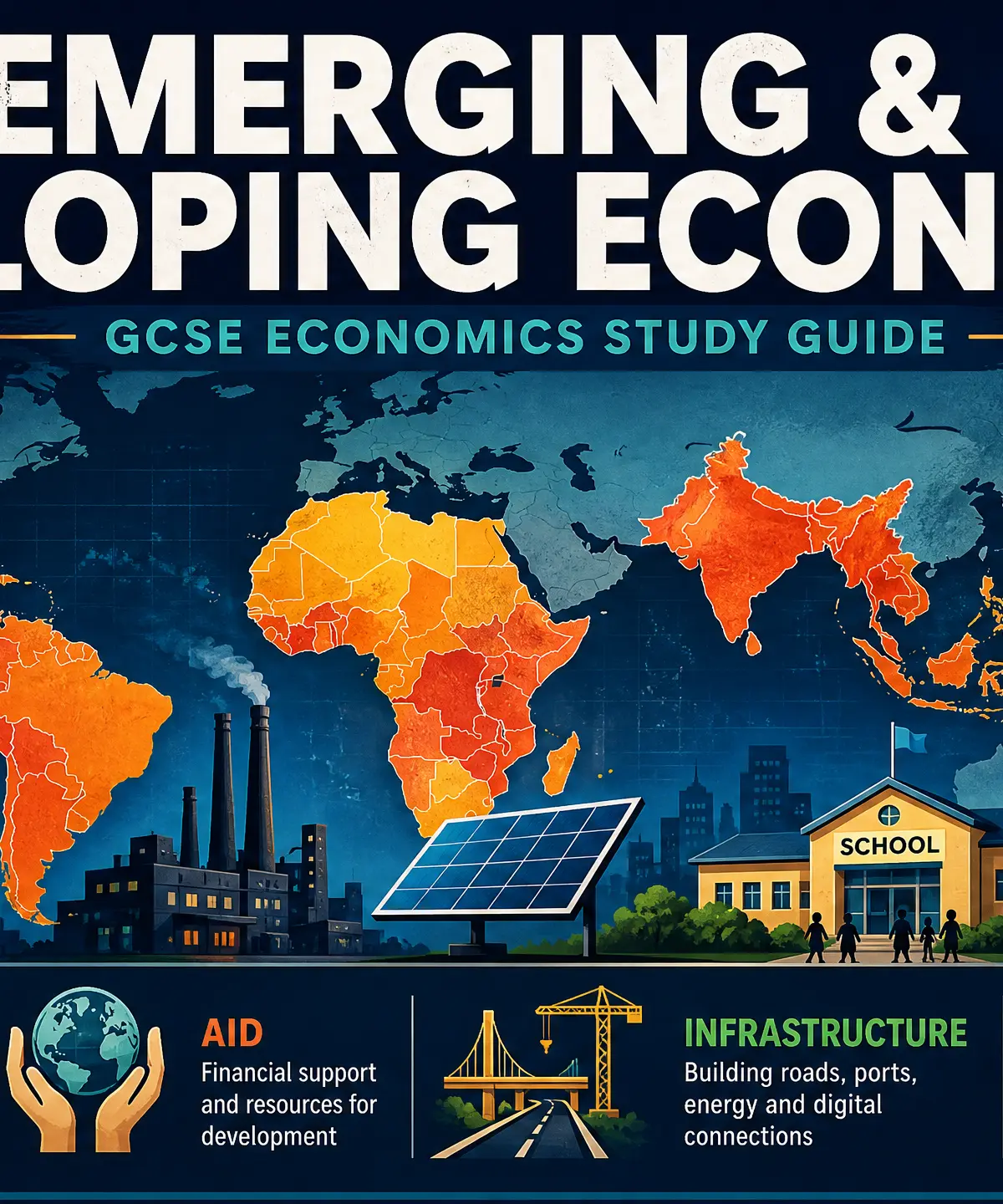
Emerging and developing economies are the engines of future global growth, yet they face unique challenges from primary product dependency to savings gaps. This guide unpacks the strategies used to promote development and the critical distinction between economic growth and true human development—essential knowledge for securing top marks in your GCSE Economics exam.
- 5 min read
- 3 worked examples
- 2 practice questions
- 6 key terms
Study Notes
Overview
This study guide covers the critical topic of Emerging and Developing Economies. It is a favourite area for examiners because it requires you to connect theoretical models (like the Harrod-Domar model) to real-world global issues. You will learn how to distinguish between economic growth (an increase in GDP) and economic development (improvements in living standards, health, and education).
Examiners expect candidates to confidently use the Human Development Index (HDI), evaluate the barriers to development such as primary product dependency and poor infrastructure, and critically compare market-orientated and interventionist development strategies. Top marks are awarded to students who use specific, named country examples rather than vague generalizations.
Listen to the revision podcast for a comprehensive audio walkthrough of this topic.
Key Concepts & Measures
Economic Growth vs Economic Development
Definition: Economic growth is an increase in the real value of goods and services produced in an economy (measured by GDP). Economic development is a broader measure of welfare, encompassing living standards, education, and health.
Why it matters: A country can experience growth without development if the wealth is concentrated among a small elite. Examiners frequently test your ability to explain this distinction.
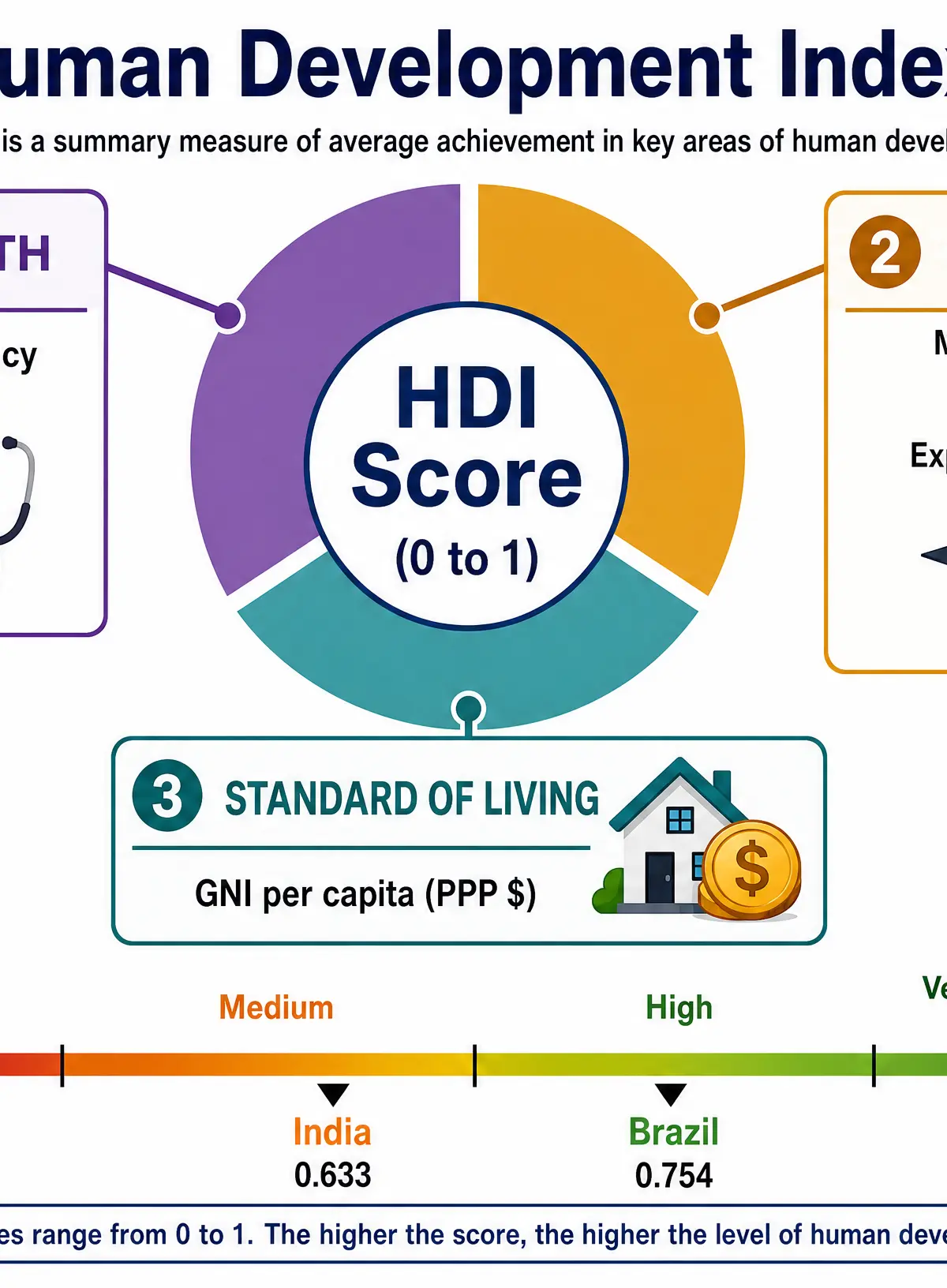
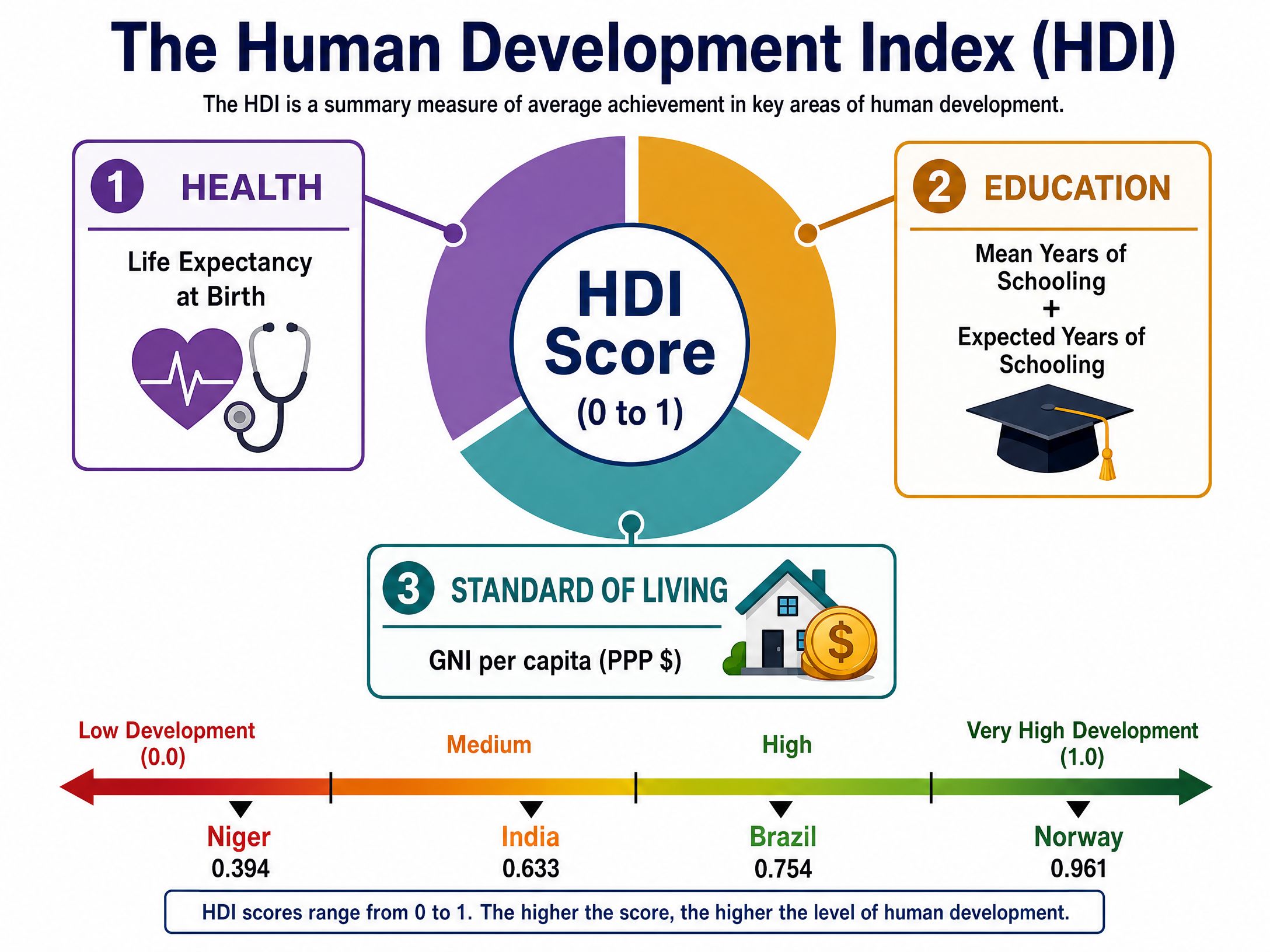
The Human Development Index (HDI)
What it is: A composite statistic of life expectancy, education, and per capita income indicators used to rank countries into four tiers of human development.
Components:
- Health: Life expectancy at birth
- Education: Mean years of schooling and expected years of schooling
- Standard of Living: Gross National Income (GNI) per capita (PPP $)
Barriers to Development
Primary Product Dependency
What it is: When a developing country relies heavily on the export of raw materials (e.g., copper, coffee, cocoa).
Impact: Commodity prices are highly volatile. A sudden drop in prices can devastate export revenues, reducing government tax income and halting investment in public services.
Specific Knowledge: Zambia is heavily dependent on copper exports; Ghana relies heavily on agricultural and textile exports.
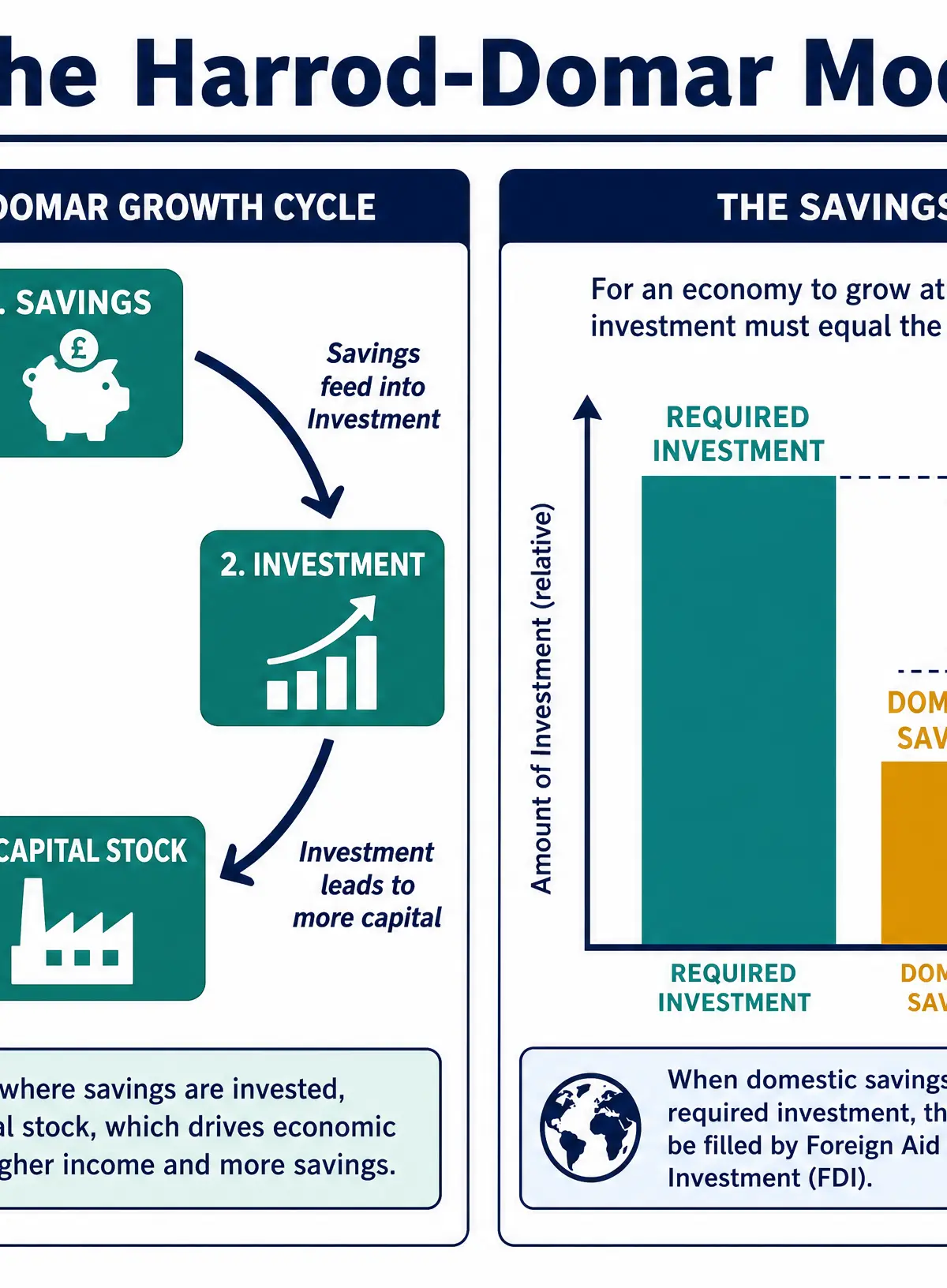
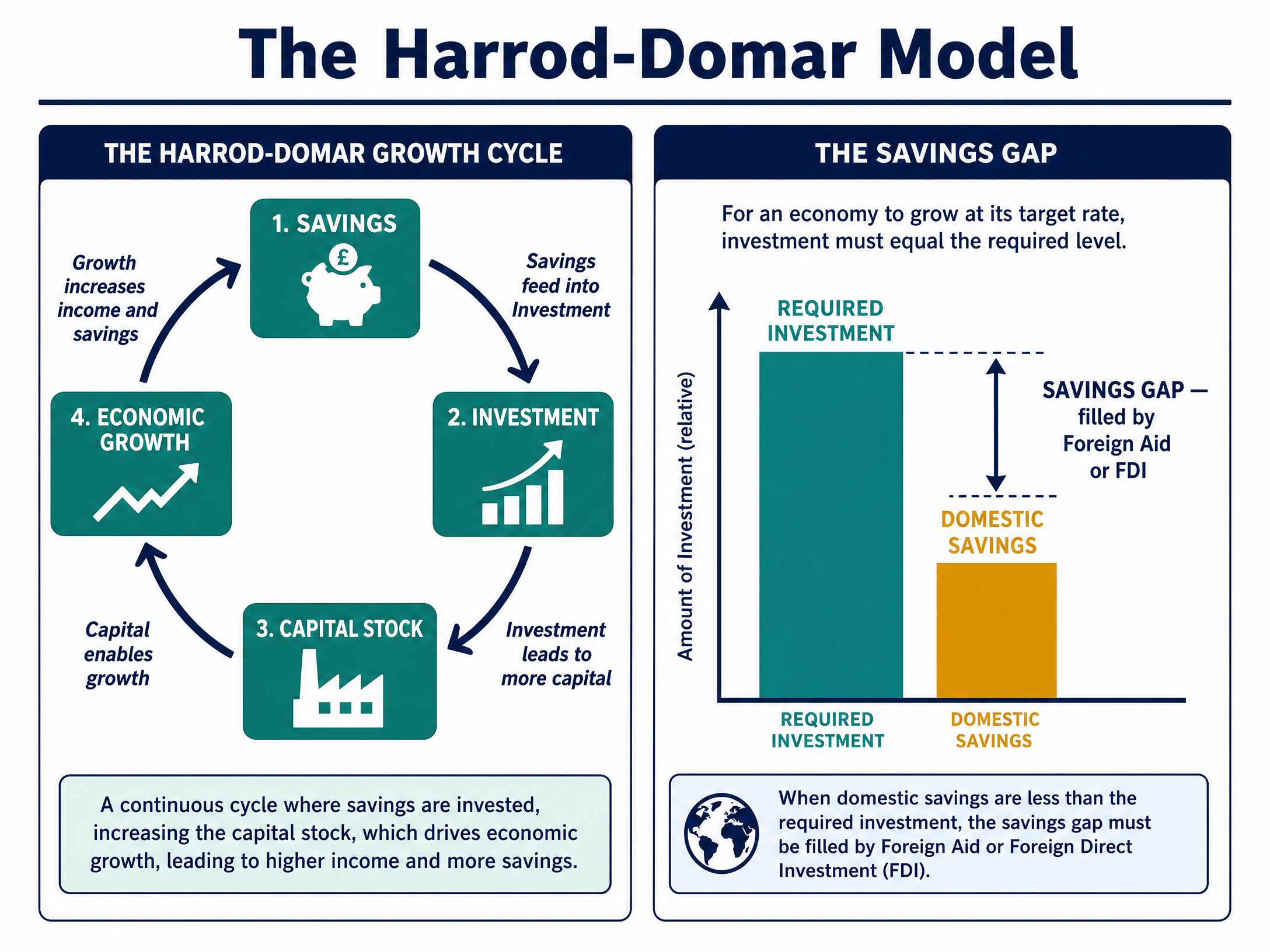
The Savings Gap (Harrod-Domar Model)
What it is: In developing countries, low incomes mean households cannot afford to save.
Impact: Without savings, banks have no funds to lend for investment. Without investment, the capital stock does not grow, leading to low economic growth and keeping incomes low—a vicious cycle.
Poor Infrastructure
What it is: Inadequate transport, energy, and communication networks.
Impact: Increases the cost of doing business, reduces competitiveness, and deters Foreign Direct Investment (FDI).
Development Strategies
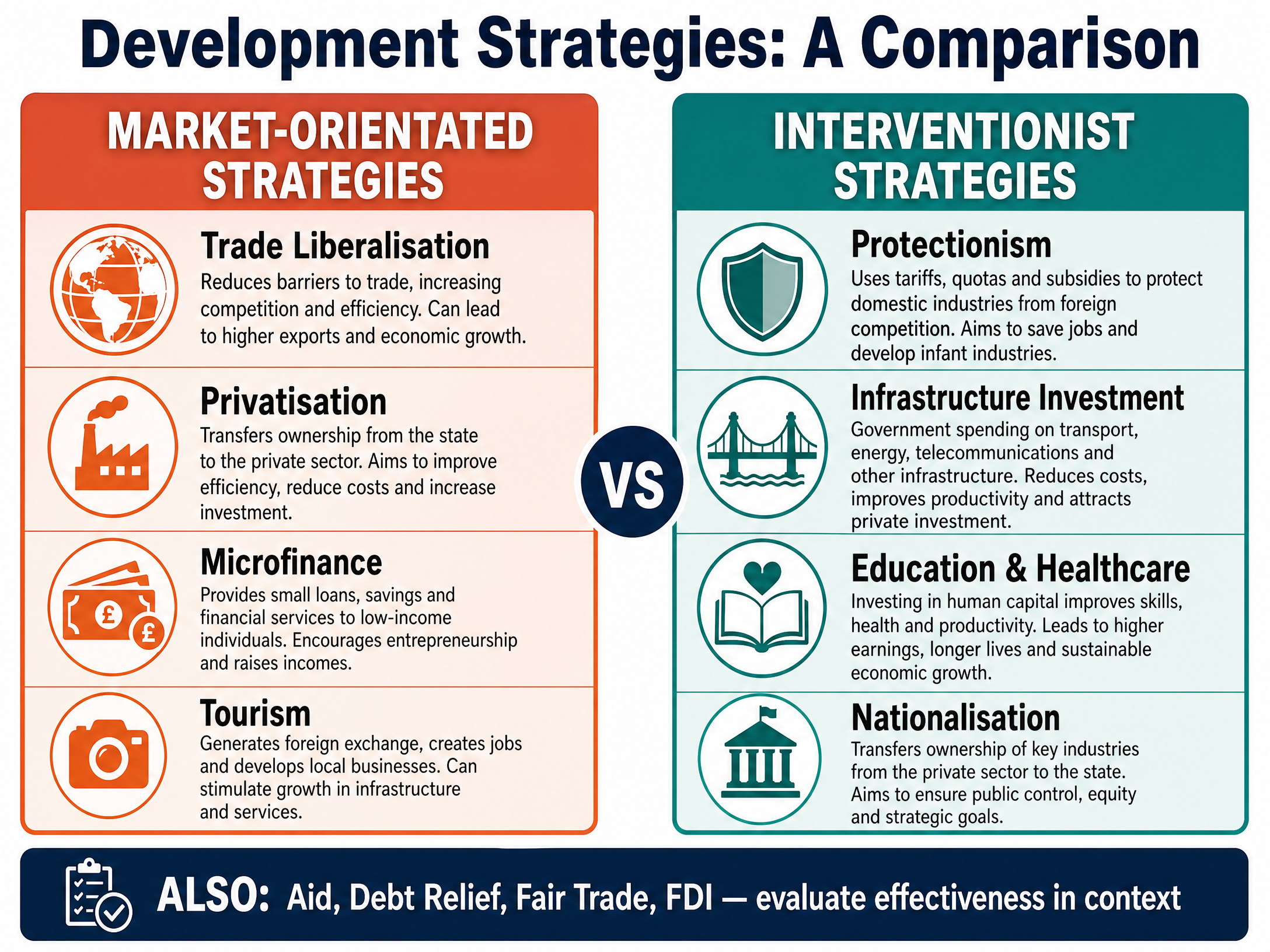
Countries adopt different approaches to stimulate development. You must be able to evaluate these strategies.
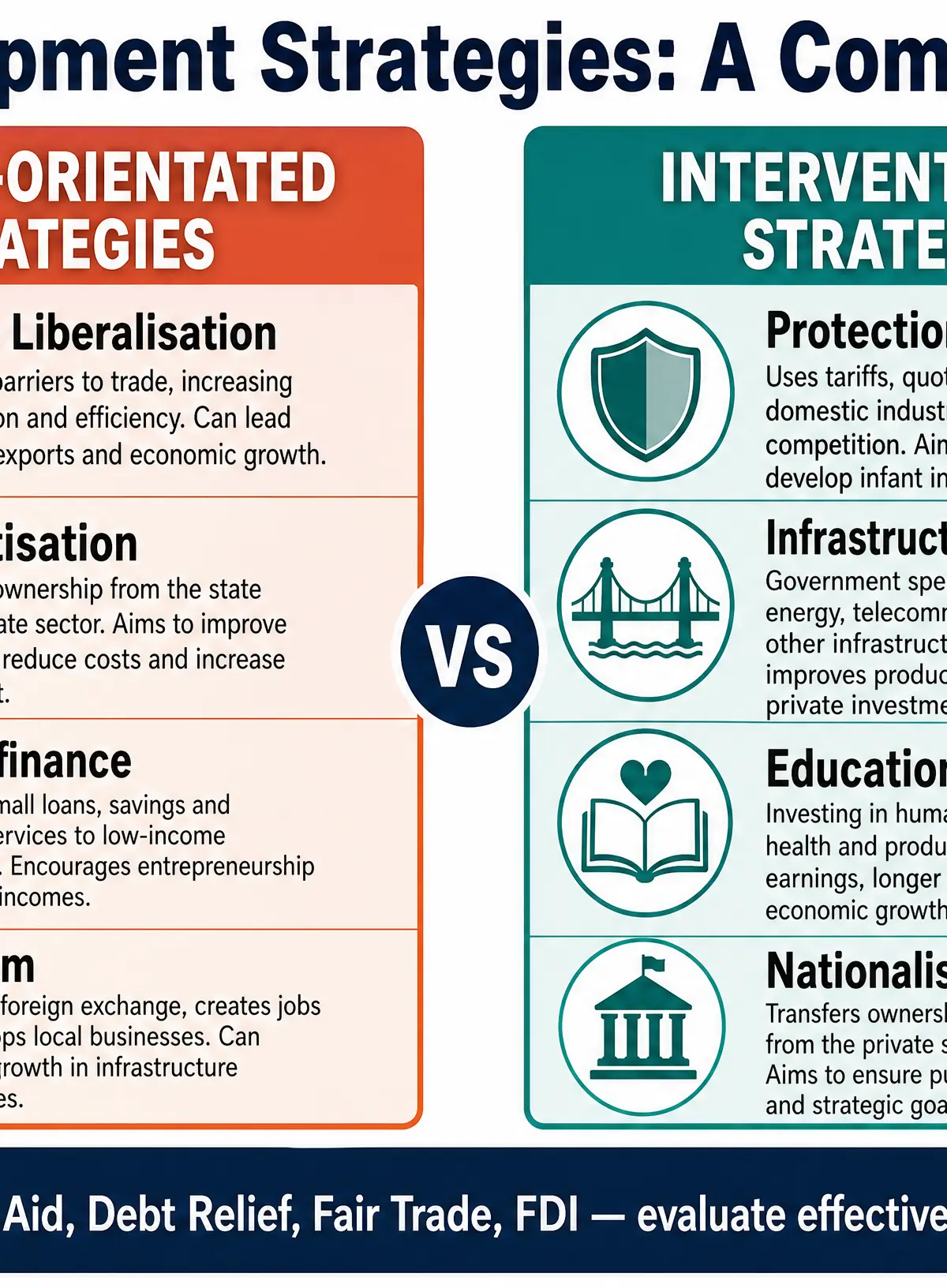
Market-Orientated Strategies
These strategies rely on the free market to allocate resources.
- Trade Liberalisation: Removing tariffs and quotas to encourage free trade and specialization. Evaluation: Can expose domestic infant industries to intense foreign competition.
- Microfinance: Providing small loans to entrepreneurs (often women) who lack access to traditional banking. Specific Knowledge: The Grameen Bank in Bangladesh.
- Privatisation: Selling state-owned assets to the private sector to improve efficiency. Evaluation: Can lead to higher prices for essential services like water.
Interventionist Strategies
These strategies involve active government involvement.
- Infrastructure Investment: State spending on roads, ports, and energy grids to lower business costs and attract FDI.
- Protectionism: Using tariffs to protect 'infant industries' until they achieve economies of scale.
- Education & Healthcare: Investing in human capital to raise long-term productivity.
Other Strategies
- Foreign Aid: Financial assistance from other countries or NGOs. Evaluation: Can fund vital projects but may create dependency and corruption.
- Debt Relief: Cancelling debts frees up government revenue for health and education. Specific Knowledge: The HIPC (Heavily Indebted Poor Countries) initiative.
The Role of International Institutions
The International Monetary Fund (IMF)
Role: Provides emergency loans to countries facing balance of payments crises.
Impact: Often attaches 'Structural Adjustment Programmes' (conditions) requiring the country to cut public spending and privatise industries, which critics argue harms the poorest citizens.
The World Bank
Role: Provides long-term loans and grants for specific development projects (e.g., building schools, dams, or sanitation systems).
Non-Governmental Organisations (NGOs)
Role: Charities like Oxfam and Save the Children provide grassroots assistance, often reaching communities that governments fail to support.
Visual Resources
3 diagrams and illustrations
Interactive Diagrams
1 interactive diagram to visualise key concepts
Conceptual Flow Outline
The Cycle of Poverty (Savings Gap)
Worked Examples
3 worked examples — open one to explore the question and available guidance.
Practice Questions
Test your understanding — click to reveal model answers
Explain two limitations of using GDP per capita to compare living standards between countries. (4 marks)
Hint: Think about what GDP includes and, more importantly, what it ignores (like distribution and hidden economies).
Assess the effectiveness of foreign aid in promoting economic development. (9 marks)
Hint: You need a balanced argument. How does aid help the savings gap? What are the dangers of dependency?
Test your understanding of Emerging and developing economies
Active recall beats re-reading. Take an instant quiz now to test what you’ve learned and lock it into long-term memory.
7 days Premium · Then free forever · No card, no charge