Study Notes
Overview
The OCR Conflict Anthology is a curated selection of poetry that spans different eras, cultures, and types of conflict. Examiners are looking for candidates who can move beyond simply describing what a poem is about, to analysing how the poet has constructed meaning. This requires a sharp focus on Assessment Objective 2 (AO2) — the writer's methods — and the ability to integrate relevant contextual factors (AO3) that influenced the poet's perspective. The most successful responses will draw perceptive connections between poems, evaluating how different writers present the universal theme of conflict.
Listen to our comprehensive revision podcast to solidify your understanding:
Core Themes
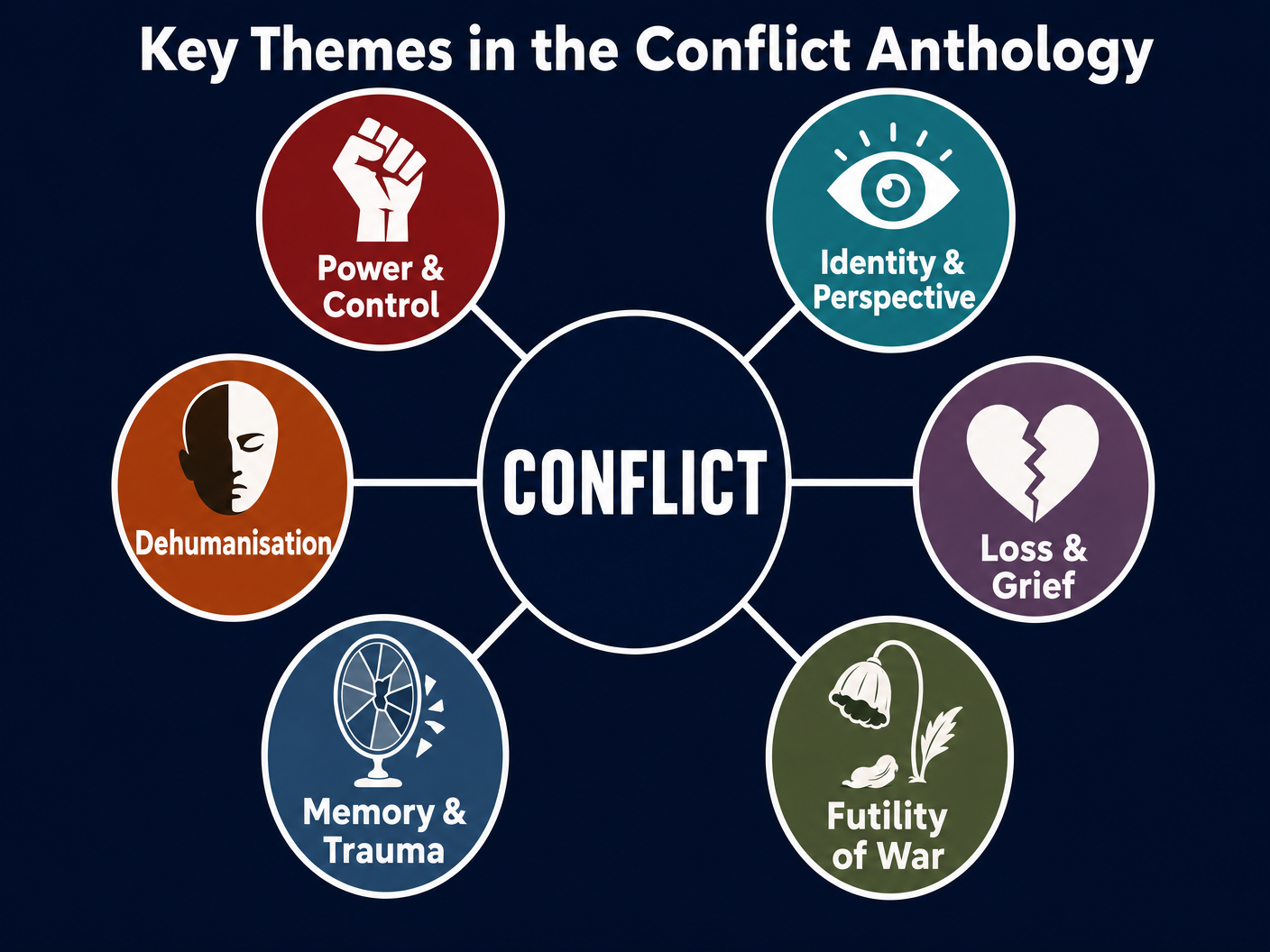
Theme 1: The Brutality and Futility of War
Many poets in the anthology dismantle the myth of the heroic soldier, presenting instead the visceral, devastating reality of combat. They use graphic imagery and disjointed structures to reflect the chaos of the battlefield and the physical toll on the human body. Examiners reward candidates who can analyse how this imagery forces the reader to confront uncomfortable truths.
Key Quotes:
- "And the blood in my veins is made up of mistakes" - This metaphor highlights the internalisation of conflict and the inescapable nature of guilt and trauma.
- "The heavens are no longer blue, the earth is no longer green" - The juxtaposition of natural beauty with absolute destruction emphasises the unnatural, corrupting force of war.
Theme 2: Power, Control, and Voice
Conflict is fundamentally about power dynamics. The anthology explores who holds authority and who is rendered powerless or voiceless. Some poems adopt the perspective of the ordinary soldier or civilian victim to reclaim agency, while others critique the detached arrogance of military or political leaders.
Key Quotes:
- "I have a rendezvous with Death / At some disputed barricade" - The personification of Death and the formal, almost casual tone contrast chillingly with the reality of impending slaughter, suggesting a fatalistic acceptance of higher powers.
- "We real cool. We / Left school." - The collective pronoun 'We' combined with short, sharp enjambed lines reflects a rebellious, yet ultimately self-destructive assertion of identity against societal norms.
Theme 3: Memory and Trauma
The psychological aftermath of conflict is a recurring focus. Poets explore how trauma fractures memory and identity, often using fragmented forms, repetition, and shifts in tense to mirror the intrusive nature of traumatic recollection.
Key Quotes:
- "But I, being poor, have only my dreams; / I have spread my dreams under your feet" - This highlights the vulnerability of the individual when offering their true self, showing how personal conflict and potential loss are tied to emotional exposure.
Writer's Methods
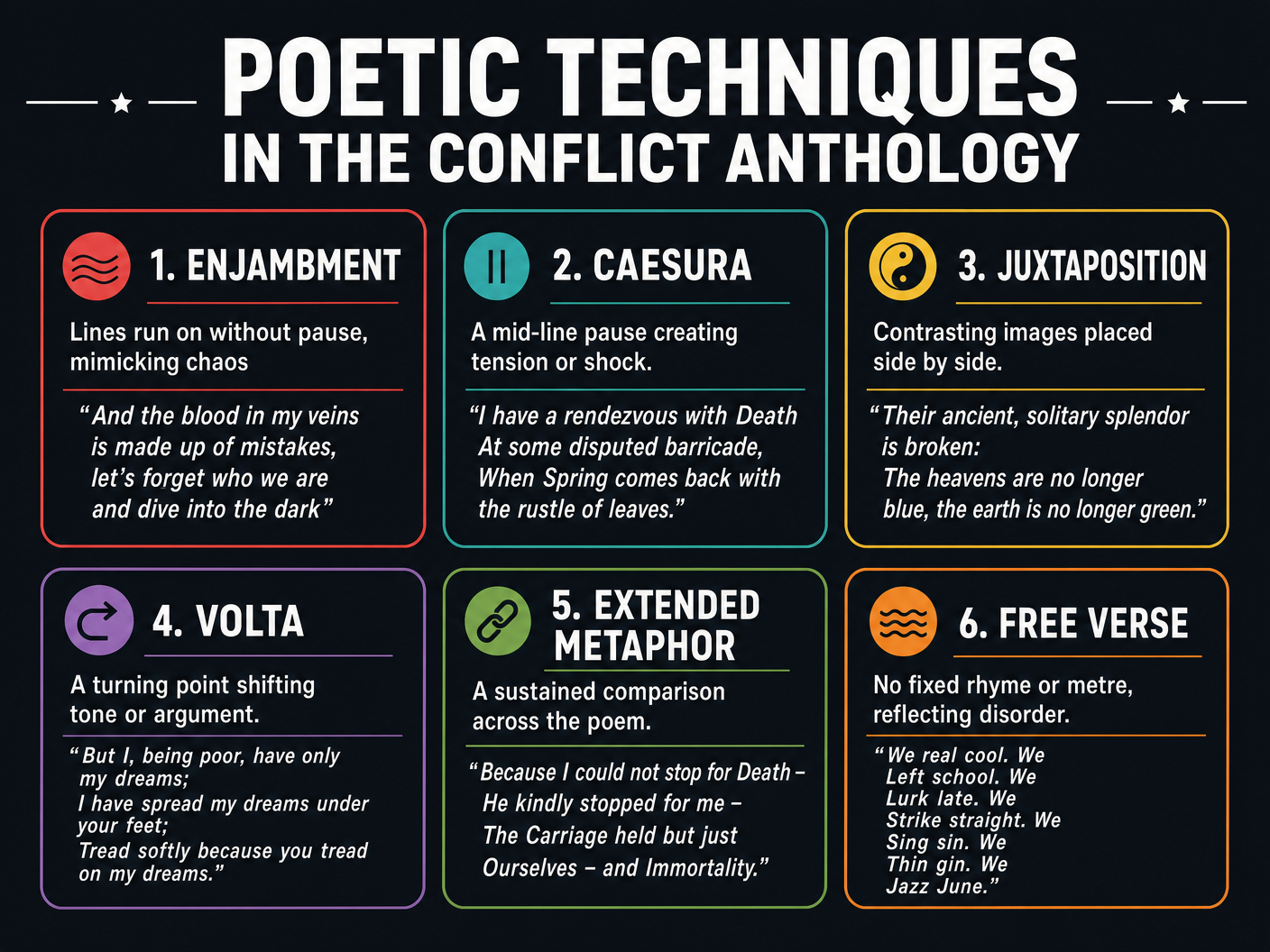
Examiners demand precise analysis of poetic techniques. When discussing methods, you must explain the effect on the reader.
- Enjambment: Used to create a sense of breathlessness, urgency, or the relentless momentum of violence. It denies the reader a moment to pause, mirroring the soldier's experience.
- Caesura: A mid-line pause that creates a sudden halt, often representing shock, the abrupt end of a life, or a moment of profound realisation.
- Juxtaposition: Placing contrasting images (e.g., natural beauty and human destruction) side by side to highlight the unnatural horrors of conflict.
- Form: The choice between rigid structures (like a sonnet) and free verse is crucial. Rigid forms can represent military control or inescapable fate, while free verse often reflects chaos and psychological breakdown.
Context
Context (AO3) must be woven seamlessly into your analysis. Consider the historical period of the poem — was it written during the patriotic fervour of early WWI, or the disillusioned aftermath? Consider the poet's own background — were they a combatant, a civilian, or writing retrospectively? Context should be used to explain why a poet made specific choices, not just added as historical trivia.
Visual Resources
2 diagrams and illustrations
Interactive Diagrams
1 interactive diagram to visualise key concepts
Conceptual Flow Outline
The interconnected nature of physical and psychological conflict.
Worked Examples
2 detailed examples with solutions and examiner commentary
Practice Questions
Test your understanding — click to reveal model answers
Compare how poets present the effects of conflict on civilians in Poem D and one other poem from the anthology. (30 marks)
Hint: Consider the difference between direct physical harm and indirect emotional/psychological trauma.
Explore how the poet uses structure to convey chaos in Poem F. (15 marks)
Hint: Look closely at enjambment, stanza length, and the use of punctuation (or lack thereof).
Compare the presentation of power and authority in Poem G and one other poem. (30 marks)
Hint: Think about who is speaking in the poem. Is it a person in power, or someone subjected to power?
Read the unseen poem. How does the poet present the experience of returning from war? (24 marks)
Hint: Apply the E.C.J.V method. Look for shifts in tone between the past (war) and the present (home).