Pearson Edexcel · A-Level · English Language
Component 1 – Overview
This component tests your ability to analyse how language varies depending on the contexts of production and reception, including changes over time. You will apply key language frameworks to evaluate written, spoken, and multimodal data, and critically assess attitudes towards language use.
- 5 min read
- 3 worked examples
- 5 practice questions
- 8 key terms
Study Notes

Overview
Component 1 introduces you to the ways in which language varies depending on the contexts of production and reception. It covers how language choices create personal identities and how language varies over time from c1550 to the present day. You will apply key language frameworks and levels to written, spoken, and multimodal data, and evaluate how social, geographical, and historical factors influence language use.
Reading Skills
Identifying Information & Ideas
When approaching unseen data, your first task is to locate explicit and implicit information. Read the text carefully, highlighting key features across different language frameworks. Look for patterns, anomalies, and shifts in tone or focus. Consider how the mode (written, spoken, multimodal), field (subject matter), function (purpose), and audience shape the information presented.
Analysing Language
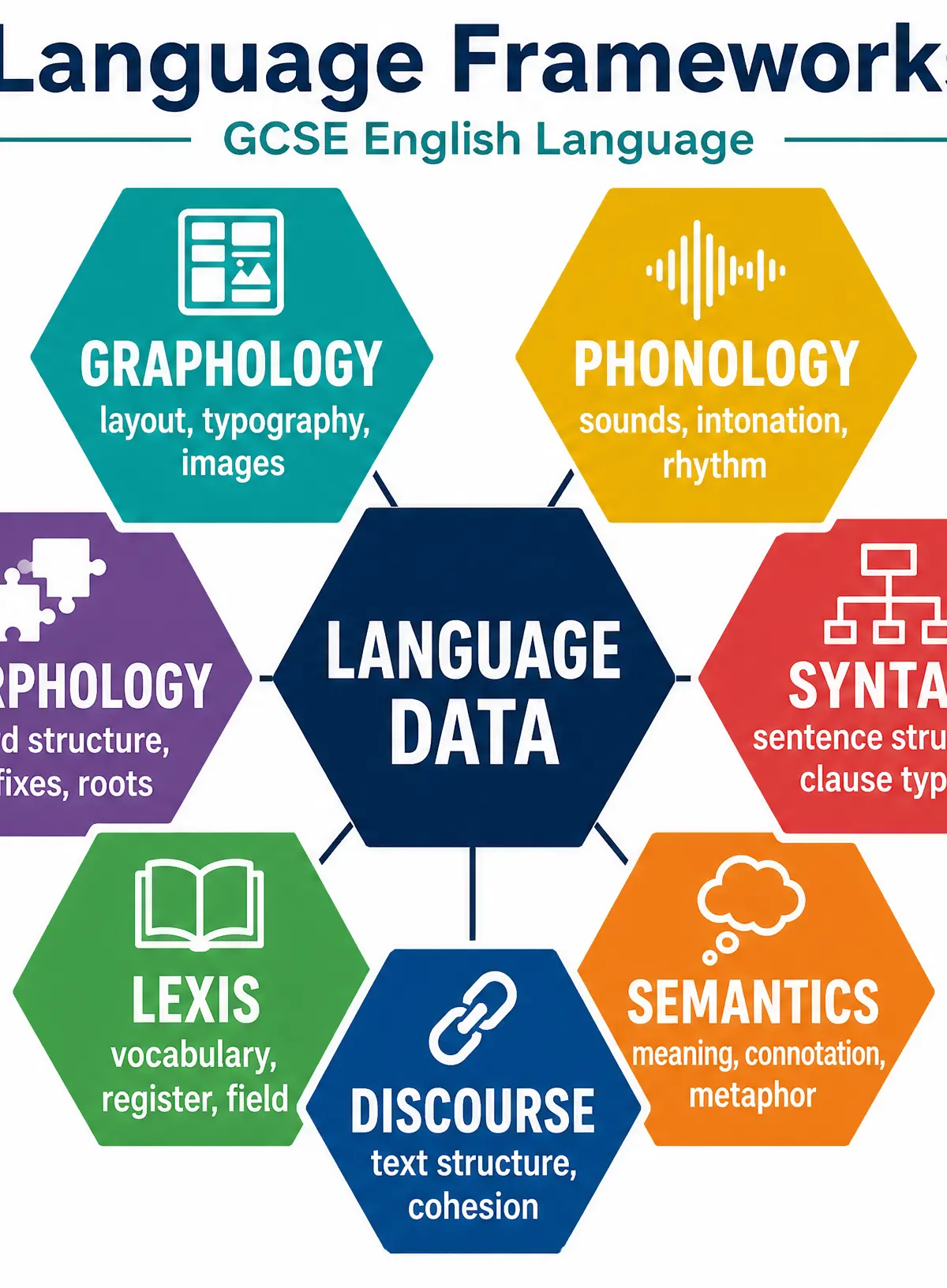
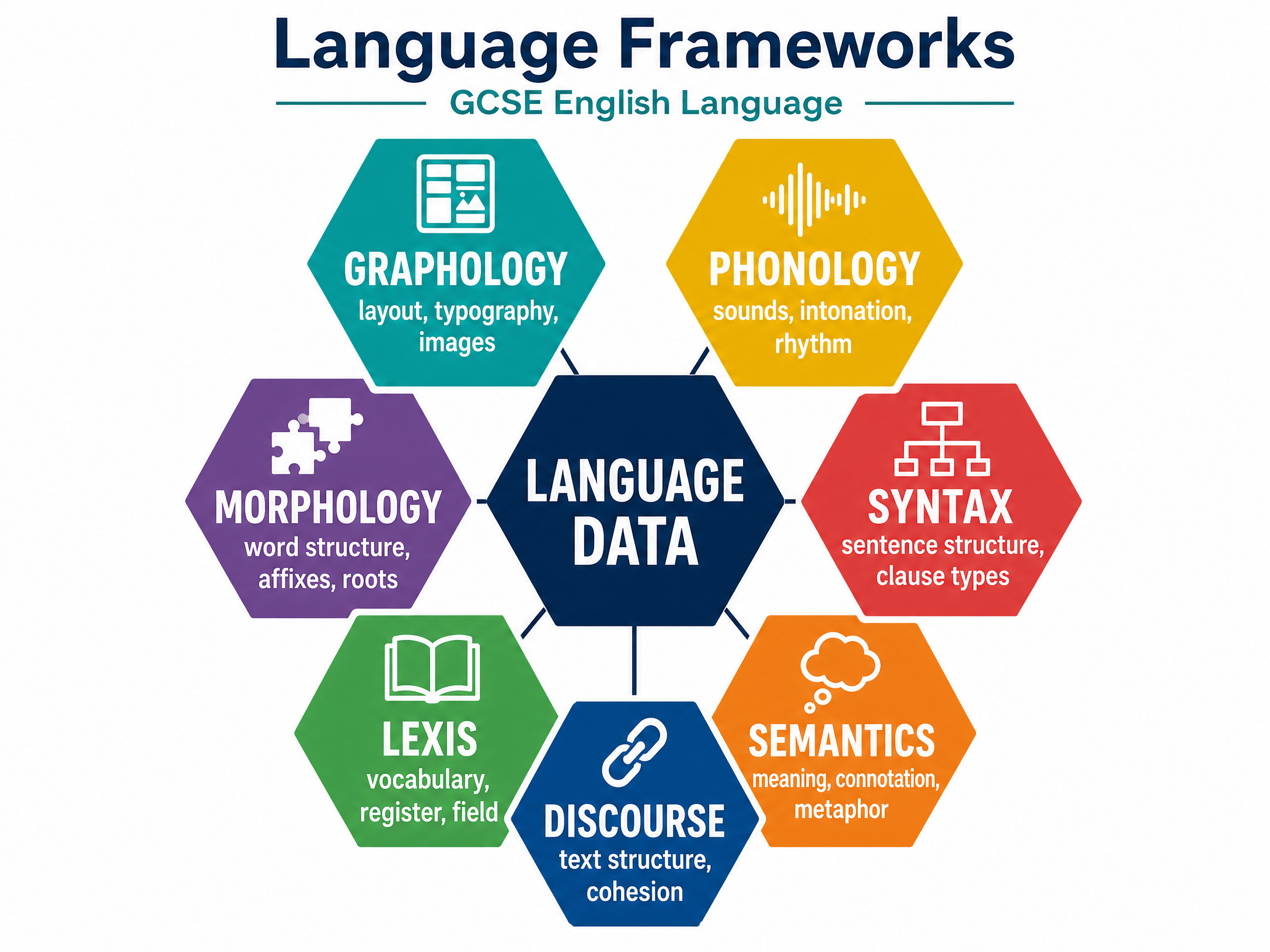
Key Language Frameworks
| Framework | Focus | Key Features to Identify | Effect on Reader/Listener |
|---|---|---|---|
| Graphology | Visual appearance | Layout, typography, images, spacing | Establishes genre, guides reading path, creates initial impression |
| Phonology | Sound system | Phonemes, intonation, rhythm, prosodics | Conveys emotion, emphasis, regional identity (crucial for spoken data) |
| Morphology | Word structure | Affixes, roots, compounding | Shows word formation processes, can indicate formality or creativity |
| Syntax | Sentence structure | Clause types, sentence length, word order | Controls pacing, creates emphasis, reflects complexity of thought |
| Lexis | Vocabulary | Register, semantic fields, formal/informal | Establishes tone, indicates field of expertise, reveals social attitudes |
| Semantics | Meaning | Connotation, metaphor, semantic shift | Adds layers of meaning, creates imagery, influences interpretation |
| Discourse | Text structure | Cohesion, topic shifts, discourse markers | Guides the reader through the text, shows logical progression |
Analysing Structure
Structural analysis at the discourse level involves looking at how the text is organised as a whole. Consider openings and closings, shifts in narrative perspective or focus, paragraph structure, and cohesive devices. How does the structure support the function of the text?
Evaluating Critically
Critical evaluation requires you to form and express opinions about language use, supported by evidence. You must go beyond feature-spotting to explain why choices were made and what effect they have. When discussing language variation over time or attitudes towards language (prescriptivism vs descriptivism), evaluate whose interests are served by certain language ideologies.
Comparing Writers' Viewpoints
When comparing texts (e.g., a 16th-century text and a 21st-century text), use a structured approach. Identify the viewpoints or contexts, compare the language methods used to express them, and evaluate the effectiveness or significance of the differences. Always link your comparison back to the specific focus of the question.
Writing Skills
Analytical Writing
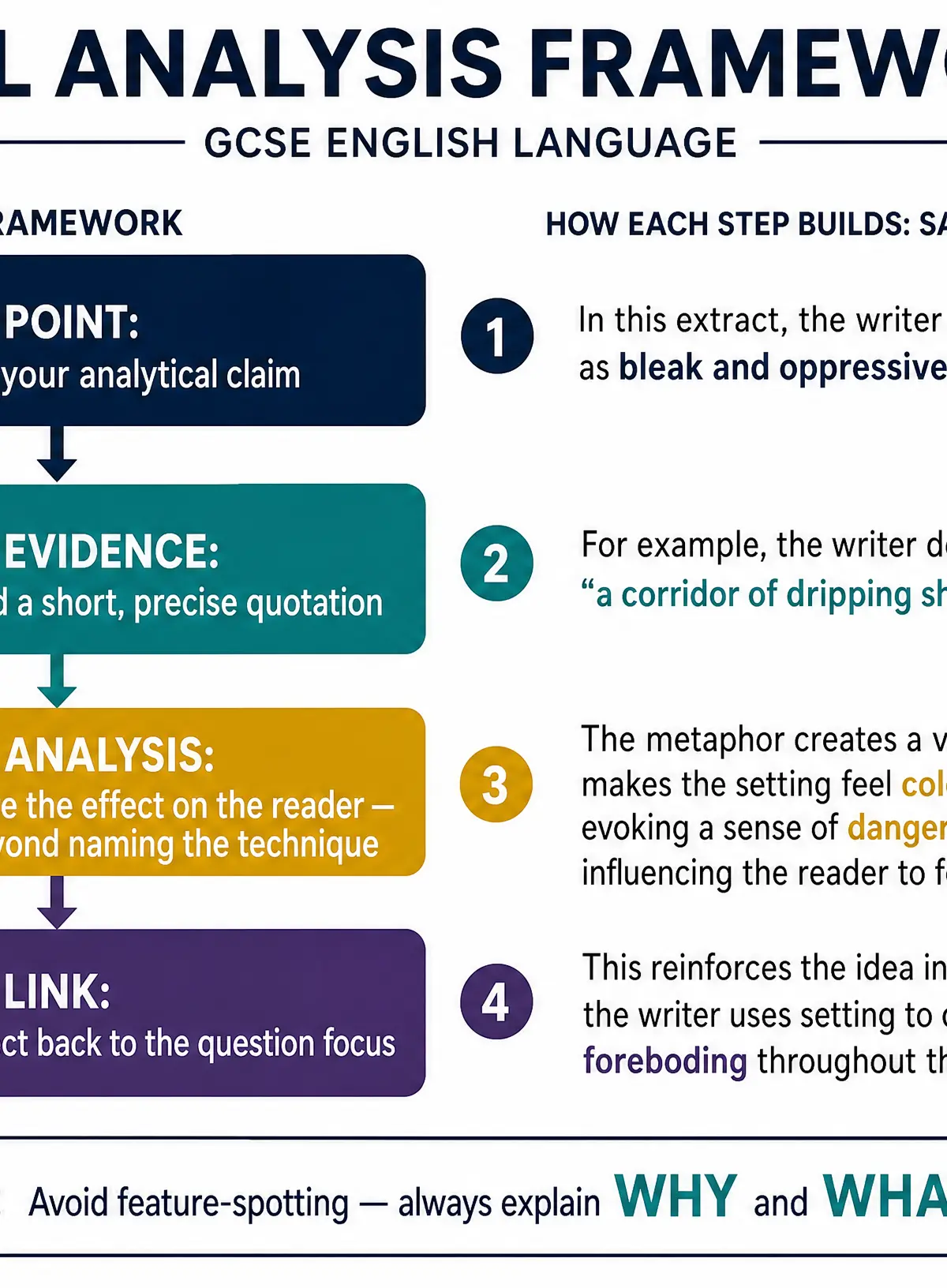
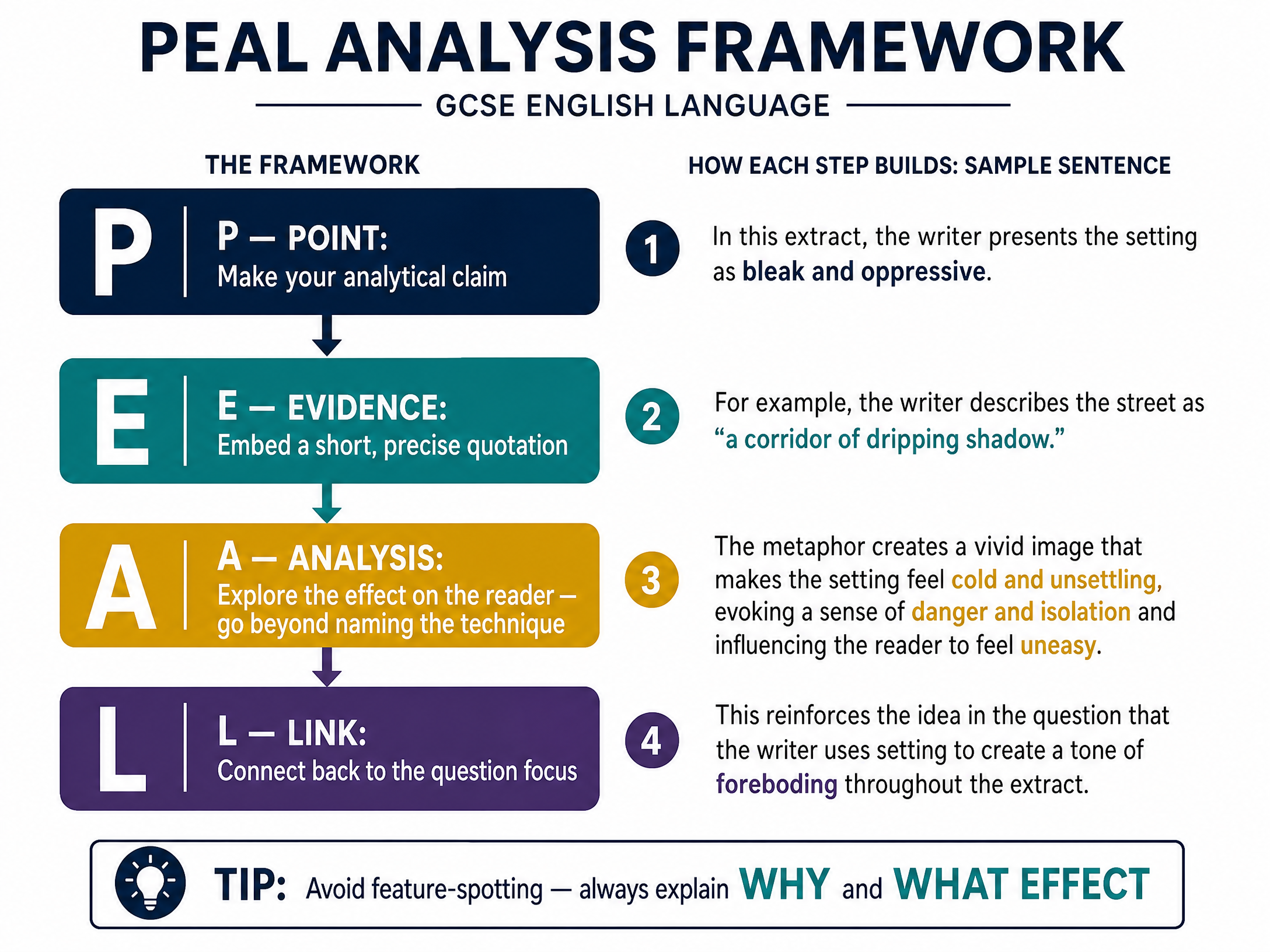
Your analytical responses must be extended, coherent, and precisely argued. Use the PEAL structure (Point, Evidence, Analysis, Link) to ensure depth.
- Point: Make a clear analytical claim related to the question.
- Evidence: Embed short, precise quotations or specific linguistic examples (using correct terminology or phonemic transcription).
- Analysis: Explore the effect in detail. How does this feature relate to mode, field, function, or audience? What does it reveal about language variation or attitudes?
- Link: Connect your analysis back to the broader context or the specific question focus.
Technical Accuracy (SPaG)
Accurate use of linguistic terminology is essential. You must demonstrate a secure grasp of the language frameworks. Ensure your own writing is cohesive, well-structured, and technically accurate, using appropriate discourse markers to guide the examiner through your argument.
Podcast: Component 1 Overview
Listen to our comprehensive 15-minute podcast covering the core concepts, language frameworks, and top exam tips for Component 1.
Interactive Diagrams
2 interactive diagrams to visualise key concepts
Conceptual Flow Outline
Approach to Analysing Language Data
Conceptual Flow Outline
Framework for Comparing Language Over Time
Worked Examples
3 worked examples — open one to explore the question and available guidance.
Practice Questions
Test your understanding — click to reveal model answers
Identify two features of graphology in the provided advertisement.
Hint: Look at the visual layout, fonts, and use of space.
Analyse how the speaker uses phonological features to convey emotion in the transcript.
Hint: Look for transcription symbols indicating pauses, stress, or volume changes.
Compare the syntactic choices made by the writers of Text A (18th century diary) and Text B (modern blog post).
Hint: Look at sentence length, clause structures (simple vs complex), and word order.
Evaluate the attitude towards regional dialects expressed in Text C.
Hint: Identify whether the writer is prescriptivist or descriptivist, find evidence, and assess their reasoning.
With reference to both texts, explore how language has changed over time to reflect shifting social values.
Hint: Look for changes in lexis (new words, archaic words), semantics (shifting meanings), and how audience address has changed.
Test your understanding of Component 1 – Overview
Active recall beats re-reading. Take an instant quiz now to test what you’ve learned and lock it into long-term memory.
7 days Premium · Then free forever · No card, no charge