Pearson Edexcel · A-Level · English Language
Component 3 – Topic area: Language and Journalism
This component assesses your ability to analyse how language varies depending on its context, audience, and purpose. You will need to apply linguistic frameworks to texts ranging from 1550 to the present day, critically evaluating how language shapes identity and reflects societal attitudes.
- 7 min read
- 2 worked examples
- 3 practice questions
- 8 key terms
Study Notes
Overview
Component 3 – Language and Journalism requires you to apply linguistic frameworks to a variety of texts, spanning from Early Modern English (c1550) to contemporary digital communication. The exam assesses your ability to analyse how language choices are influenced by mode, field, function, and audience, and how these choices construct meaning and identity. You must move beyond simple feature-spotting to critically evaluate the effects of language variation over time and across different social groups.
The Podcast
Listen to this 15-minute audio guide covering the core concepts, language frameworks, and crucial exam tips.
1. The Language Frameworks
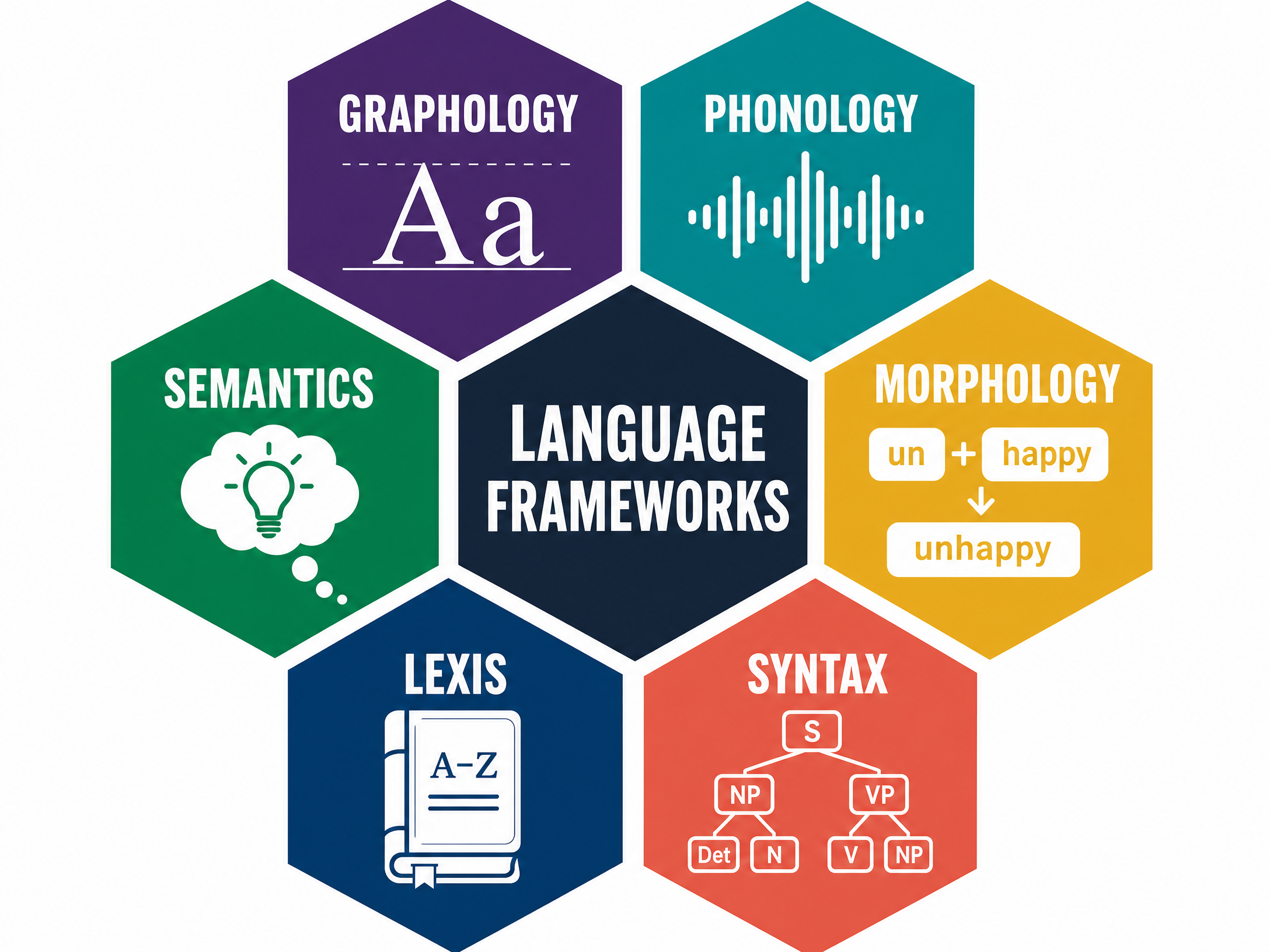
To analyse any text successfully, you must apply the six key language frameworks. These are your analytical tools. Examiners reward candidates who can synthesise these frameworks, showing how they work together to create meaning.
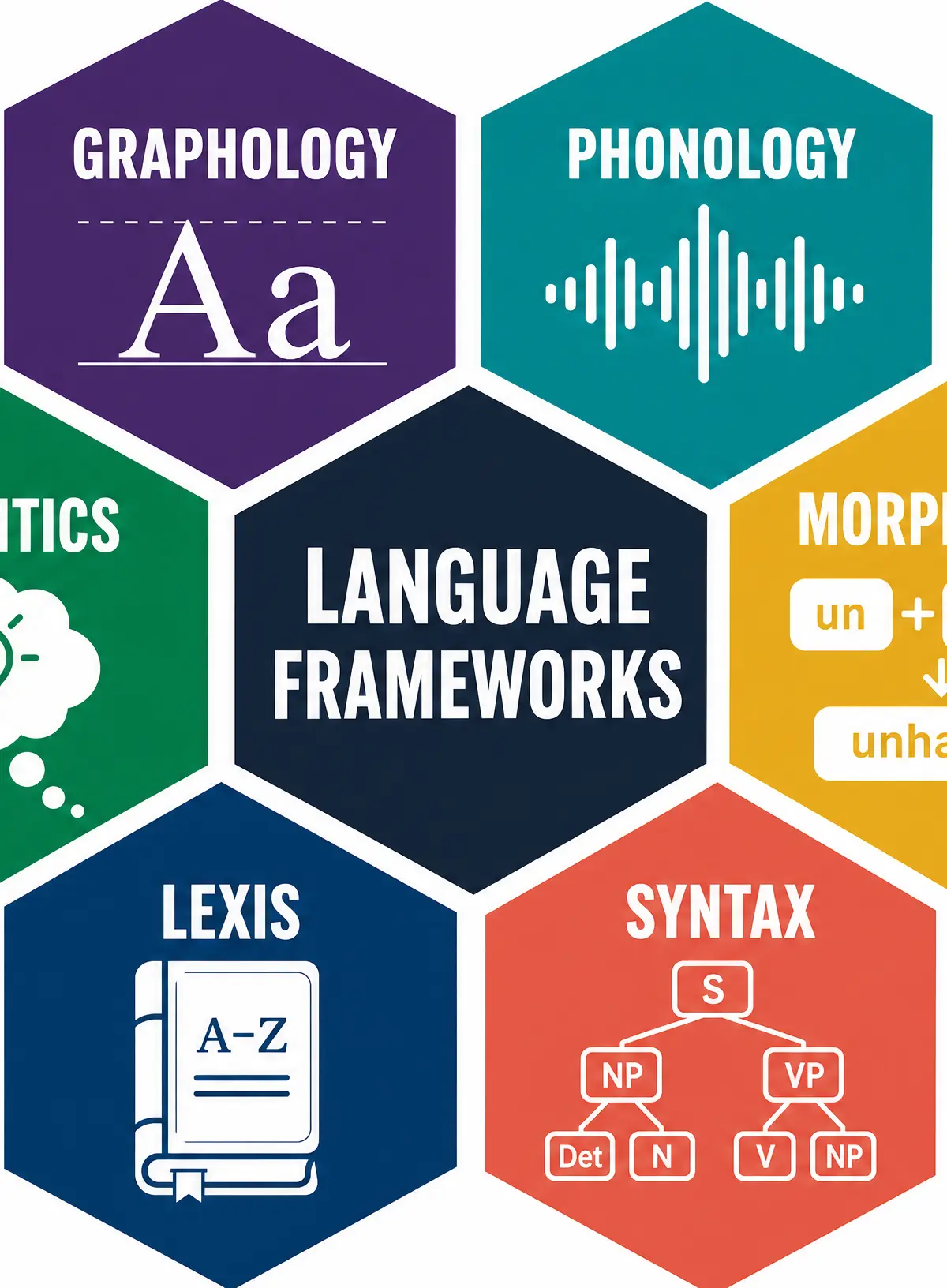
Graphology
Graphology refers to the visual appearance of language. In journalism, this is crucial for establishing the genre and target audience before a single word is read.
- Features to identify: Layout, typography (fonts), use of images, columns, headlines, white space, multimodal elements.
- Effect on reader: Guides the reader's eye, establishes formality (e.g., broadsheet vs tabloid), and creates immediate visual impact.
Phonology
Phonology is the sound system of language. Even in written texts, phonological features are deliberately chosen for effect.
- Features to identify: Alliteration, assonance, sibilance, rhyme, rhythm, phonetic spelling (to represent dialect/accent).
- Effect on reader: Creates memorable phrasing (crucial in headlines), establishes tone, or signals regional identity.
Semantics
Semantics deals with meaning, including how meaning shifts over time or depends on context.
- Features to identify: Semantic fields (groups of related words), connotations, metaphors, similes, semantic change (broadening, narrowing, amelioration, pejoration).
- Effect on reader: Evokes specific associations, frames a topic positively or negatively, and reflects historical attitudes.
Lexis
Lexis refers to the specific vocabulary choices made by a writer or speaker.
- Features to identify: Formal/informal register, colloquialisms, jargon, slang, Latinate vs Anglo-Saxon vocabulary, neologisms (new words).
- Effect on reader: Establishes the level of expertise required, signals social group membership, and sets the text's tone.
Morphology
Morphology is the study of word structure and how words are formed.
- Features to identify: Root words, prefixes, suffixes, compound words, blends (e.g., 'brunch'), acronyms, initialisms.
- Effect on reader: Demonstrates how language adapts to new concepts (especially in technology and journalism) and creates concise communication.
Syntax
Syntax is the arrangement of words to create sentences.
- Features to identify: Sentence types (simple, compound, complex, minor), sentence functions (declarative, interrogative, imperative, exclamatory), active vs passive voice.
- Effect on reader: Controls pacing, emphasizes key information, and can obscure or highlight agency (e.g., using passive voice to hide who is responsible for an action).
2. Language Variation and Context
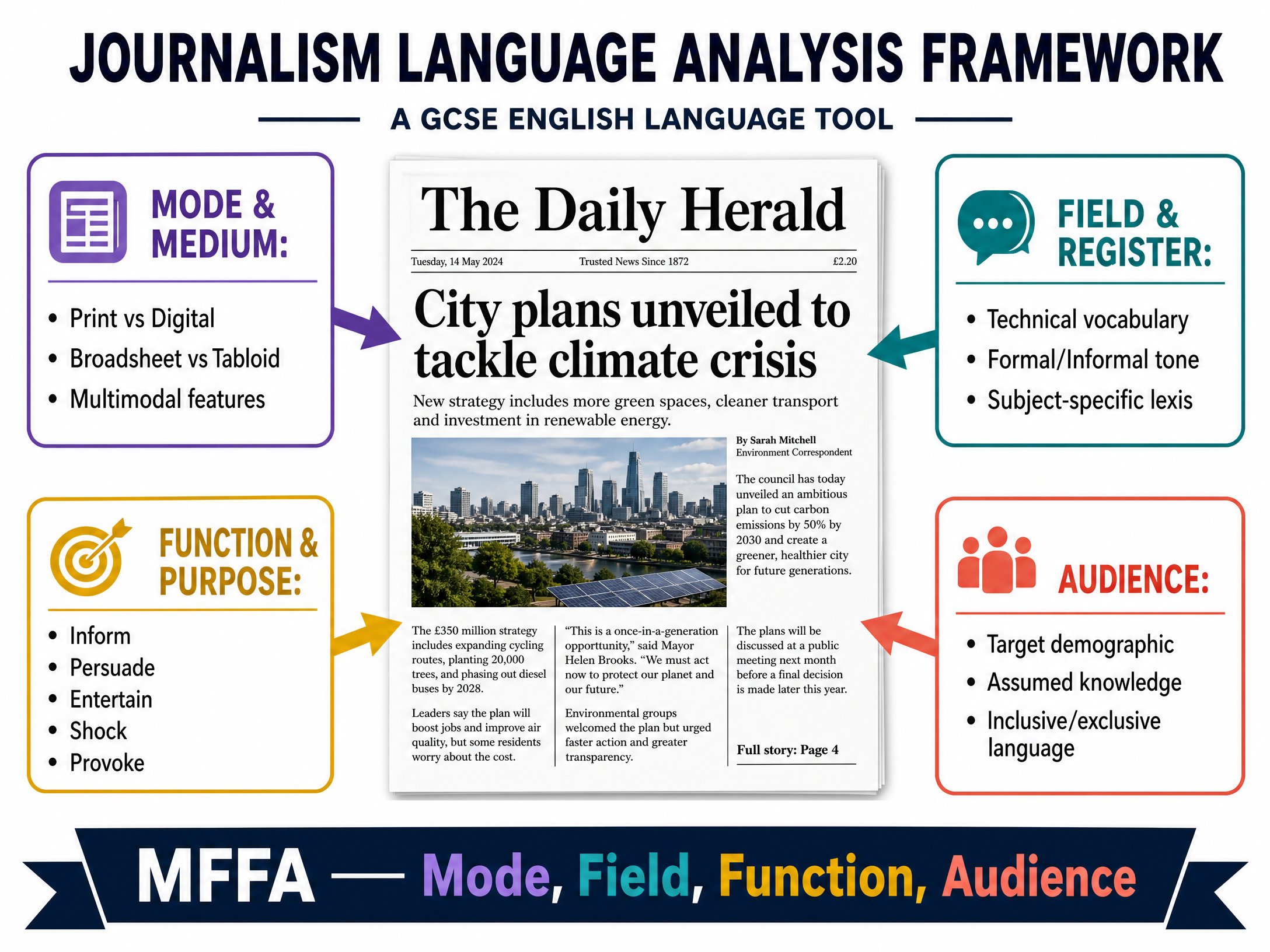
When analysing journalistic texts, you must always consider the context of production and reception. The acronym MFFA is essential here.
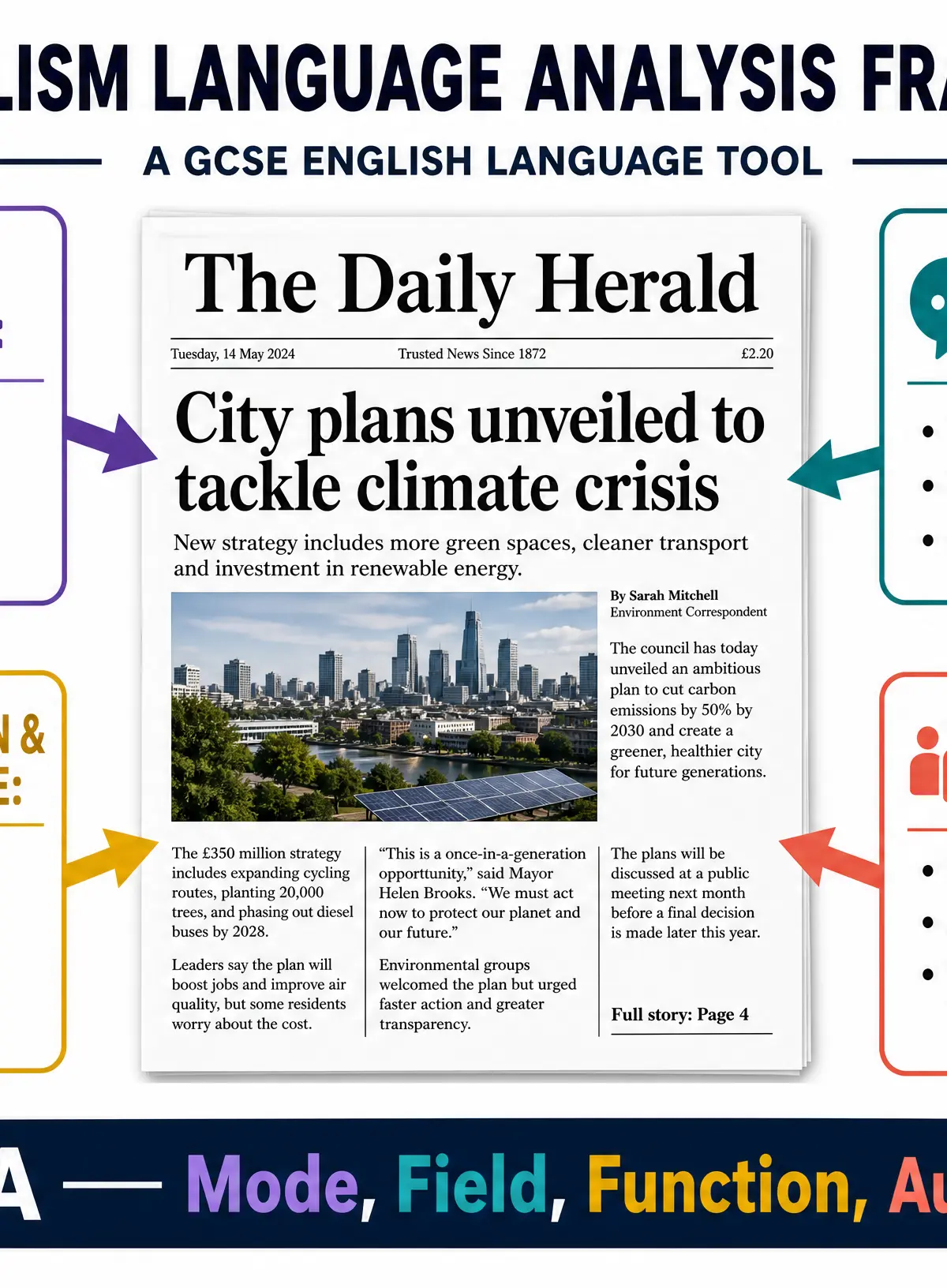
Mode, Field, Function, Audience (MFFA)
- Mode: Is the text written, spoken, or multimodal? How does a digital news article differ from a printed broadsheet?
- Field: What is the subject matter? Does it use specialist jargon or accessible everyday language?
- Function: Is the primary purpose to inform, persuade, entertain, or provoke? How do the language choices support this function?
- Audience: Who is the target demographic? How does the writer use inclusive pronouns ('we', 'us') or assumed knowledge to build a relationship with the reader?
Language and Identity
Language is a primary marker of identity. The exam will ask you to evaluate how language constructs social and regional identities.
- Sociolect: Language associated with a specific social group (e.g., teenagers, gamers, lawyers). It signals group membership and exclusion of outsiders.
- Dialect: Regional variations in vocabulary and grammar (not just accent).
- Idiolect: An individual's unique, personal language variety.
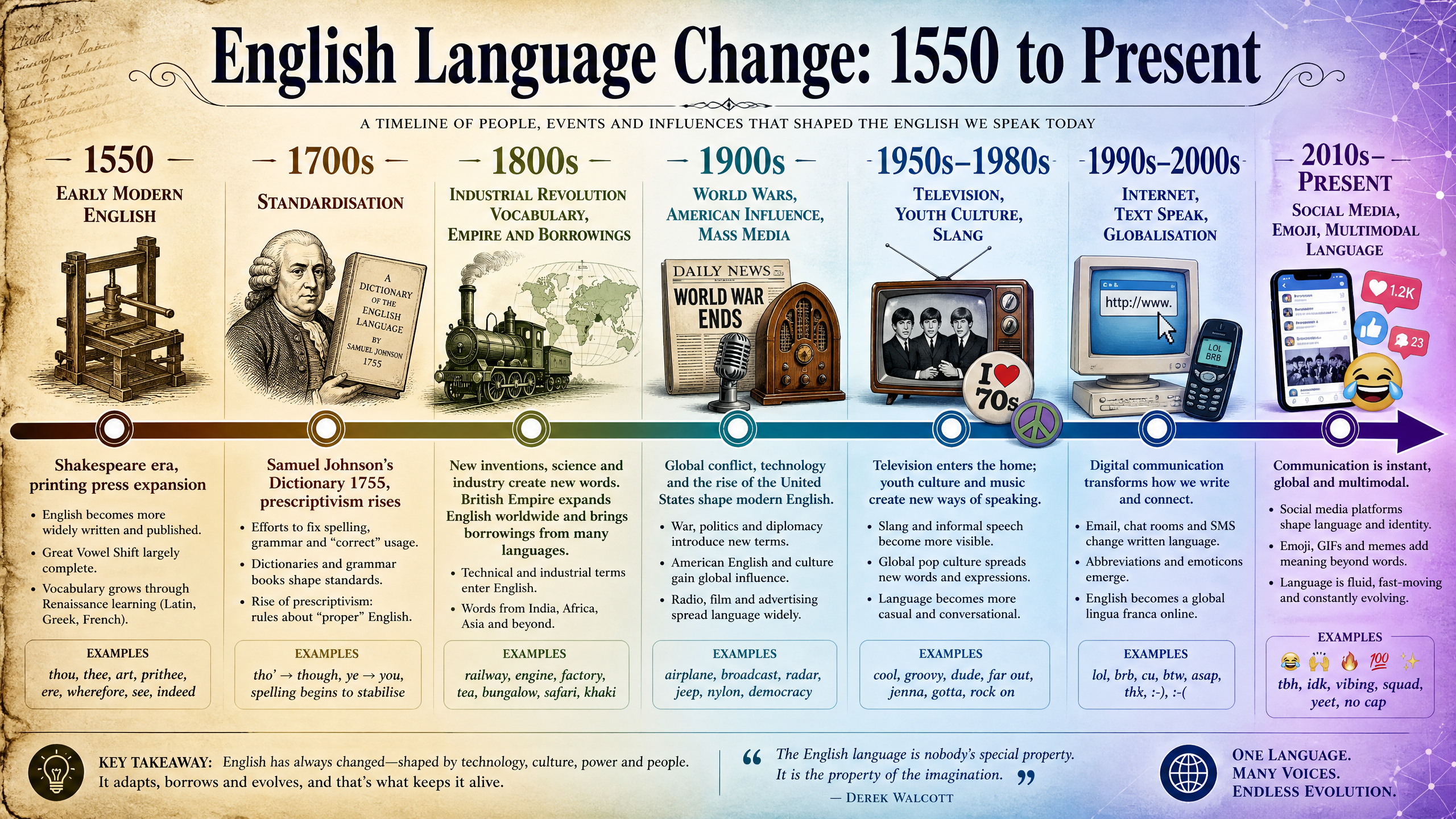
3. Language Change Over Time (1550 - Present)
English is not static; it is constantly evolving. You must be able to analyse texts from different historical periods and evaluate the forces driving language change.
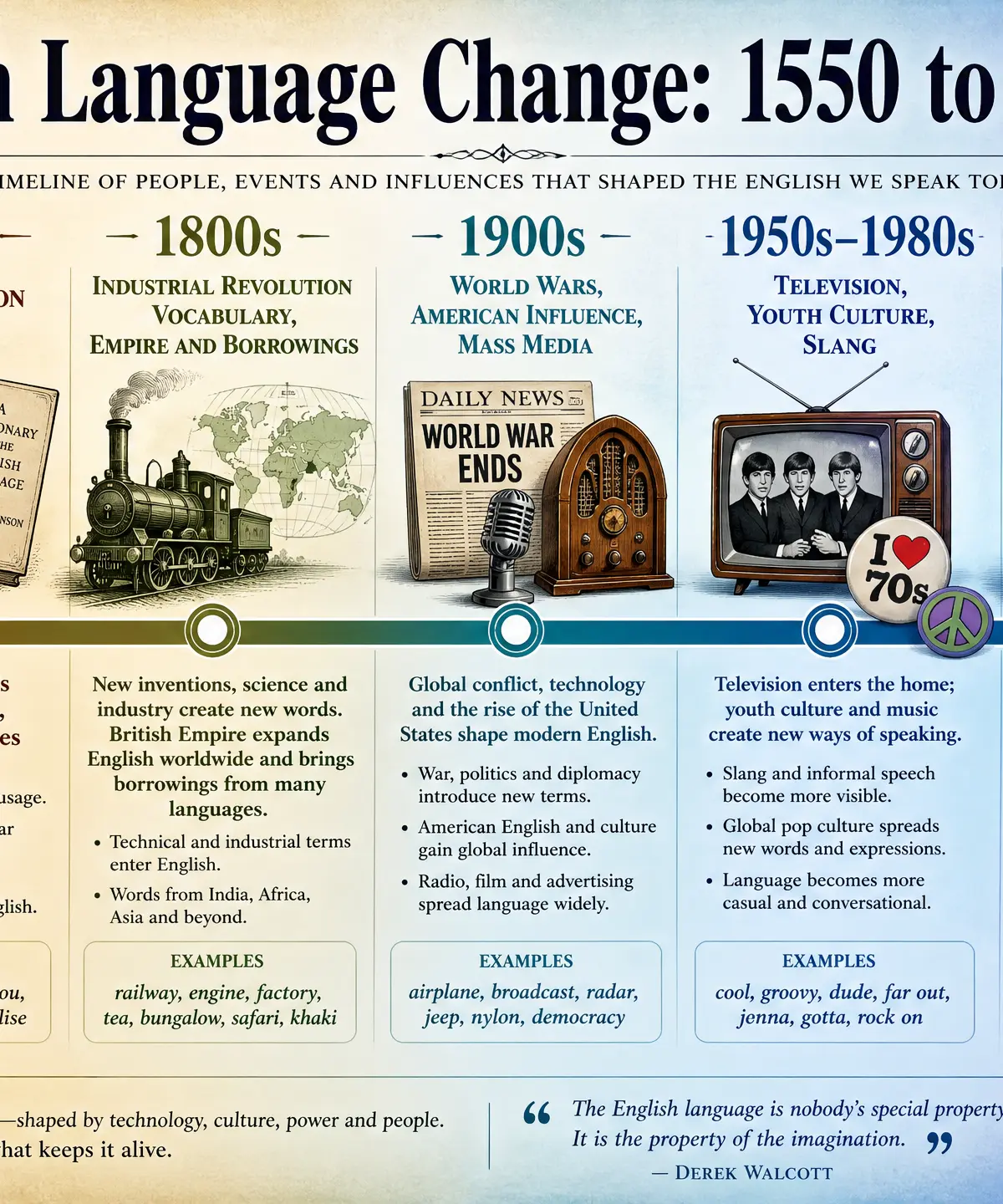
Key Historical Drivers
- Technology: From the printing press (which began standardising spelling) to the internet and social media (which have accelerated morphological and semantic change).
- Society and Culture: The Industrial Revolution brought new technical lexis; the World Wars introduced military slang; youth culture in the mid-20th century drove colloquial innovation.
- Globalisation: The British Empire and later American cultural dominance (via cinema and television) introduced countless loan words and structural influences.
Attitudes to Language Change
Examiners look for candidates who can critically evaluate differing attitudes to language:
- Prescriptivism: The belief that there is a 'correct' form of standard English that must be protected from 'decay' or 'corruption'. Prescriptivists often view language change negatively.
- Descriptivism: The linguistic approach that observes and describes how language is actually used, without making judgements about 'correctness'. Descriptivists view language change as natural and inevitable.
4. Structuring Your Analysis
When answering an analysis question, use a structured approach to ensure you cover all assessment objectives.
- Identify the Feature: Name the specific linguistic technique using accurate terminology (e.g., "The writer uses a minor sentence...").
- Provide Evidence: Quote briefly and embed the quotation within your sentence.
- Analyse the Effect: Explain how the feature works. What connotations does it carry? How does it position the reader?
- Link to Context: Connect the language choice to the mode, field, function, audience, or historical period.
Example of a strong analytical paragraph:
"In the tabloid headline, the writer employs the phonological feature of alliteration ('Bungling Bureaucrats Botch Budget') alongside a minor sentence structure. The repetition of the plosive 'b' sound creates an aggressive, mocking tone, which fulfills the text's function to provoke outrage. Furthermore, the lexical choice 'bungling' carries strong negative semantics of incompetence, aligning with the tabloid's populist stance and appealing to a working-class audience's distrust of authority."
Visual Resources
3 diagrams and illustrations
Interactive Diagrams
2 interactive diagrams to visualise key concepts
Conceptual Flow Outline
Exam Approach Flowchart for Component 3
Conceptual Flow Outline
Types of Language Change
Worked Examples
2 worked examples — open one to explore the question and available guidance.
Practice Questions
Test your understanding — click to reveal model answers
Identify two graphological features in a typical tabloid newspaper front page.
Hint: Think about what you see before you start reading the text.
Explain how the semantic meaning of the word 'sick' has changed over time.
Hint: Consider its traditional meaning versus its modern slang usage.
Evaluate the view that text messaging and social media are 'destroying' the English language.
Hint: Contrast prescriptive and descriptive attitudes, using specific linguistic examples (e.g., morphology, graphology).
Test your understanding of Component 3 – Topic area: Language and Journalism
Active recall beats re-reading. Take an instant quiz now to test what you’ve learned and lock it into long-term memory.
7 days Premium · Then free forever · No card, no charge