Eduqas · GCSE · English Language
Course version: C700QS · Version from Mar 2026
Spoken Language (Non-exam assessment): As part of, or following, the…
Full specification wording
Component 3: Spoken Language (Non-exam assessment): As part of, or following, the presentation, candidates must listen to and respond appropriately to questions and feedback.
This guidance covers the question-and-response stage of the Spoken Language assessment.
Checked against the Eduqas C700QS specification (opens in a new tab) on .
- Point 7 of 8
- 4 key terms
Study notes
From the checked teaching notes for this specification point.
The idea
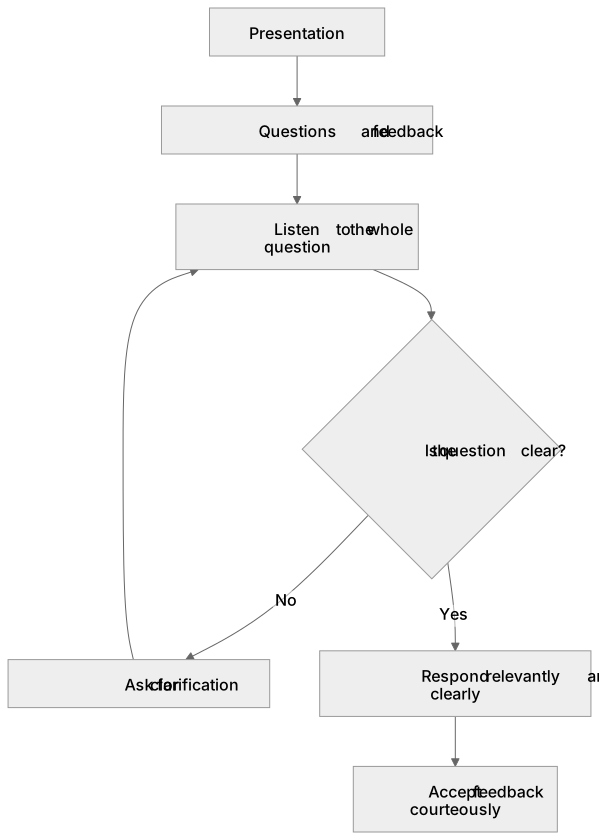
This guidance covers the question-and-response stage of the Spoken Language assessment. It states that, either during your presentation or after it, you must listen to questions and feedback and respond appropriately. Two things are required: listening and responding. Listening means attending carefully to what is asked rather than planning your next sentence. Responding appropriately means giving a relevant, clear answer that addresses the question, and accepting feedback courteously. This may happen as part of the presentation, for example when an audience member interjects, or following it in a question-and-answer exchange. Prepare by anticipating likely questions about your topic and thinking how you would answer them, but do not memorise scripted replies. If a question is unclear, it is appropriate to ask for clarification before answering.
Common mistakes and how to put them right
Treating the presentation as the whole task.
Put it right: You must also listen to and respond to questions and feedback, whether during or after it.
Ignoring or deflecting a question.
Put it right: Respond relevantly to what is asked rather than talking past it.
Rejecting feedback defensively: accept feedback courteously and respond appropriately.
Scripting answers word for word.
Put it right: Anticipate likely questions but answer genuinely rather than reciting.
Exam tips
- Anticipate likely questions about your topic and prepare how you would answer them, without scripting.
- Listen to the whole question before answering, and ask for clarification if it is unclear.
- Respond relevantly and courteously to feedback, showing you have taken it on board.
Try the lesson
The start of the Component 3: Spoken Language (Non-exam assessment): As part of, or following, the presentation, candidates must listen to and respond appropriately to questions and feedback. lesson, made from checked teaching notes for this specification point.
Have a go first
During the Spoken Language assessment, how must a candidate handle questions and feedback from the audience?
Listen
This guidance covers the question-and-response stage of the Spoken Language assessment. It states that, either during your presentation or after it, you must listen to questions and feedback and respond appropriately. Two things are required: listening and responding. Listening means attending carefully to what is asked rather than planning your next sentence. Responding appropriately means giving a relevant, clear answer that addresses the question, and accepting feedback courteously. This may happen as part of the presentation, for example when an audience member interjects, or following it in a question-and-answer exchange. Prepare by anticipating likely questions about your topic and thinking how you would answer them, but do not memorise scripted replies. If a question is unclear, it is appropriate to ask for clarification before answering. Exam tip: Anticipate likely questions about your topic and prepare how you would answer them, without scripting.
See it
Key words
Say what each word means before you turn the card.
Active listening
Try answering aloud or in your head before turning the card.
Appropriate spoken responses
Try answering aloud or in your head before turning the card.
Engaging with questions
Try answering aloud or in your head before turning the card.
Responding to feedback
Try answering aloud or in your head before turning the card.
See every definition
- Active listening
- Attending carefully to what is asked rather than planning your next sentence.
- Appropriate spoken responses
- Giving a relevant, clear answer that addresses the question, and accepting feedback courteously.
- Engaging with questions
- Listening to the whole question before answering, and asking for clarification if it is unclear.
- Responding to feedback
- Accepting feedback courteously and responding appropriately, showing you have taken it on board.
There is more to this lesson
The full lesson goes on to check your understanding and help you earn the marks. Create a free account to carry on, with your progress saved.
A week of Premium from your first lesson · Then the free plan continues · No card, no charge
Test your understanding of Component 3: Spoken Language (Non-exam assessment): As part of, or following, the presentation, candidates must listen to and respond appropriately to questions and feedback.
Active recall beats re-reading. Take an instant quiz now to test what you’ve learned and lock it into long-term memory.
A week of Premium from your first lesson · Then the free plan continues · No card, no charge