OCR · GCSE · English Language
Spoken language (03 or 04)
The Spoken Language endorsement (Component 03/04) is a compulsory non-exam assessment that tests your ability to plan and deliver a formal presentation, use Spoken Standard English, and respond to questions effectively.
- 6 min read
- 3 worked examples
- 5 practice questions
- 8 key terms
Study Notes

Overview
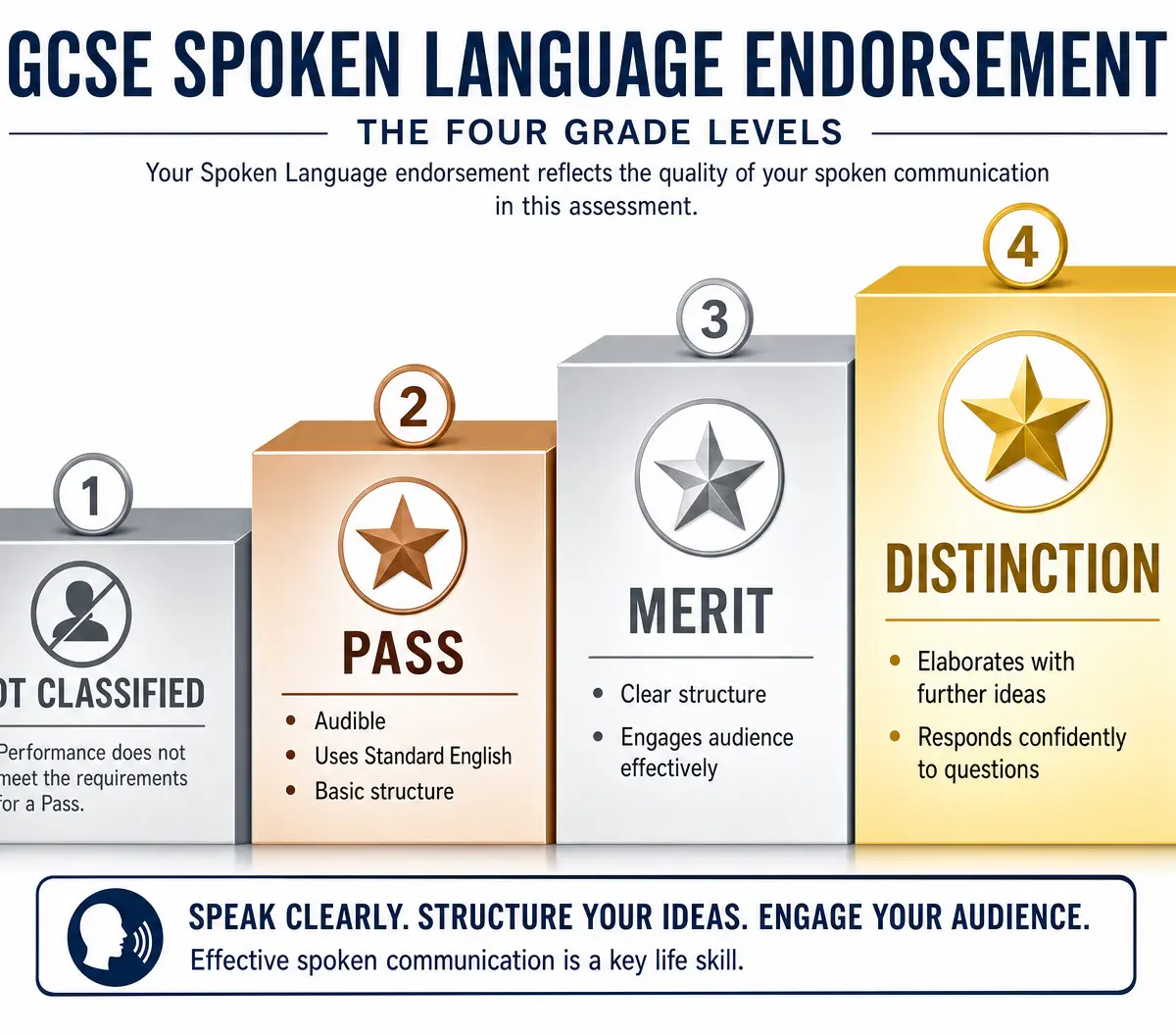
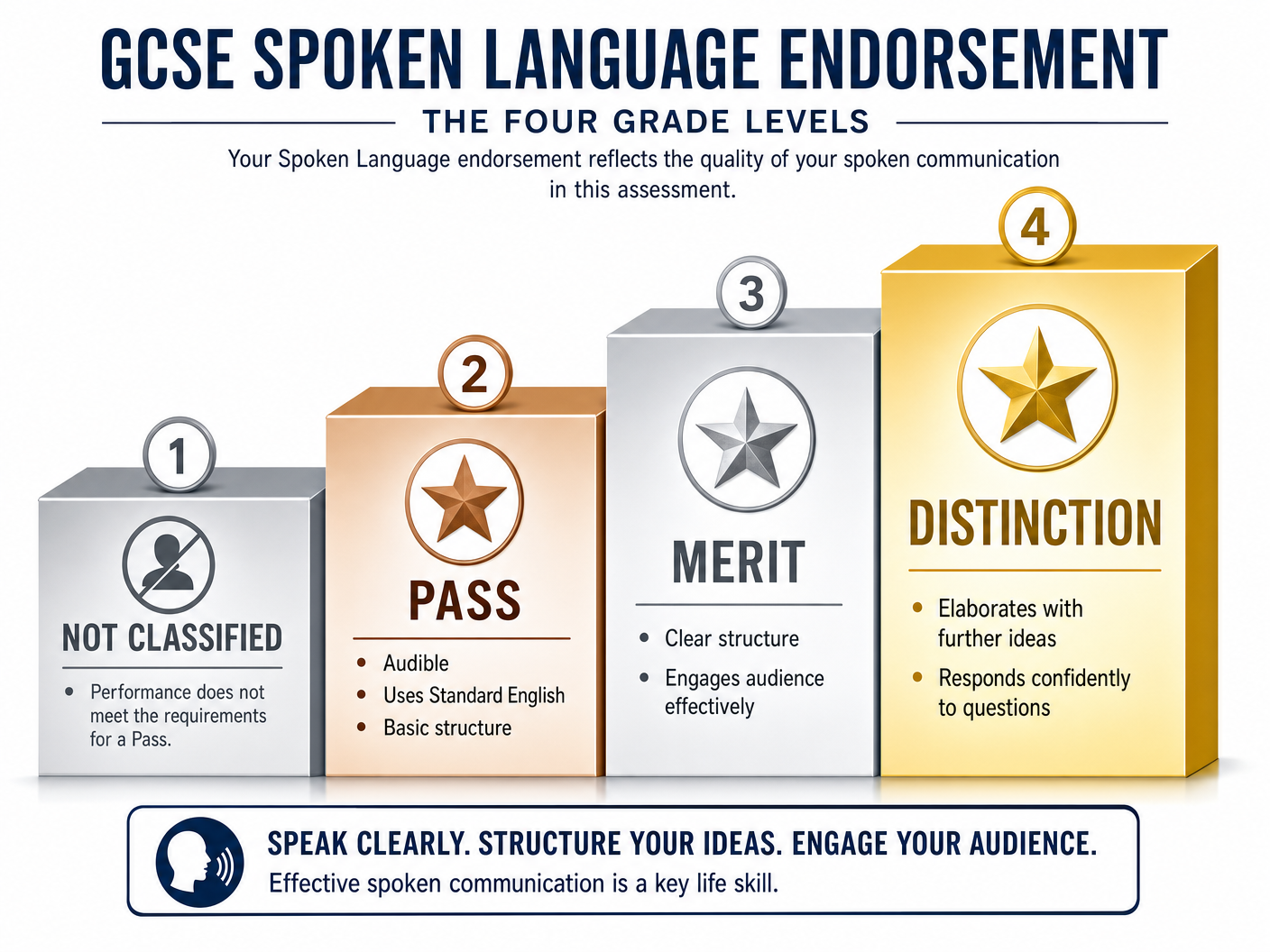
The Spoken Language endorsement is a unique and essential component of your GCSE English Language qualification. Unlike the written papers, this is a non-exam assessment, meaning it is assessed internally by your teacher and monitored externally. While it does not contribute to your final 1-9 GCSE grade, it is awarded a separate grade of Distinction, Merit, Pass, or Not Classified, which appears on your final certificate. This component tests your ability to communicate formally, structure an argument, and engage with an audience in real-time.
Core Requirements
To succeed in this assessment, you must complete two main tasks. First, you must deliver a formal spoken presentation on a topic of your choice. Second, you must listen to and respond to questions and feedback from your audience. Both parts are equally important, and your performance across the entire assessment determines your final grade.

Key Assessment Criteria
Examiners look for specific skills when awarding grades. Understanding these criteria is the first step toward achieving a Distinction.
1. Audibility and Clarity
You must speak clearly and loudly enough for the entire room to hear you. Nerves often cause candidates to speak too quickly or too quietly. Practise projecting your voice and pacing your delivery to ensure every word lands effectively.
2. Spoken Standard English
This is a critical requirement for all passing grades. Spoken Standard English means using formal grammar and vocabulary. It does not mean changing your regional accent. You must avoid slang, double negatives (e.g., 'I don't know nothing'), and informal contractions (e.g., 'gonna', 'wanna').
3. Expression of Ideas
Your presentation must move beyond simple facts. You need to express complex ideas, information, and feelings. Explain your points thoroughly and demonstrate genuine engagement with your chosen topic.
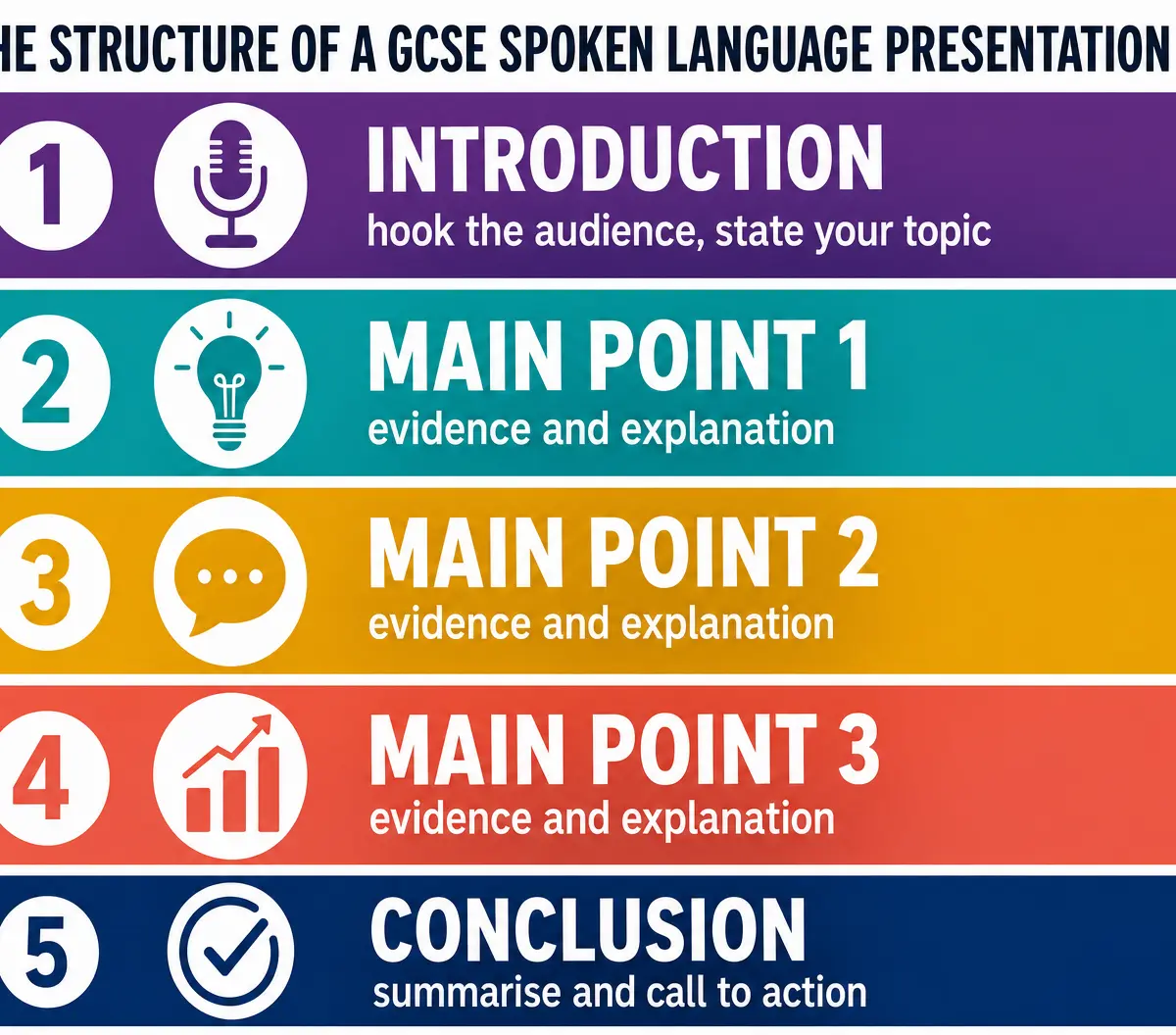
4. Organisation and Structure
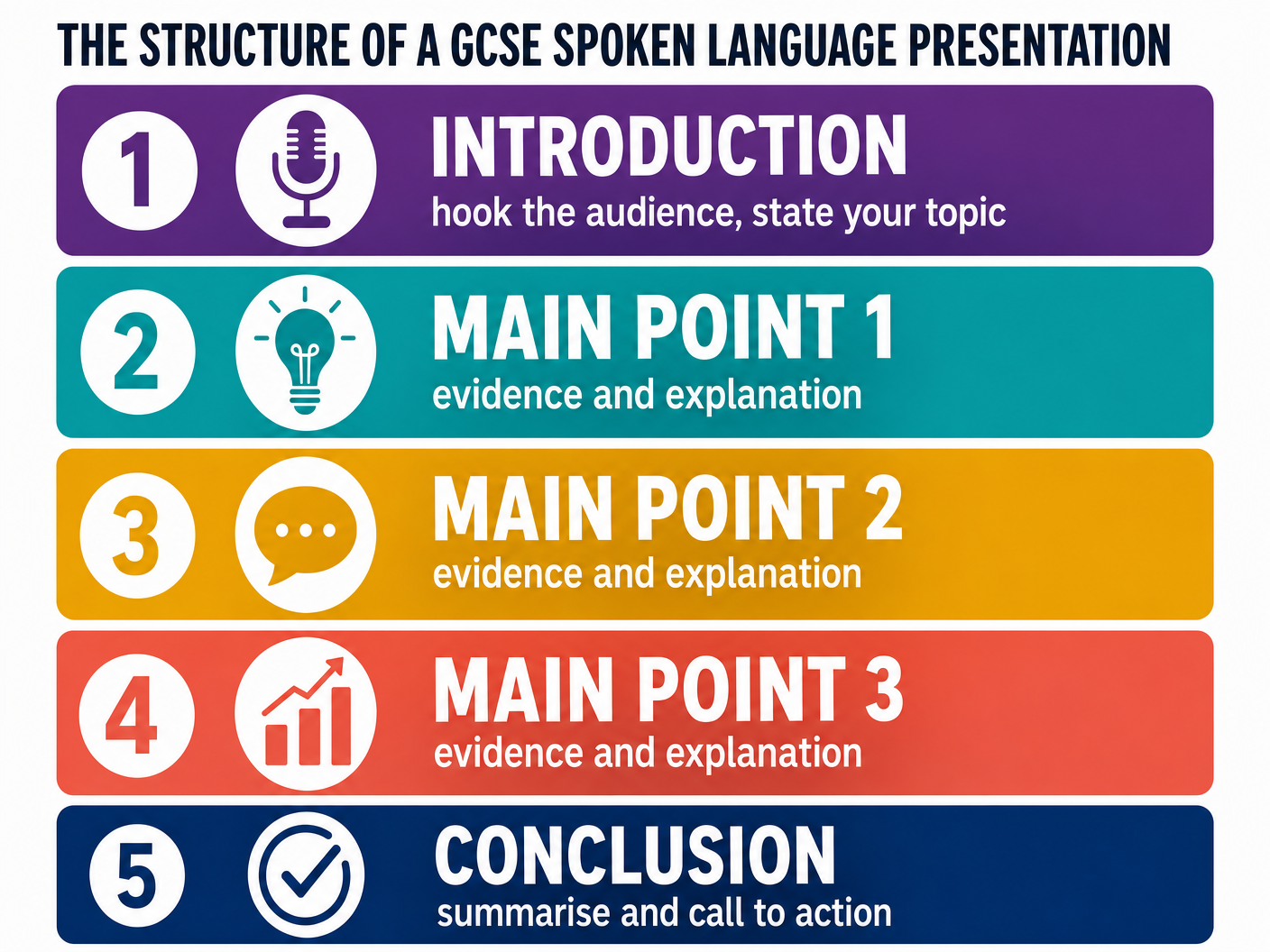
A successful presentation has a clear, logical structure. It should begin with an engaging introduction, develop through clearly signposted main points, and conclude with a strong summary or call to action.
5. Audience Engagement
You must tailor your language, tone, and examples to suit your specific audience. Maintain eye contact, use appropriate body language, and ensure your content is neither too simplistic nor overly complex for the listeners.
6. Responding to Questions
The Q&A session is where many candidates secure—or lose—their Distinction. You must listen carefully to questions and provide thoughtful, developed answers rather than brief 'yes' or 'no' responses.
7. Elaboration (Distinction Criteria)
To achieve a Distinction, you must elaborate with further ideas and information during the Q&A. This means going beyond the initial question to introduce new evidence, offer a counter-argument, or connect the question to a broader theme.
The PACED Preparation Framework
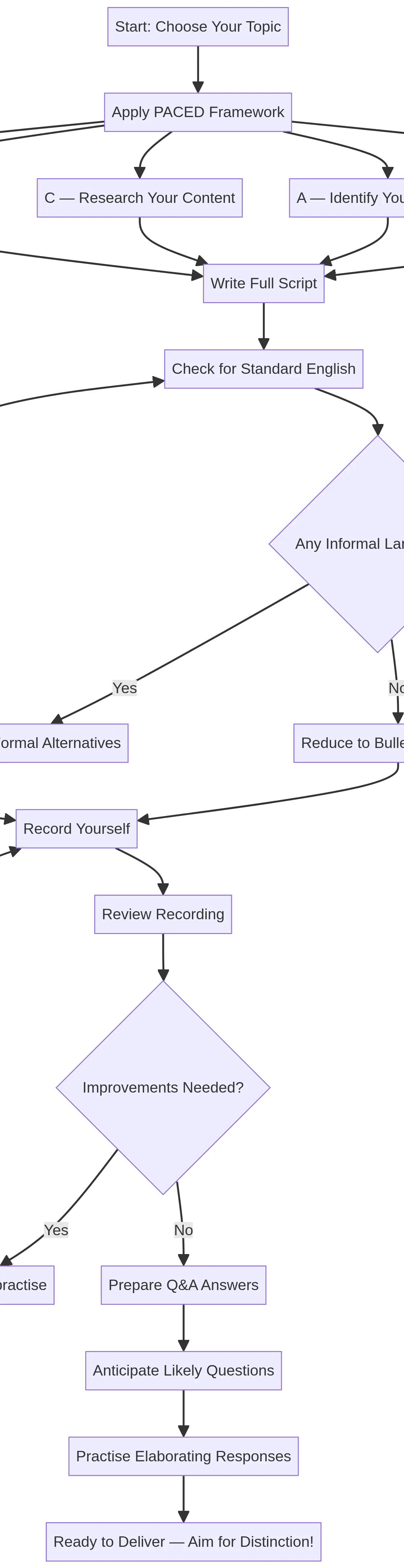
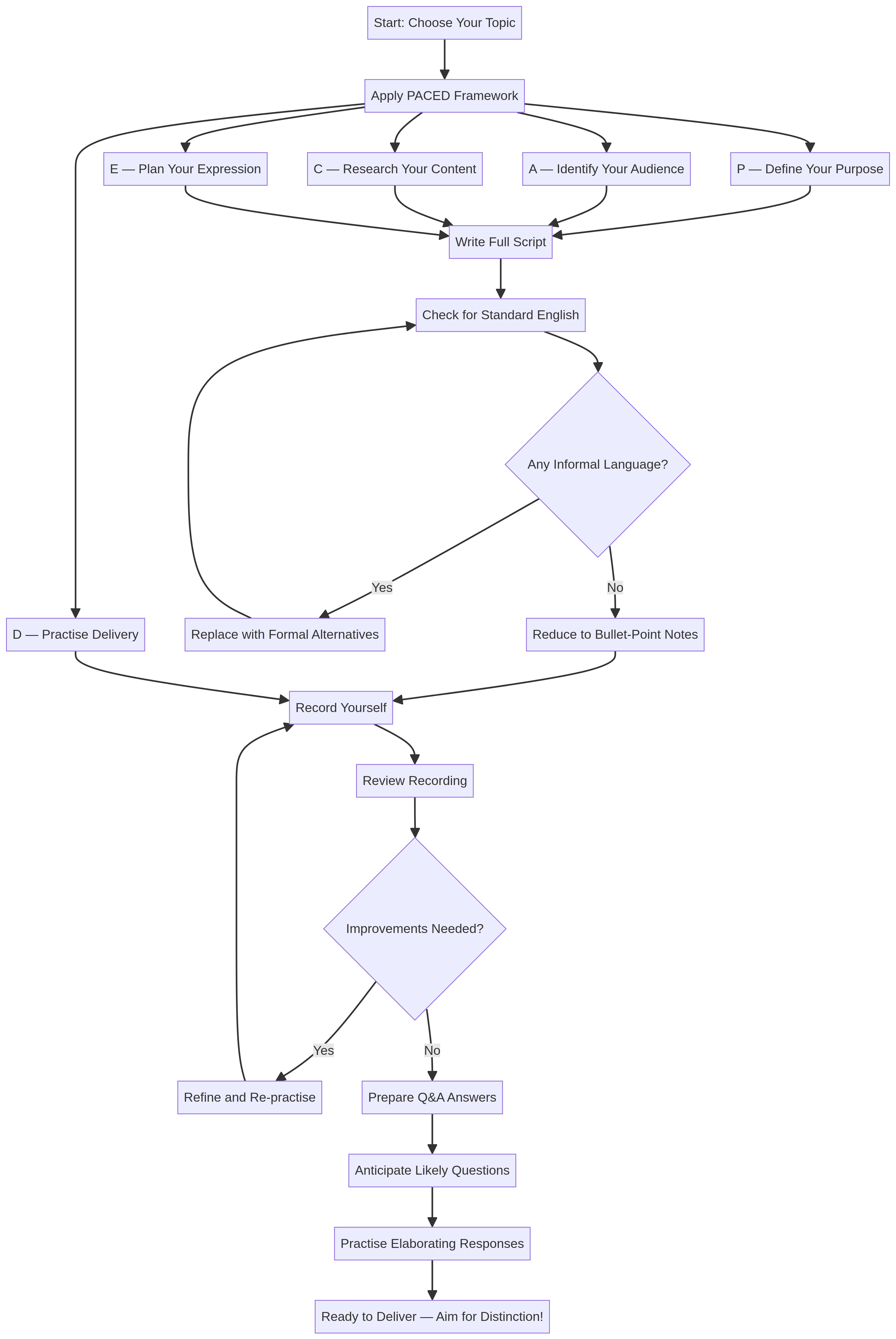
To ensure your presentation meets all these criteria, use the PACED framework during your preparation phase.
Purpose
Define your goal. Are you informing, persuading, arguing, or exploring? Your purpose should guide every decision you make about your content and delivery.
Audience
Identify who will be listening. What do they already know? What will surprise or engage them? Tailor your vocabulary and examples accordingly.
Content
Research thoroughly. Gather statistics, expert quotes, and real-world examples to support your main points. Ensure your arguments are robust and well-evidenced.
Expression
Plan how you will deliver your content. Consider your tone, pace, and use of rhetorical devices like questions or repetition to maintain interest.
Delivery
Practise out loud. Do not simply read your script in your head. Record yourself, review the footage, and refine your performance until it feels natural and confident.
The Q&A Session: Strategies for Success
Many candidates prepare extensively for the presentation but neglect the Q&A. This is a significant error, as the Q&A is where you demonstrate your ability to think on your feet and elaborate on your ideas.
Anticipate Questions
After writing your presentation, review each main point and ask yourself what questions it might prompt. Prepare detailed answers for these anticipated questions.
Use the 'Develop' Technique
When asked a question, answer it directly, then use a phrase like, 'To develop that point further...' or 'That connects to another interesting aspect...' to introduce new information. This demonstrates the elaboration required for a Distinction.
Handle Difficult Questions Gracefully
If you are asked a question you do not know the answer to, do not panic. You can say, 'That's an interesting perspective I hadn't considered, but it makes me think about...' and pivot to a related point you are confident discussing.
Final Checklist
Before your assessment, ensure you have:
- Chosen a topic you are genuinely passionate about.
- Structured your presentation with a clear beginning, middle, and end.
- Checked your script for informal language and replaced it with Spoken Standard English.
- Practised delivering your presentation out loud from brief notes, not a full script.
- Prepared for the Q&A by anticipating questions and practising elaborated responses.
Visual Resources
4 diagrams and illustrations

Interactive Diagrams
2 interactive diagrams to visualise key concepts
Conceptual Flow Outline
The PACED Presentation Preparation Flowchart
Conceptual Flow Outline
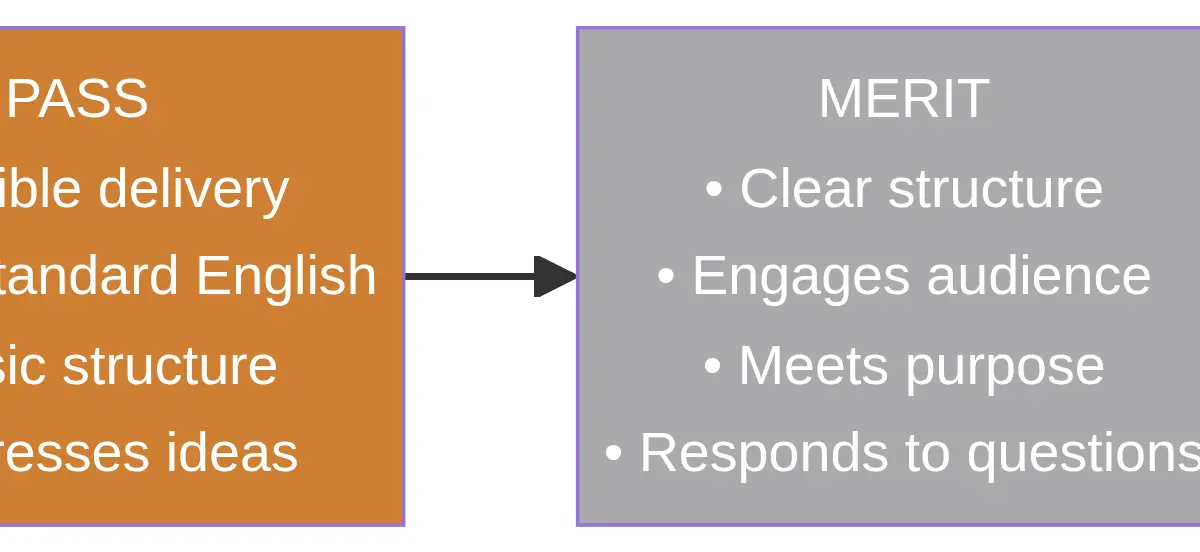
Spoken Language Grade Criteria Progression
Worked Examples
3 worked examples — open one to explore the question and available guidance.
Practice Questions
Test your understanding — click to reveal model answers
Rewrite the following sentence into Spoken Standard English: 'I ain't got no idea why they was doing that.'
Hint: Look for double negatives and incorrect verb agreements.
Identify three discourse markers that could be used to signal the transition between the introduction and the first main point of a presentation.
Hint: Think of formal phrases that mean 'to start with'.
Read this Q&A response: 'Yes, I think climate change is bad because the ice caps are melting.' How could this be improved to meet Distinction criteria?
Hint: Apply the SEE method (State, Explain, Elaborate). How can you extend the discussion?
List four techniques you can use to engage your audience during a formal presentation.
Hint: Think about both what you say and how you deliver it.
Explain why reading directly from a full script prevents a candidate from achieving a Merit or Distinction.
Hint: Consider the criteria for audience engagement and responding to feedback.