Pearson Edexcel · GCSE · English Language
Spoken Language
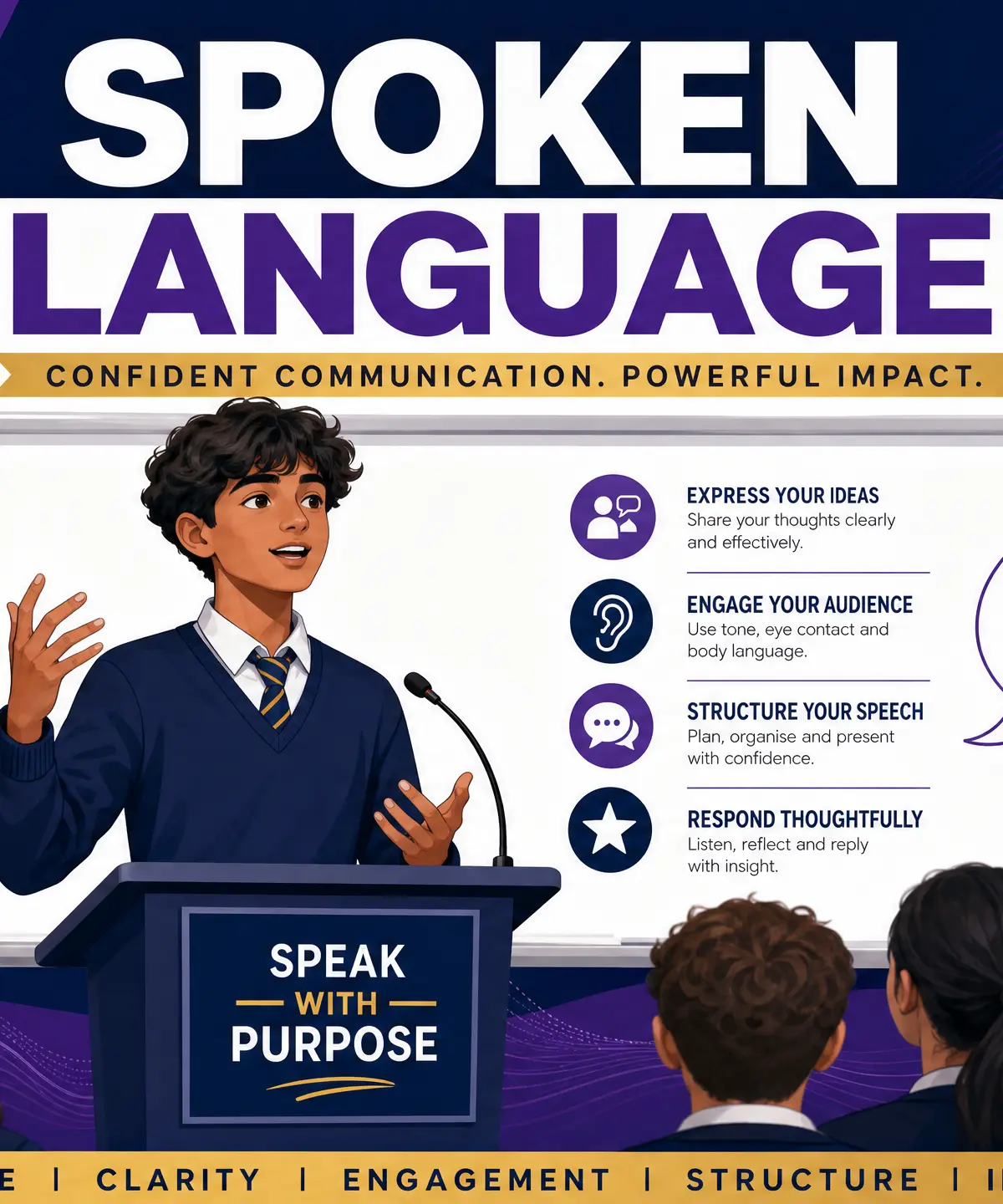
The Spoken Language endorsement assesses a candidate's ability to present formally, use sophisticated language and body language, and respond thoughtfully to questions and feedback. It is graded separately from the written exams as Pass, Merit, or Distinction.
- 4 min read
- 3 worked examples
- 5 practice questions
- 8 key terms
Study Notes
Overview
The Spoken Language component is a vital part of your GCSE English Language qualification. While it doesn't contribute to your final 1-9 grade, it appears as a separate endorsement on your certificate (Pass, Merit, or Distinction). More importantly, it tests the exact communication skills you will need for future interviews, presentations, and professional life.
Listen to our 10-minute masterclass podcast below to understand exactly what examiners are looking for:

Core Presentation Skills
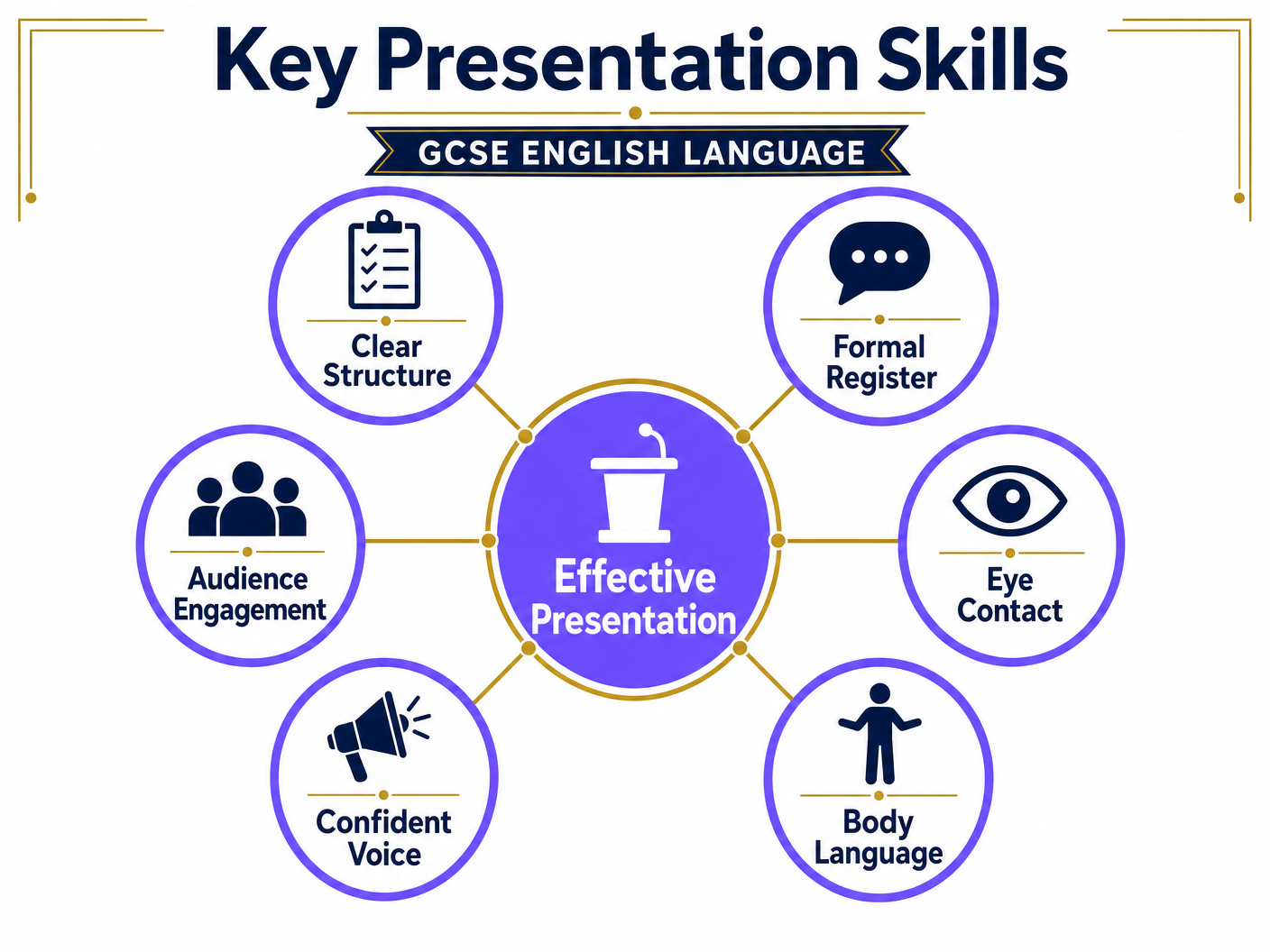
1. Structuring Your Presentation
A Distinction-level presentation doesn't just ramble; it has a clear, deliberate structure. Examiners award marks for presentations that take the audience on a logical journey.
- The Hook: Open with something that demands attention—a startling statistic, a rhetorical question, or a short, relevant anecdote.
- The Development: Move through your points logically. Use clear signposting language like "Building on this point..." or "A secondary consideration is..."
- The Conclusion: Summarise your main argument and leave the audience with a final, memorable thought. Circular structures (returning to your opening hook) are highly effective.
2. Formal Register and Vocabulary
Because this is a formal presentation, your language must match the context. This is known as register.
- Avoid slang, filler words ("like", "you know"), and contractions where possible.
- Upgrade your vocabulary: instead of "really bad", use "deeply concerning"; instead of "lots of people think", use "a significant proportion of the population believes".
- Use complete sentences and articulate your words clearly.
3. Delivery and Body Language
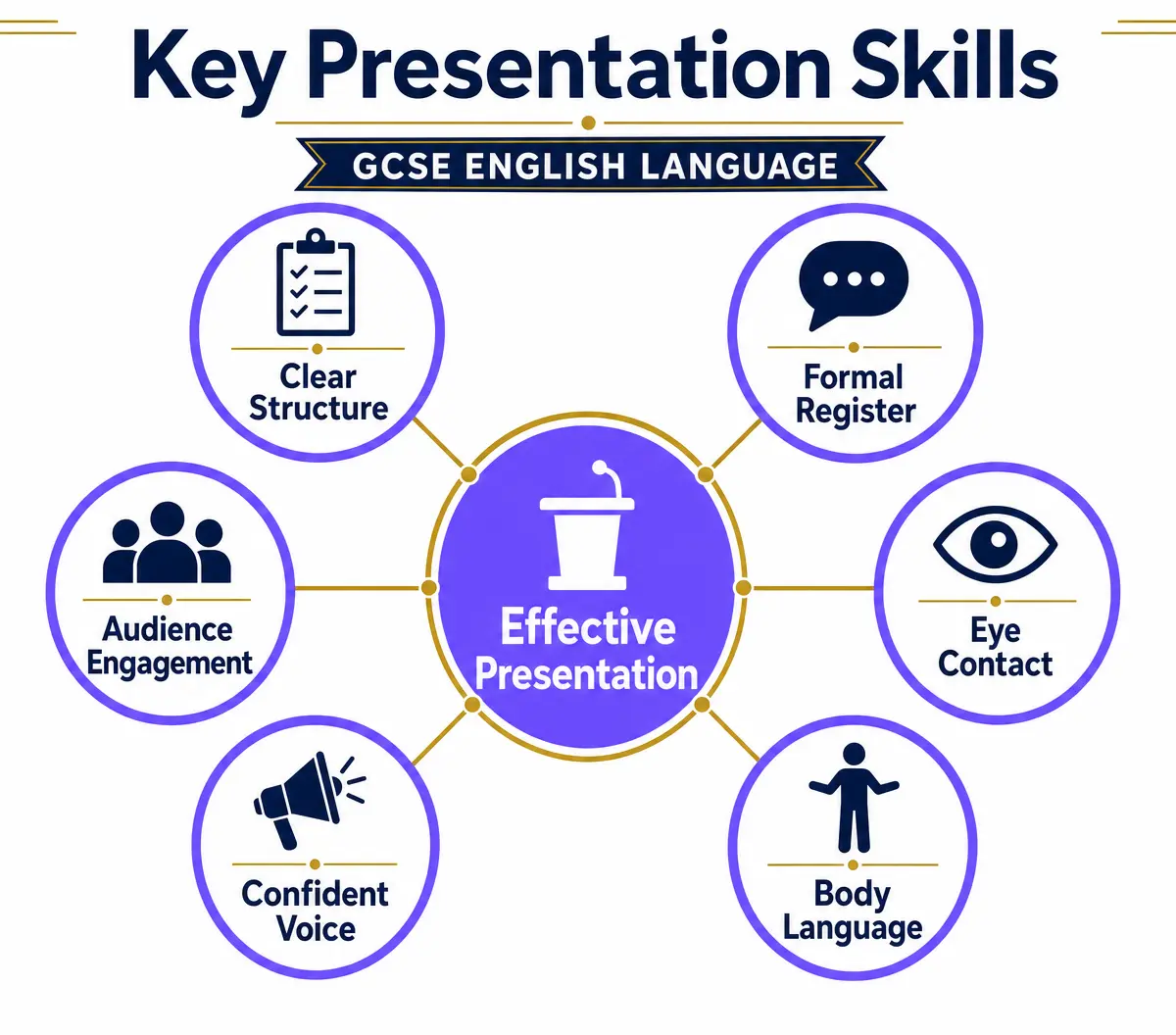
How you say something is just as important as what you say. Examiners are watching your physical presence.
- Eye Contact: Look at your audience, not your notes. This builds rapport and demonstrates confidence.
- Stance: Stand with feet shoulder-width apart. Do not cross your arms, sway, or fidget.
- Vocal Variety: Alter your pace, pitch, and volume. Slow down to emphasize key points, and use deliberate pauses for dramatic effect.
Responding to Questions and Feedback
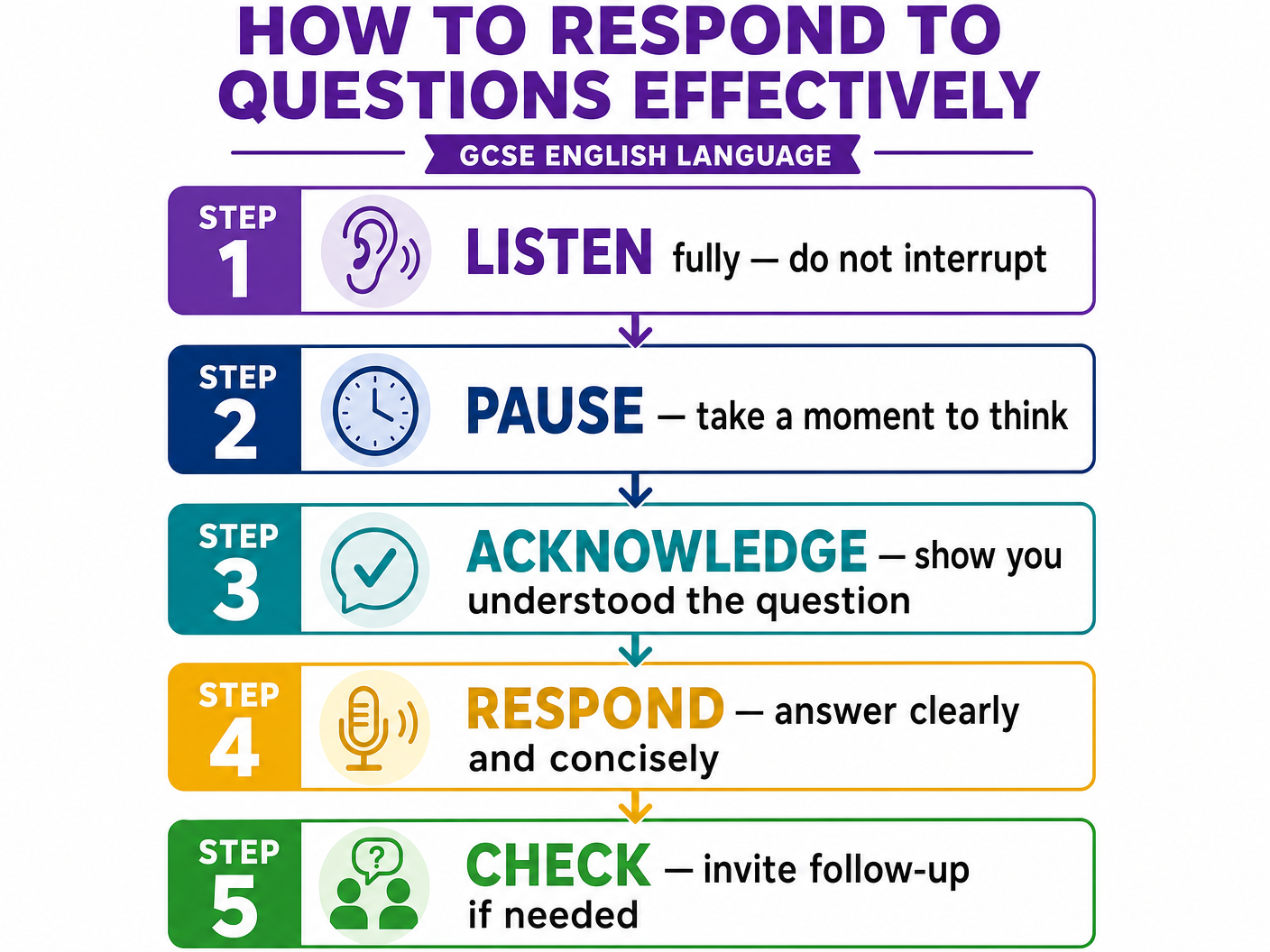
This is often where candidates lose marks, but it is entirely manageable with the right approach.
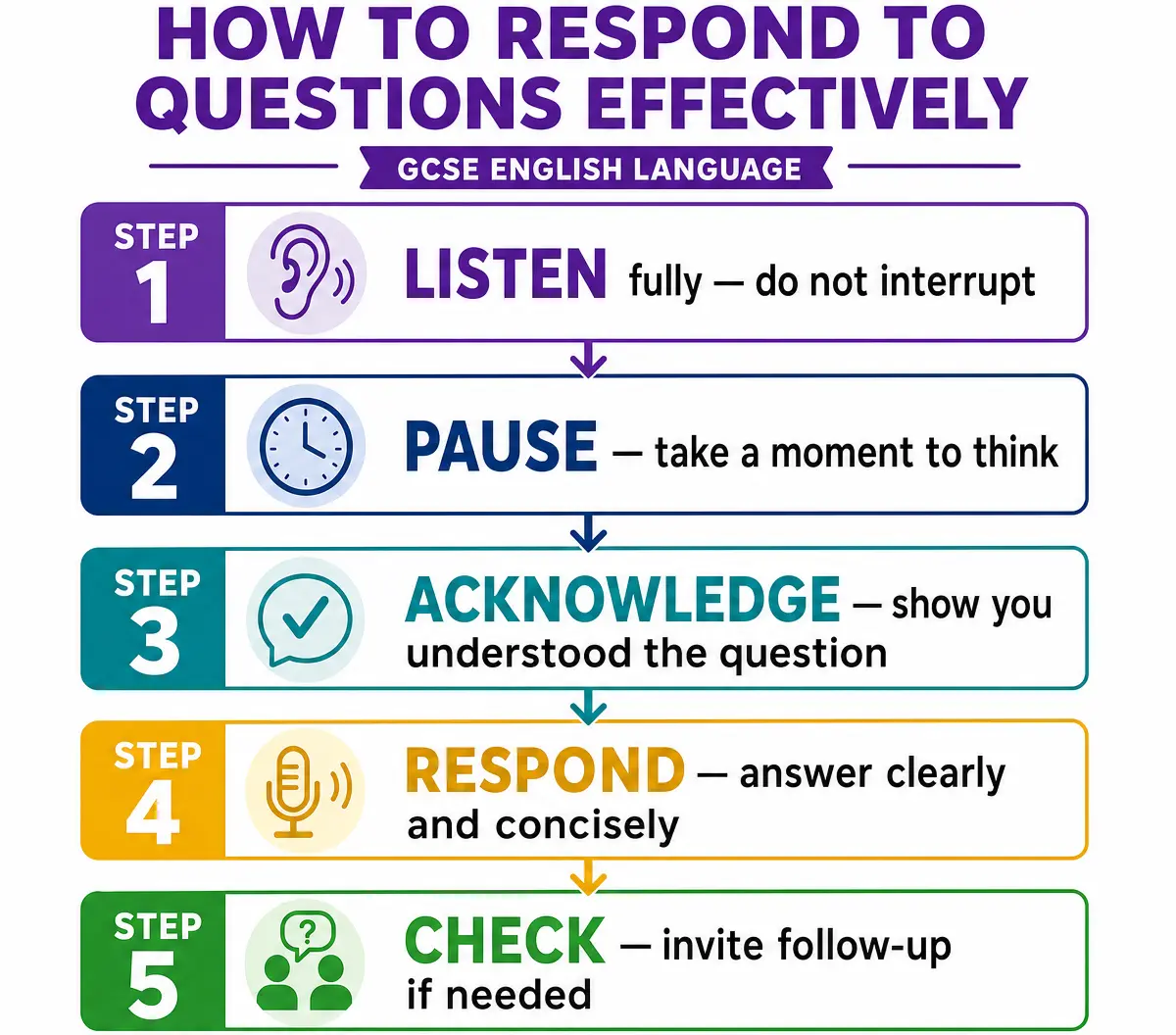
- Listen Fully: Do not interrupt the questioner. Let them finish entirely.
- Pause: Take 2-3 seconds to gather your thoughts. This shows intelligence and consideration, not weakness.
- Acknowledge: Say "That's an interesting point" or "I'm glad you asked that." It buys you time and shows active listening.
- Respond Concisely: Give a clear, structured answer. Do not ramble. If you don't know the answer, say so honestly, but offer a related thought: "I haven't considered that specific angle, but my view would be..."
Common Mistakes to Avoid
- Reading from a script: Using full sentences on your prompt cards guarantees you will read them, losing eye contact and vocal variety. Use bullet points only.
- Rushing: Nerves make us speak faster. Consciously force yourself to speak slightly slower than your normal conversational pace.
- Defensiveness: If someone offers feedback or disagrees with you during the Q&A, do not become defensive. Engage with their point respectfully. A mature discussion earns high marks.
Visual Resources
2 diagrams and illustrations
Interactive Diagrams
2 interactive diagrams to visualise key concepts
Conceptual Flow Outline
Presentation and Q&A Flowchart
Conceptual Flow Outline
Spoken Language Mark Levels
Worked Examples
3 worked examples — open one to explore the question and available guidance.
Practice Questions
Test your understanding — click to reveal model answers
You are preparing a presentation on the importance of local libraries. Write an engaging opening 'hook' (2-3 sentences).
Hint: Try starting with a surprising statistic, a rhetorical question, or a short personal anecdote.
Rewrite this informal sentence into a formal register suitable for a presentation: 'It's really bad that loads of kids are spending way too much time on their phones.'
Hint: Replace 'really bad', 'loads of kids', and 'way too much time' with formal vocabulary.
During your Q&A, a student asks a question that you do not understand. How should you respond?
Hint: Remember the L-P-A-R framework. How do you handle the 'Acknowledge' step if you need clarification?
You are presenting on Climate Change. An audience member aggressively states: 'Your statistics are wrong, climate change is a natural cycle.' Draft your response.
Hint: Do not become defensive. Acknowledge their viewpoint respectfully, then use your evidence to counter it.
Explain how varying your vocal pace and pitch can improve a presentation.
Hint: Think about audience attention spans and how we emphasize important information.