AQA · A-Level · English Literature
Course version: 7717 · Version from Sept 2026
Drama and further texts: Geoffrey Chaucer: 'The Nun’s Priest’s Tale'…
Full specification wording
Aspects of comedy - Set texts: Drama and further texts: Geoffrey Chaucer: 'The Nun’s Priest’s Tale' including Prologue and Epilogue (Pre-1900)
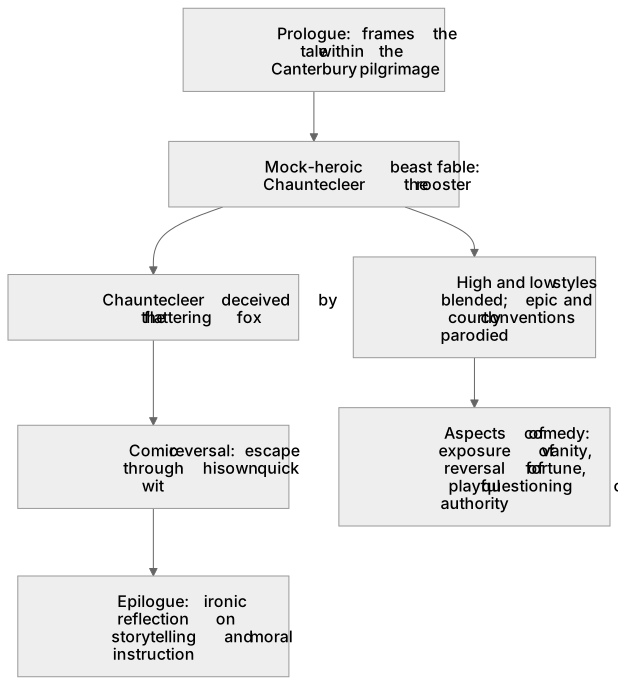
The Nun’s Priest’s Tale is a mock-heroic beast fable in which Chauntecleer the rooster is deceived by the flattering fox, only to escape through his own quick wit.
Checked against the AQA 7717 specification (opens in a new tab) on .
- Point 2 of 6
- 3 key terms
Study notes
From the checked teaching notes for this specification point.
The idea
The Nun’s Priest’s Tale is a mock-heroic beast fable in which Chauntecleer the rooster is deceived by the flattering fox, only to escape through his own quick wit. Students study how Chaucer blends high and low styles, parodying epic and courtly conventions to create comedy. The Prologue and Epilogue frame the tale within the Canterbury pilgrimage, adding layers of irony about storytelling and moral instruction. To perform well, students analyse Chaucer’s use of rhetoric, dream lore, animal characterisation and direct address to the audience. They connect these methods to aspects of comedy such as the exposure of vanity, the reversal of fortune, and the playful questioning of authority. Assessment requires whole-text knowledge, with attention to Chaucer’s language, structure and medieval context.
What earns the marks
- Analyse how Chaucer uses mock-heroic style, including elevated diction and epic conventions, to create comedy in the tale of Chauntecleer and the fox.
- Examine the role of the Prologue and Epilogue in framing the tale, providing context about the Nun’s Priest and inviting ironic reflection on storytelling and moral interpretation.
- Discuss how animal characters embody human follies, such as pride and flattery, and how this anthropomorphism generates both humour and satirical comment.
- Consider Chaucer’s use of rhetoric and learned allusion, including dream theory and classical references, to parody intellectual debate and to expose the gap between words and actions.
- Explore the tale’s treatment of fortune and free will, and how the comic reversal from near-disaster to escape shapes the tale’s moral ambiguity.
- Connect the tale’s comic techniques to wider aspects of comedy, such as the exposure of vanity, the disruption of order, and the restoration of a precarious harmony.
Common mistakes and how to put them right
Reading the tale as a straightforward fable with a clear moral, rather than analysing Chaucer’s ironic and parodic methods.
Put it right: Focus on how the tale complicates simple moral lessons through style and structure.
Neglecting the Prologue and Epilogue and treating the tale in isolation.
Put it right: Integrate analysis of the framing material to show how it shapes comic and thematic effects.
Ignoring the medieval context and Chaucer’s use of rhetorical conventions.
Put it right: Use relevant knowledge of medieval literature and society to illuminate the parody and comedy.
Exam tips
- Plan your response around the assessment objectives: analyse language, form and structure; explore connections across the text; and engage with different interpretations where appropriate.
- Construct a cohesive whole-text argument, drawing on specific sections across the tale, prologue and epilogue to support your analysis of comic techniques.
Try the lesson
The start of the Aspects of comedy - Set texts: Drama and further texts: Geoffrey Chaucer: 'The Nun’s Priest’s Tale' including Prologue and Epilogue (Pre-1900) lesson, made from checked teaching notes for this specification point.
Have a go first
How does Chaucer create comedy through the debate between Chauntecleer and Pertelote about dreams?
Listen
The Nun’s Priest’s Tale is a mock-heroic beast fable in which Chauntecleer the rooster is deceived by the flattering fox, only to escape through his own quick wit. Students study how Chaucer blends high and low styles, parodying epic and courtly conventions to create comedy. The Prologue and Epilogue frame the tale within the Canterbury pilgrimage, adding layers of irony about storytelling and moral instruction. To perform well, students analyse Chaucer’s use of rhetoric, dream lore, animal characterisation and direct address to the audience. They connect these methods to aspects of comedy such as the exposure of vanity, the reversal of fortune, and the playful questioning of authority. Assessment requires whole-text knowledge, with attention to Chaucer’s language, structure and medieval context. A strong answer earns marks for these points. Analyse how Chaucer uses mock-heroic style, including elevated diction and epic conventions, to create comedy in the tale of Chauntecleer and the fox. Examine the role of the Prologue and Epilogue in framing the tale, providing context about the Nun’s Priest and inviting ironic reflection on storytelling and moral interpretation. Discuss how animal characters embody human follies, such as pride and flattery, and how this anthropomorphism generates both humour and satirical comment. Consider Chaucer’s use of rhetoric and learned allusion, including dream theory and classical references, to parody intellectual debate and to expose the gap between words and actions. A common slip: Reading the tale as a straightforward fable with a clear moral, rather than analysing Chaucer’s ironic and parodic methods. Instead, focus on how the tale complicates simple moral lessons through style and structure. Exam tip: Plan your response around the assessment objectives: analyse language, form and structure; explore connections across the text; and engage with different interpretations where appropriate.
See it
Key words
Say what each word means before you turn the card.
Mock-heroic comedy
Try answering aloud or in your head before turning the card.
Flattery and deception
Try answering aloud or in your head before turning the card.
Dreams and fortune
Try answering aloud or in your head before turning the card.
See every definition
- Mock-heroic comedy
- A comic mode in which Chaucer blends high and low styles, parodying epic and courtly conventions.
- Flattery and deception
- The means by which Chauntecleer the rooster is deceived by the fox, before escaping through his own quick wit.
- Dreams and fortune
- Material Chaucer draws on through dream lore and the reversal of fortune, shaping the tale's moral ambiguity.
Label the diagram
Some boxes have lost their names. Pick the right name for each number.
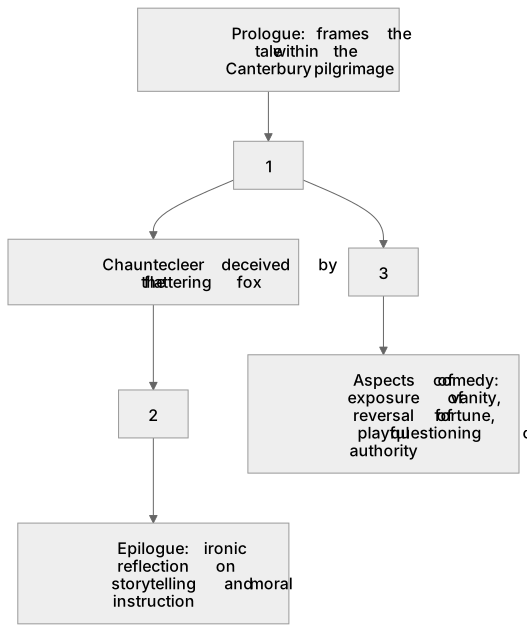
1Box 1
2Box 2
3Box 3
There is more to this lesson
The full lesson goes on to check your understanding and help you earn the marks. Create a free account to carry on, with your progress saved.
A week of Premium from your first lesson · Then the free plan continues · No card, no charge
Test your understanding of Aspects of comedy - Set texts: Drama and further texts: Geoffrey Chaucer: 'The Nun’s Priest’s Tale' including Prologue and Epilogue (Pre-1900)
Active recall beats re-reading. Take an instant quiz now to test what you’ve learned and lock it into long-term memory.
A week of Premium from your first lesson · Then the free plan continues · No card, no charge