AQA · A-Level · English Literature
Course version: 7717 · Version from Sept 2026
Ultimately how the comedy affects the audience, inviting laughter at the…
Full specification wording
Aspects of comedy: ultimately how the comedy affects the audience, inviting laughter at the ridiculous behaviour of human beings and a sense of joy that positive resolutions are possible.
This statement asks students to move from textual detail to audience response.
Checked against the AQA 7717 specification (opens in a new tab) on .
- Point 18 of 18
- 4 key terms
Study notes
From the checked teaching notes for this specification point.
The idea
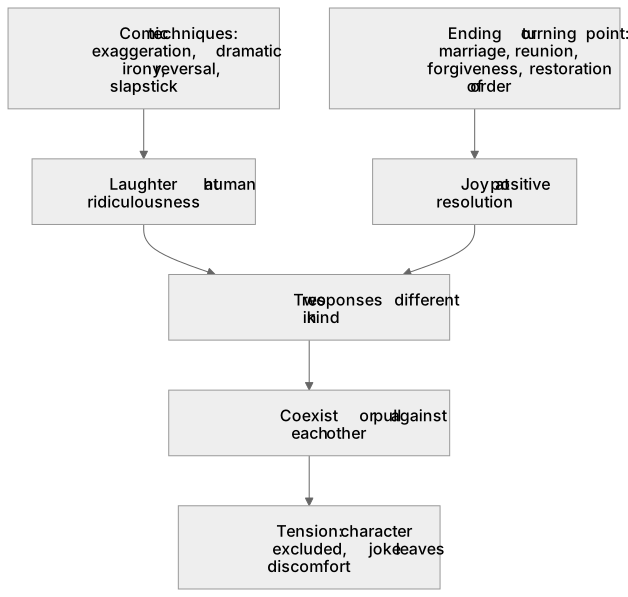
This statement asks students to move from textual detail to audience response. Comedy invites laughter at human folly — vanity, self-deception, greed, pretension — while also offering joy when conflicts resolve into marriage, reunion or forgiveness. The skill is to analyse how writers engineer both responses: through exaggerated characterisation, comic timing, dramatic irony, reversal and reconciliation. In Twelfth Night, Malvolio's humiliation prompts laughter at ridiculous behaviour, yet the ending's marriages and reunions generate delight. Assessment rewards close analysis of method and effect, not assertion that a play is funny.
What earns the marks
- Analyses a specific comic technique, such as exaggeration, dramatic irony, reversal or slapstick, and explains how it invites laughter at human ridiculousness.
- Explains how the ending or a turning point creates joy by resolving conflict, often through marriage, reunion, forgiveness or restoration of order.
- Distinguishes between laughter at folly and joy at positive resolution, showing awareness that the two responses are different in kind.
- Uses precise textual evidence, including staging or structural detail, to support claims about audience response.
- Considers tension between the two responses, for example where a resolution leaves a character excluded or a joke leaves discomfort.
Common mistakes and how to put them right
Claiming a play is funny without analysing the technique that produces laughter.
Put it right: Name the device and explain its effect on the audience.
Treating joy at resolution as automatic.
Put it right: Show how the text earns it through structure, language and staging.
Ignoring unresolved or troubling elements.
Put it right: Acknowledge them and discuss how they qualify the sense of joy.
Exam tips
- Frame each paragraph around a technique and its effect on the audience, rather than retelling plot.
- Use precise audience-response vocabulary — amusement, delight, unease, relief — and justify each with textual evidence.
- When discussing resolution, comment on structure and staging as well as dialogue to show how joy is produced.
Try the lesson
The start of the Aspects of comedy: ultimately how the comedy affects the audience, inviting laughter at the ridiculous behaviour of human beings and a sense of joy that positive resolutions are possible. lesson, made from checked teaching notes for this specification point.
Have a go first
When considering the ultimate effect of comedy on an audience, which combination of responses is most characteristic of the genre?
Listen
This statement asks students to move from textual detail to audience response. Comedy invites laughter at human folly — vanity, self-deception, greed, pretension — while also offering joy when conflicts resolve into marriage, reunion or forgiveness. The skill is to analyse how writers engineer both responses: through exaggerated characterisation, comic timing, dramatic irony, reversal and reconciliation. In Twelfth Night, Malvolio's humiliation prompts laughter at ridiculous behaviour, yet the ending's marriages and reunions generate delight. Assessment rewards close analysis of method and effect, not assertion that a play is funny. A strong answer earns marks for these points. Analyses a specific comic technique, such as exaggeration, dramatic irony, reversal or slapstick, and explains how it invites laughter at human ridiculousness. Explains how the ending or a turning point creates joy by resolving conflict, often through marriage, reunion, forgiveness or restoration of order. Distinguishes between laughter at folly and joy at positive resolution, showing awareness that the two responses are different in kind. Uses precise textual evidence, including staging or structural detail, to support claims about audience response. A common slip: Claiming a play is funny without analysing the technique that produces laughter. Instead, name the device and explain its effect on the audience. Exam tip: Frame each paragraph around a technique and its effect on the audience, rather than retelling plot.
See it
Key words
Say what each word means before you turn the card.
Human folly and ridiculous behaviour
Try answering aloud or in your head before turning the card.
Comic resolution and social harmony
Try answering aloud or in your head before turning the card.
Audience response and emotional effect
Try answering aloud or in your head before turning the card.
Tension between laughter and unease
Try answering aloud or in your head before turning the card.
See every definition
- Human folly and ridiculous behaviour
- The vanity, self-deception, greed and pretension of human beings that comedy invites the audience to laugh at.
- Comic resolution and social harmony
- The joy offered when conflicts resolve into marriage, reunion or forgiveness, restoring order at the end of a comedy.
- Audience response and emotional effect
- How the comedy ultimately affects the audience, inviting laughter at ridiculous behaviour and a sense of joy that positive resolutions are possible.
- Tension between laughter and unease
- The question of whether laughter at folly and joy at resolution coexist or pull against each other, for example where a resolution leaves a character excluded or a joke leaves discomfort.
Label the diagram
Some boxes have lost their names. Pick the right name for each number.
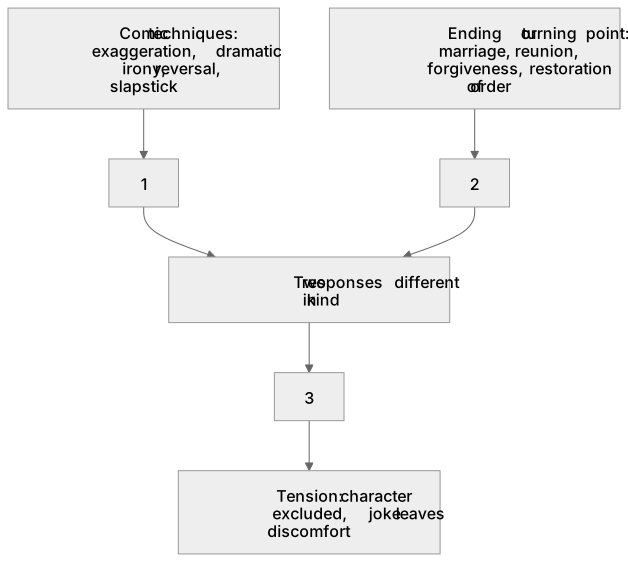
1Box 1
2Box 2
3Box 3
There is more to this lesson
The full lesson goes on to check your understanding and help you earn the marks. Create a free account to carry on, with your progress saved.
A week of Premium from your first lesson · Then the free plan continues · No card, no charge
Test your understanding of Aspects of comedy: ultimately how the comedy affects the audience, inviting laughter at the ridiculous behaviour of human beings and a sense of joy that positive resolutions are possible.
Active recall beats re-reading. Take an instant quiz now to test what you’ve learned and lock it into long-term memory.
A week of Premium from your first lesson · Then the free plan continues · No card, no charge