AQA · GCSE · English Literature
Course version: 8702 · Version from Sept 2015
Students will study one cluster of poems taken from the AQA poetry…
Full specification wording
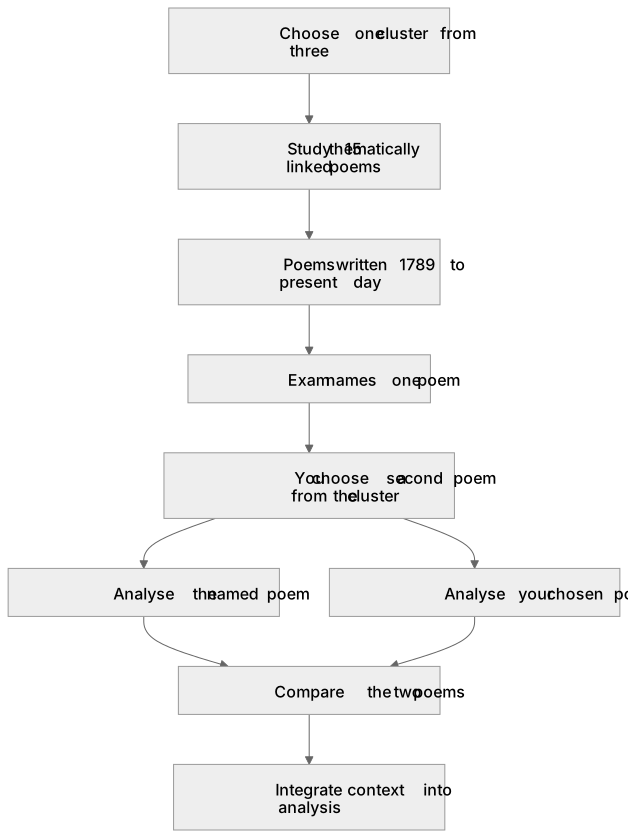
Poetry: Students will study one cluster of poems taken from the AQA poetry anthology, Poems Past and Present. There is a choice of three clusters, each containing 15 poems. The poems in each cluster are thematically linked and were written between 1789 and the present day.
You will study one cluster of 15 poems from the AQA anthology, choosing from three thematically linked clusters.
Checked against the AQA 8702 specification (opens in a new tab) on .
- Point 1 of 5
- 4 key terms
Study notes
From the checked teaching notes for this specification point.
The idea
You will study one cluster of 15 poems from the AQA anthology, choosing from three thematically linked clusters. The poems span 1789 to the present, so you encounter Romantic, Victorian, modern and contemporary voices. The exam tests your ability to analyse how poets present themes and ideas, and to compare poems. You must know all 15 poems well, but the exam will name one poem and you choose a second from the cluster. For example, if studying Love and Relationships, you might compare 'When We Two Parted' with 'Neutral Tones'. Learn to select precise quotations, explore form, structure and language, and link poems by theme, context and technique. Context is assessed but should be integrated into your analysis, not bolted on. In the exam, you will be assessed on your ability to analyse the named poem and your chosen poem, not on reciting all 15.
What earns the marks
- Analyse how the named poem and your chosen poem present the question's focus, using precise quotations and subject terminology.
- Compare the two poems effectively, exploring similarities and differences in theme, technique and context.
- Integrate relevant contextual information into your analysis to deepen interpretation, rather than adding it as separate background.
- Use a clear structure for comparative essays, such as introducing both poems, analysing them together, and drawing conclusions.
- Select and embed short quotations to support points about form, structure and language, and explain their effects.
Common mistakes and how to put them right
Writing about all 15 poems in the exam.
Put it right: The exam names one poem and you choose one other from the cluster, so focus on comparing just two.
Including context as a separate paragraph.
Put it right: Weave context into your analysis of the poems, showing how it shapes meaning.
Ignoring form and structure and only discussing language.
Put it right: Comment on poetic form, line structure, rhyme and rhythm to show deeper understanding.
Exam tips
- Learn at least three to four key quotations from each poem, including ones that show theme, technique and context.
- Practise planning comparative responses under timed conditions to build confidence in selecting and linking poems.
- Use comparative connectives such as 'similarly', 'whereas' and 'both poets' to make your comparisons explicit.
Try the lesson
The start of the Poetry: Students will study one cluster of poems taken from the AQA poetry anthology, Poems Past and Present. There is a choice of three clusters, each containing 15 poems. The poems in each cluster are thematically linked and were written between 1789 and the present day. lesson, made from checked teaching notes for this specification point.
Have a go first
How many poems does each cluster in the AQA poetry anthology contain?
Listen
You will study one cluster of 15 poems from the AQA anthology, choosing from three thematically linked clusters. The poems span 1789 to the present, so you encounter Romantic, Victorian, modern and contemporary voices. The exam tests your ability to analyse how poets present themes and ideas, and to compare poems. You must know all 15 poems well, but the exam will name one poem and you choose a second from the cluster. For example, if studying Love and Relationships, you might compare 'When We Two Parted' with 'Neutral Tones'. Learn to select precise quotations, explore form, structure and language, and link poems by theme, context and technique. Context is assessed but should be integrated into your analysis, not bolted on. In the exam, you will be assessed on your ability to analyse the named poem and your chosen poem, not on reciting all 15. A strong answer earns marks for these points. Analyse how the named poem and your chosen poem present the question's focus, using precise quotations and subject terminology. Compare the two poems effectively, exploring similarities and differences in theme, technique and context. Integrate relevant contextual information into your analysis to deepen interpretation, rather than adding it as separate background. Use a clear structure for comparative essays, such as introducing both poems, analysing them together, and drawing conclusions. A common slip: Writing about all 15 poems in the exam. Instead, The exam names one poem and you choose one other from the cluster, so focus on comparing just two. Exam tip: Learn at least three to four key quotations from each poem, including ones that show theme, technique and context.
See it
Watch it explained
How do the poets present the question's focus in the named poem and one other from your cluster?
Read the described scene instead
Welcome to this guide on the AQA GCSE English Literature poetry exam. You will study one cluster of fifteen poems from the AQA poetry anthology, Poems Past and Present. There are three thematically linked clusters to choose from, and the poems were written between 1789 and the present day. That means you will encounter Romantic, Victorian, modern and contemporary voices. In the exam, you need to analyse how poets present themes and ideas, and compare two poems effectively. This video will show you how the exam works, how to select evidence, how to integrate context, and how to structure a comparative response. Let's map the exam. First, you study one cluster of fifteen poems from the AQA anthology, choosing from three clusters that are thematically linked. The poems span 1789 to the present, so your cluster includes Romantic, Victorian, modern and contemporary poetry. You must know all fifteen poems well, but the exam will name one poem, and you choose a second poem from the same cluster. Crucially, you are assessed on your ability to analyse the named poem and your chosen poem, not on reciting all fifteen. For example, if you study Love and Relationships, you might compare 'When We Two Parted' with 'Neutral Tones'. Now, what should you know for each poem? You need to analyse how the named poem and your chosen poem present the focus of the exam question. Use precise quotations and subject terminology to support your points. Explore form, structure and language, and explain their effects. You should also learn to link poems by theme, context and technique, because comparison is central to the exam. A useful example from the Love and Relationships cluster is comparing 'When We Two Parted' with 'Neutral Tones'. Keep your quotations short and embedded, and make sure every point explains the effect of the poet's choices. Here is a clear process for building a comparative response. Start by introducing both poems and the question's focus, so your reader knows which two poems you are comparing. Then analyse the poems together, exploring similarities and differences in theme, technique and context. Select short, precise quotations and explain how form, structure and language shape meaning. Integrate relevant contextual information into your analysis rather than adding it as a separate background paragraph. Finally, draw conclusions about how the poets present the theme or ideas in the question. This structure helps you stay focused on just two poems and make your comparisons explicit. Let's apply that to a worked example. The question asks how the poets present the question's focus in the named poem and one other from your cluster. First, identify the named poem and choose a second poem from the same cluster. For instance, in Love and Relationships, you might compare 'When We Two Parted' with 'Neutral Tones'. Next, select short quotations that show theme, technique and context, and analyse form, structure and language in both poems. Use comparative connectives such as 'similarly', 'whereas' and 'both poets' to make similarities and differences explicit. Weave context into your interpretation, and conclude by comparing how the two poets present the focus of the question. Watch out for common mistakes. Do not write about all fifteen poems in the exam: the exam names one poem and you choose one other from the cluster, so focus on comparing just two. Do not include context as a separate paragraph; instead, weave context into your analysis and show how it shapes meaning. Do not ignore form and structure and discuss only language: comment on poetic form, line structure, rhyme and rhythm to show deeper understanding. To prepare, learn at least three to four key quotations from each poem, including ones that show theme, technique and context. Practise planning comparative responses under timed conditions, and use connectives like 'similarly', 'whereas' and 'both poets'. To recap: you study one cluster of fifteen thematically linked poems from the AQA anthology, written between 1789 and the present day. In the exam, one poem is named, and you choose a second poem from the same cluster. Focus on analysing and comparing those two poems, using precise short quotations and subject terminology. Explore theme, technique and context, and integrate contextual information into your interpretation. Comment on form, structure and language, and explain effects. Structure your response by introducing both poems, analysing them together, and drawing conclusions. Learn three to four key quotations per poem and practise timed comparative planning.
Key words
Say what each word means before you turn the card.
Thematic links between poems
Try answering aloud or in your head before turning the card.
Poetic techniques and their effects
Try answering aloud or in your head before turning the card.
Contextual influences on poetry
Try answering aloud or in your head before turning the card.
Comparative analysis
Try answering aloud or in your head before turning the card.
See every definition
- Thematic links between poems
- The poems in each cluster are thematically linked, and you should link poems by theme, context and technique.
- Poetic techniques and their effects
- You explore form, structure and language, select and embed short quotations, and explain their effects.
- Contextual influences on poetry
- Relevant contextual information is integrated into your analysis to deepen interpretation, rather than added as separate background.
- Comparative analysis
- You compare the two poems effectively, exploring similarities and differences in theme, technique and context.
Label the diagram
Some boxes have lost their names. Pick the right name for each number.
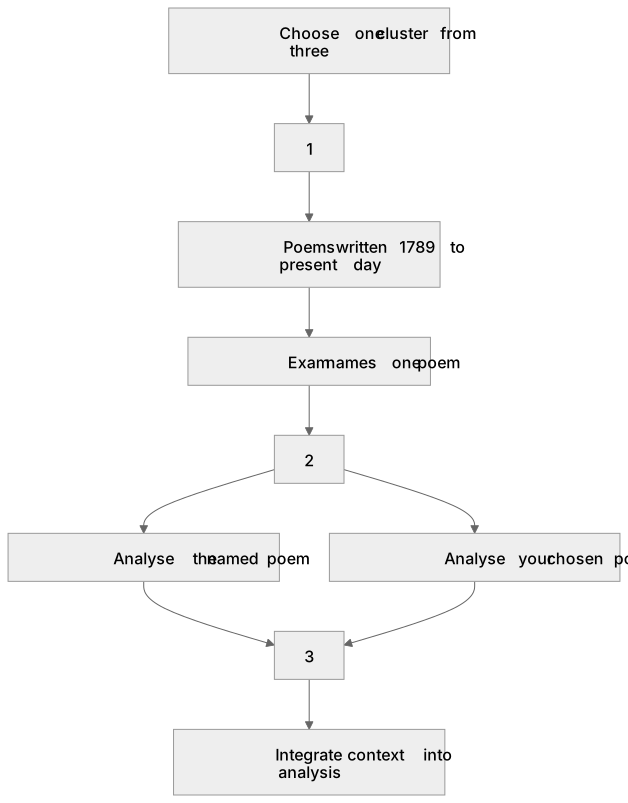
1Box 1
2Box 2
3Box 3
There is more to this lesson
The full lesson goes on to check your understanding and help you earn the marks. Create a free account to carry on, with your progress saved.
A week of Premium from your first lesson · Then the free plan continues · No card, no charge
Test your understanding of Poetry: Students will study one cluster of poems taken from the AQA poetry anthology, Poems Past and Present. There is a choice of three clusters, each containing 15 poems. The poems in each cluster are thematically linked and were written between 1789 and the present day.
Active recall beats re-reading. Take an instant quiz now to test what you’ve learned and lock it into long-term memory.
A week of Premium from your first lesson · Then the free plan continues · No card, no charge