AQA · GCSE · English Literature
Course version: 8702 · Version from Sept 2015
Students should study all 15 poems in their chosen cluster and be prepared…
Full specification wording
Poetry: Students should study all 15 poems in their chosen cluster and be prepared to write about any of them in the examination.
In the exam, you will be asked to write about one named poem and then choose a second from the cluster to compare.
Checked against the AQA 8702 specification (opens in a new tab) on .
- Point 2 of 5
- 4 key terms
Study notes
From the checked teaching notes for this specification point.
The idea
In the exam, you will be asked to write about one named poem and then choose a second from the cluster to compare. Because the named poem could be any of the 15, you cannot rely on predicting which one will appear. Effective preparation involves learning each poem's content, themes, structure, and language features, and practising making connections between poems. For example, if your cluster includes poems about power and conflict, you might compare how two poets present the effects of conflict on ordinary people. You should also memorise a few short quotations from each poem and be ready to analyse them in detail. Studying all 15 poems also helps you develop a broader understanding of poetic techniques and contextual influences, which strengthens your analysis.
What earns the marks
- Knows the content, themes and key ideas of all 15 poems in the chosen cluster, so any named poem can be analysed confidently.
- Analyses how poets use structure and language to create meaning and effect in the named poem.
- Makes relevant comparisons between the named poem and a second poem from the cluster, exploring similarities and differences.
- Supports analysis with precise quotations and references to the poems.
- Shows understanding of the relationships between poems and the cluster's overarching themes.
Common mistakes and how to put them right
Only revising a few poems and hoping one of them will be the named poem.
Put it right: Study all 15 poems systematically, creating summary notes and quotation banks for each.
Ignoring the comparison poem and writing only about the named poem.
Put it right: Plan your response to include both poems, ensuring you compare key features such as theme, structure, and language.
Using quotations without analysing their effect.
Put it right: Follow a quotation with an explanation of how it supports your interpretation of the poet's methods and intentions.
Exam tips
- Create a revision grid for all 15 poems, noting key themes, structural features, and two or three quotations for each.
- Practise planning responses under timed conditions, selecting a comparison poem that offers clear points of similarity and difference.
- When comparing, use connectives such as 'similarly', 'whereas', and 'in contrast' to structure your analysis and show clear links.
Try the lesson
The start of the Poetry: Students should study all 15 poems in their chosen cluster and be prepared to write about any of them in the examination. lesson, made from checked teaching notes for this specification point.
Have a go first
How many poems must a student study in their chosen cluster?
Listen
In the exam, you will be asked to write about one named poem and then choose a second from the cluster to compare. Because the named poem could be any of the 15, you cannot rely on predicting which one will appear. Effective preparation involves learning each poem's content, themes, structure, and language features, and practising making connections between poems. For example, if your cluster includes poems about power and conflict, you might compare how two poets present the effects of conflict on ordinary people. You should also memorise a few short quotations from each poem and be ready to analyse them in detail. Studying all 15 poems also helps you develop a broader understanding of poetic techniques and contextual influences, which strengthens your analysis. A strong answer earns marks for these points. Knows the content, themes and key ideas of all 15 poems in the chosen cluster, so any named poem can be analysed confidently. Analyses how poets use structure and language to create meaning and effect in the named poem. Makes relevant comparisons between the named poem and a second poem from the cluster, exploring similarities and differences. Supports analysis with precise quotations and references to the poems. A common slip: Only revising a few poems and hoping one of them will be the named poem. Instead, Study all 15 poems systematically, creating summary notes and quotation banks for each. Exam tip: Create a revision grid for all 15 poems, noting key themes, structural features, and two or three quotations for each.
See it
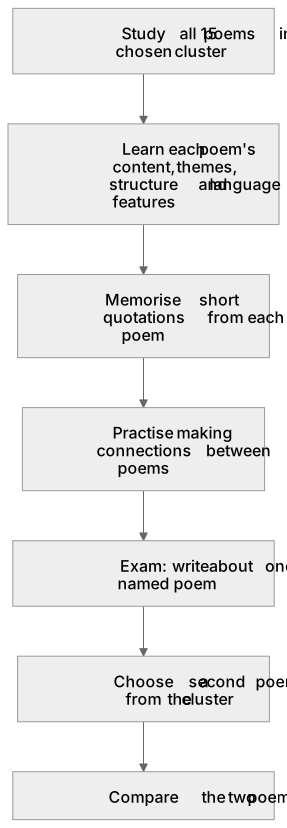
Put it in order
Put these steps in the order they happen.
- 1. Compare the two poems
- 2. Choose a second poem from the cluster
- 3. Memorise short quotations from each poem
- 4. Exam: write about one named poem
- 5. Study all 15 poems in chosen cluster
- 6. Learn each poem's content, themes, structure and language features
- 7. Practise making connections between poems
Watch it explained
How do two poets present the effects of conflict on ordinary people? Write about one named poem and one other from your cluster.
Read the described scene instead
Welcome to your comprehensive interactive study breakdown on Poetry for AQA GCSE English Literature. This guide focuses on a crucial requirement: you must study all 15 poems in your chosen cluster and be prepared to write about any of them in the examination. In the exam, you will be asked to write about one named poem and then choose a second poem from the cluster to compare. Because the named poem could be any of the 15, you cannot rely on predicting which one will appear. Effective preparation means learning each poem's content, themes, structure, and language features, and practising connections between poems. Let's build a systematic strategy so you can analyse any named poem confidently and make relevant comparisons under exam conditions. Let's map the overarching themes and connections across your cluster. The key takeaways include the power of nature and the effects of conflict in the Power and Conflict cluster, as well as identity and place, and loss and absence. Studying all 15 poems helps you see relationships between poems and the cluster's overarching themes. For example, if your cluster includes poems about power and conflict, you might compare how two poets present the effects of conflict on ordinary people. Your concept map should link each poem to themes, structural features, and language choices, so that when you meet a named poem, you can quickly select a strong comparison poem with clear similarities and differences. Turning to your core study notes: preparation must be systematic, not selective. For every poem, learn the content, themes, and key ideas, so any named poem can be analysed confidently. You should also learn each poem's structure and language features, and memorise a few short quotations from each poem, ready to analyse them in detail. Create summary notes and quotation banks for each poem. Studying all 15 poems also helps you develop a broader understanding of poetic techniques and contextual influences, which strengthens your analysis. Your notes should support precise references, clear explanations of meaning and effect, and connections between poems and the cluster's overarching themes. Here is a step-by-step process for the exam. First, identify the named poem and select a second poem from the cluster that offers clear points of similarity and difference. Second, plan your response to include both poems, noting key features such as theme, structure, and language. Third, analyse the named poem, explaining how the poet uses structure and language to create meaning and effect. Fourth, integrate your comparison, exploring similarities and differences and using connectives such as 'similarly', 'whereas', and 'in contrast'. Finally, support your analysis with precise quotations and references, and always explain how each quotation supports your interpretation. Practise this planning under timed conditions so the sequence becomes automatic. Let's work through a worked example. The question is: how do two poets present the effects of conflict on ordinary people? Write about one named poem and one other from your cluster. Start by identifying the named poem and choosing a second poem that offers clear points of similarity and difference. Plan both poems around the theme of conflict's effects on ordinary people, plus structural and language features. Select precise quotations and explain how each supports your interpretation of the poet's methods and intentions. Use connectives such as 'similarly', 'whereas', and 'in contrast' to structure your comparison. Your answer should analyse the named poem and compare it with the second poem, exploring similarities and differences in how the poets present the effects of conflict. Watch out for common pitfalls. One error is only revising a few poems and hoping one of them will be the named poem; instead, study all 15 poems systematically, creating summary notes and quotation banks for each. Another error is ignoring the comparison poem and writing only about the named poem; correct this by planning your response to include both poems and comparing key features such as theme, structure, and language. A third error is using quotations without analysing their effect; always follow a quotation with an explanation of how it supports your interpretation of the poet's methods and intentions. Exam tips: create a revision grid for all 15 poems, noting key themes, structural features, and two or three quotations for each. Practise timed planning, select a comparison poem with clear similarities and differences, and use connectives like 'similarly', 'whereas', and 'in contrast'. To recap: study all 15 poems in your chosen cluster, learning content, themes, structure, and language features. Memorise a few short quotations from each poem and be ready to analyse them in detail. In the exam, write about the named poem and choose a second poem from the cluster to compare, exploring similarities and differences. Support your analysis with precise quotations and references. Use a revision grid for all 15 poems, noting key themes, structural features, and two or three quotations each, and practise planning responses under timed conditions. Connect your poems to the cluster's overarching themes, including the power of nature, the effects of conflict, identity and place, and loss and absence. With this systematic approach, you can analyse any named poem confidently.
Key words
Say what each word means before you turn the card.
Power and Conflict cluster
Try answering aloud or in your head before turning the card.
Effects of conflict
Try answering aloud or in your head before turning the card.
Comparison
Try answering aloud or in your head before turning the card.
Quotations
Try answering aloud or in your head before turning the card.
See every definition
- Power and Conflict cluster
- A group of poems about power and conflict, in which you might compare how two poets present the effects of conflict on ordinary people.
- Effects of conflict
- What conflict does to ordinary people, which two poets in the cluster might be compared on.
- Comparison
- Making connections between poems, exploring similarities and differences between the named poem and a second poem from the cluster.
- Quotations
- Short extracts from each poem that you memorise and are ready to analyse in detail.
Label the diagram
Some boxes have lost their names. Pick the right name for each number.
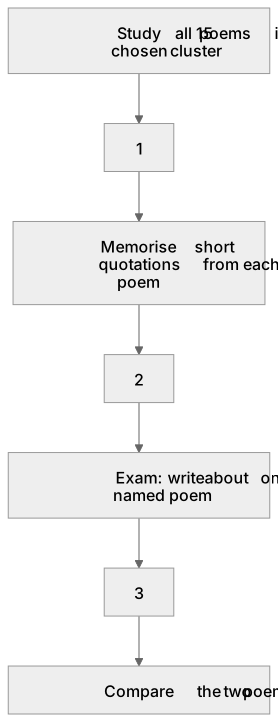
1Box 1
2Box 2
3Box 3
There is more to this lesson
The full lesson goes on to check your understanding and help you earn the marks. Create a free account to carry on, with your progress saved.
A week of Premium from your first lesson · Then the free plan continues · No card, no charge
Test your understanding of Poetry: Students should study all 15 poems in their chosen cluster and be prepared to write about any of them in the examination.
Active recall beats re-reading. Take an instant quiz now to test what you’ve learned and lock it into long-term memory.
A week of Premium from your first lesson · Then the free plan continues · No card, no charge