When We Two Parted
Master Byron's 'When We Two Parted', a poignant lyric poem exploring clandestine love, emotional betrayal, and the enduring pain of separation. This guide provides examiner-focused analysis of form, structure, and intense personal imagery to secure top-band marks.
Study Notes
Overview
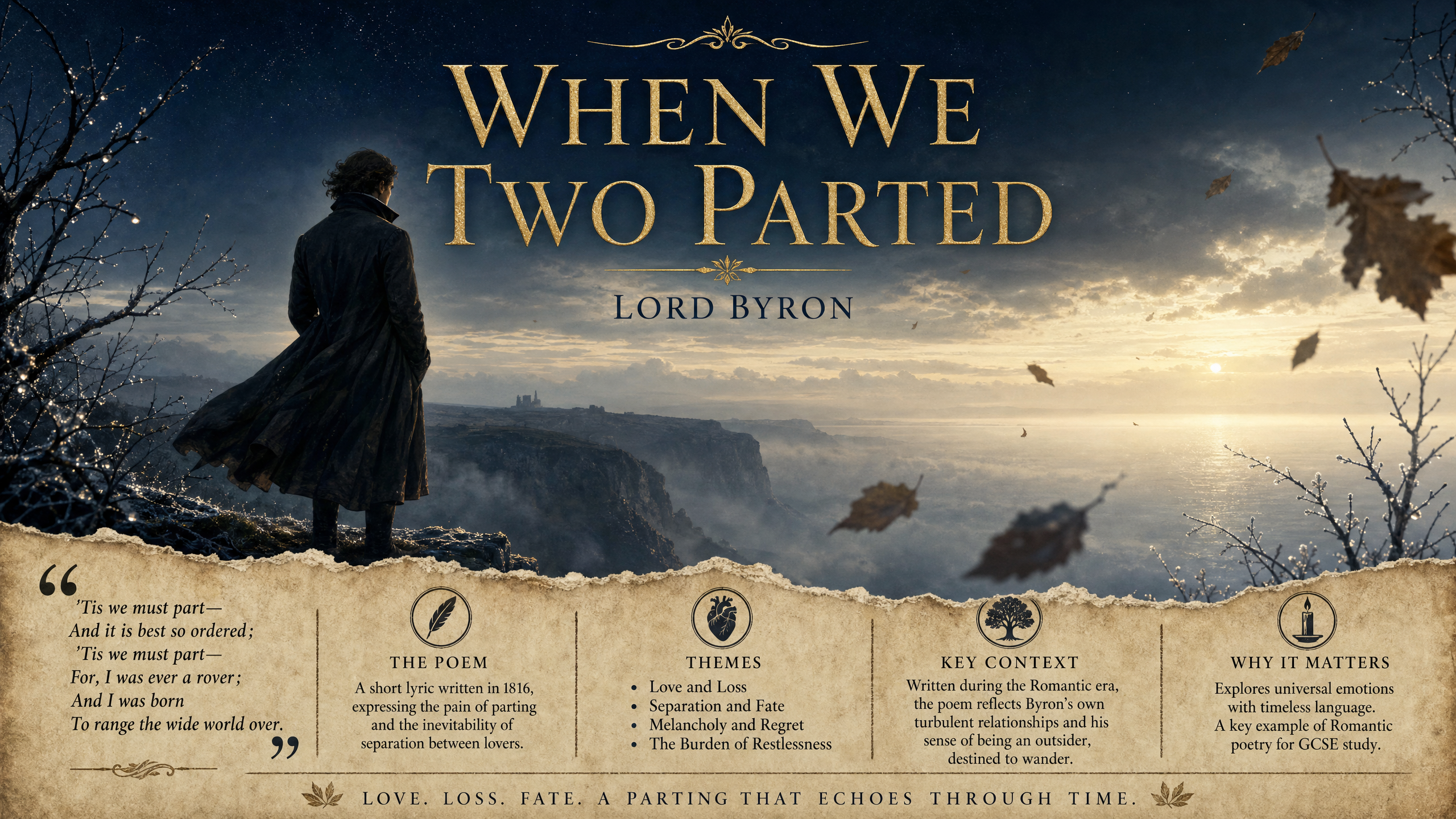
Lord Byron's 'When We Two Parted' (written c. 1808, published 1816) is a quintessential Romantic lyric poem that delves into the agonizing aftermath of a secret love affair. Examiners consistently reward candidates who can move beyond simple plot summary to analyse how Byron uses form, cyclical structure, and sensory imagery to convey themes of loss, regret, and the societal constraints of Regency-era relationships. The poem's power lies in its restraint—the grief is 'silent', yet all-consuming.
Listen to the audio study guide here:
Plot/Content Overview
- Stanza 1: The speaker recalls the painful, secret parting from their lover, characterized by silence and tears.
- Stanza 2: The speaker reflects on the physical coldness of the parting ('cold thy kiss'), viewing it as a dark omen for the future.
- Stanza 3: In the present, the speaker hears the former lover's name mentioned in society, accompanied by news of their tarnished reputation, which feels like a 'knell' (funeral bell).
- Stanza 4: The speaker contemplates a potential future meeting, concluding that it would be met with the same 'silence and tears' as their original parting, highlighting the inescapable cycle of grief.
Themes
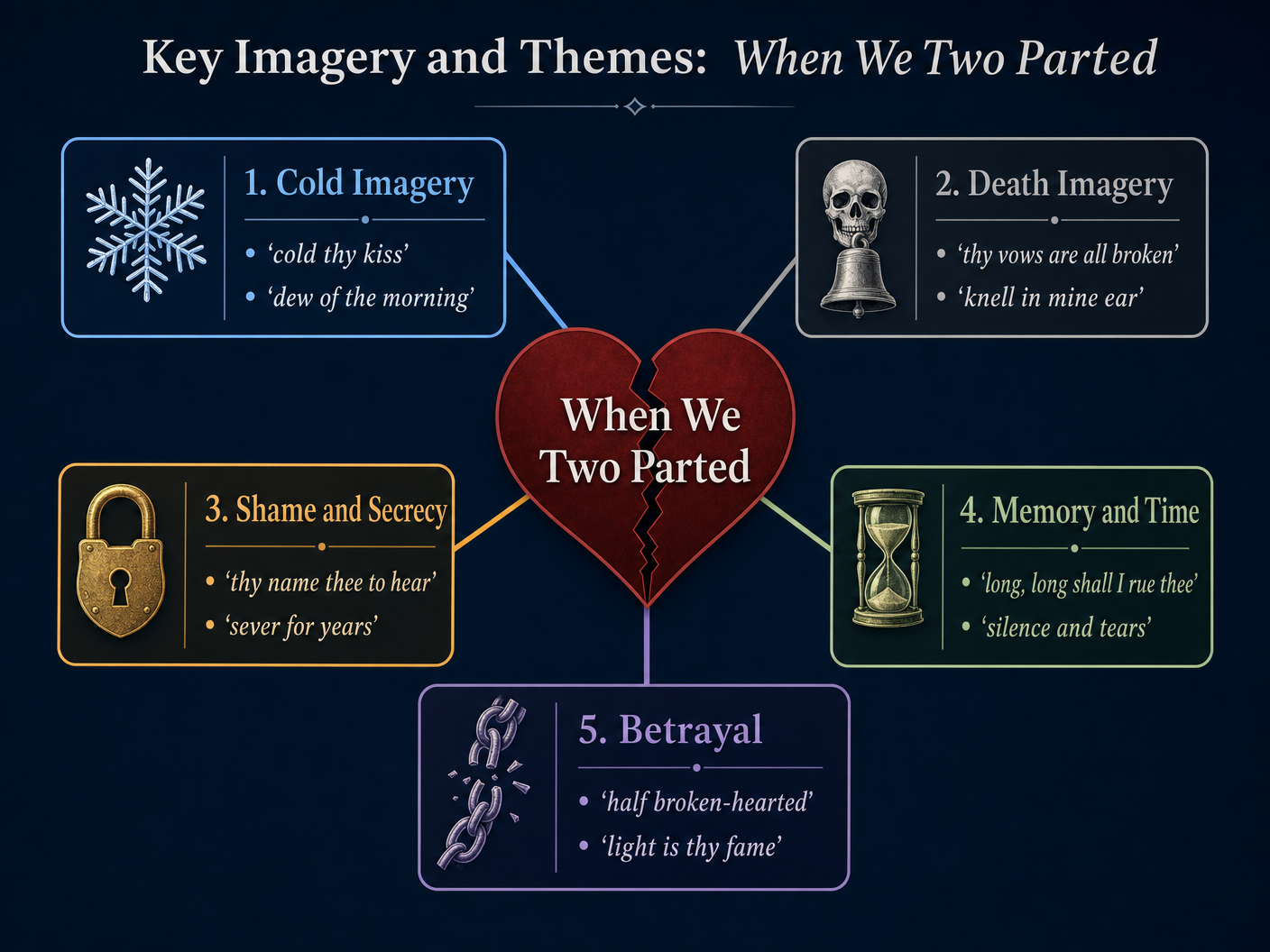
Theme 1: Loss and Enduring Grief
Byron presents grief not as a fleeting emotion, but as a permanent state of being. The cyclical structure of the poem traps the speaker in their sorrow, suggesting that time cannot heal this specific wound.
Key Quotes:
- "When we two parted / In silence and tears" (Stanza 1) - The absence of words highlights the profound depth of the sorrow; the grief is too immense for articulation.
- "Long, long shall I rue thee, / Too deeply to tell." (Stanza 4) - The repetition of 'long' emphasizes the enduring nature of the pain, while 'too deeply to tell' reinforces the theme of silent, inexpressible suffering.
Theme 2: Secrecy and Shame
The clandestine nature of the relationship amplifies the speaker's pain. Because the love was secret, the mourning must also be secret, denying the speaker any public comfort or closure.
Key Quotes:
- "They name thee before me, / A knell to mine ear;" (Stanza 3) - The auditory imagery of a 'knell' (funeral bell) links the hearing of her name to death, while also highlighting the social setting where he must hide his reaction.
- "Why wert thou so dear?" (Stanza 3) - A rhetorical question that underscores the speaker's internal conflict and regret over a love that has brought such shame.
Theme 3: Betrayal and Broken Vows
The poem shifts from mourning a mutual loss to expressing bitterness over the lover's subsequent actions and tarnished reputation.
Key Quotes:
- "Thy vows are all broken, / And light is thy fame:" (Stanza 3) - 'Light' implies she is now seen as frivolous or scandalous, a public betrayal that compounds his private grief.
- "Half broken-hearted" (Stanza 1) - This crucial phrase suggests an imbalance; perhaps he loved more deeply, or perhaps the relationship was never fully realized.
Writer's Methods
Form and Structure
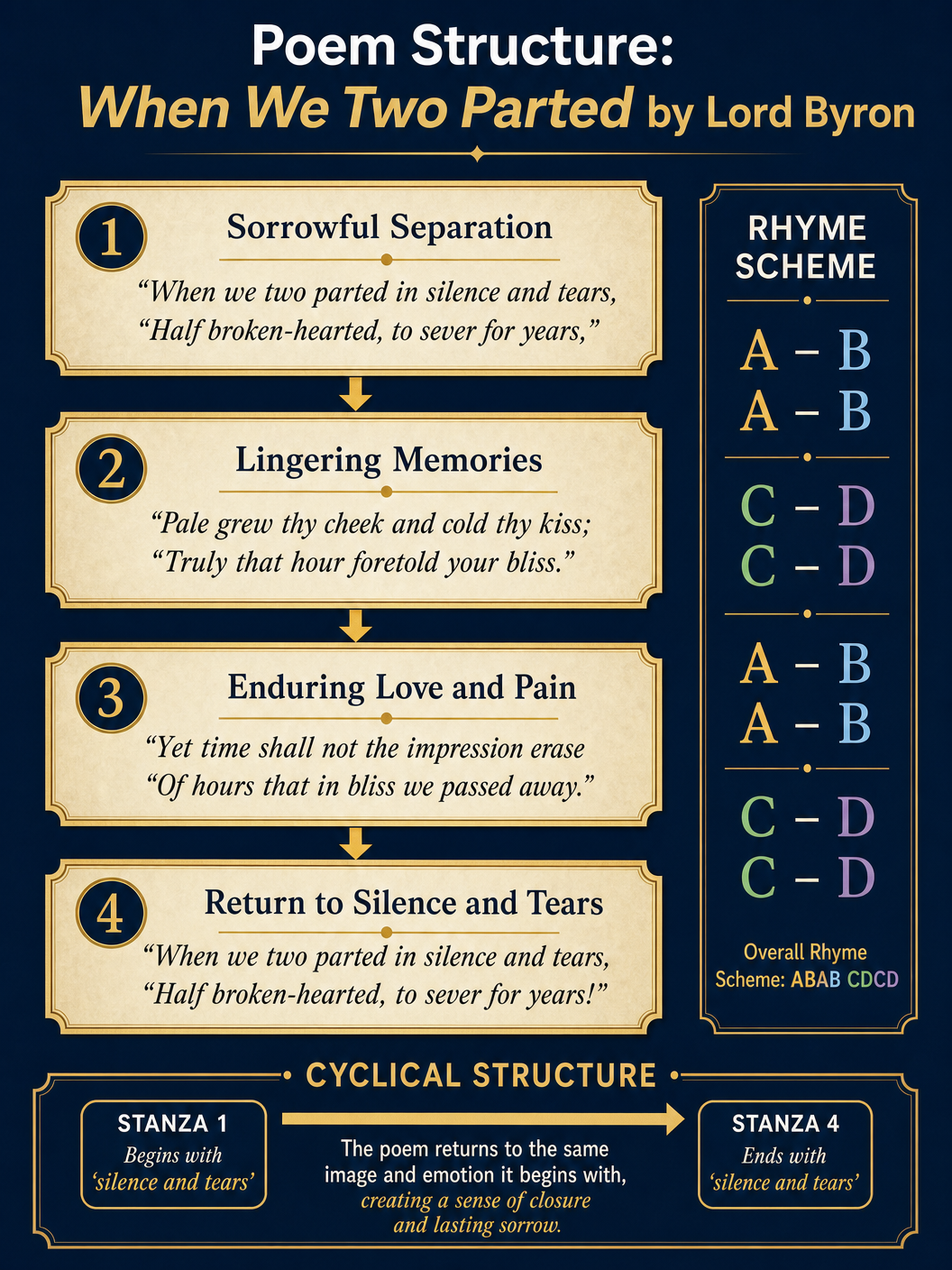
Byron employs a highly controlled structure to contain the intense emotion. The poem consists of four octets (eight-line stanzas) with a consistent ABAB CDCD rhyme scheme. This rigid structure contrasts with the chaotic emotions being described, perhaps reflecting the speaker's attempt to maintain composure in public.
The most significant structural feature is the cyclical structure. The poem begins and ends with the phrase "silence and tears." This creates a sense of entrapment; despite the passage of time, the speaker has not moved on emotionally.
Sensory Imagery
Byron uses powerful sensory imagery, particularly relating to coldness and death, to convey the death of the relationship.
- Tactile: "Pale grew thy cheek and cold, / Colder thy kiss;" - The repetition of 'cold' associates the lover with a corpse, suggesting the love was dead even before they parted.
- Auditory: "A knell to mine ear;" - The metaphor of the funeral bell links the end of the relationship to mortality and finality.
Context
Understanding the Romantic context is vital for AO3. The Romantic movement prioritized intense individual emotion over societal convention. Byron's own life was characterized by scandalous affairs (including a rumored affair with Lady Frances Webster, often thought to be the subject of this poem). The poem's emphasis on secrecy reflects the strict moral codes of Regency society, where public exposure of an affair would lead to social ruin. By backdating the poem to 1808 upon its 1816 publication, Byron actively attempted to protect the identity of the woman involved, making secrecy both a theme of the poem and a reality of its creation.
Interactive Diagrams
1 interactive diagram to visualise key concepts
Conceptual Flow Outline
The Cyclical Structure of Grief in 'When We Two Parted'
Worked Examples
2 detailed examples with solutions and examiner commentary
Practice Questions
Test your understanding — click to reveal model answers
Compare how poets present the pain of loss in 'When We Two Parted' and one other poem from your anthology.
Hint: Consider comparing the silent, enduring grief in Byron's poem with the more physical or dramatic grief in a poem like 'Neutral Tones' or 'Porphyria's Lover'.
How does Byron use imagery to convey the speaker's feelings in 'When We Two Parted'?
Hint: Focus on the semantic fields of coldness and death, and don't forget to link the auditory imagery ('knell') to the speaker's feelings of shock and betrayal.
Explore the significance of secrecy in 'When We Two Parted'.
Hint: Look at words like 'silence', 'shame', and 'name thee before me'. Why must the speaker hide his reaction?
Starting with Stanza 3, how does Byron present the theme of betrayal?
Hint: Analyze 'vows are all broken' and 'light is thy fame' in the extract, then look at 'half broken-hearted' in the wider text.