Cambridge International · iGCSE · English Literature
Course version: 0475 · Version from Sept 2026
Coursework Portfolio
The Coursework Portfolio offers a unique opportunity to demonstrate your analytical and creative prowess outside the constraints of an exam hall. By crafting two distinct assignments on different texts, you can secure up to 25% of your final IGCSE grade while showcasing your ability to deeply engage with literature.
- 4 min read
- 2 worked examples
- 4 practice questions
- 8 key terms
Study Notes
Overview
The Cambridge IGCSE English Literature Coursework Portfolio is a culmination of your literary studies, requiring you to produce two distinct assignments based on two different texts. This component allows you to demonstrate your comprehensive understanding of literature through both sustained analytical writing and imaginative empathic response. Examiners look for a genuine, informed personal response (AO4) supported by precise textual evidence (AO2) and a nuanced understanding of how writers use language, structure, and form to create meaning (AO3). The portfolio is your chance to shine without the pressure of a ticking clock, rewarding meticulous planning, drafting, and refinement.
The Assessment Objectives Framework
 Open full-size image (opens in a new tab)
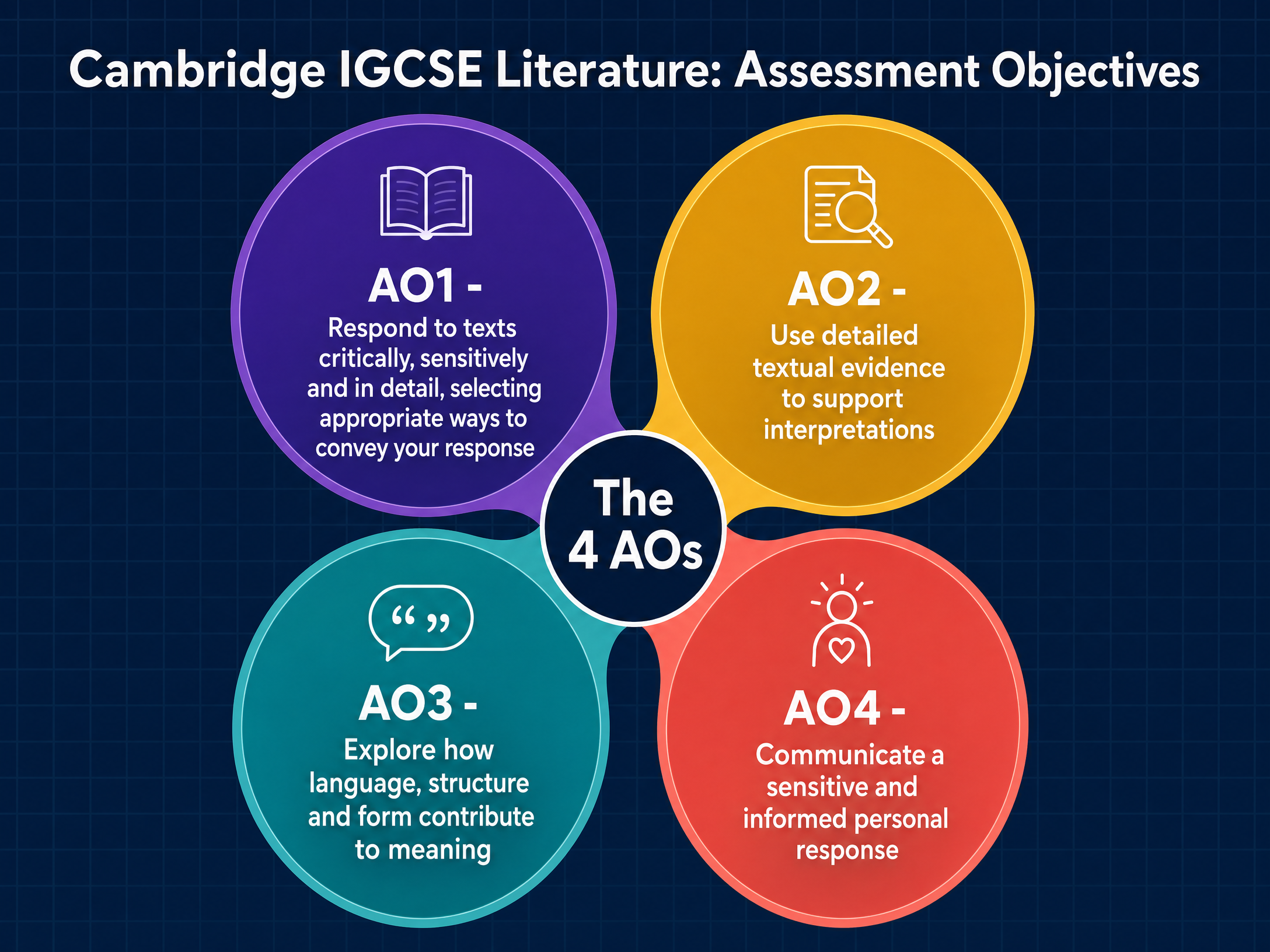
Every mark awarded in your portfolio is tied directly to the four Assessment Objectives. Understanding these is the key to unlocking the highest mark bands:
- AO1: Respond to texts critically, sensitively and in detail, selecting appropriate ways to convey your response.
- AO2: Use detailed textual evidence to support interpretations.
- AO3: Explore how language, structure and form contribute to meaning.
- AO4: Communicate a sensitive and informed personal response.
Assignment 1: The Analytical Essay
 Open full-size image (opens in a new tab)
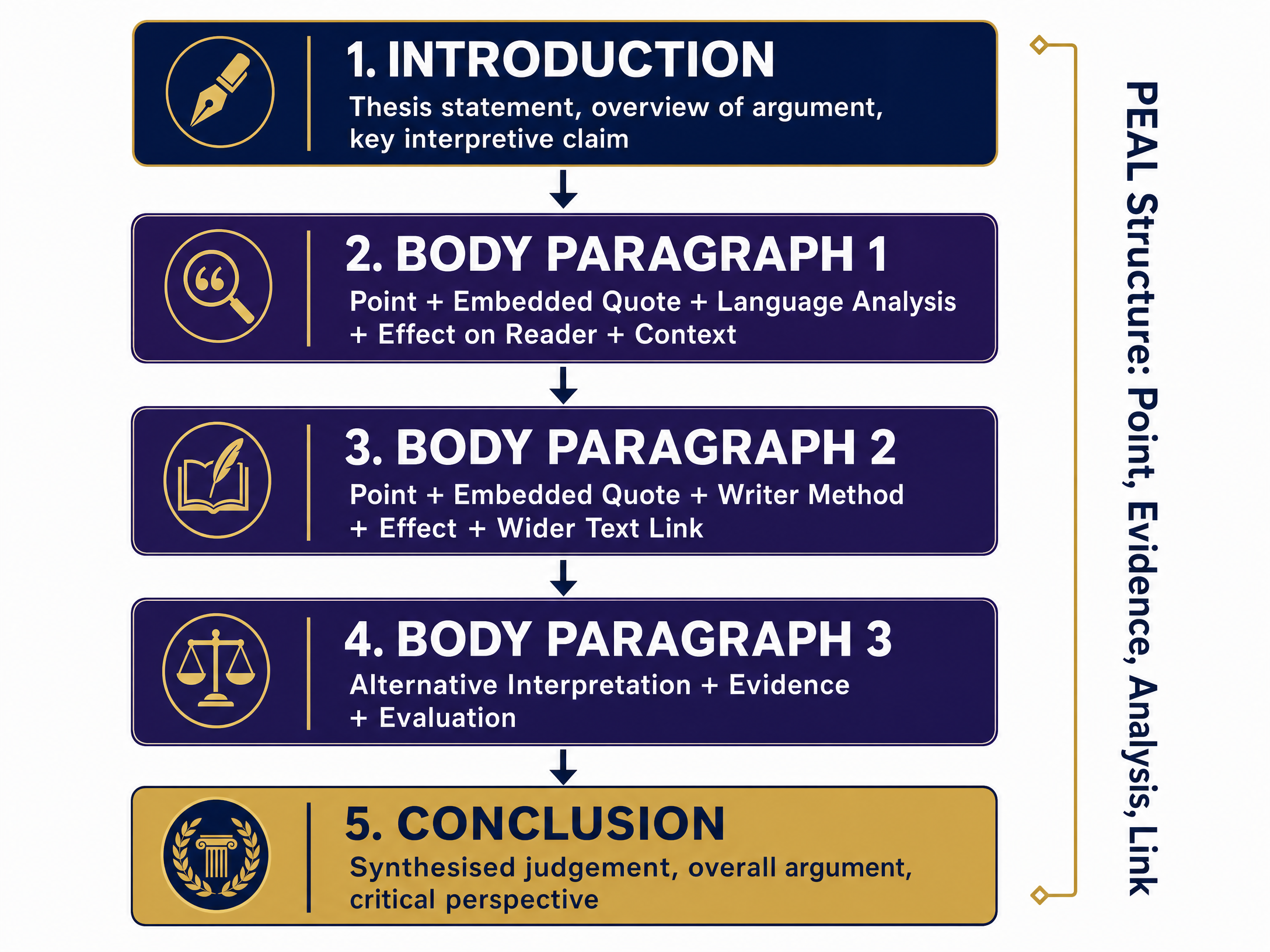
Your first assignment is typically a sustained analytical essay exploring a specific theme, character, or aspect of the writer's craft.
The PEAL Structure: To ensure you hit all AOs, adopt the PEAL paragraph structure:
- Point: Make a clear interpretive claim (AO1).
- Evidence: Embed a precise quotation from the text (AO2).
- Analysis: Analyse specific language choices and their effects (AO3).
- Link: Connect back to your thesis or the wider context of the text (AO1/AO4).
Integrating Context: A common pitfall is 'bolting on' context as a separate paragraph. Examiners reward context that is organically woven into your analysis, demonstrating how historical, social, or literary background directly influences your interpretation of the text.
Assignment 2: The Empathic Response
 Open full-size image (opens in a new tab)
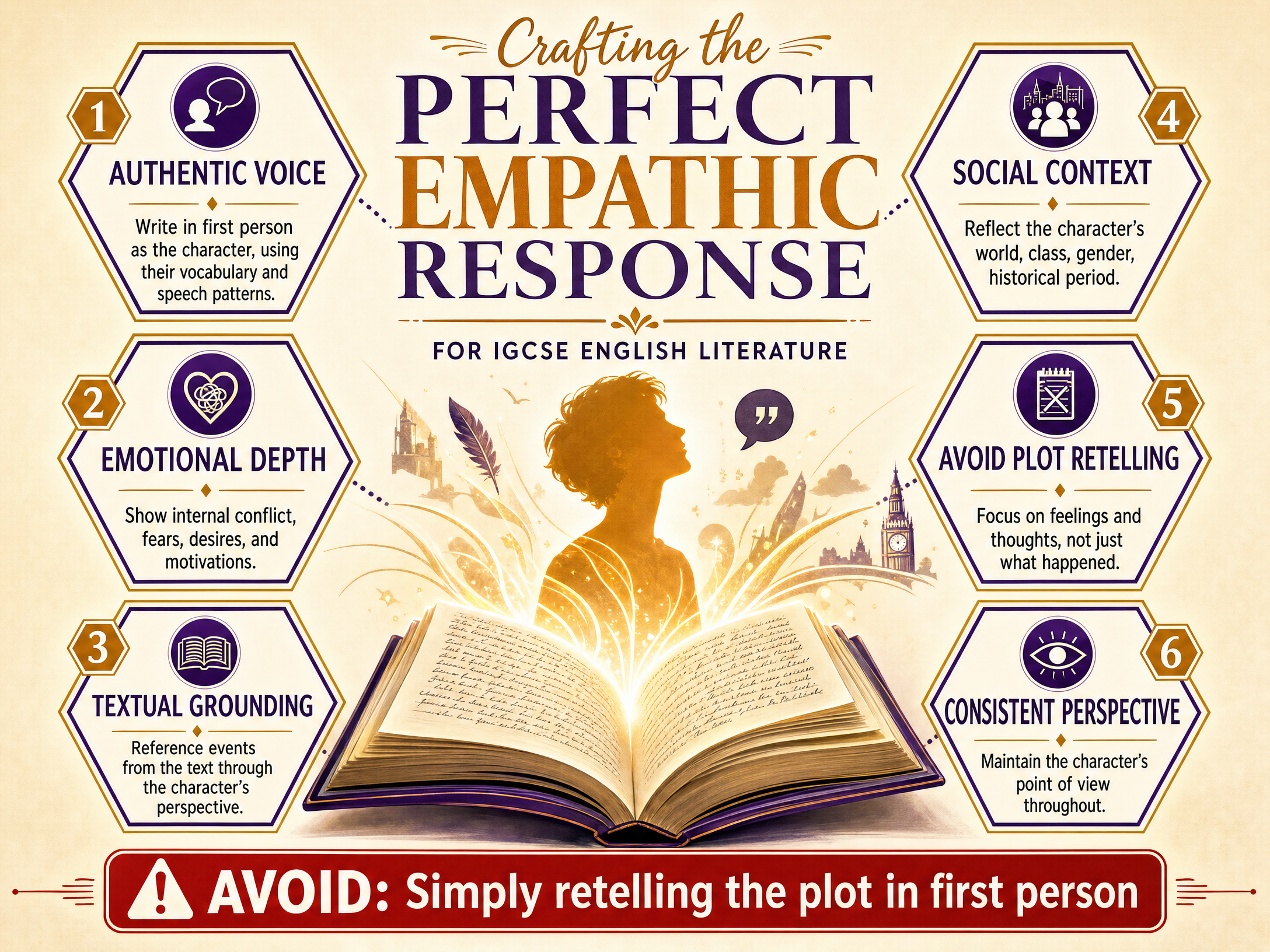
The empathic response requires you to write from the perspective of a character at a specific moment in the text. This is not merely a creative writing exercise; it is a rigorous test of your literary understanding.
Authentic Voice: You must capture the character's unique voice, vocabulary, and worldview. If the character is a 19th-century aristocrat, their language should reflect that status and era.
Avoiding the Trap: The most frequent error in empathic responses is simply retelling the plot in the first person. Instead, focus on the character's internal emotional landscape—their fears, motivations, and hidden desires. Ground your response in specific textual details to demonstrate your comprehensive knowledge of the original work.
Portfolio Overview
 Open full-size image (opens in a new tab)
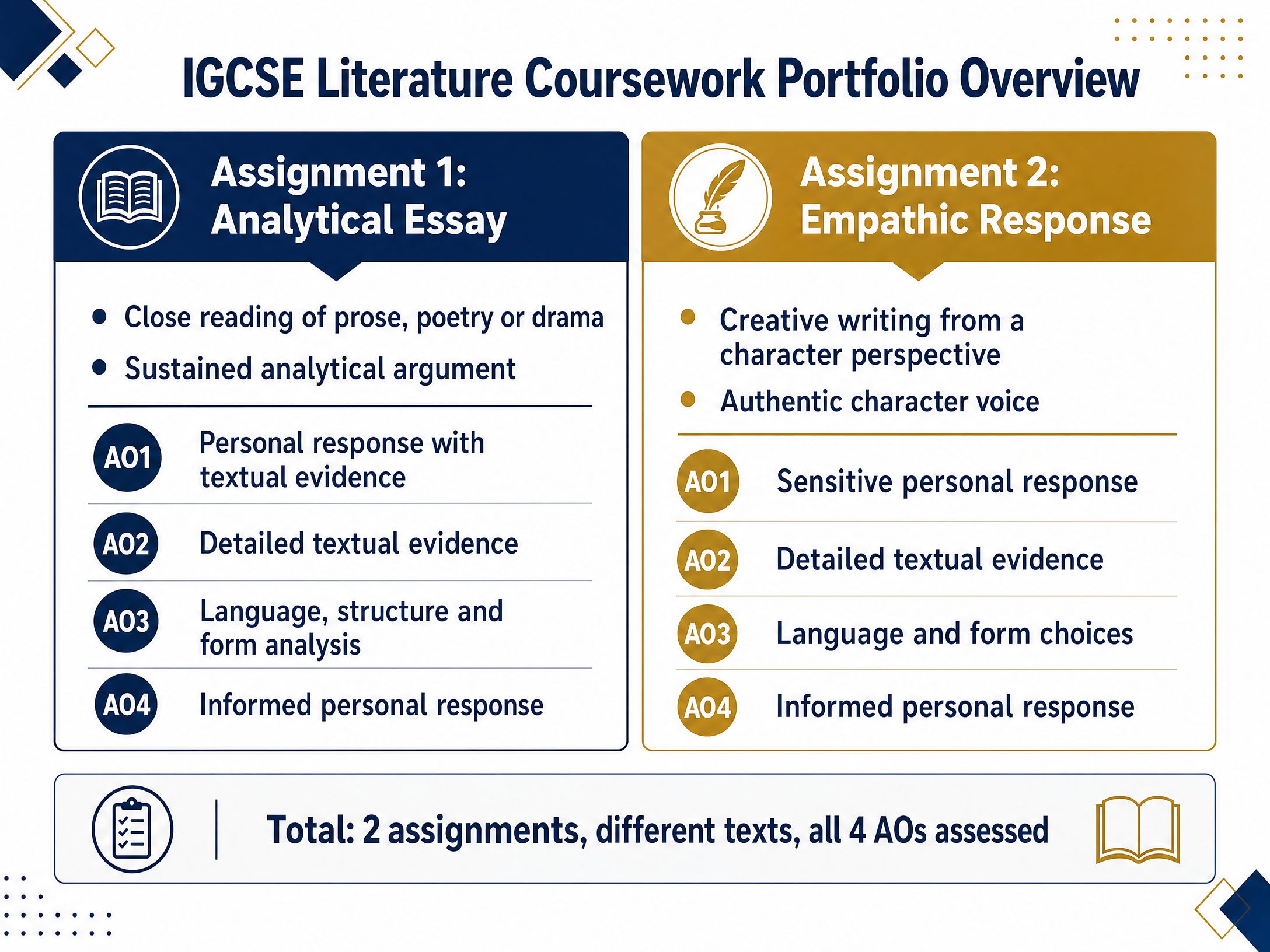
Ensure your portfolio meets all requirements: two assignments, two different texts, and clear evidence of engagement with all four Assessment Objectives across the submission.
Podcast Episode
Listen to our comprehensive 15-minute podcast episode covering everything you need to know about the Coursework Portfolio, including expert tips and a quick-fire recall quiz.
Check what you remember
Read the wording for your board, then hide it and explain Assessment Objectives (AOs) in your own words. Rough notes are fine. This is a self-check, with no mark or grade.
Reference: Cambridge International
The four specific criteria against which your work is marked: critical response (AO1), textual evidence (AO2), writer's methods (AO3), and personal response (AO4).
Interactive Diagrams
1 interactive diagram to visualise key concepts
Conceptual Flow Outline
Coursework Portfolio Structure and Requirements
Worked Examples
2 worked examples — open one to explore the question and available guidance.
Practice Questions
Try the question, then reveal an answer plan or example response
Analytical Essay Practice: Explore how the writer creates tension and suspense in a key chapter/scene of your chosen text.
Hint: Focus heavily on AO3 (structure and form). Look at sentence length, pacing, and the withholding of information.
Empathic Response Practice: Write the thoughts of a character who has just discovered a devastating secret.
Hint: Don't explain the secret to the reader—the character already knows it. Focus on their emotional reaction and what it means for their future.
Analytical Essay Practice: How does the writer present the relationship between two characters in your chosen text?
Hint: Don't just describe their interactions. Analyse the power dynamics, the subtext of their dialogue, and how their relationship drives the narrative forward.
Empathic Response Practice: Write a letter from a minor character observing the actions of the protagonist.
Hint: This tests your ability to adopt an 'outsider' perspective. How does the protagonist look to someone who doesn't know their internal thoughts?
Ready to test yourself interactively?
Active recall beats reading alone. Answer questions on Coursework Portfolio with instant AI scoring and mark scheme guidance.
A week of Premium from your first lesson · Then the free plan continues · No card, no charge
Exam technique
How to turn what you know into marks
How to approach the question
Deconstruct your chosen prompt by highlighting the key theme/character and the command words. Map out your thesis before writing.
How to structure your answer
Analytical Essay: Introduction (Thesis) -> 3-4 PEAL Paragraphs -> Conclusion. Empathic Response: Establish voice immediately -> Reflect on recent events -> Show internal conflict -> Look to the future.
Timing
As coursework is untimed, focus on drafting and refining. Aim for 800-1200 words per assignment.
Common pitfalls
- Writing description or plot summary instead of analysis.
- Failing to embed quotations fluently.
- Treating the empathic response as generic creative writing rather than rooting it in the text.
- Using the same text for both assignments.
What the command words want
- Explore
- Look at multiple facets of the topic; show how the writer develops the idea across the text.
- Write the thoughts of
- Adopt the character's persona completely. Focus on AO4 (sensitive personal response) while grounding in AO2 (textual detail).
- How does the writer present
- Focus heavily on AO3 (language, structure, form). Discuss the writer's conscious choices and their effects.
Watch or listen (optional)
Test your understanding of Coursework Portfolio
Active recall beats re-reading. Take an instant quiz now to test what you’ve learned and lock it into long-term memory.
A week of Premium from your first lesson · Then the free plan continues · No card, no charge