Pearson Edexcel · GCSE · English Literature
Comparing Texts
Master the art of literary comparison, a skill that separates the best candidates from the rest. This guide unlocks the secrets of Edexcel Paper 2.4, showing you exactly how to weave texts together to earn top marks.
- 4 min read
- 2 worked examples
- 4 practice questions
- 8 key terms
Study Notes
Overview
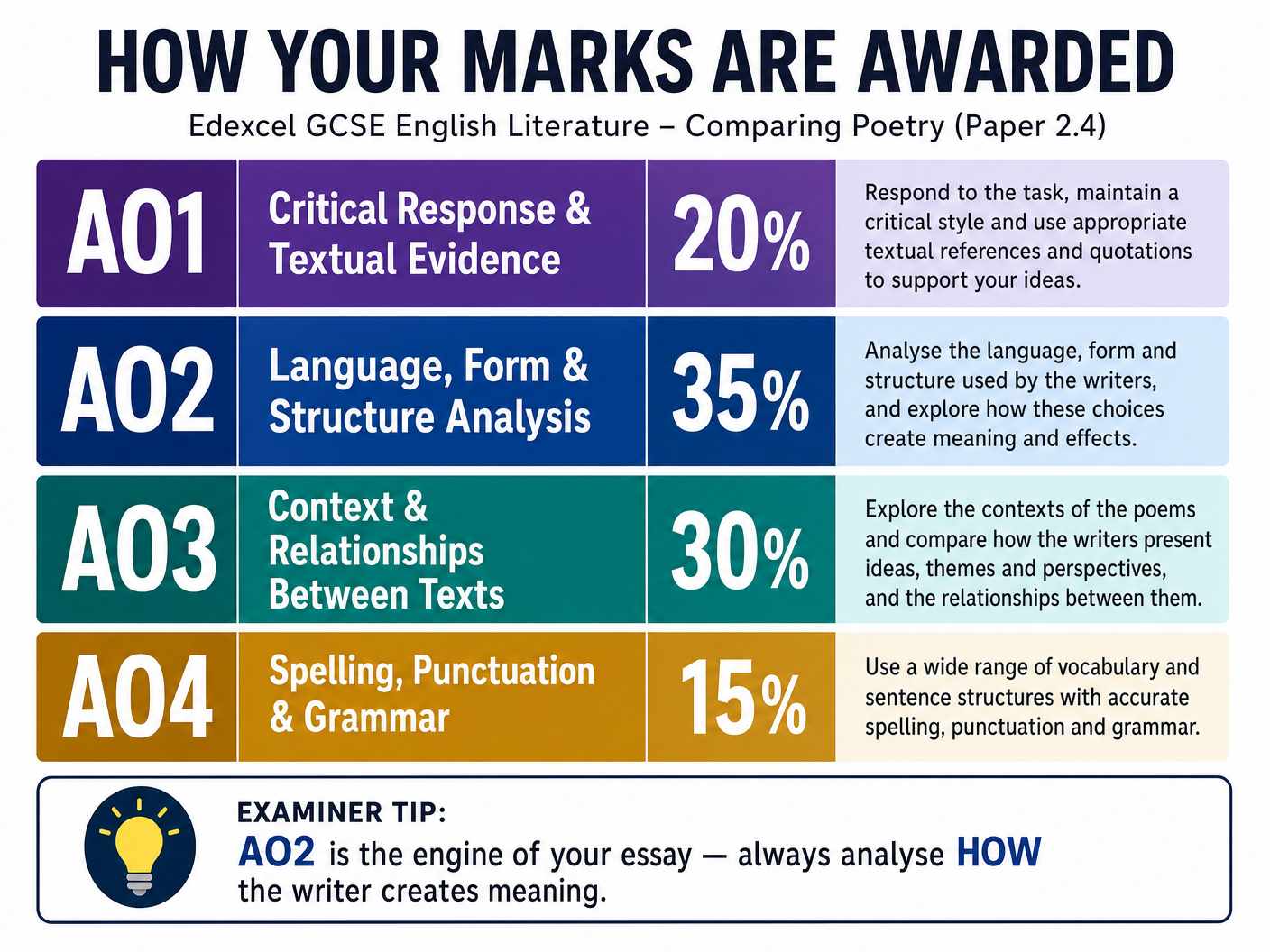
The 'Comparing Texts' component (Paper 2.4) is often where students either secure or lose their highest grades in Edexcel GCSE English Literature. Examiners are not looking for two separate essays stuck together; they demand a synthesised, integrated response where both texts are in constant conversation. This section tests your ability to critically analyse language, form, and structure (AO2), whilst understanding how different contexts shape meaning (AO3). Whether you are comparing anthology poems or unseen texts, your success depends on maintaining a relentless comparative focus.
The Comparison Framework
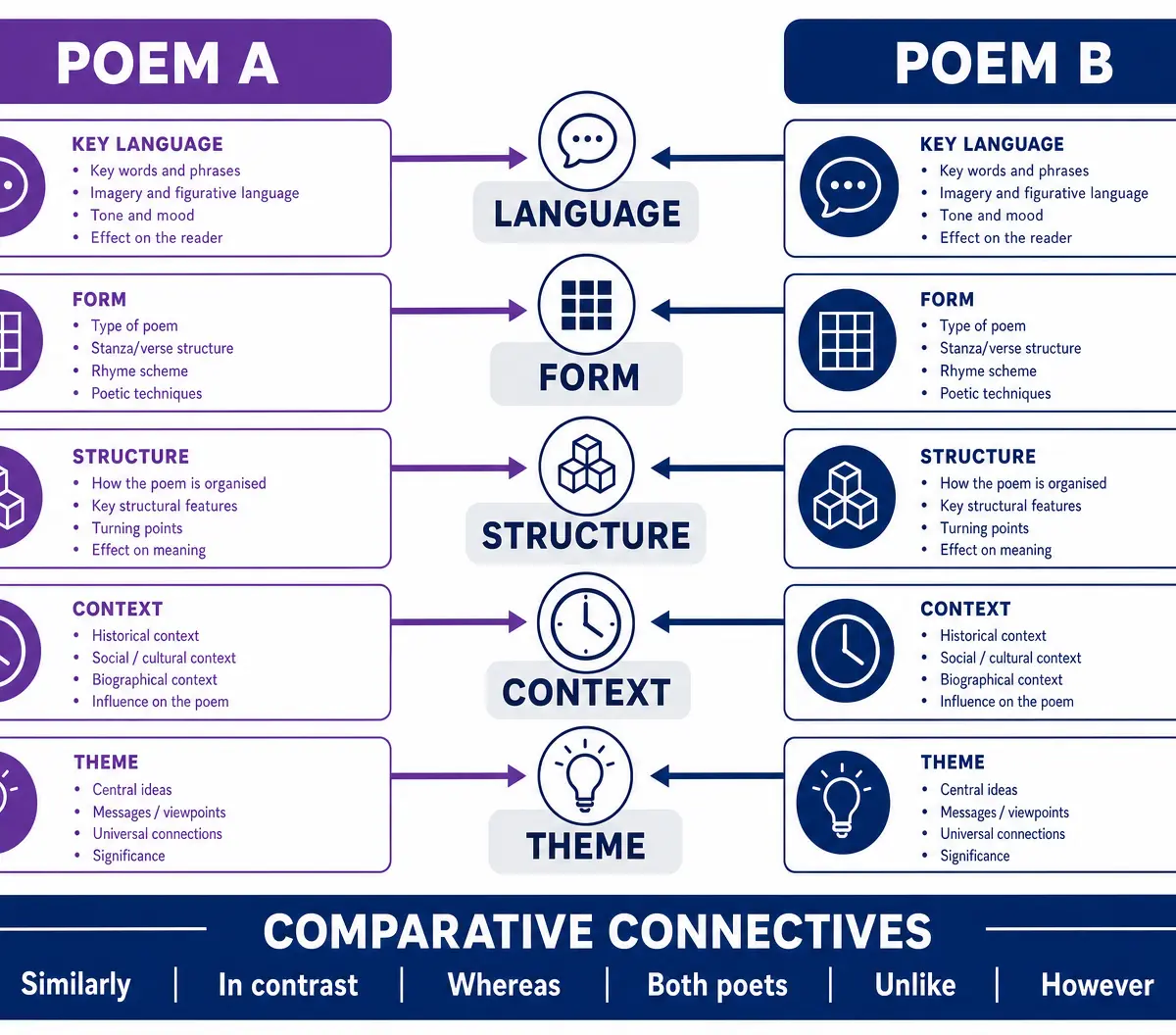
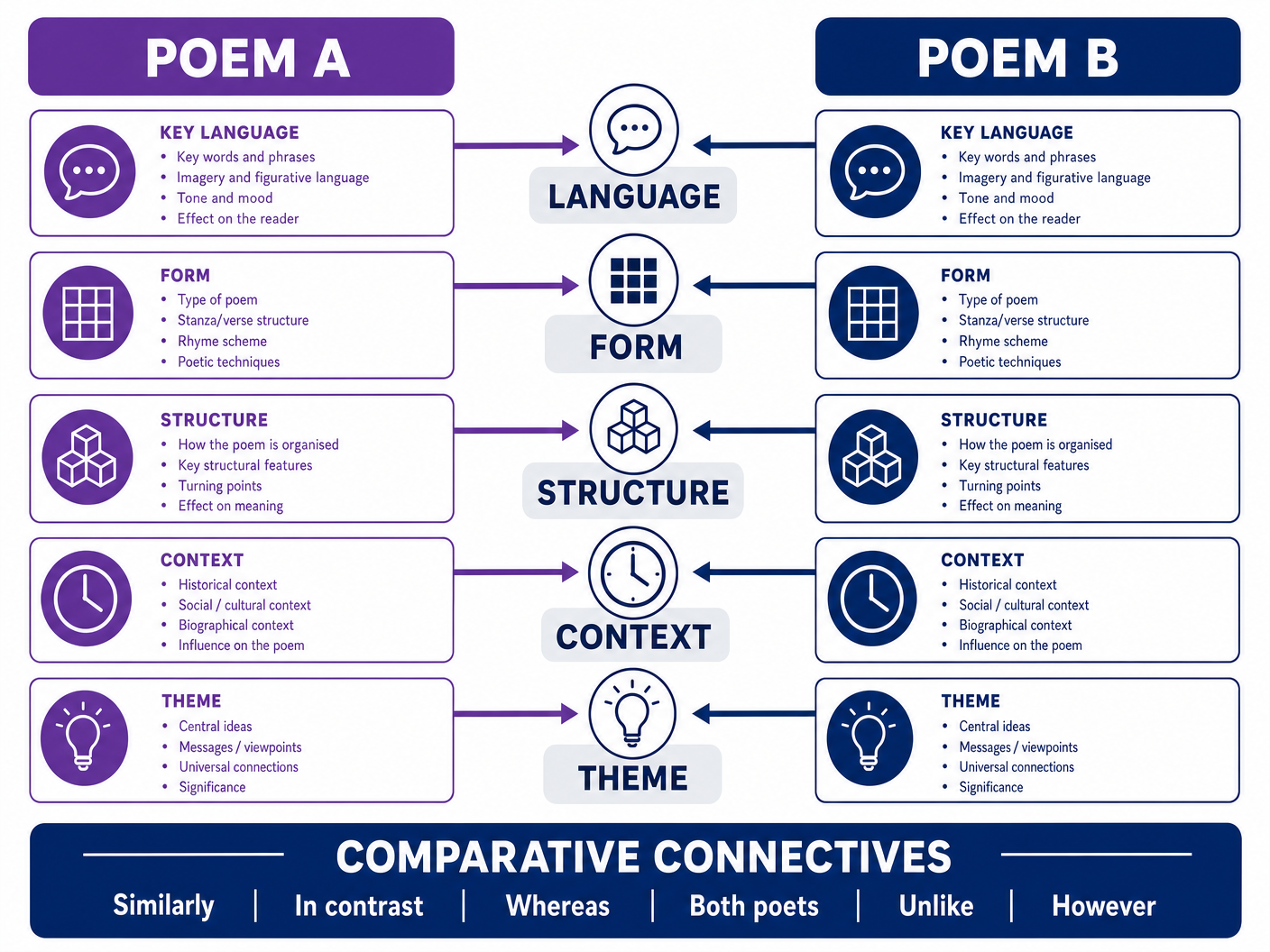
To succeed in this paper, you must approach comparison systematically. Examiners reward candidates who move beyond simple thematic links and compare the methods writers use.
Thematic Connections
Begin by establishing the thematic link. Are both poems exploring the destructive nature of power? Are they both lamenting lost love? Establishing this framework gives your essay a clear direction.
Comparing Language
When comparing language, look for word-level choices. If Poet A uses aggressive verbs while Poet B uses passive verbs, what does this contrast reveal about their respective attitudes to the theme?
Comparing Form and Structure
This is where many candidates fall down, but where the best candidates excel. Compare stanza lengths, rhyme schemes, and turning points (voltas). If one poem is a highly structured sonnet and the other is fragmented free verse, this structural contrast is a goldmine for analysis.
Writer's Methods (AO2)
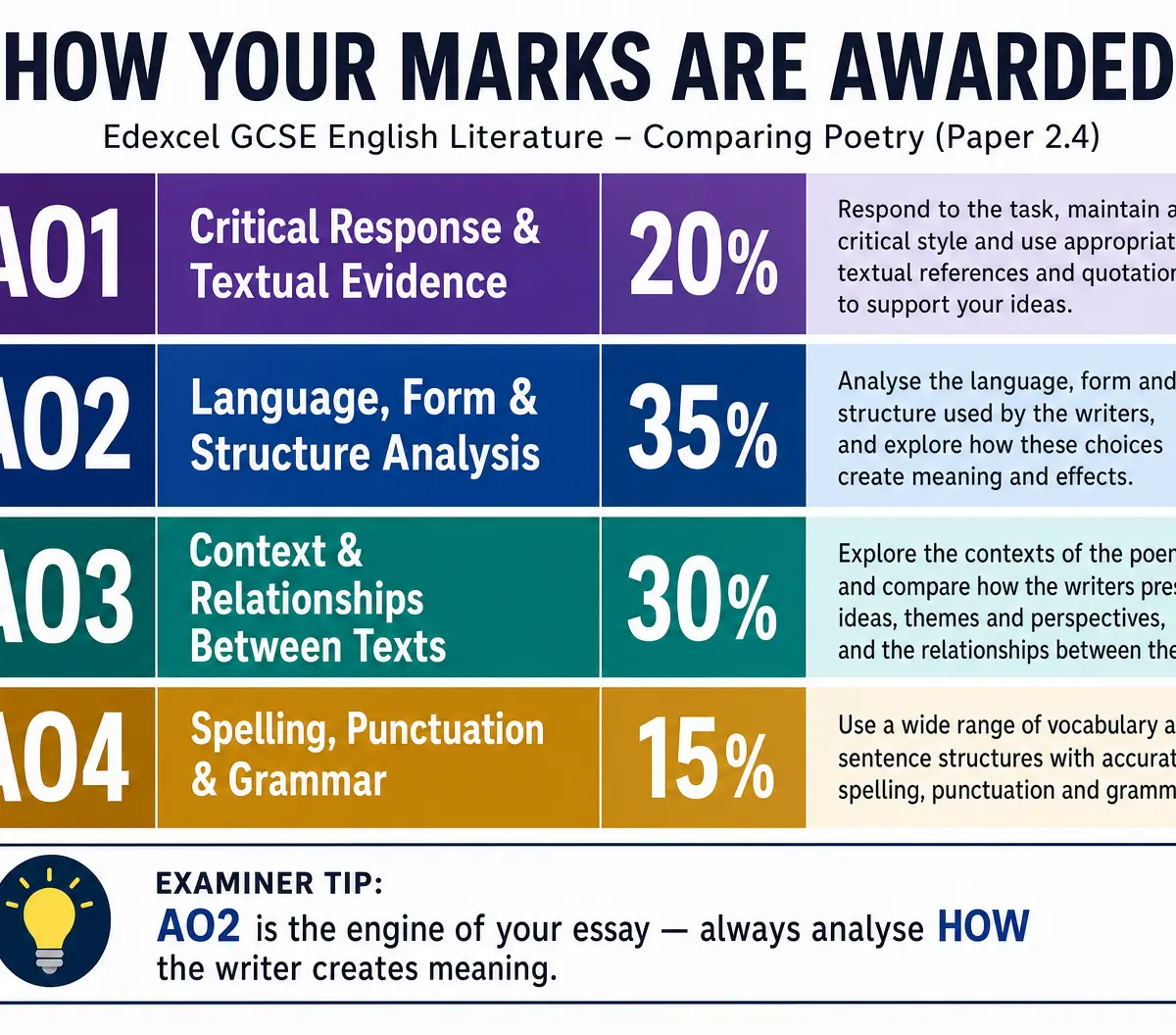
Examiners repeatedly state in their reports that AO2 is the 'engine' of a high-level response. You must analyse how the writer creates meaning.
The FLITS Approach
Use the FLITS framework to ensure comprehensive coverage:
- Form: What type of poem is it? (e.g., dramatic monologue, sonnet)
- Language: What specific words are chosen and what are their connotations?
- Imagery: What metaphors, similes, or personification are used?
- Tone: What is the emotional voice of the speaker?
- Structure: How does the poem develop from beginning to end?
Context (AO3)
Context must never be a 'bolt-on' paragraph of historical facts. It must be integrated into your analysis of the text. Explain how the context influenced the writer's choices and how it shapes our understanding of the poem's meaning.

Listen to the podcast above for a comprehensive 10-minute guide on mastering this component, including common mistakes to avoid and a quick-fire recall quiz.
Essay Structure
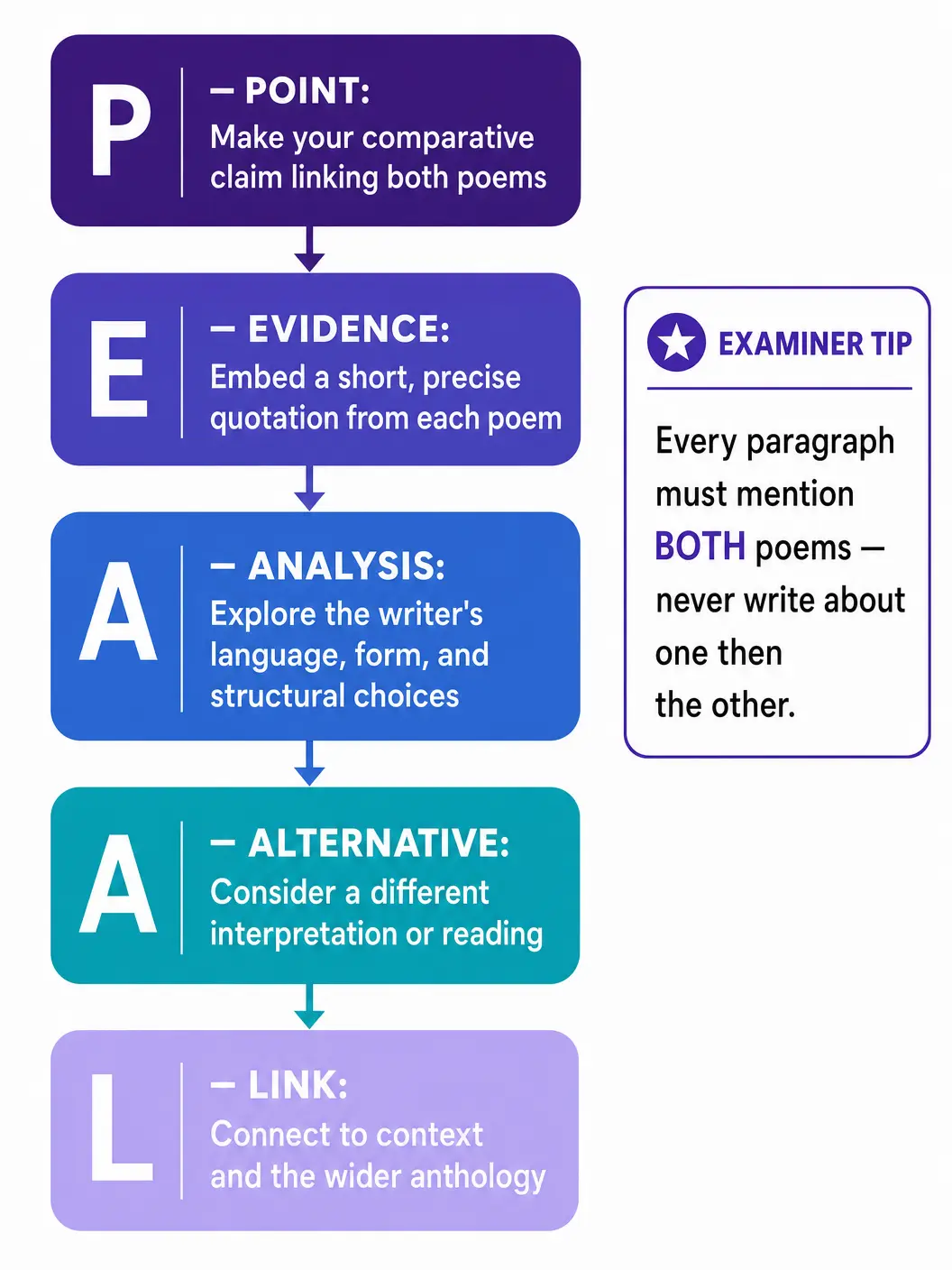
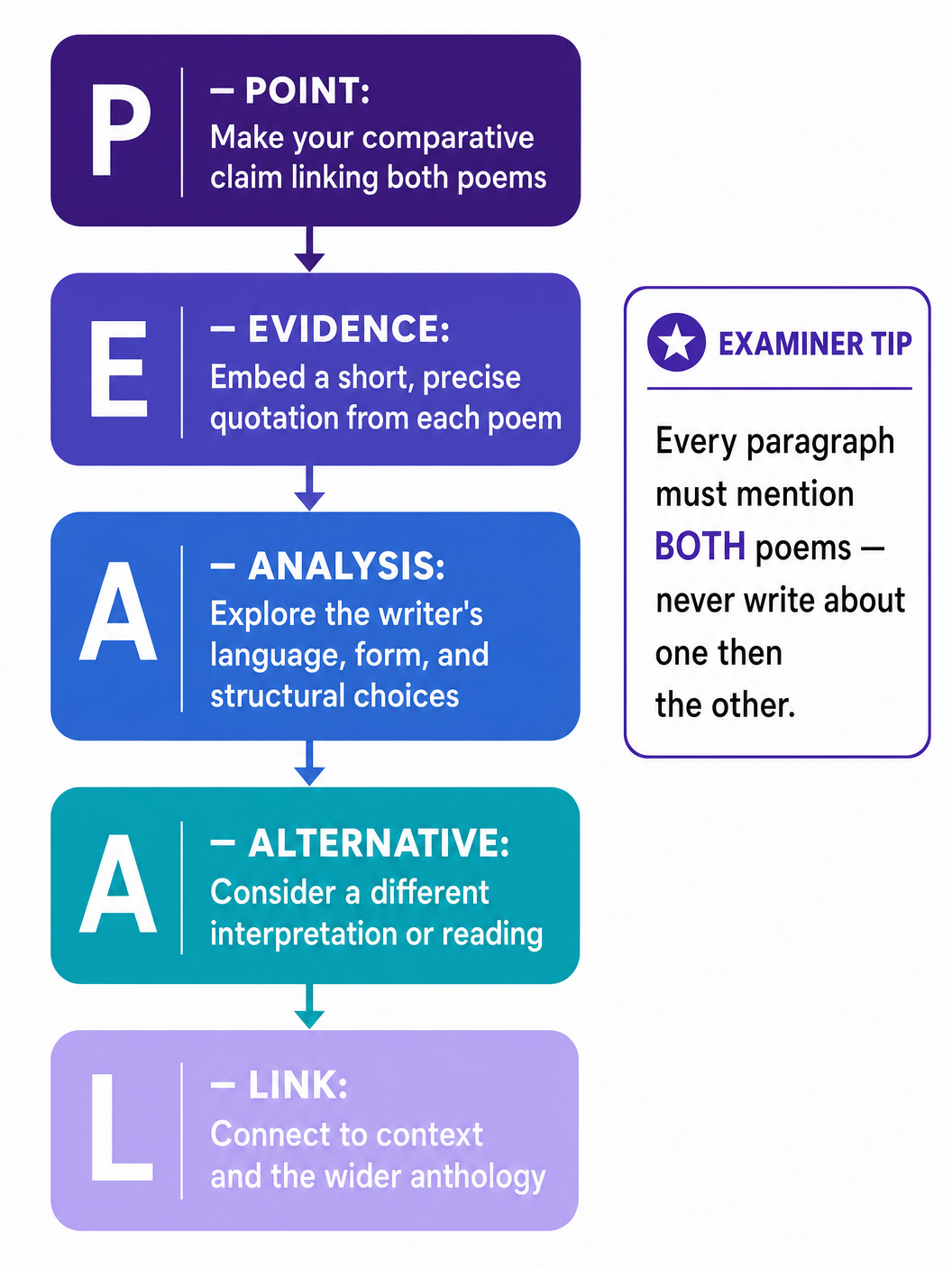
Adopt the comparative PEAL structure for every paragraph to ensure you never lose focus on either text.
Visual Resources
3 diagrams and illustrations
Interactive Diagrams
1 interactive diagram to visualise key concepts
Conceptual Flow Outline
The Planning Process for a Comparative Poetry Essay
Worked Examples
2 worked examples — open one to explore the question and available guidance.
Practice Questions
Test your understanding — click to reveal model answers
Compare how poets present the experience of loss in 'Poetics of Loss' and one other poem from your anthology. (30 marks)
Hint: Consider whether the loss is presented as sudden and violent, or slow and fading. How do the structure and form reflect these different experiences?
Compare how the writers present the power of nature in the unseen poem provided and one other poem. (30 marks)
Hint: Is nature presented as a nurturing force or a destructive, overwhelming power? Look for personification and sensory imagery.
Compare how poets present ideas about identity in 'My Identity' and one other poem. (30 marks)
Hint: Think about cultural identity, personal history, and how language is used to express belonging or alienation.
Compare how the writers present the reality of conflict in the unseen poem 'The Front Line' and one other poem. (30 marks)
Hint: Contrast the physical reality of the battlefield with the psychological impact on the soldiers.