Pearson Edexcel · GCSE · English Literature
Evaluation of a Writer's Choice of Vocabulary, Grammatical and Structural Features
Mastering the evaluation of a writer's craft is the key to unlocking the highest grades in GCSE English Literature. This guide equips you with the tools to analyse vocabulary, grammar, and structure like a senior examiner, transforming how you read and write about texts.
- 5 min read
- 2 worked examples
- 4 practice questions
- 8 key terms
Study Notes
Overview
Evaluating a writer's choice of vocabulary, grammatical, and structural features is the cornerstone of advanced literary analysis. Examiners are not looking for a simple retelling of the plot; they want to see that you understand the text as a deliberately constructed artefact. Every word, sentence, and structural shift is a choice made by the writer to shape the reader's response, convey themes, and reflect contextual concerns. To achieve the highest marks (Level 5/6), candidates must move beyond 'feature-spotting' and offer perceptive, critical evaluations of how these methods create meaning and impact.
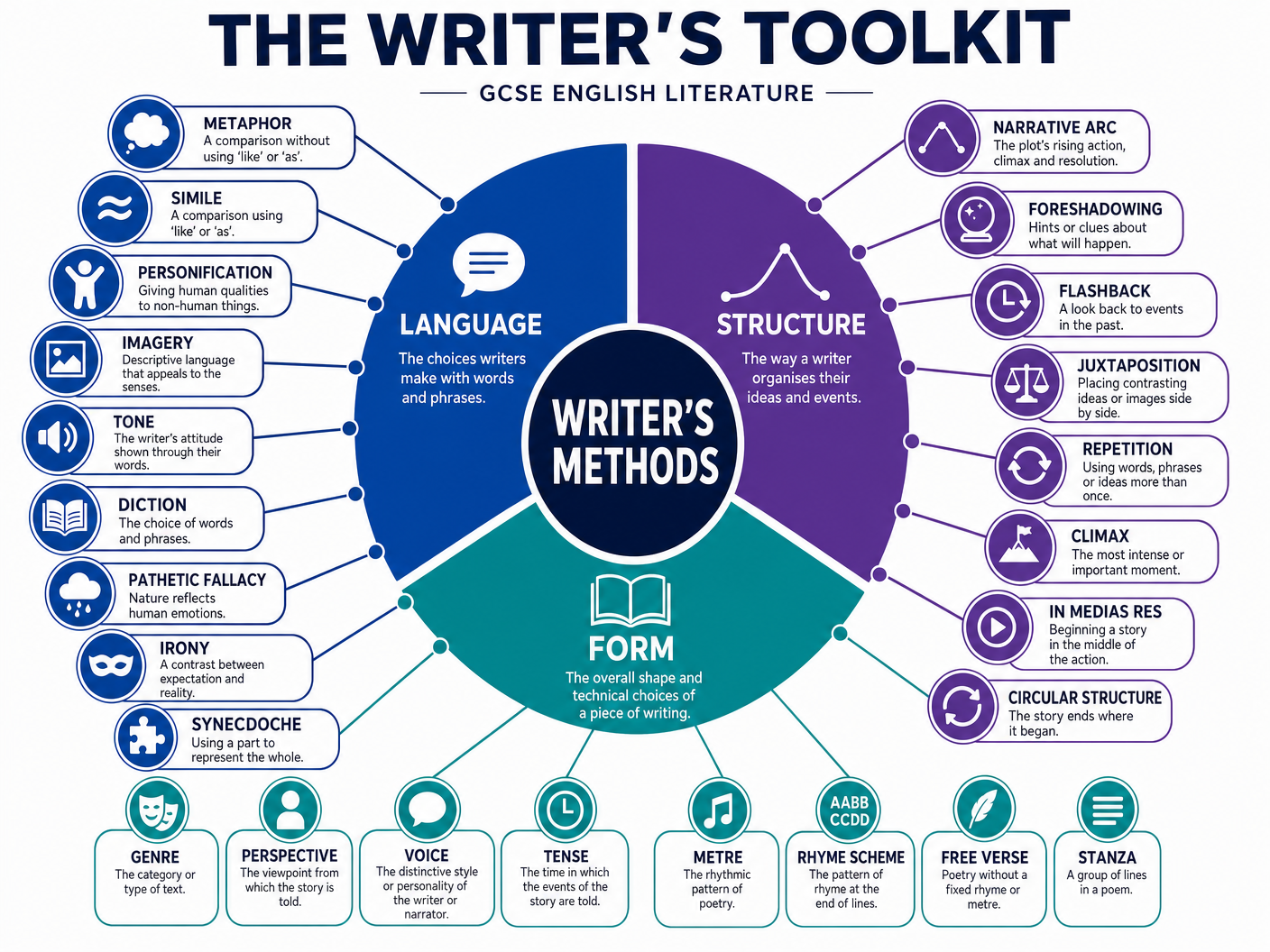
The Writer's Toolkit: Language, Structure, and Form
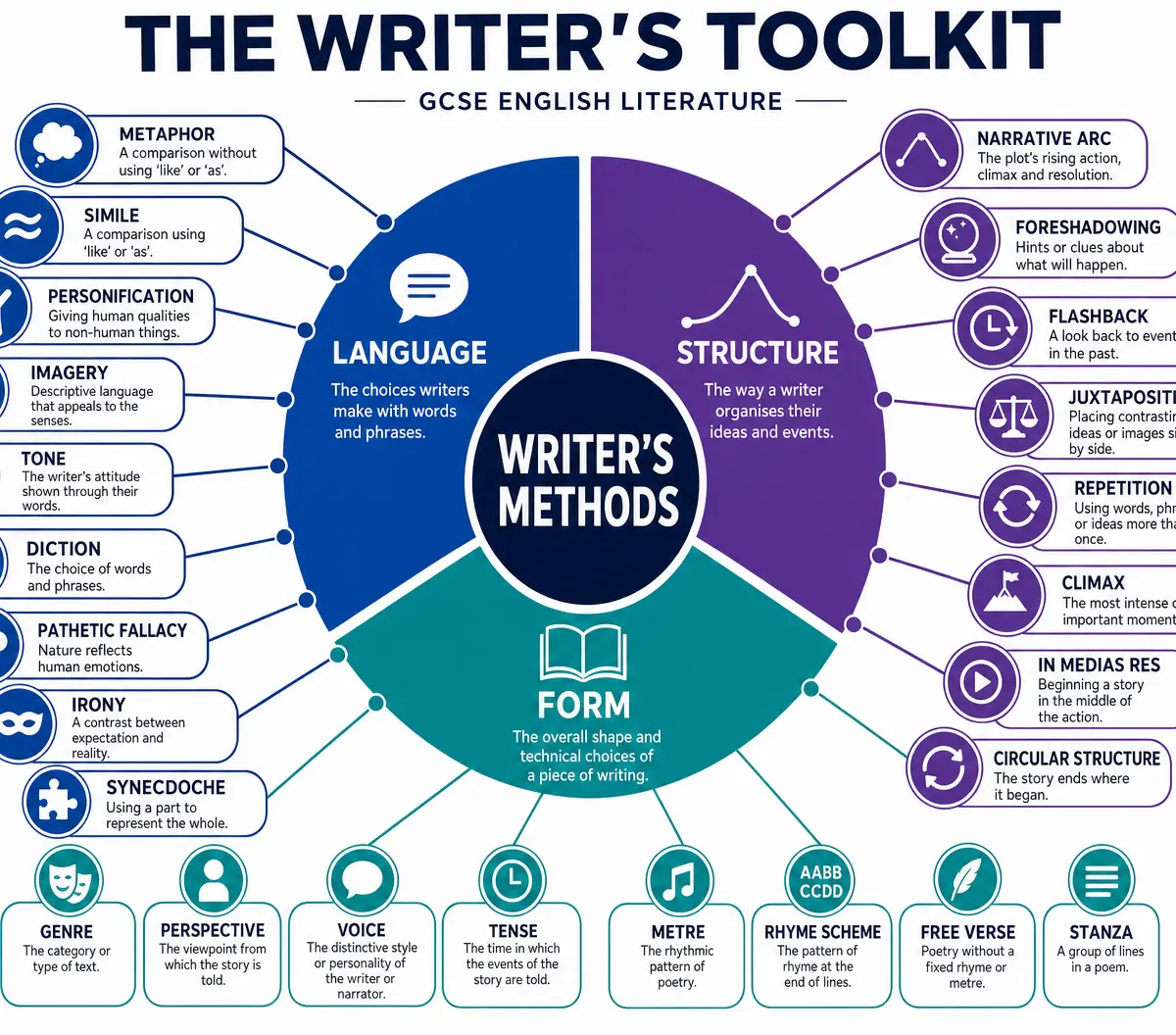
Language and Vocabulary Choices
Language analysis focuses on the writer's specific word choices and linguistic techniques. Examiners reward candidates who can unpick the connotations of individual words and explain their effect within the wider context of the passage or text.
Key Techniques to Analyse:
- Semantic Fields: Groups of related words that build a sustained atmosphere. For example, a semantic field of decay might suggest moral corruption.
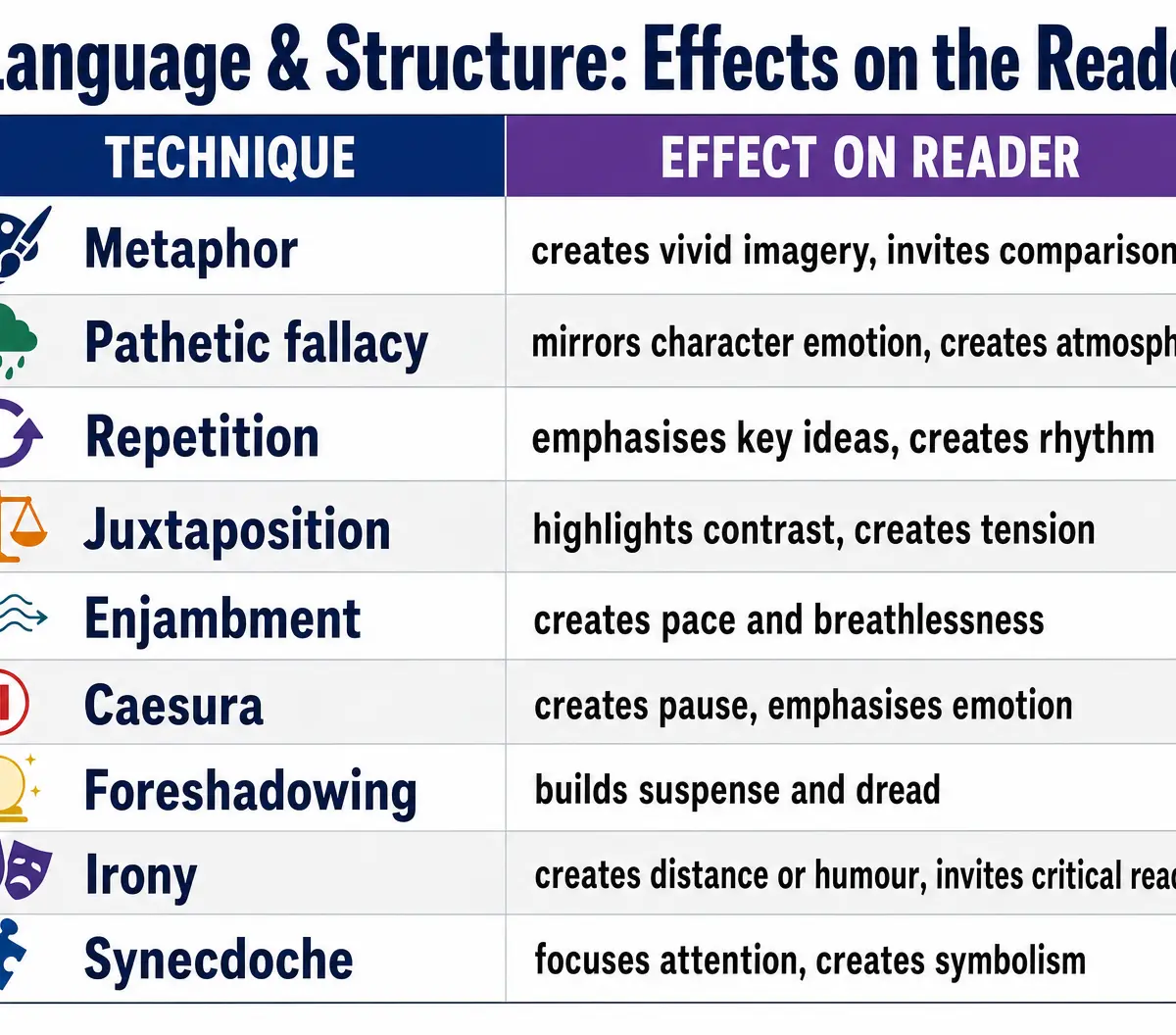
- Figurative Language: Metaphors, similes, and personification. Don't just identify them; explain the specific comparison being made and its emotional impact.
- Connotations: The associations a word carries. A writer choosing 'glared' instead of 'looked' suggests hostility and aggression.
- Sensory Imagery: Descriptions appealing to sight, sound, touch, taste, or smell, used to immerse the reader in the scene.
Grammatical Features
Grammar is often overlooked, but it is a powerful tool for shaping meaning. Analysing syntax (sentence structure) can elevate a response to the top band.
Key Features to Analyse:
- Sentence Length: Short, simple sentences can create pace, tension, or a sense of shock. Long, complex, multi-clausal sentences might reflect overwhelming emotion, confusion, or a stream of consciousness.
- Voice: Active voice gives a character agency; passive voice can make them seem powerless or victimised.
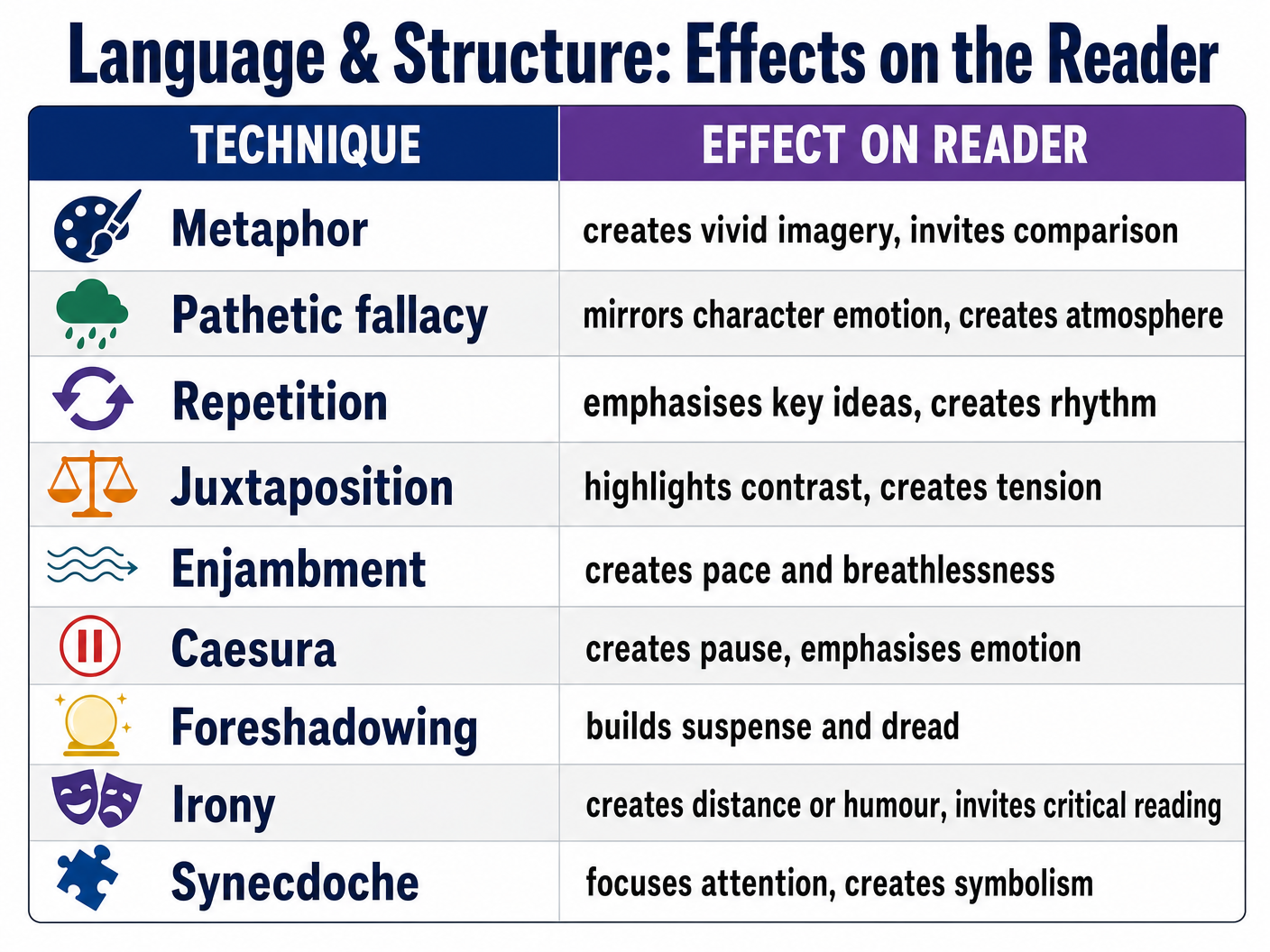
- Punctuation: Look for caesura (a pause in the middle of a line) to create hesitation, or enjambment (lines flowing into each other) to create a breathless, urgent pace.
- Sentence Types: Imperatives (commands) establish dominance; interrogatives (questions) create uncertainty or challenge the reader.
Structural Choices
Structure refers to how the text is organised and sequenced. It is about the journey the writer takes the reader on.
Key Techniques to Analyse:
- Narrative Arc and Focus: How does the focus shift from the beginning, to the middle, to the end of an extract or text? Does it move from the external setting to an internal emotion?
- Foreshadowing and Flashbacks: Manipulating time to build suspense or provide crucial background information.
- Juxtaposition and Contrast: Placing contrasting ideas, characters, or settings side-by-side to highlight their differences.
- Repetition and Motifs: Recurring words or images that reinforce a theme or idea.
- Narrative Perspective: Who is telling the story? A first-person narrator creates intimacy and subjectivity; an omniscient third-person narrator provides a broader, more objective view.
Listen to the Podcast
Tune in to our expert tutor breaking down the core concepts of writer's craft, complete with a quick-fire recall quiz and essential exam tips.

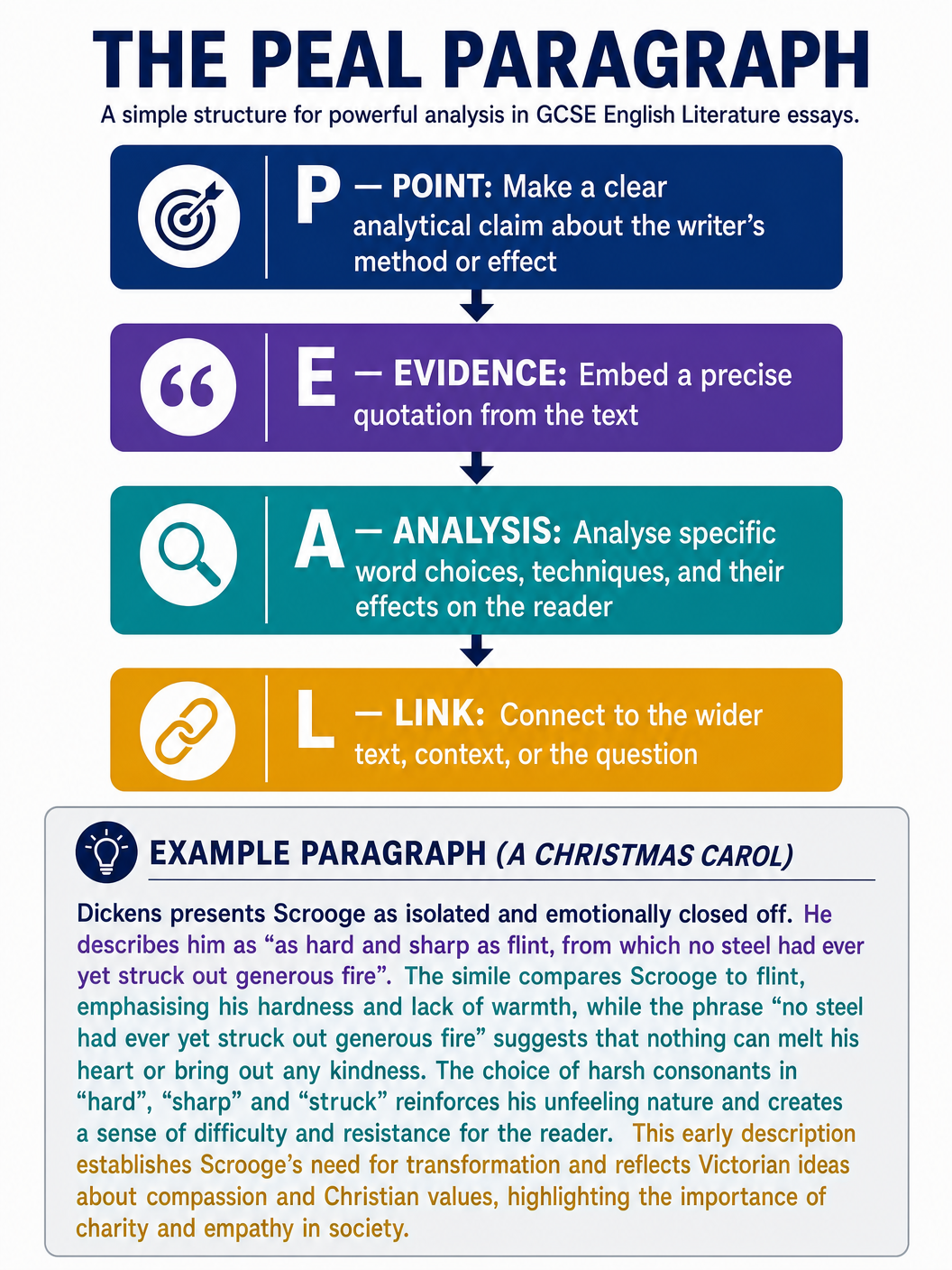
The PEAL Structure for Analysis
To effectively evaluate a writer's choices, candidates must structure their analysis clearly. The PEAL paragraph is a highly effective framework for ensuring that evidence is properly analysed and linked back to the question.
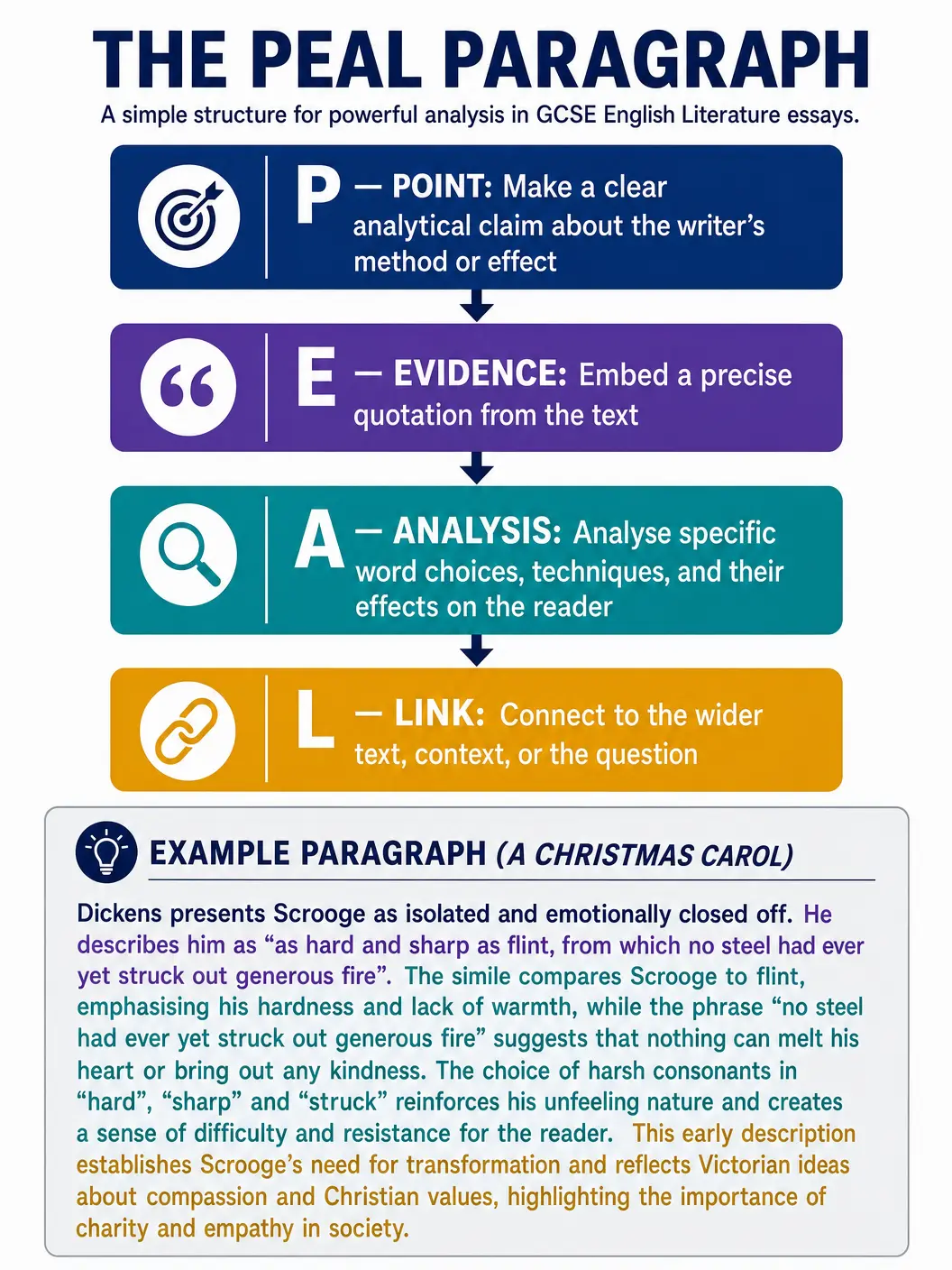
- Point: Make a clear, conceptualised claim about the writer's method or effect.
- Evidence: Embed a precise, concise quotation.
- Analysis: Unpick the specific language or structural choices within the quote. Explore connotations, techniques, and the effect on the reader.
- Link: Connect your analysis back to the writer's overall intention, the wider themes of the text, or the relevant context (AO3).
Integrating Context (AO3)
A critical part of evaluating a writer's craft is understanding why they made those choices in relation to their historical, social, or literary context. Context must never be 'bolted on' as a separate paragraph. Instead, it should inform your analysis of the writer's methods. Ask yourself: How do the language and structural choices reflect the anxieties, beliefs, or conventions of the time the text was written?
Visual Resources
3 diagrams and illustrations
Interactive Diagrams
1 interactive diagram to visualise key concepts
Conceptual Flow Outline
The Pathway to High-Level Analysis (Moving from Feature Spotting to Evaluation)
Worked Examples
2 worked examples — open one to explore the question and available guidance.
Practice Questions
Test your understanding — click to reveal model answers
Read the provided extract. How does the writer use language and structure to present the character's sense of isolation? (30 marks)
Hint: Look for vocabulary that suggests distance or coldness. Structurally, consider how the character is positioned in relation to others or their environment.
Evaluate the effectiveness of the writer's structural choices in building the climax of the narrative. (30 marks)
Hint: Focus on the pacing. How do sentence lengths change? Is there foreshadowing earlier in the text that pays off here? Does the narrative perspective shift?
Compare how the writers of Text A and Text B use grammatical features to present power and authority. (30 marks)
Hint: Look at sentence types (imperatives vs. interrogatives) and voice (active vs. passive). Who commands the dialogue?
How does the writer use form and structure to engage the reader in the opening chapter? (30 marks)
Hint: Consider 'in medias res' (starting in the middle of the action). Look at how information is revealed or withheld.