Pearson Edexcel · GCSE · English Literature
Poetry Anthology: Conflict (15 poems – Romantic, Literary Heritage, Contemporary)
Master the Edexcel GCSE Conflict Poetry Anthology with this comprehensive guide. We decode all 15 poems, from Romantic critiques of power to contemporary voices on trauma, equipping you with the analytical tools to secure top marks.
- 4 min read
- 1 worked example
- 4 practice questions
- 8 key terms
Study Notes
Overview
The 'Conflict' poetry collection is a core component of the Edexcel GCSE English Literature specification (Component 2). It requires candidates to study 15 poems spanning three distinct literary periods: the Romantic Era, the Literary Heritage period, and Contemporary poetry. Examiners are looking for a sophisticated, conceptualised understanding of how poets across centuries have explored the universal theme of conflict. To achieve high marks, you must move beyond simply identifying what a poem is about (AO1) and rigorously analyse how the poet has constructed meaning through language, form, and structure (AO2), while seamlessly integrating relevant contextual factors (AO3).
Podcast Episode
Listen to our 10-minute deep dive into the anthology, covering key themes, essential quotes, and exam techniques:

Thematic Exploration
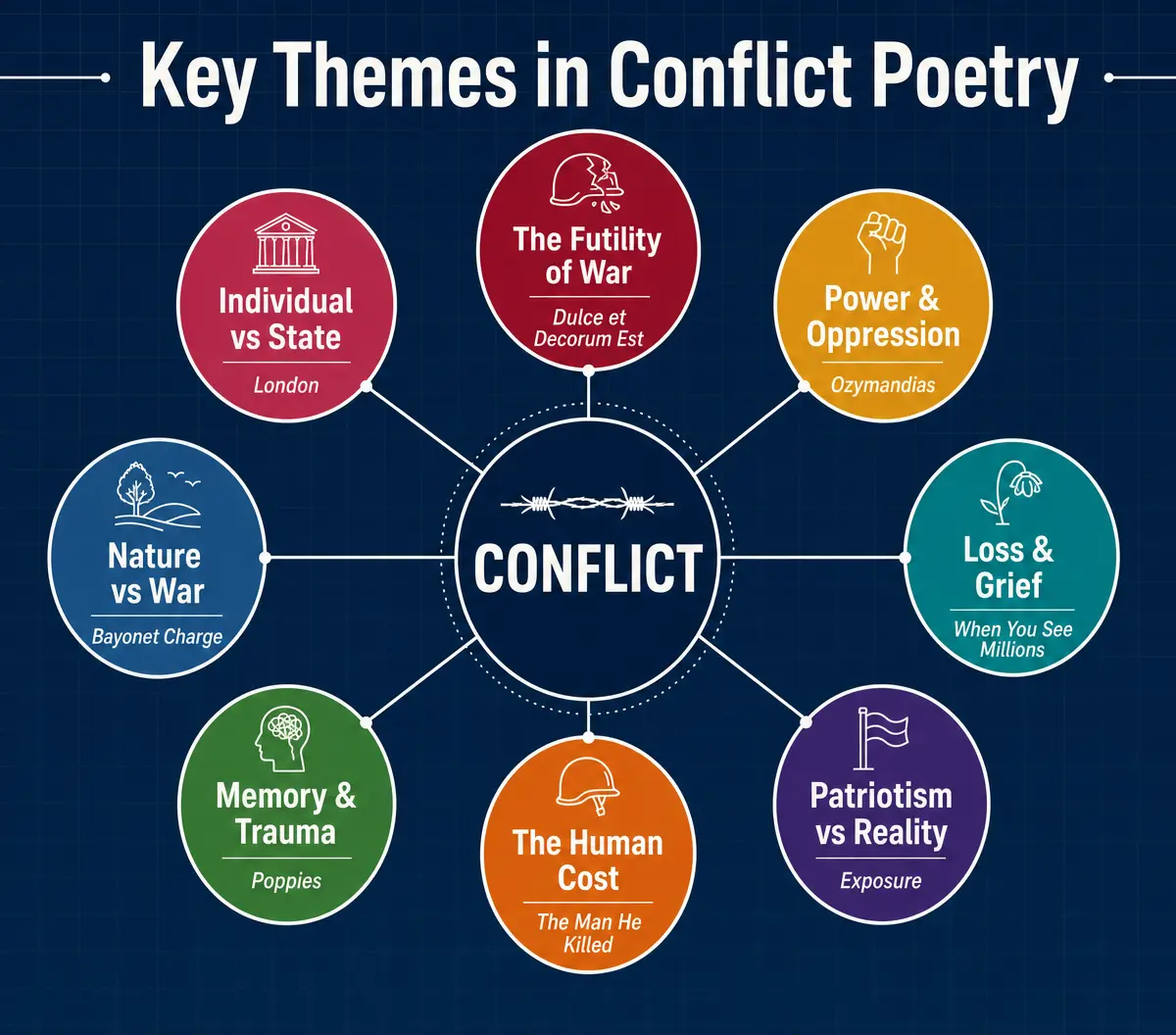
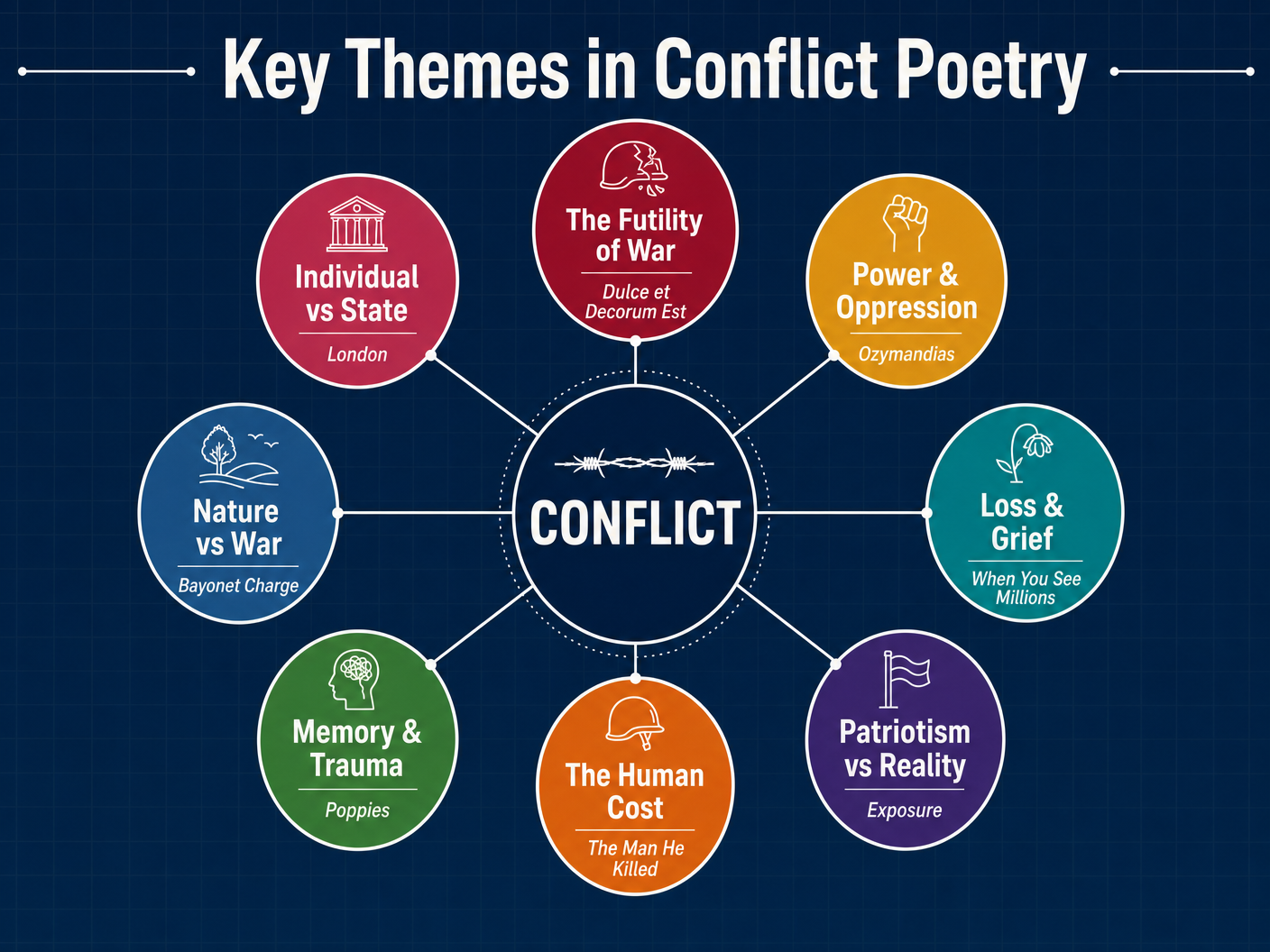
Theme 1: The Futility of War
Many poets in the collection challenge the glorification of conflict, exposing its pointless destruction.
Key Quotes:
- "Gas! GAS! Quick, boys!" (Dulce et Decorum Est by Wilfred Owen) - The disrupted metre and exclamatory punctuation mirror the chaos of the gas attack, subverting any notion of dignified combat.
- "Theirs not to reason why, / Theirs but to do and die" (The Charge of the Light Brigade by Alfred, Lord Tennyson) - The syntactic parallelism and driving dactylic metre create a sense of inescapable, fatal momentum, though Tennyson presents this obedience as noble rather than purely futile.
Theme 2: Power and Oppression
Conflict is often presented not on a battlefield, but in the power dynamics between rulers and the ruled.
Key Quotes:
- "Look on my Works, ye Mighty, and despair!" (Ozymandias by Percy Bysshe Shelley) - The imperative verb 'Look' establishes the tyrant's arrogance, but the poem's structure—a ruined statue in an empty desert—creates a profound dramatic irony, revealing the ultimate powerlessness of dictators against time.
- "the mind-forg'd manacles I hear" (London by William Blake) - This powerful metaphor suggests that the oppression of the poor is not just physical, but psychological and systemic.
Theme 3: Memory and Trauma
The psychological aftermath of conflict is a recurring motif, particularly in the contemporary poems.
Key Quotes:
- "spasms of paper red, disrupting a blockade / of yellow bias binding" (Poppies by Jane Weir) - The semantic field of conflict ('spasms', 'blockade') invades the domestic sphere of dressmaking, showing how grief militarises everyday life.
- "his bloody life in my bloody hands" (Remains by Simon Armitage) - The repetition of the expletive 'bloody' carries a dual meaning: the literal blood of the victim and the speaker's profound guilt and frustration.
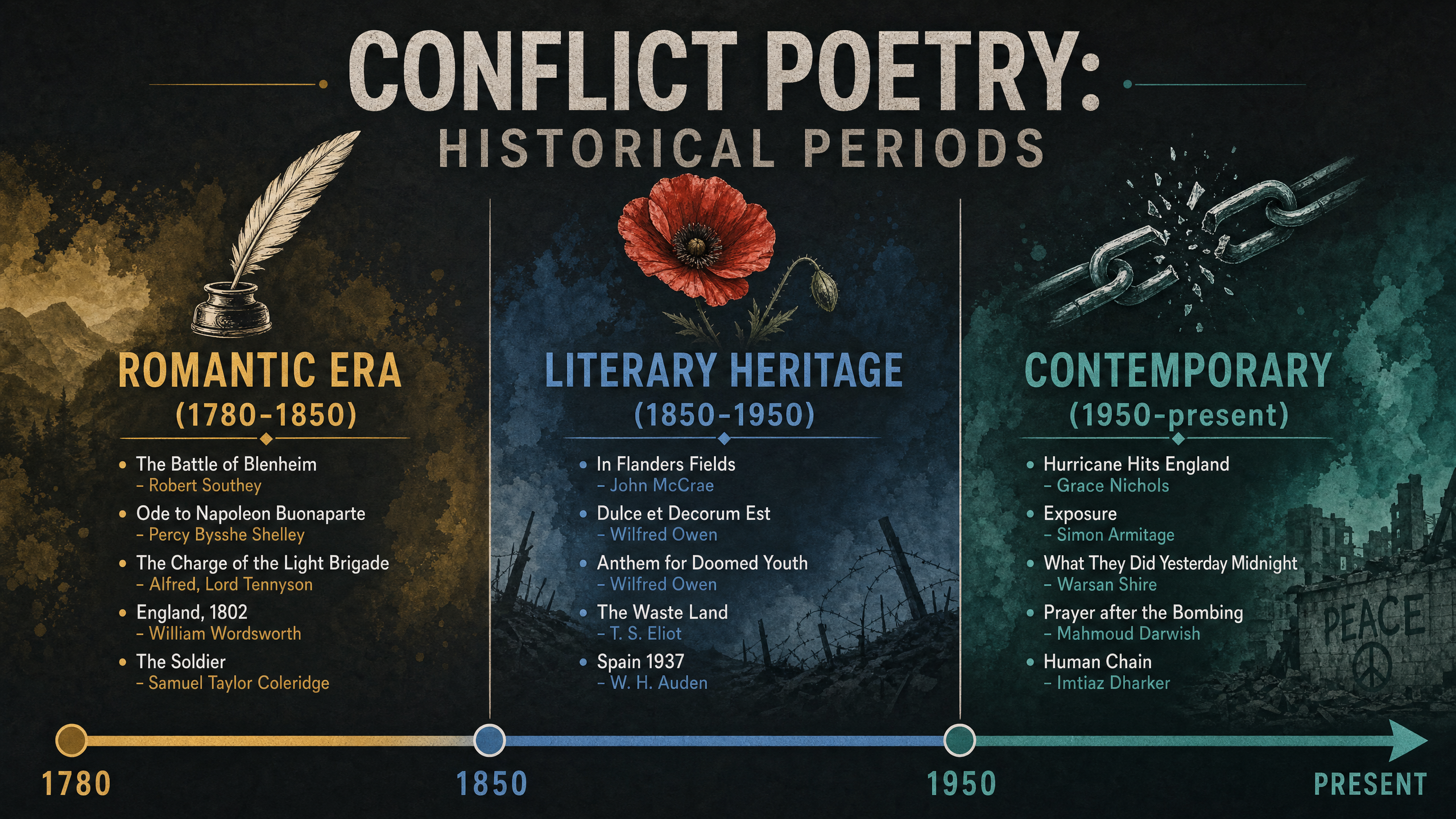
Historical Periods
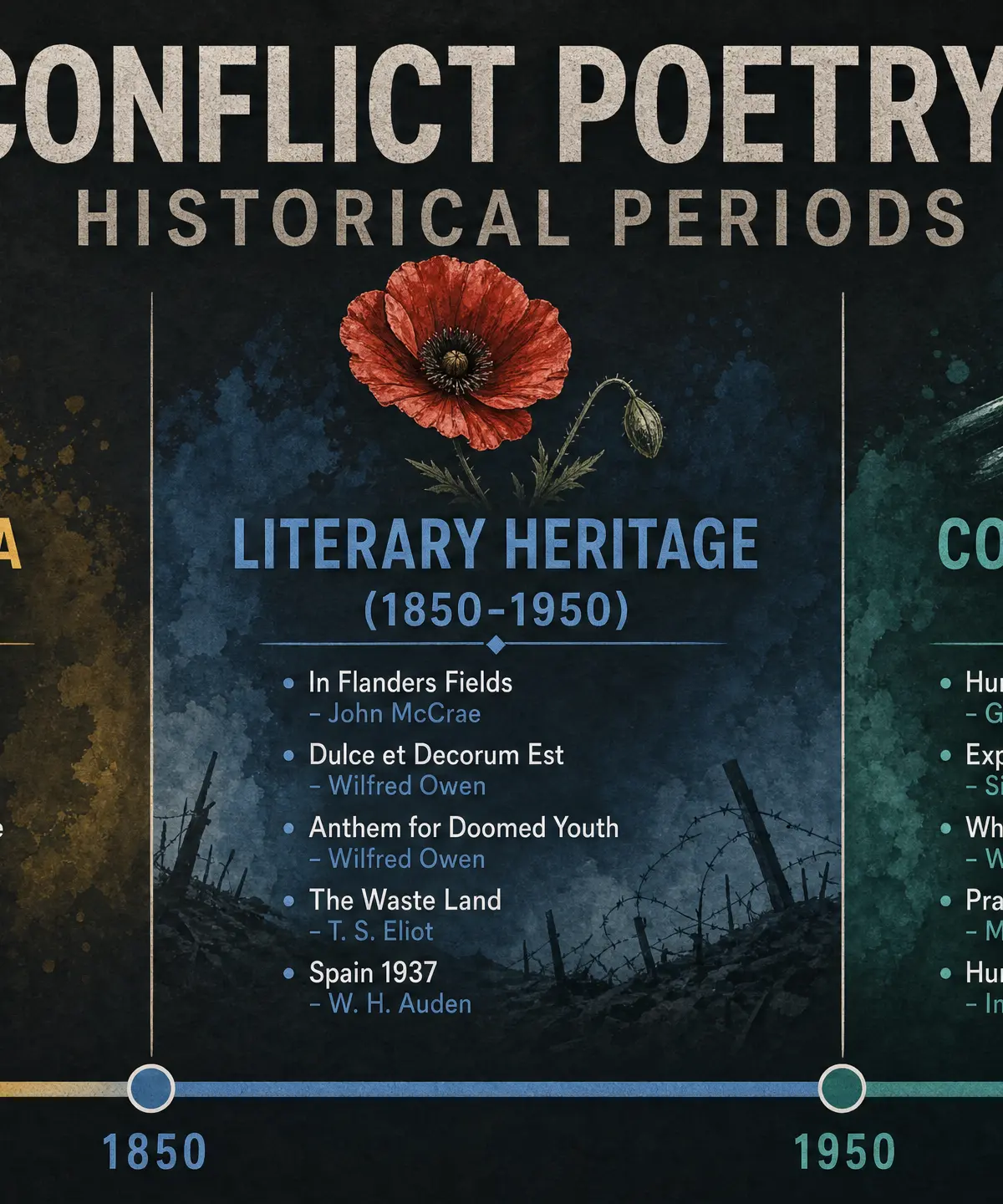
Understanding the context of these three periods is crucial for AO3.
The Romantic Era (1780-1850)
Poets like Blake, Shelley, and Wordsworth focused on the power of nature, the rights of the individual, and a deep suspicion of established authority and institutions.
Literary Heritage (1850-1950)
This period covers the Victorian era through to the end of the Second World War. It tracks a massive shift in attitudes towards conflict—from Tennyson's patriotic glorification of military blunder to Owen and Sassoon's visceral, anti-war realism.
Contemporary (1950-present)
Modern poets like Armitage, Dharker, and Weir explore conflict in a globalised world, often focusing on the civilian experience, the psychological scars of modern warfare, and the impact of terrorism and displacement.
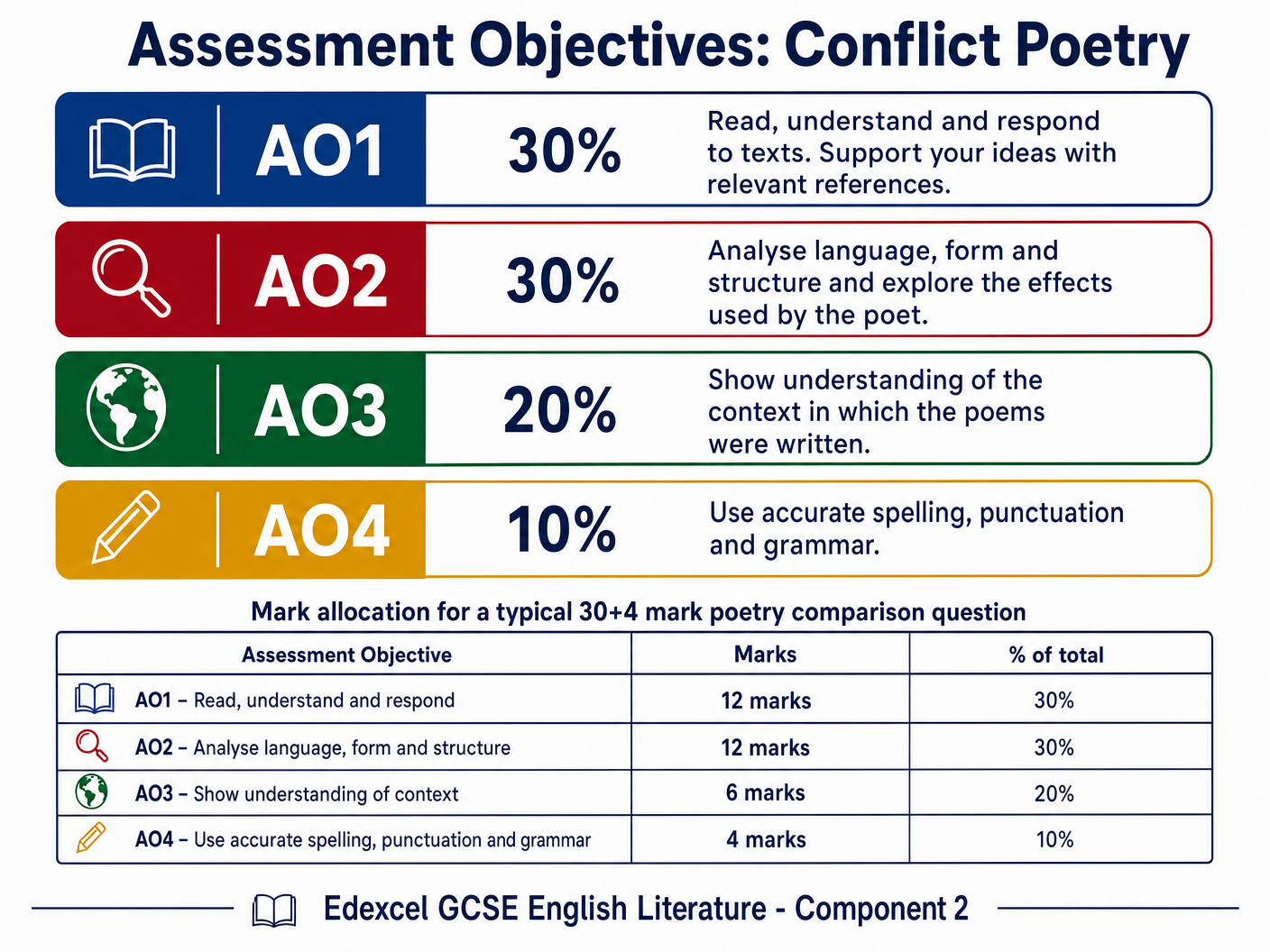
Assessment Objectives Breakdown
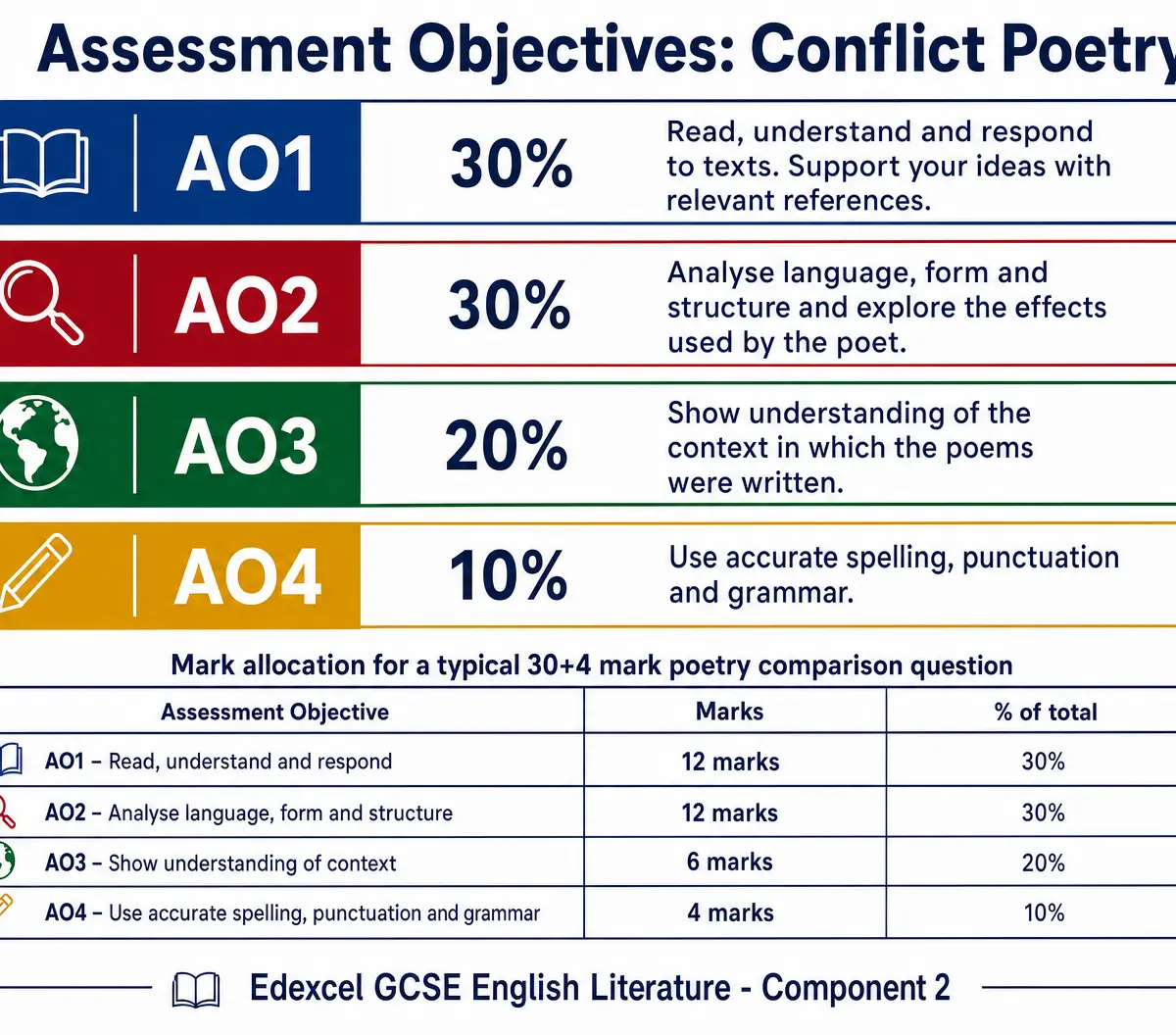
For the poetry comparison question, marks are allocated across four Assessment Objectives. Your response must balance these requirements.
Visual Resources
3 diagrams and illustrations
Interactive Diagrams
1 interactive diagram to visualise key concepts
Conceptual Flow Outline
Exam Planning Process for Poetry Comparison
Worked Examples
1 worked example — open one to explore the question and available guidance.
Practice Questions
Test your understanding — click to reveal model answers
Re-read Ozymandias. Choose one other poem from the Conflict anthology. Compare how the writers present the theme of power. (30 marks + 4 marks AO4)
Hint: Consider comparing with *London* (systemic power vs individual tyrant) or *My Last Duchess* (arrogance of rulers).
Re-read Poppies. Choose one other poem from the anthology. Compare how the writers present the effects of conflict on individuals. (30 marks + 4 marks AO4)
Hint: Compare with *Remains* to contrast the experience of a civilian mother with a traumatised soldier.
Re-read London. Choose one other poem from the anthology. Compare how the writers present the idea of suffering. (30 marks + 4 marks AO4)
Hint: Compare with *Exposure* to contrast urban, systemic suffering with the physical suffering of soldiers.
Re-read The Charge of the Light Brigade. Choose one other poem. Compare how the writers present attitudes towards conflict. (30 marks + 4 marks AO4)
Hint: Compare with *Dulce et Decorum Est* for a direct contrast between patriotic glory and horrific reality.