Pearson Edexcel · A-Level · English Literature
Course version: 9ET0 · Version from Sept 2015
Poetry – Section B: Specified Poetry Pre- or Post-1900 – Post-1900 – The…
Full specification wording
Component 3: Poetry – Section B: Specified Poetry Pre- or Post-1900 – Post-1900 – The Movement – Philip Larkin: The Less Deceived (Faber, 2011): Wedding-Wind
Unusually for this poet, this piece adopts a female persona to explore the immediate aftermath of a rural marriage.
Checked against the Pearson Edexcel 9ET0 specification (opens in a new tab) on .
- Point 2 of 9
- 4 key terms
Study notes
From the checked teaching notes for this specification point.
The idea
Unusually for this poet, this piece adopts a female persona to explore the immediate aftermath of a rural marriage. The powerful, restless wind serves as a central metaphor for the overwhelming, transformative energy of sexual awakening and marital union. The speaker's initial anxiety during the stormy night transitions into a profound sense of joy and integration with the natural world by morning.
What earns the marks
- Analyse the use of the female persona and how it contrasts with the typical male voices in the collection.
- Evaluate the wind as a multifaceted symbol representing both destructive power and life-affirming passion.
- Examine the structural shift between the first stanza's nocturnal anxiety and the second stanza's diurnal joy.
- Discuss the integration of human emotion with the rural, agricultural landscape.
Common mistakes and how to put them right
Reading the poem as a literal description of bad weather.
Put it right: Interpret the wind as a metaphor for the psychological and physical intensity of the wedding night.
Assuming the speaker is the poet himself.
Put it right: Explicitly identify and analyse the use of a dramatic female persona.
Overlooking the agricultural imagery.
Put it right: Connect the farming references to themes of fertility, growth, and natural cycles.
Exam tips
- Contrast the genuine joy and fulfilment in this poem with the cynicism and disappointment found elsewhere in the collection.
- Analyse the specific verbs and dynamic language used to describe the wind's movement and its effect on the environment.
- Consider how the two-stanza structure reflects a transition from apprehension to acceptance and celebration.
Try the lesson
The start of the Component 3: Poetry – Section B: Specified Poetry Pre- or Post-1900 – Post-1900 – The Movement – Philip Larkin: The Less Deceived (Faber, 2011): Wedding-Wind lesson, made from checked teaching notes for this specification point.
Have a go first
In Philip Larkin's poem 'Wedding-Wind', from whose perspective is the narrative presented?
Listen
Unusually for this poet, this piece adopts a female persona to explore the immediate aftermath of a rural marriage. The powerful, restless wind serves as a central metaphor for the overwhelming, transformative energy of sexual awakening and marital union. The speaker's initial anxiety during the stormy night transitions into a profound sense of joy and integration with the natural world by morning. A strong answer earns marks for these points. Analyse the use of the female persona and how it contrasts with the typical male voices in the collection. Evaluate the wind as a multifaceted symbol representing both destructive power and life-affirming passion. Examine the structural shift between the first stanza's nocturnal anxiety and the second stanza's diurnal joy. Discuss the integration of human emotion with the rural, agricultural landscape. A common slip: Reading the poem as a literal description of bad weather. Instead, interpret the wind as a metaphor for the psychological and physical intensity of the wedding night. Exam tip: Contrast the genuine joy and fulfilment in this poem with the cynicism and disappointment found elsewhere in the collection.
See it
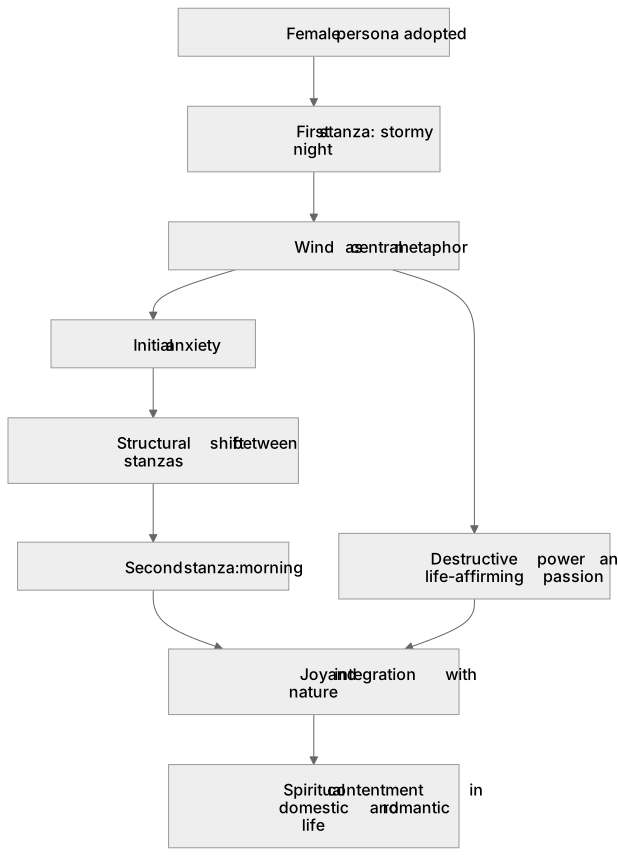
Key words
Say what each word means before you turn the card.
Marriage and Union
Try answering aloud or in your head before turning the card.
The Power of Nature
Try answering aloud or in your head before turning the card.
Female Experience and Sexuality
Try answering aloud or in your head before turning the card.
Joy and Fulfilment
Try answering aloud or in your head before turning the card.
See every definition
- Marriage and Union
- Explored through a female persona in the immediate aftermath of a rural marriage, where marital union is linked to sexual awakening and transformative energy.
- The Power of Nature
- The powerful, restless wind acts as a central metaphor for overwhelming energy, mirroring the protagonist's internal emotional landscape and her integration with the natural world.
- Female Experience and Sexuality
- Adopting a female persona, the piece explores sexual awakening and marital union, with the wind symbolising life-affirming passion and physical intensity.
- Joy and Fulfilment
- The speaker's initial anxiety during the stormy night transitions into a profound sense of joy and almost spiritual contentment in her domestic and romantic life by morning.
Label the diagram
Some boxes have lost their names. Pick the right name for each number.
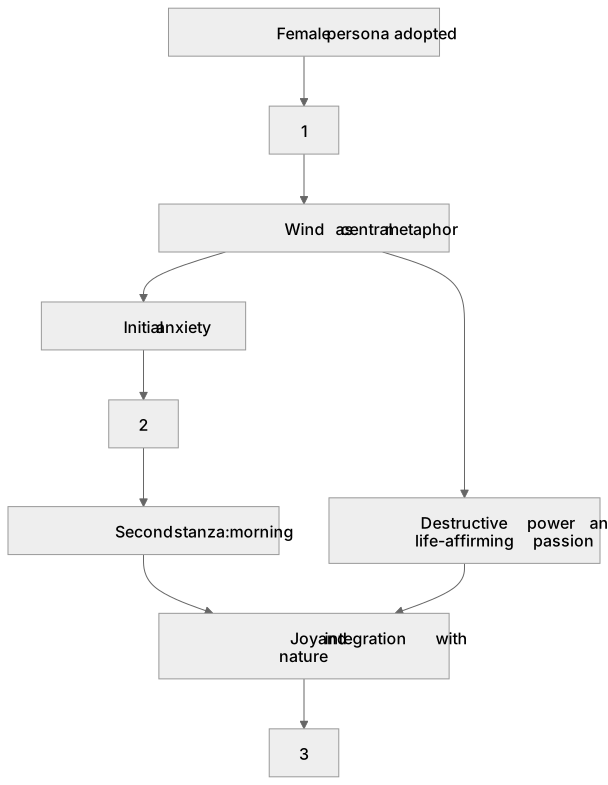
1Box 1
2Box 2
3Box 3
There is more to this lesson
The full lesson goes on to check your understanding and help you earn the marks. Create a free account to carry on, with your progress saved.
A week of Premium from your first lesson · Then the free plan continues · No card, no charge
Test your understanding of Component 3: Poetry – Section B: Specified Poetry Pre- or Post-1900 – Post-1900 – The Movement – Philip Larkin: The Less Deceived (Faber, 2011): Wedding-Wind
Active recall beats re-reading. Take an instant quiz now to test what you’ve learned and lock it into long-term memory.
A week of Premium from your first lesson · Then the free plan continues · No card, no charge