Pearson Edexcel · GCSE · English Literature
Poetry
The 'Time and Place' poetry cluster is a profoundly moving collection that explores how our surroundings and the passage of time shape human identity. Studying these poems is rewarding because they offer a powerful lens through which to examine memory, loss, and the enduring impact of history on our personal lives, providing excellent opportunities for high-level critical analysis.
- 5 min read
- 1 worked example
- 4 practice questions
- 8 key terms
Study Notes
Overview
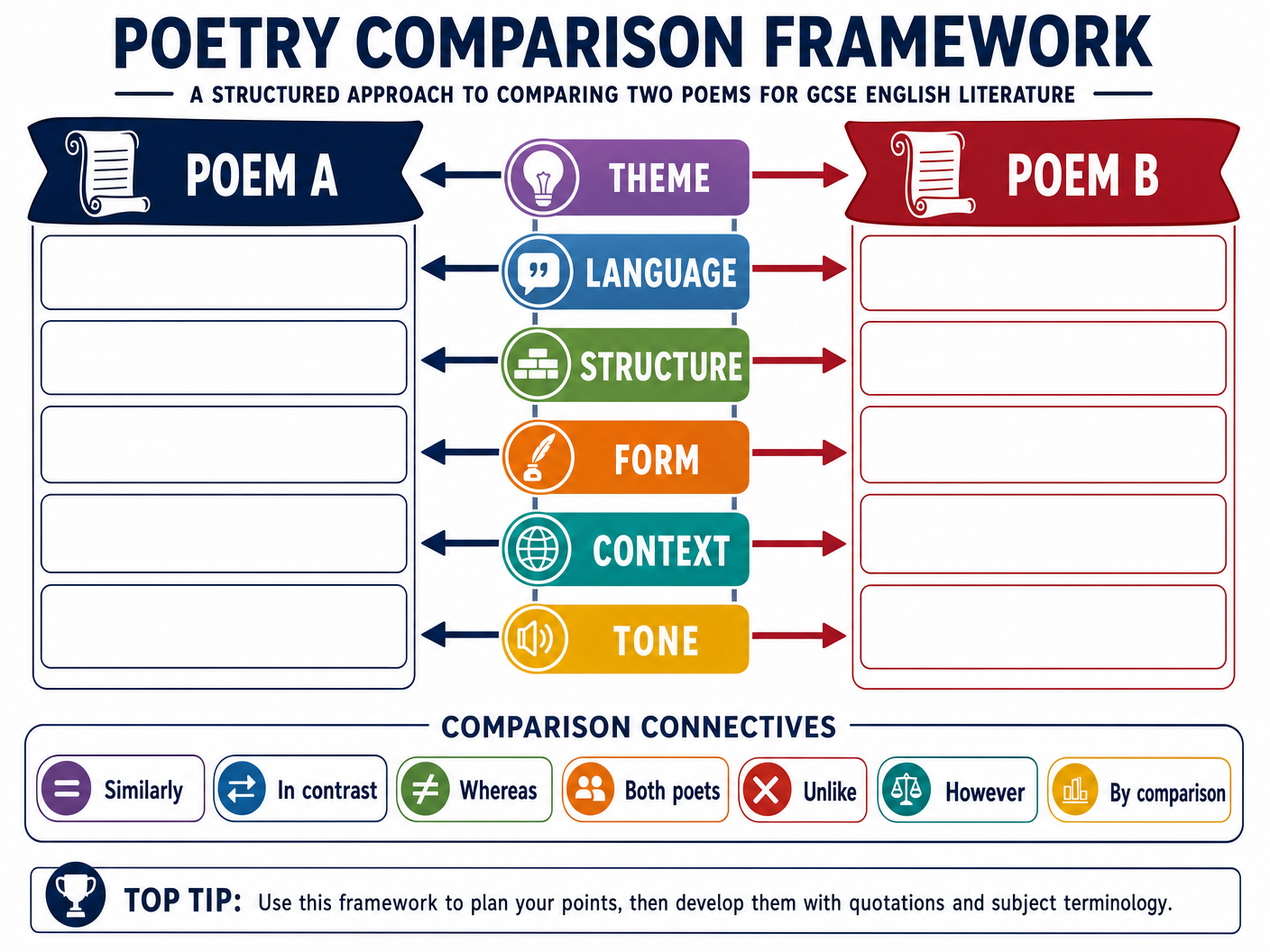
The 'Time and Place' poetry cluster challenges candidates to explore the complex relationship between human experience and the environments we inhabit. Examiners are looking for perceptive analysis of how poets use specific settings—whether a childhood home, a war-torn landscape, or an industrial city—to articulate profound themes of memory, identity, and impermanence. A successful response will move beyond simple description, instead interrogating the writer's methods (AO2) and seamlessly integrating relevant historical and social contexts (AO3) to illuminate the text's deeper meanings. You will be expected to compare poems, demonstrating an understanding of how different poets approach similar themes.
Listen to our comprehensive revision podcast to solidify your understanding of these core concepts:

Thematic Overview
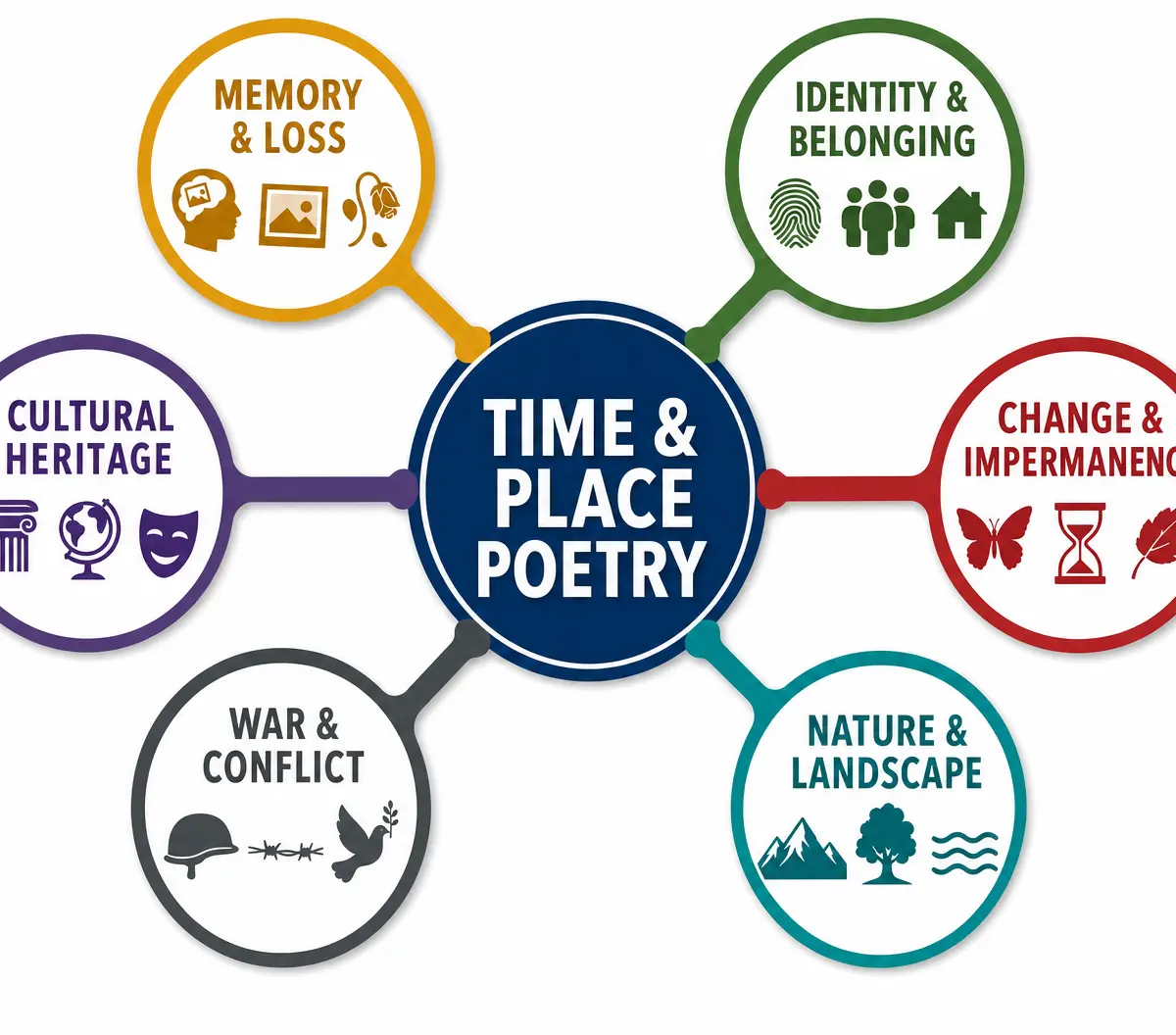
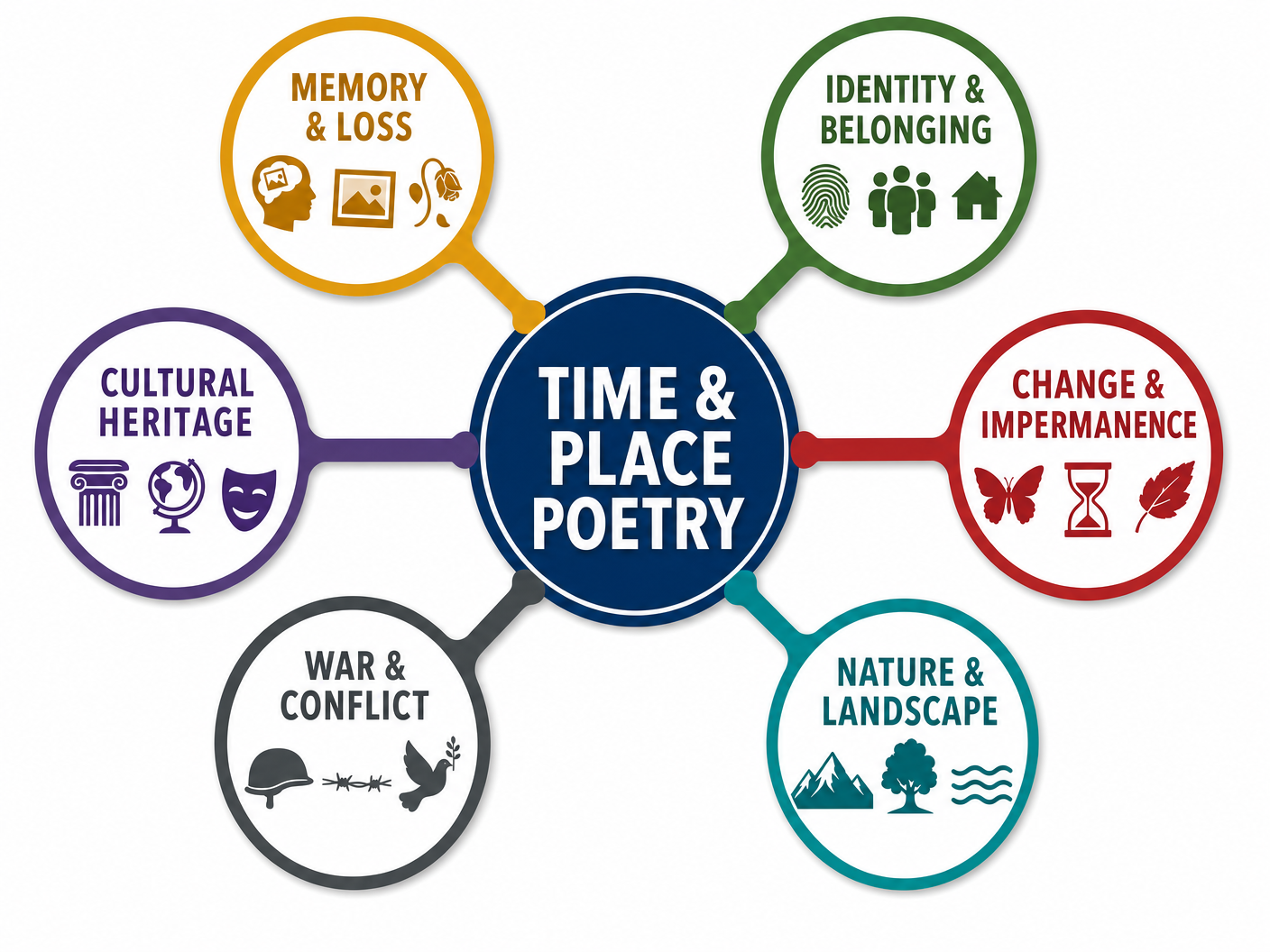
Theme 1: Memory and Loss
Memory is frequently depicted not as a reliable record, but as a fragile, emotional construct tied to specific places. Poets often use physical landscapes as triggers for nostalgia or grief, exploring how the past continues to haunt the present. The physical decay of a place often mirrors the loss of a loved one or a past way of life.
Key Quotes:
- "The house still breathes her name" - The personification of the house suggests that the memory of the deceased is inextricably linked to the physical space, making the loss feel immediate and inescapable.
- "Fading photographs in a drawer of dust" - The alliteration and imagery of decay highlight the inevitable erosion of memory over time.
Theme 2: Identity and Belonging
Our sense of self is deeply rooted in our origins. Several poems in the cluster explore the dislocation felt when one is separated from their homeland, or when that homeland changes beyond recognition. This theme is crucial for understanding the impact of migration, conflict, and cultural shifts.
Key Quotes:
- "My tongue trips over the foreign streets" - The metaphor effectively conveys the struggle to articulate one's identity in an unfamiliar environment, highlighting the linguistic and cultural barriers to belonging.
- "Roots torn from the ancestral soil" - This visceral imagery emphasizes the violent and painful nature of displacement.
Theme 3: Change and Impermanence
Time is often presented as an unstoppable, destructive force. Landscapes are altered by industrialization, war, or the slow march of nature. Poets grapple with the anxiety of impermanence, sometimes finding solace in the cyclical nature of the seasons, and other times despairing at the loss of permanence.
Key Quotes:
- "The concrete veins strangle the green" - A powerful metaphor criticizing urban development and the destruction of the natural world.
- "Only the river remembers the old ways" - Personification that contrasts the enduring power of nature with the fleeting nature of human existence.
Writer's Methods
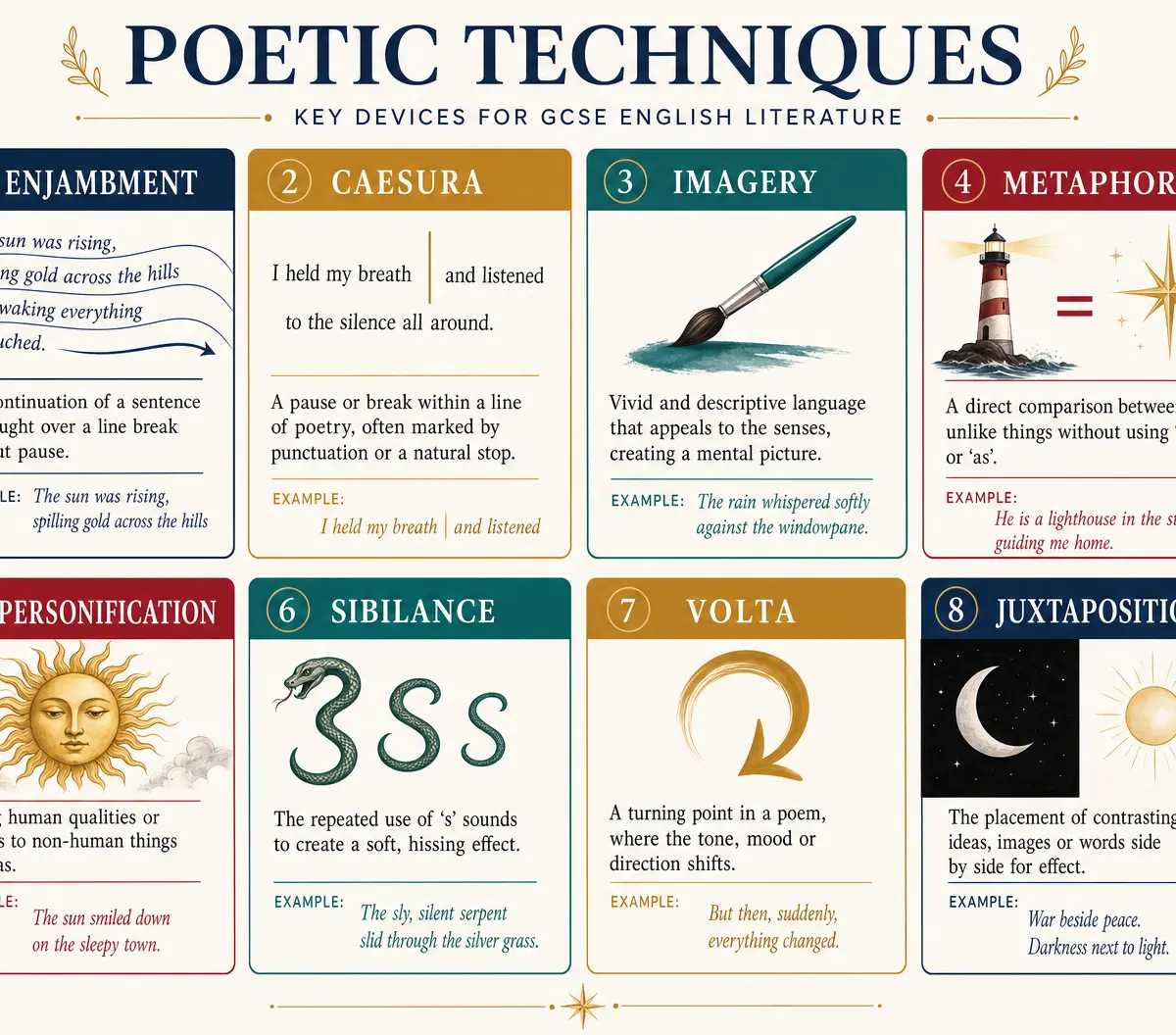
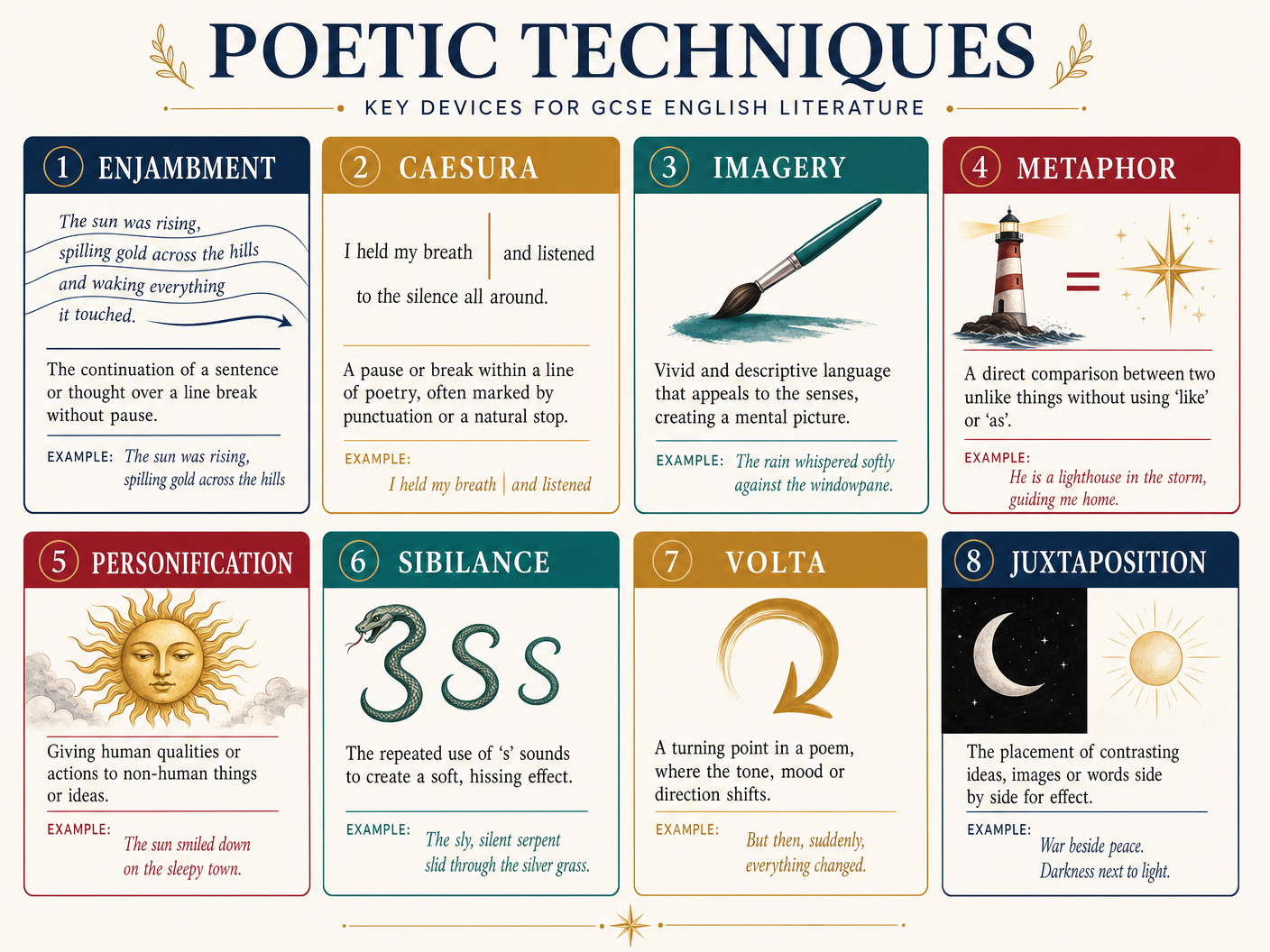
Examiners reward candidates who can precisely identify poetic techniques and, crucially, analyze their effects.
Form and Structure: Look for how the poem is built. Does a rigid stanza structure reflect a sense of entrapment or control? Does free verse with heavy enjambment suggest the chaotic flow of memory or the uncontainable power of nature? The use of a volta (a turning point) is often where the poet reveals their central argument.
Language and Imagery: Pay close attention to sensory details. How does the poet use semantic fields (e.g., words related to decay, war, or nature) to establish tone? Analyze metaphors and similes not just for what they compare, but for the connotations of the words chosen.
Context
To achieve high marks in AO3, context must be integrated into your analysis, not 'bolted on'. Consider the historical backdrop of the poems. Are they responding to the Industrial Revolution, the aftermath of a World War, or the experiences of the Windrush generation? How do these societal shifts influence the poet's perspective on time and place? For example, a poem describing a ruined landscape might be read differently if you know it was written immediately following the Blitz.
Worked Examples
1 worked example — open one to explore the question and available guidance.
Practice Questions
Test your understanding — click to reveal model answers
Compare how poets present the effects of time on a place in 'Poem C' and one other poem from the cluster.
Hint: Consider whether time is presented as a destructive force or a healing one. How do the structural choices reflect the passage of time?
How does the poet use imagery to convey a sense of loss in 'Poem E'?
Hint: Focus closely on AO2. Look for sensory details—what does the speaker see, hear, or feel that represents what is gone?
Compare the presentation of cultural identity in 'Poem F' and one other poem.
Hint: Think about how language and physical environment are used to represent cultural roots. How does displacement affect the speaker's voice?
Explore how the structure of 'Poem H' reflects the speaker's state of mind.
Hint: Look at stanza length, line length, punctuation (caesura), and enjambment. Does the poem look organized or chaotic?