AQA · GCSE · Food Preparation and Nutrition
Food choice
This study guide covers the critical factors influencing food choice, focusing on mandatory and non-mandatory food labelling, nutritional information interpretation, and the powerful impact of marketing techniques. Understanding these concepts is essential not only for achieving high marks in your GCSE Food Preparation and Nutrition exam but also for making informed, healthy decisions as a consumer.
- 6 min read
- 2 worked examples
- 3 practice questions
- 5 key terms
Study Notes
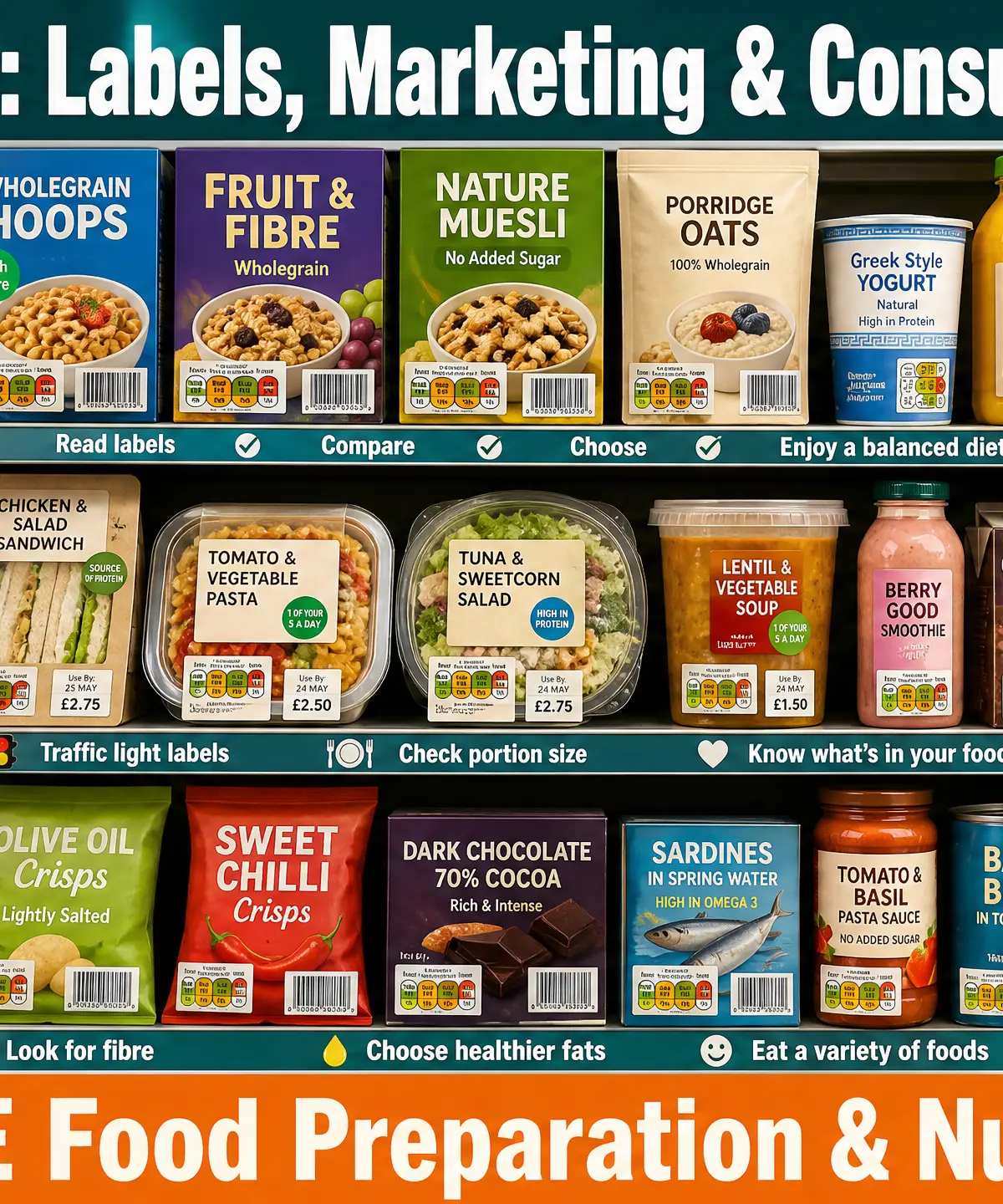
Overview
This topic explores the complex web of information and persuasion that influences what we eat. In an environment where consumers are bombarded with choices, understanding how food is labelled and marketed is a core component of the GCSE Food Preparation and Nutrition specification. Examiners expect candidates to demonstrate a precise understanding of the legal requirements for food packaging (such as the EU Food Information for Consumers Regulation 1169/2011) and the voluntary information manufacturers provide.
Furthermore, candidates must be able to critically evaluate how marketing strategies—from BOGOF deals to celebrity endorsements—steer consumer behaviour, often toward less healthy options. This guide will equip you with the technical vocabulary and analytical skills required to tackle high-tariff 'evaluate' and 'assess' questions confidently.
Listen to our podcast episode on Food Choice to reinforce your learning:
Food Labelling: The Law and The Choices
Food labelling is strictly regulated to protect consumers from misleading claims and to ensure food safety, particularly regarding allergens.
Mandatory Information
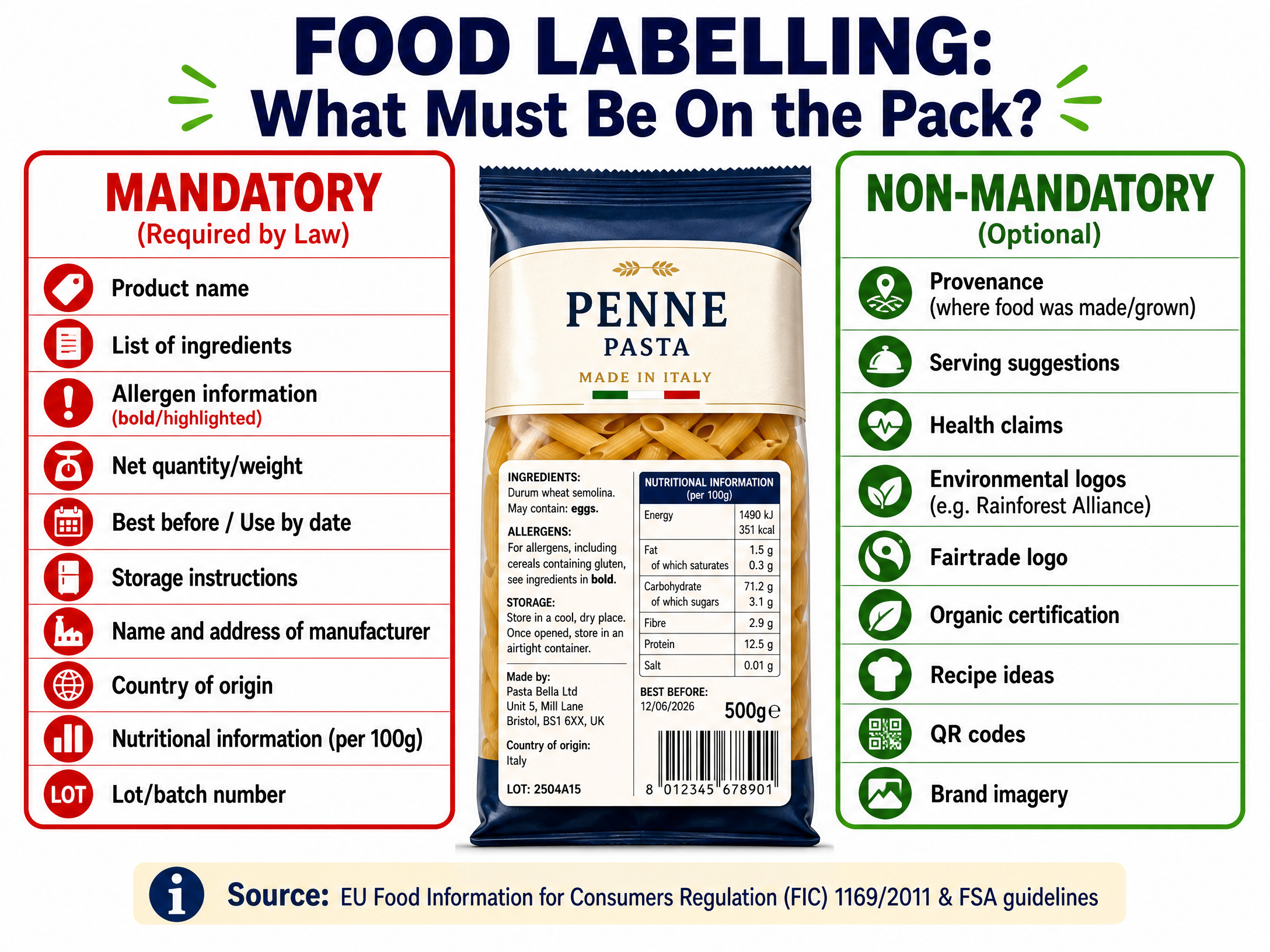
By law, pre-packaged food must display specific information. This is governed by retained EU legislation (FIC 1169/2011) and enforced by the Food Standards Agency (FSA).
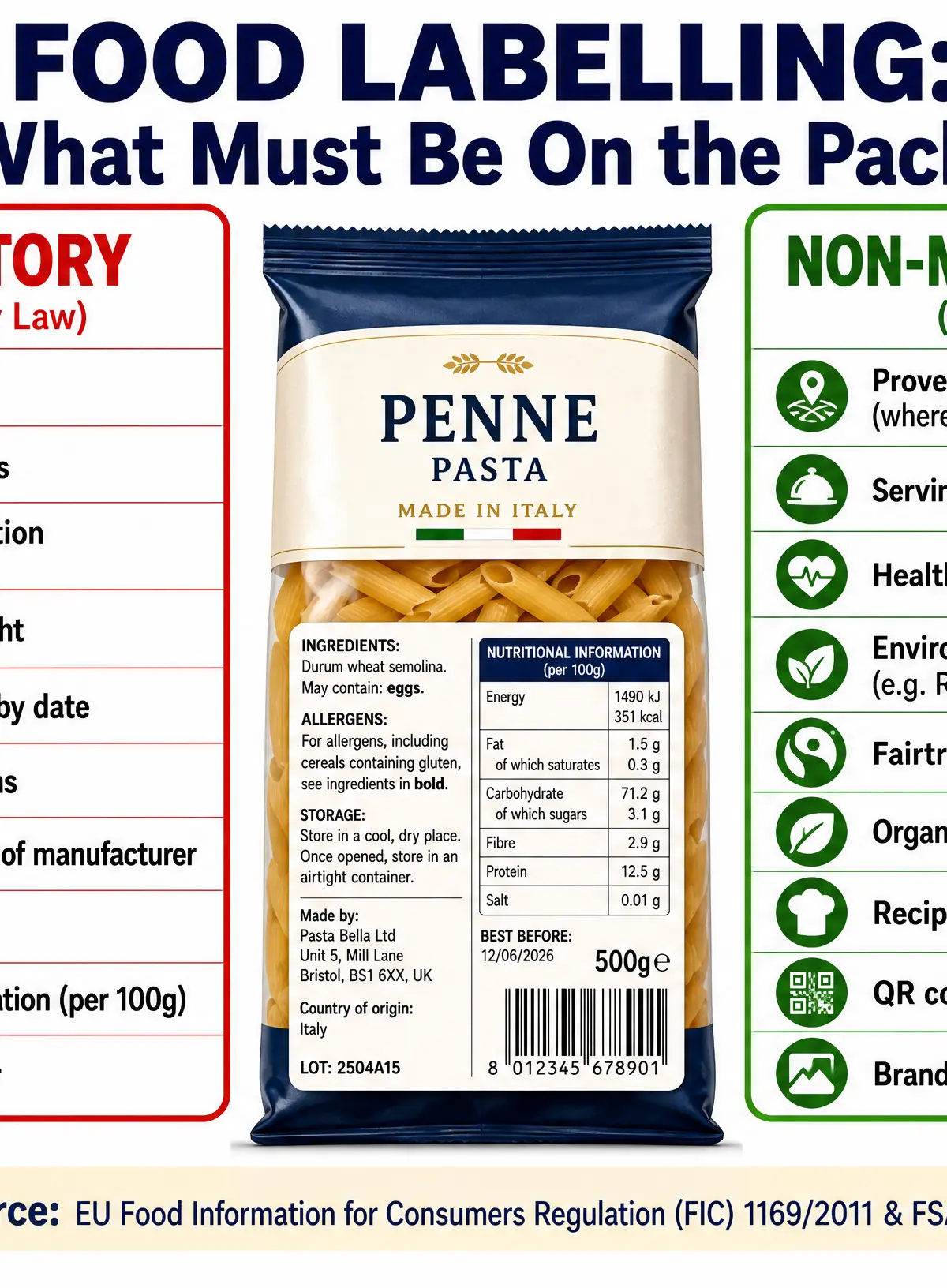
The 10 Mandatory Requirements:
- Product Name: Must clearly state what the food is.
- List of Ingredients: Must be listed in descending order of weight. The main ingredient appears first.
- Allergen Information: The 14 major allergens (e.g., nuts, milk, gluten) must be emphasised (e.g., in bold).
- Net Quantity: The weight or volume of the product.
- Date Mark:
- Use By: A safety warning. Food must not be eaten after this date.
- Best Before: A quality indicator. Food is safe to eat after this date but may not taste its best.
- Storage Instructions: e.g., "Keep refrigerated".
- Name and Address: Of the manufacturer, packer, or seller.
- Country of Origin: Mandatory for certain products like meat and where its omission would be misleading.
- Nutritional Information: Must be presented per 100g/100ml to allow fair comparison.
- Lot/Batch Number: Used for tracking and product recalls.
Non-Mandatory Information
Manufacturers often include voluntary information to make their products more appealing. While not required by law, this information heavily influences consumer choice.
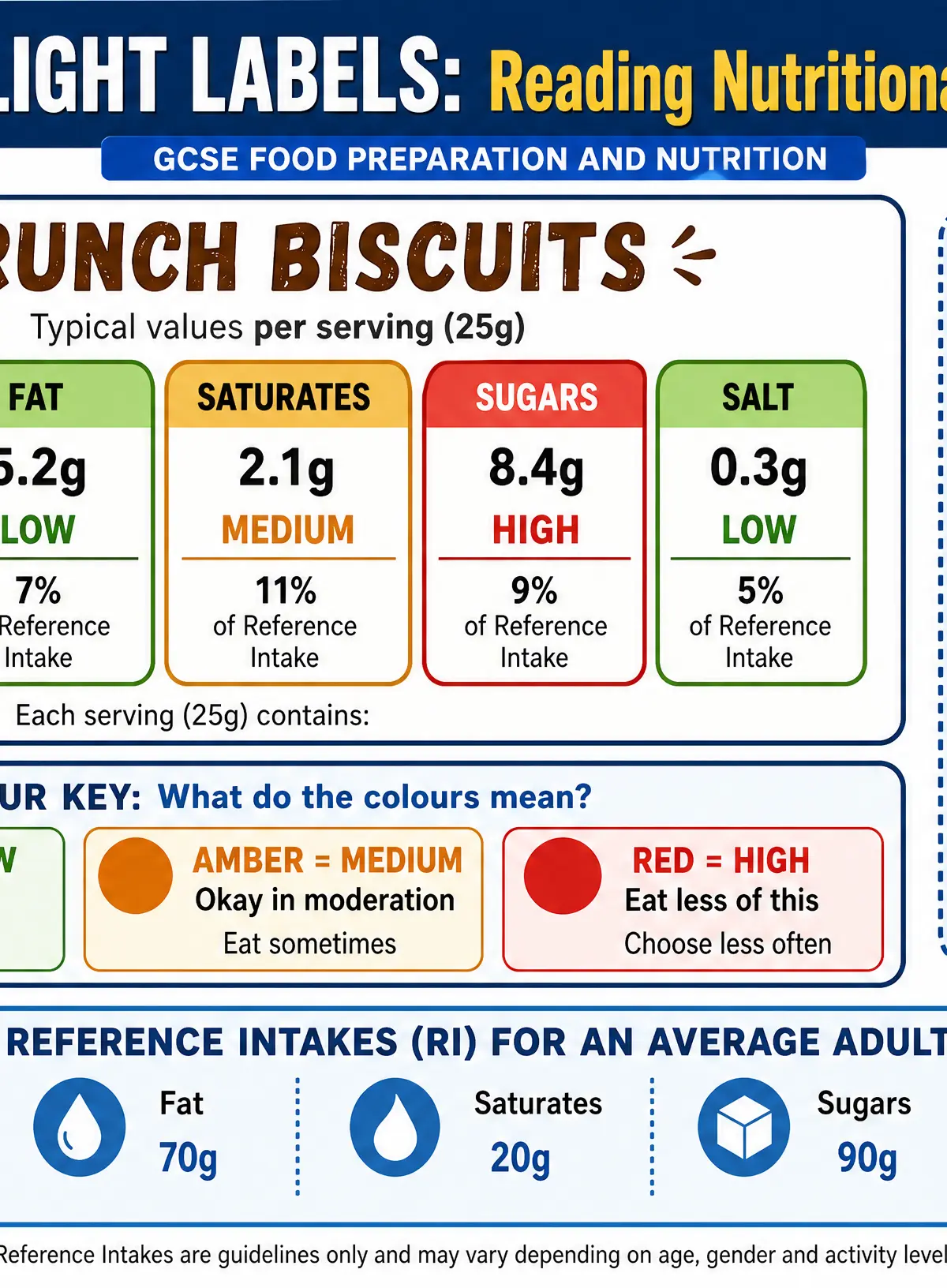
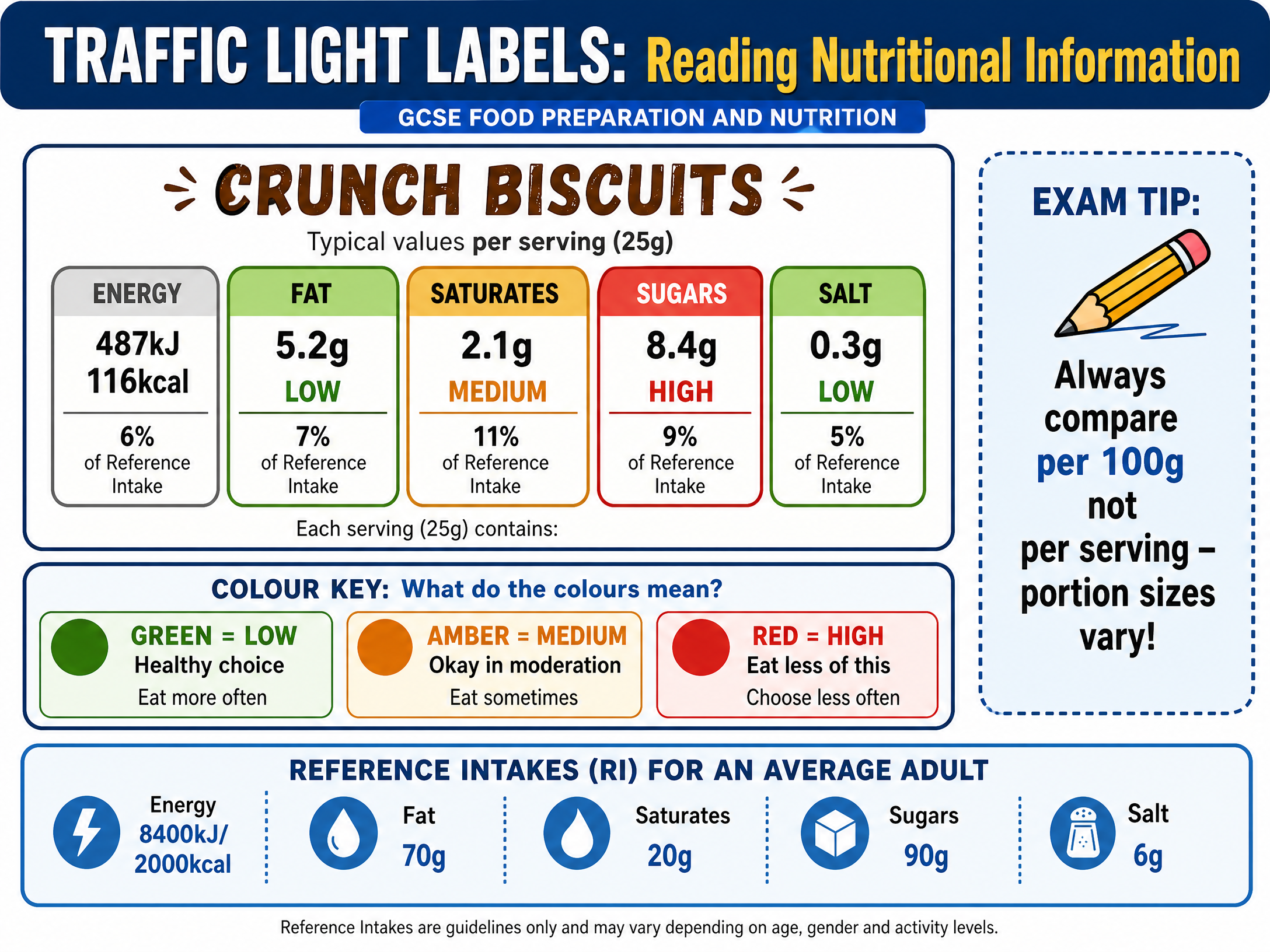
- Traffic Light Labelling: A voluntary scheme using red, amber, and green to indicate high, medium, and low levels of fat, saturates, sugar, and salt.
- Provenance: Information about where the food was grown or made (e.g., "Red Tractor", "British Beef"). Appeals to consumers' ethical or environmental values.
- Serving Suggestions: Appetising photographs showing the product prepared.
- Health Claims: e.g., "High in fibre" or "Low fat". Note: these claims are regulated but their inclusion is voluntary.
- Logos and Certifications: Fairtrade, Organic, Vegetarian Society approval.
Interpreting Nutritional Information
Examiners frequently test your ability to interpret nutritional data, often providing a table or a traffic light label.
Key Rule for the Exam: Always compare products using the per 100g column, never the 'per serving' column, as manufacturers set their own serving sizes which can be misleadingly small.
Reference Intakes (RIs):
These are guidelines for the maximum amount of nutrients an average adult should consume daily:
- Energy: 8400kJ / 2000kcal
- Fat: 70g
- Saturates: 20g
- Sugars: 90g
- Salt: 6g
Marketing Techniques
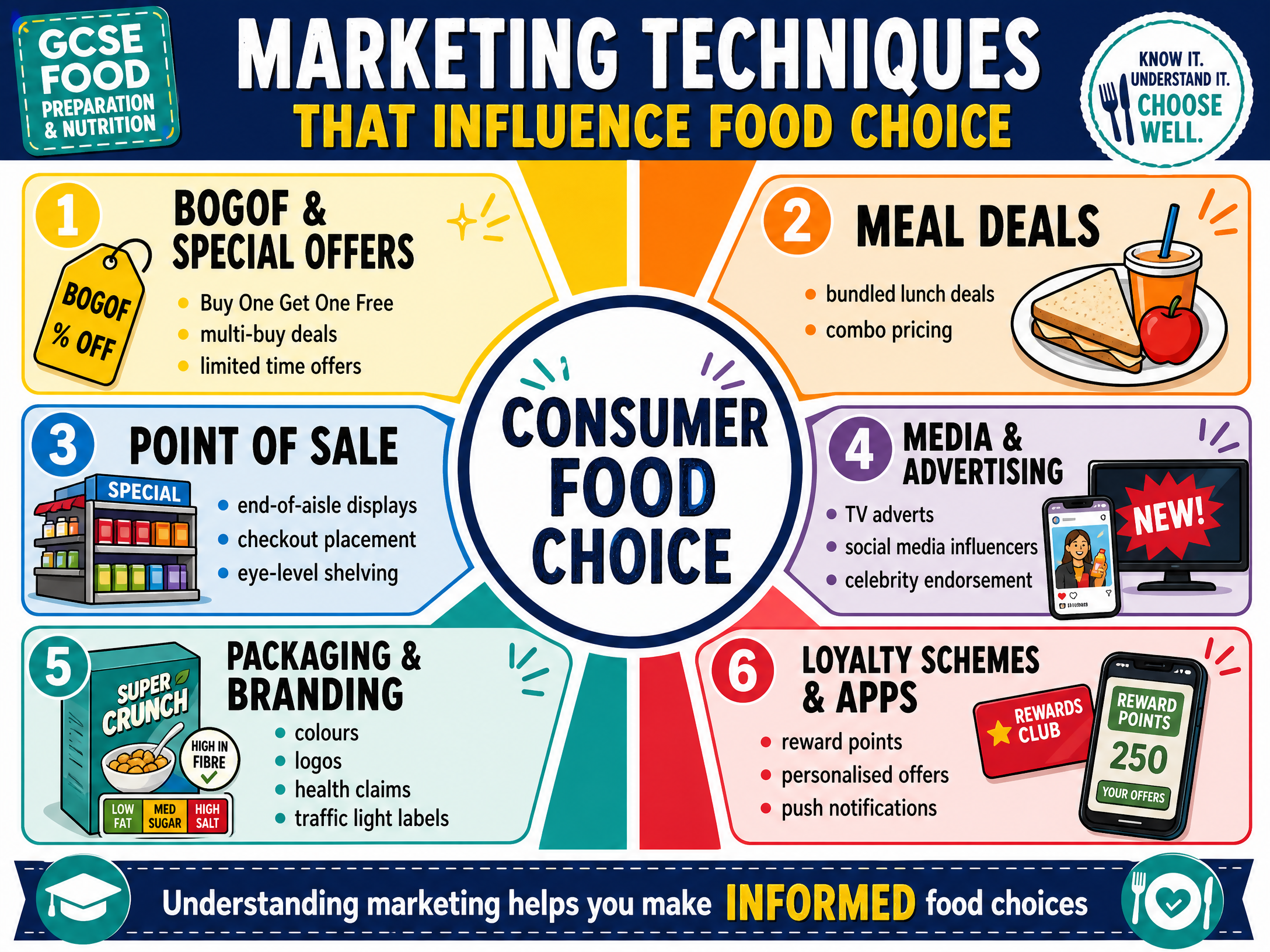
Marketing encompasses the strategies used to promote and sell products. It is a powerful driver of food choice, often overriding nutritional considerations.
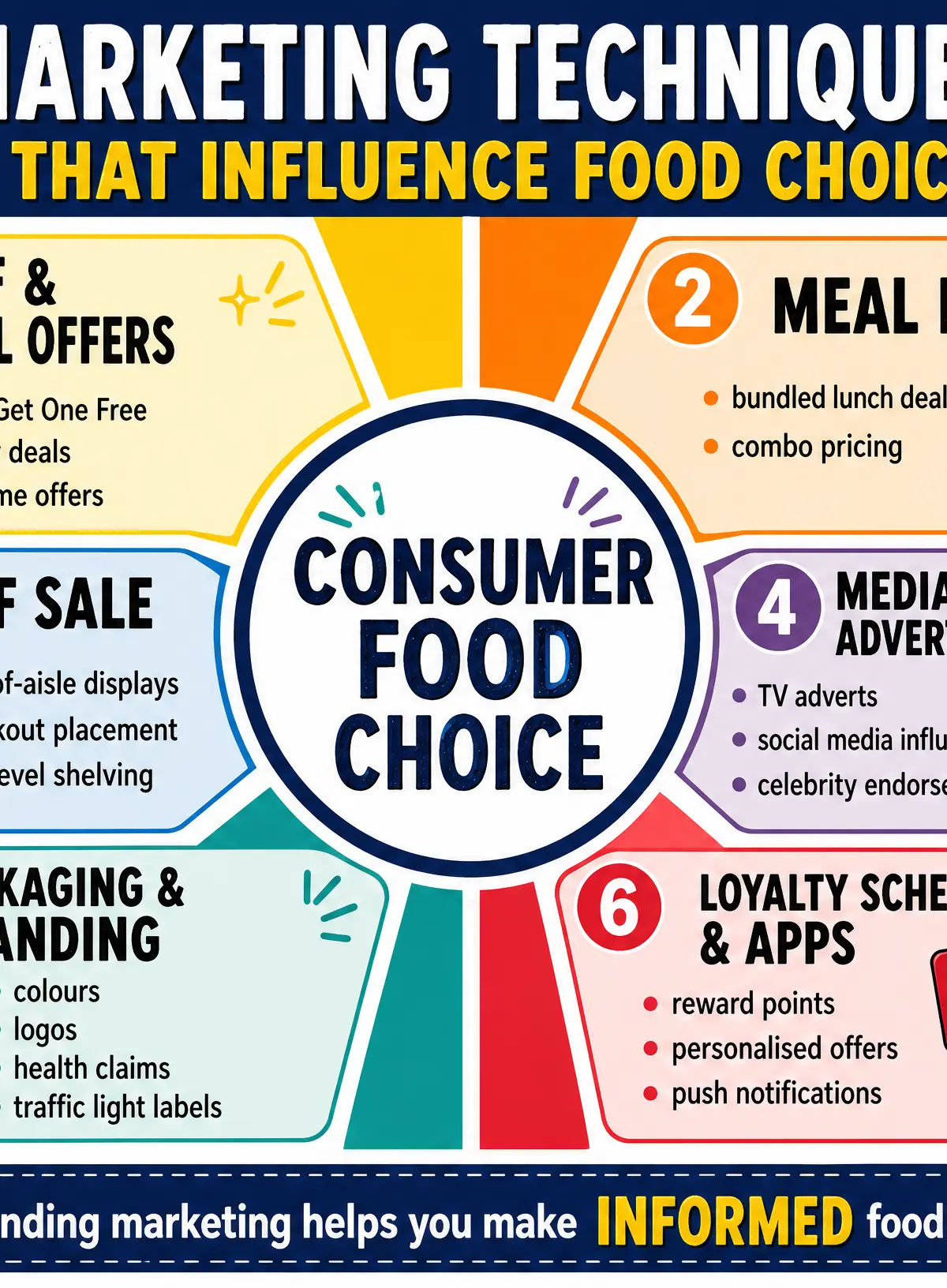
1. Promotional Pricing
- BOGOF (Buy One Get One Free) and Multi-buys (e.g., 3 for 2): Encourages bulk buying, often of high-margin, processed foods. Can lead to overconsumption or food waste.
- Meal Deals: Bundles a main, snack, and drink. While perceived as good value, they often steer consumers toward high-calorie snacks and sugary drinks rather than healthier alternatives.
2. Point of Sale (POS)
- Checkout Placement: Placing sweets and chocolates near the till targets impulse buying, especially by children (pester power).
- End-of-Aisle Displays (Gondola Ends): High-visibility areas used to promote special offers.
- Eye-Level Shelving: Premium products or those targeted at adults are placed at eye level; products targeted at children are placed lower down.
3. Media and Advertising
- Television and Digital Ads: Create brand awareness and desirability.
- Celebrity/Influencer Endorsement: Consumers trust or aspire to be like the endorser, transferring that positive feeling to the food product.
- Sponsorship: Food brands sponsoring sports events can create a misleading 'health halo' around unhealthy products.
4. Packaging and Branding
- Colour Psychology: Green implies healthy/natural; bright primary colours appeal to children.
- Character Merchandising: Using cartoon characters to appeal directly to younger consumers.
5. Loyalty Schemes
- Supermarket reward cards track purchasing data, allowing retailers to send highly targeted, personalised offers to encourage repeat custom.
Visual Resources
3 diagrams and illustrations
Interactive Diagrams
1 interactive diagram to visualise key concepts
Conceptual Flow Outline
Factors Influencing Consumer Food Choice
Worked Examples
2 worked examples — open one to explore the question and available guidance.
Practice Questions
Test your understanding — click to reveal model answers
State three pieces of mandatory information that must be shown on a food label. (3 marks)
Hint: Think about what you legally need to know for safety and identification.
Explain the difference between a 'use by' date and a 'best before' date. (4 marks)
Hint: One is about safety, the other is about quality.
Explain how 'point of sale' marketing techniques can influence a consumer to make unhealthy food choices. (4 marks)
Hint: Think about where products are placed in the supermarket and how that affects behaviour.
Test your understanding of Food choice
Active recall beats re-reading. Take an instant quiz now to test what you’ve learned and lock it into long-term memory.
7 days Premium · Then free forever · No card, no charge