OCR · GCSE · Food Preparation and Nutrition
Dietary Reference Values (DRVs)
Master Dietary Reference Values (DRVs) for your OCR GCSE Food Preparation and Nutrition exam. This guide breaks down the science of nutritional requirements, showing you how to apply DRV knowledge to different life stages and analyse diets like a pro to secure top marks.
- 5 min read
- 3 worked examples
- 5 practice questions
- 7 key terms
Study Notes
Overview
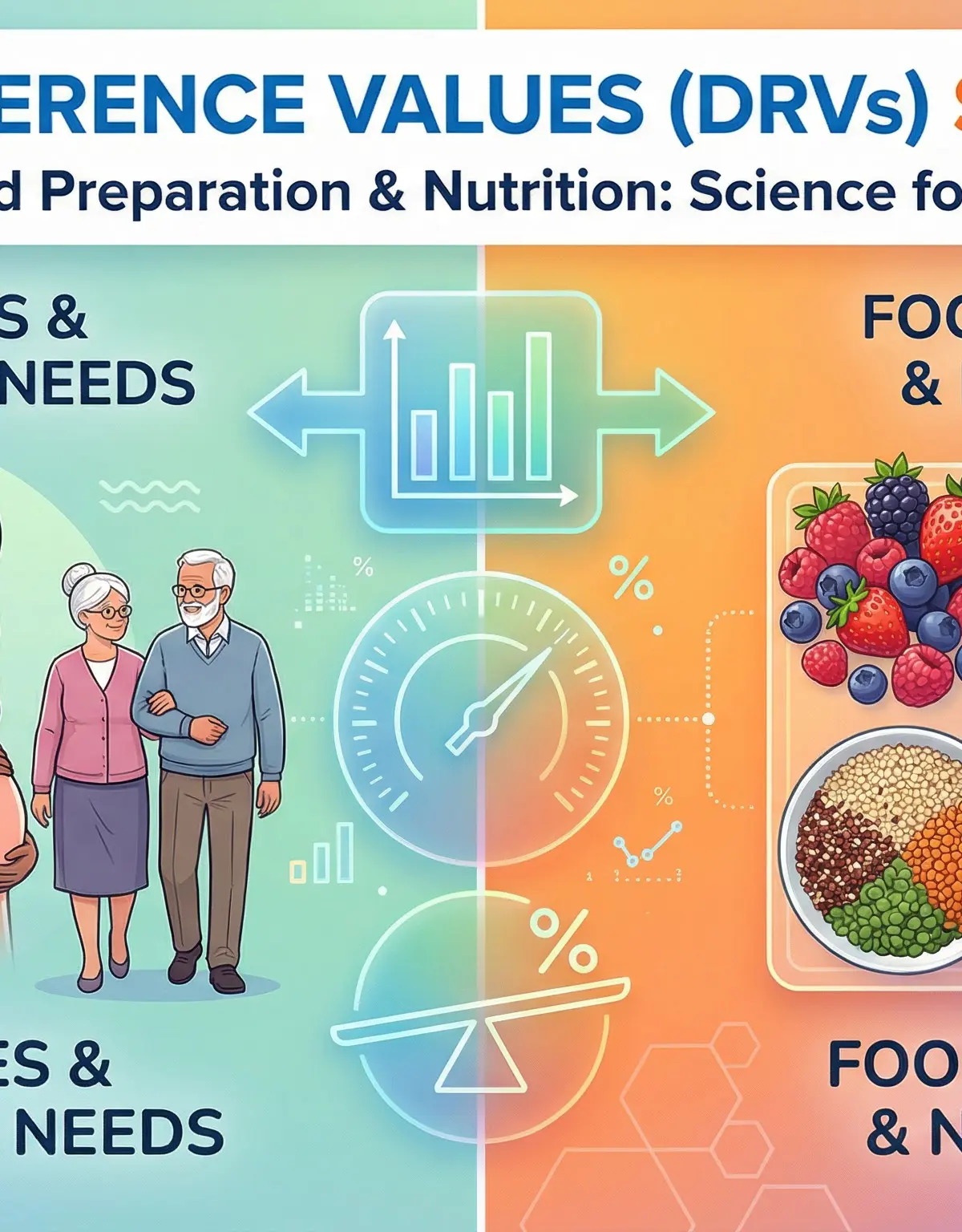
Dietary Reference Values (DRVs) are a cornerstone of the OCR GCSE Food Preparation and Nutrition specification (J309). They represent the scientific basis for understanding nutritional needs. Examiners expect candidates to not only define the different DRVs but, more importantly, to apply them to practical scenarios. This involves analysing diets, planning meals for individuals with specific needs, and justifying food choices based on quantitative data. This guide will equip you with the precise knowledge and analytical skills required to confidently tackle questions on EAR, RNI, LRNI, and Safe Intake, ensuring you can demonstrate a thorough understanding of how nutritional requirements vary across different life stages and physiological conditions.
Key Concepts: The Four DRVs
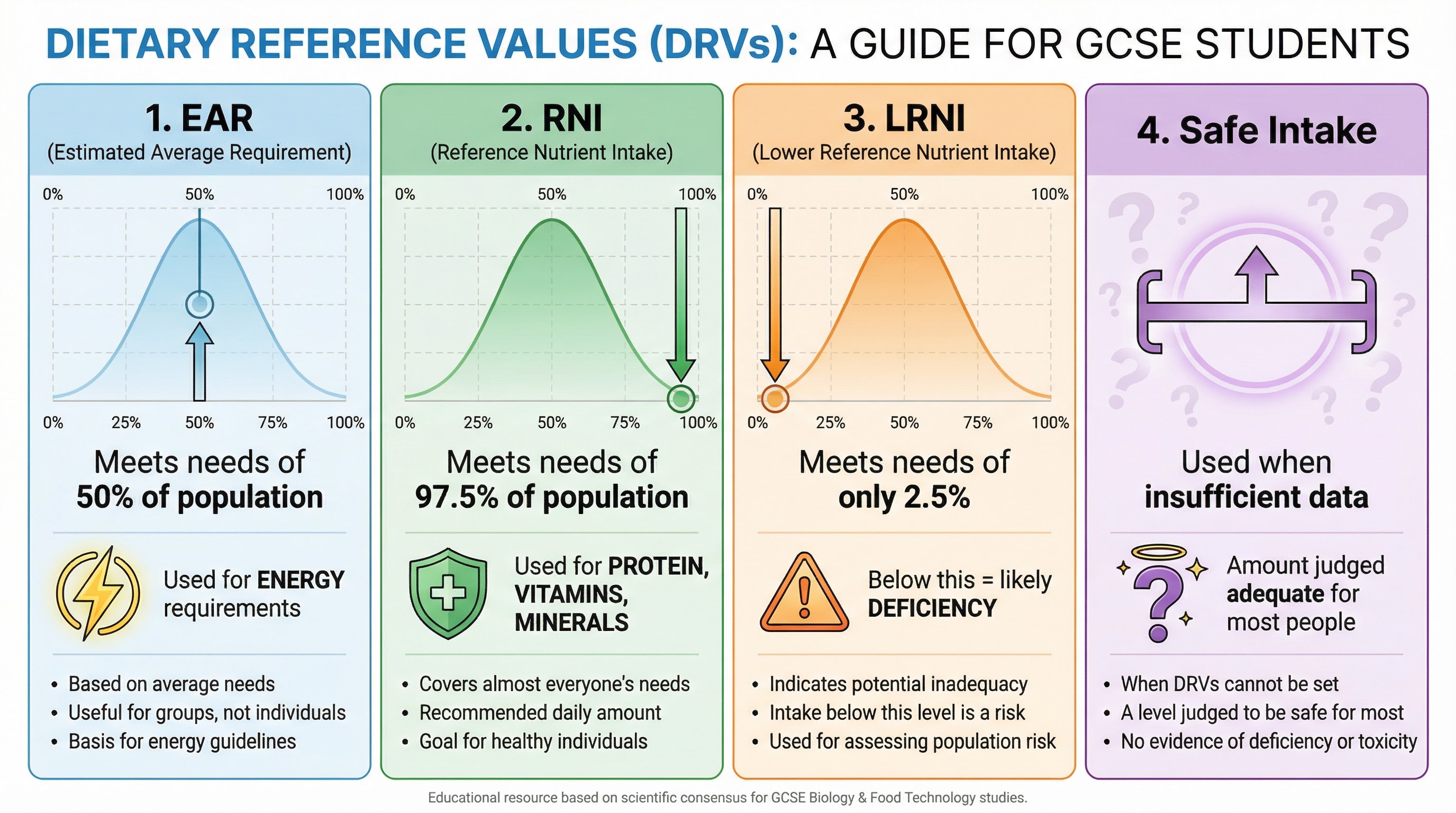
Understanding the four types of DRV is non-negotiable for exam success. Each has a specific purpose and application that you must be able to distinguish clearly.
Estimated Average Requirement (EAR)
What it is: The EAR is an estimate of the average requirement for energy or a nutrient for a group of people. It meets the needs of 50% of the population.
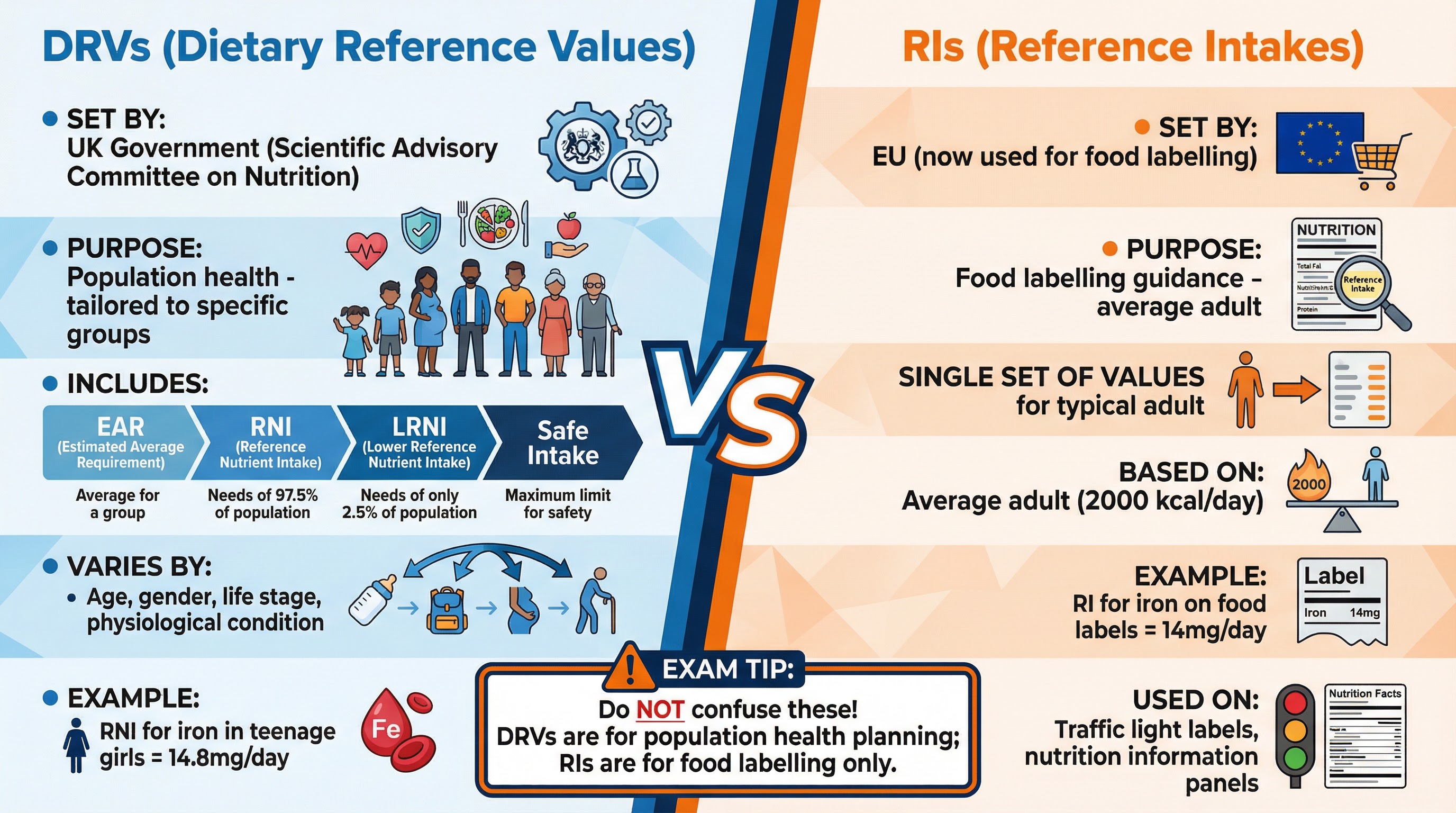
Why it matters: For the exam, you must know that EAR is only used for energy. It is the mid-point of the normal distribution of requirements. It is used by governments and health agencies to plan population-level dietary recommendations, but it is not a suitable target for individuals as it would be insufficient for half of them.
Reference Nutrient Intake (RNI)
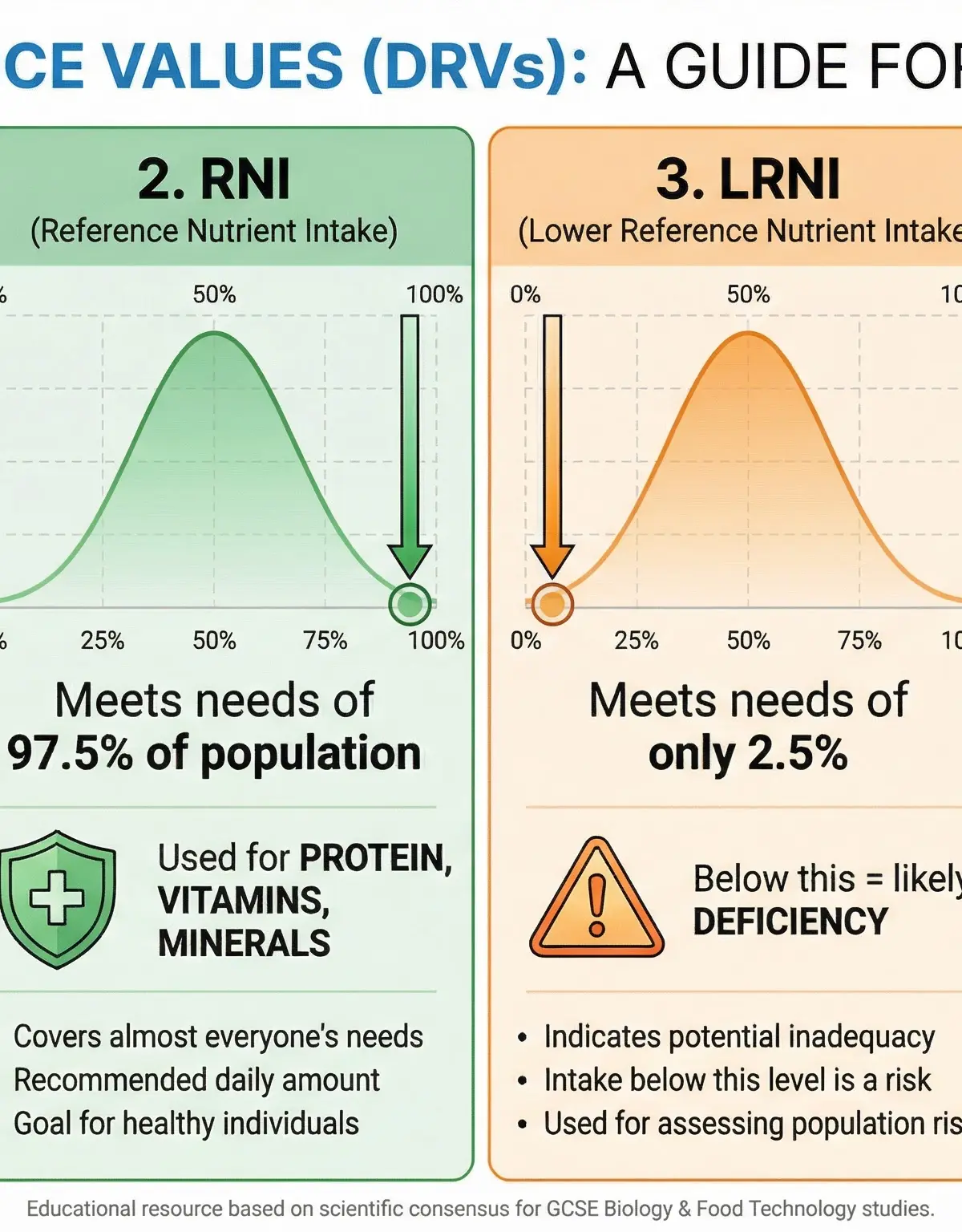
What it is: The RNI is the amount of a nutrient that is sufficient for 97.5% of people in a group. It is set at two standard deviations above the EAR.
Why it matters: This is the value examiners expect you to use as the primary goal for most individuals when analysing diets for protein, vitamins, and minerals. If a person's intake meets or exceeds the RNI, their intake is considered adequate. For example, the RNI for Vitamin C for adults is 40mg/day.
Lower Reference Nutrient Intake (LRNI)
What it is: The LRNI is the amount of a nutrient that is sufficient for only the 2.5% of people with the lowest needs. It is set at two standard deviations below the EAR.
Why it matters: An intake below the LRNI is a critical red flag. Examiners will award significant marks for identifying that an individual with an intake below the LRNI is at high risk of nutritional deficiency. You must state this explicitly in your answers.
Safe Intake
What it is: A Safe Intake is set when there is insufficient scientific evidence to establish an EAR, RNI, and LRNI. It is an amount judged to be adequate for almost everyone but below a level that could have undesirable effects.
Why it matters: This demonstrates a nuanced understanding. It is used for nutrients like biotin and pantothenic acid. While less commonly tested in calculation questions, knowing its purpose can gain you credit in definition-based questions.
DRVs vs Reference Intakes (RIs): A Common Pitfall
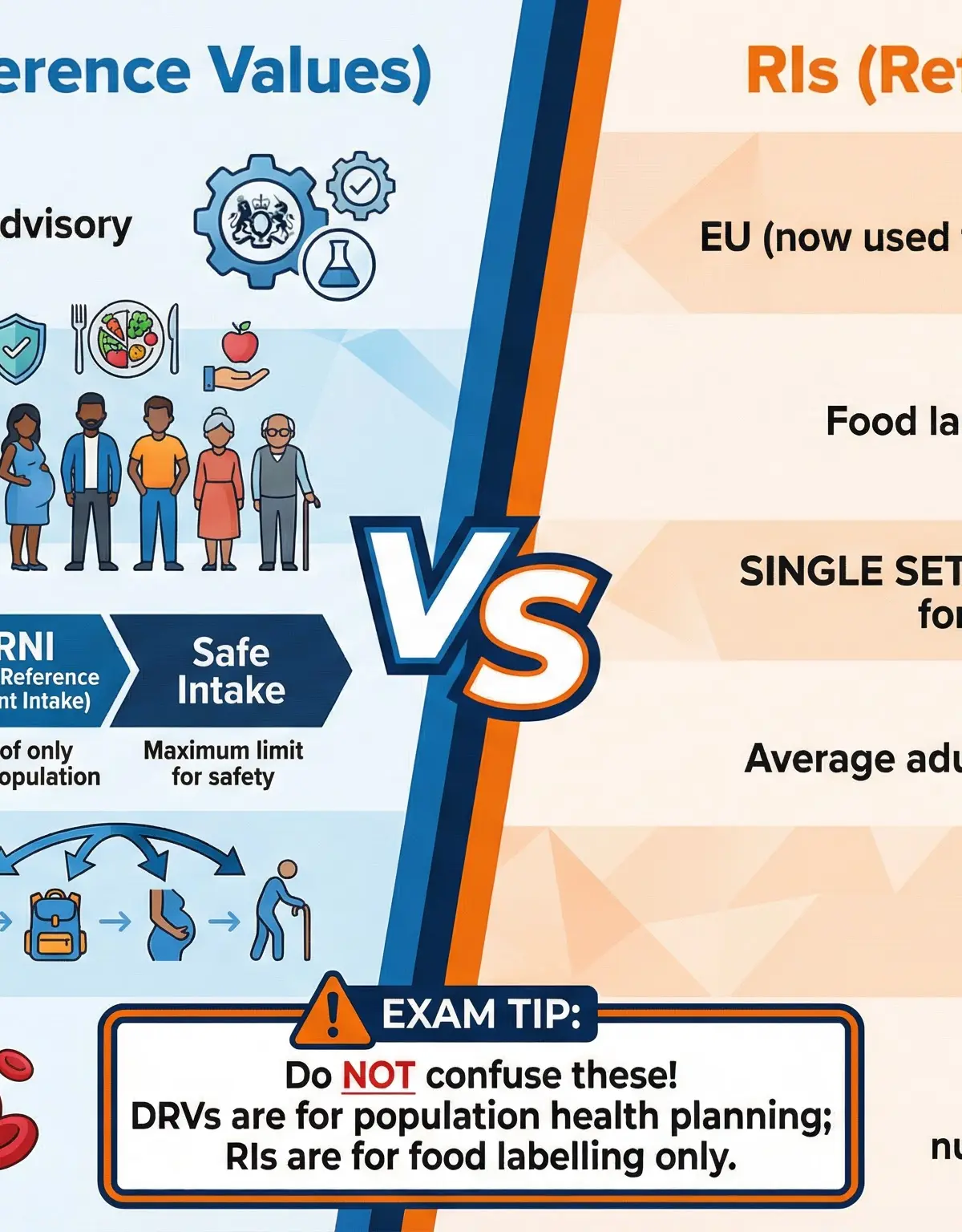
Candidates frequently lose marks by confusing DRVs with Reference Intakes (RIs). You must avoid this mistake.
DRVs Across Life Stages
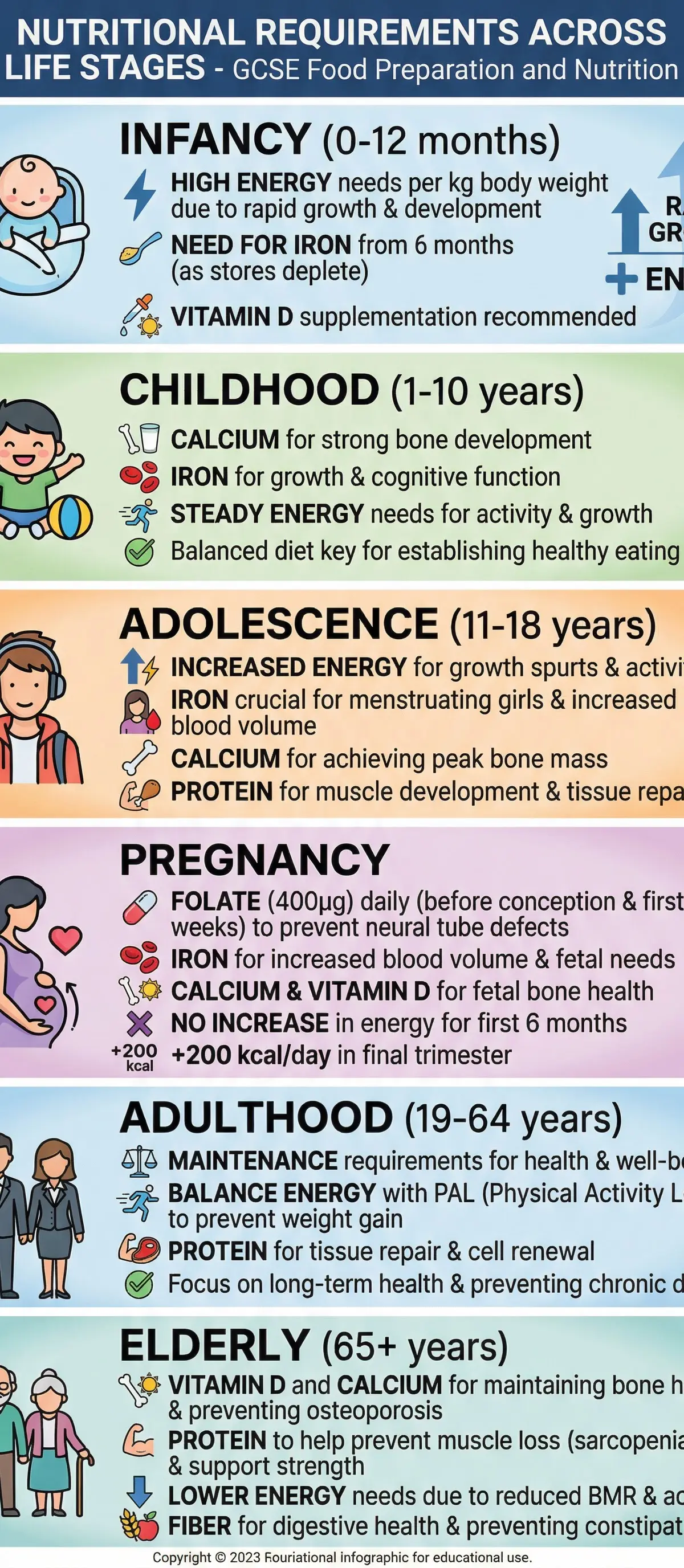
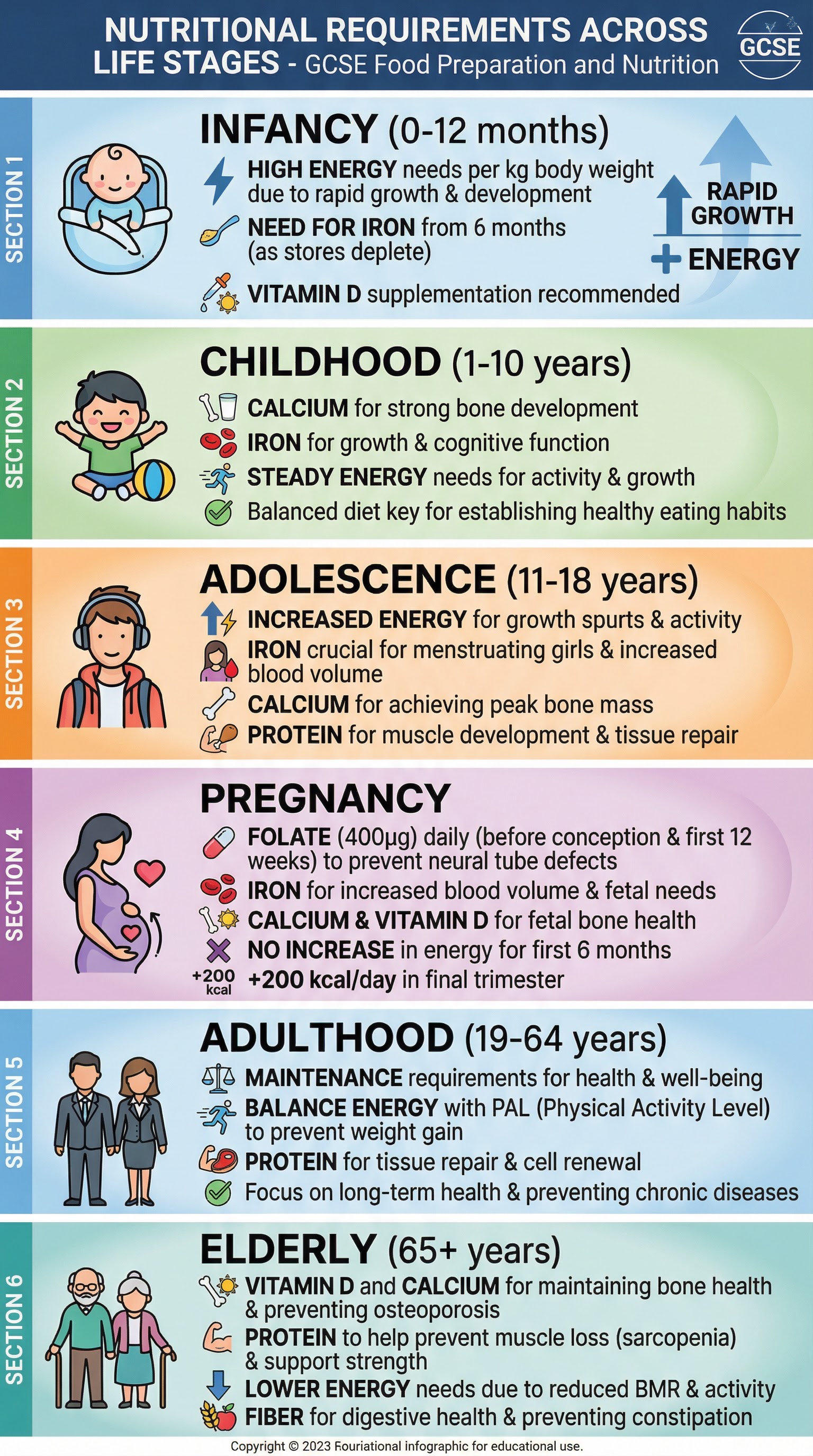
Applying DRVs to different life stages is a high-level skill that examiners reward. You must be able to explain why nutritional needs change.
Infancy (0-12 months)
Key Needs: Highest energy requirement per kg of body weight for rapid growth. Iron stores deplete after 6 months, so iron-rich weaning foods are crucial. Vitamin D supplementation is recommended.
Childhood (1-10 years)
Key Needs: Calcium and Vitamin D for bone mineralisation. Iron for cognitive development and to prevent anaemia. Energy needs increase steadily with growth and activity levels.
Adolescence (11-18 years)
Key Needs: A significant growth spurt increases the need for energy and protein. Calcium is vital to achieve Peak Bone Mass. The RNI for iron increases significantly for girls to 14.8mg/day to replace menstrual losses.
Adulthood (19-64 years)
Key Needs: Focus shifts to maintenance. Energy needs are determined by Basal Metabolic Rate (BMR) and Physical Activity Level (PAL). Nutrient-dense foods are important to prevent chronic diseases.
Pregnancy & Lactation
Key Needs: Folic acid (400µg/day) is required before and during the first 12 weeks of pregnancy to prevent neural tube defects. Iron needs increase to support the foetus and increased maternal blood volume. Energy needs only increase by ~200kcal in the final trimester.
Older Adults (65+ years)
Key Needs: Energy needs decrease due to a lower BMR. However, requirements for Vitamin D and Calcium increase to protect against osteoporosis. Protein is crucial to prevent sarcopenia (age-related muscle loss).
Worked Examples
3 worked examples — open one to explore the question and available guidance.
Practice Questions
Test your understanding — click to reveal model answers
Explain why the Reference Nutrient Intake (RNI) for calcium is higher during adolescence than in early childhood. (4 marks)
Hint: Think about what is happening to the skeleton during adolescence and what the long-term consequences are.
Describe two common mistakes candidates make when answering questions about Dietary Reference Values. (2 marks)
Hint: Think about the most common points of confusion mentioned in this guide.
A 68-year-old man has a low Physical Activity Level (PAL). Explain why his EAR for energy is lower than that of a 30-year-old man. (3 marks)
Hint: Consider the two main factors that affect energy requirements in older adults.
Define 'LRNI' and explain its significance in assessing dietary intake. (3 marks)
Hint: What percentage of the population does it cover and what does being below it mean?
Justify the recommendation for women who might become pregnant to take a folic acid supplement. (4 marks)
Hint: Link the nutrient to a specific health outcome and the timing of its importance.
Test your understanding of Dietary Reference Values (DRVs)
Active recall beats re-reading. Take an instant quiz now to test what you’ve learned and lock it into long-term memory.
7 days Premium · Then free forever · No card, no charge