OCR · GCSE · Food Preparation and Nutrition
Ethical considerations and Fair Trade
This study guide delves into the critical topic of ethical considerations and Fair Trade in food production, a key area of the OCR GCSE Food Preparation and Nutrition specification. It provides a detailed examination of how consumer choices impact global food supply chains, animal welfare, and the livelihoods of producers in Low Income Countries (LICs), equipping students with the analytical skills needed to excel in their exams."
- 4 min read
- 3 worked examples
- 5 practice questions
Study Notes
Overview
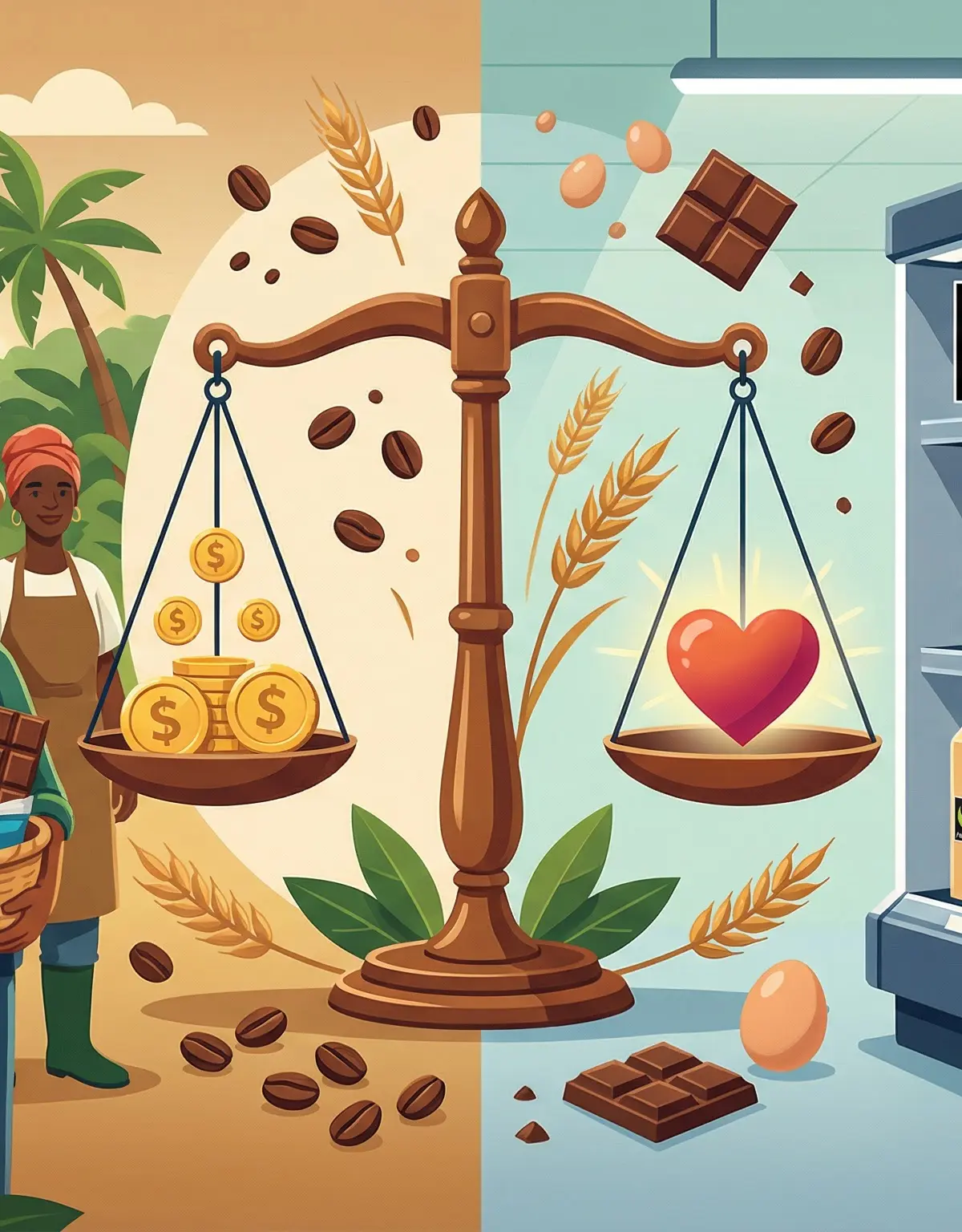
This section of the OCR J309 specification requires candidates to develop a thorough understanding of the moral, social, and environmental factors influencing food choice. Examiners expect a detailed analysis of food provenance, exploring the journey from farm to fork and the ethical dilemmas that arise along the way. A core focus is the Fairtrade system, where candidates must be able to explain its mechanisms and evaluate its impact on producers in LICs. Furthermore, a critical comparison of animal welfare standards, contrasting intensive farming methods with higher-welfare alternatives like free-range and those certified by the RSPCA Assured scheme, is essential. Credit is awarded for demonstrating a balanced perspective, weighing the benefits of ethical consumerism against economic factors such as food security and household budgets. Success in this area hinges on using precise, technical language and supporting arguments with specific examples of assurance schemes and their guarantees.
Key Concepts: Ethical Food Choices
Fairtrade: A System for Fairness
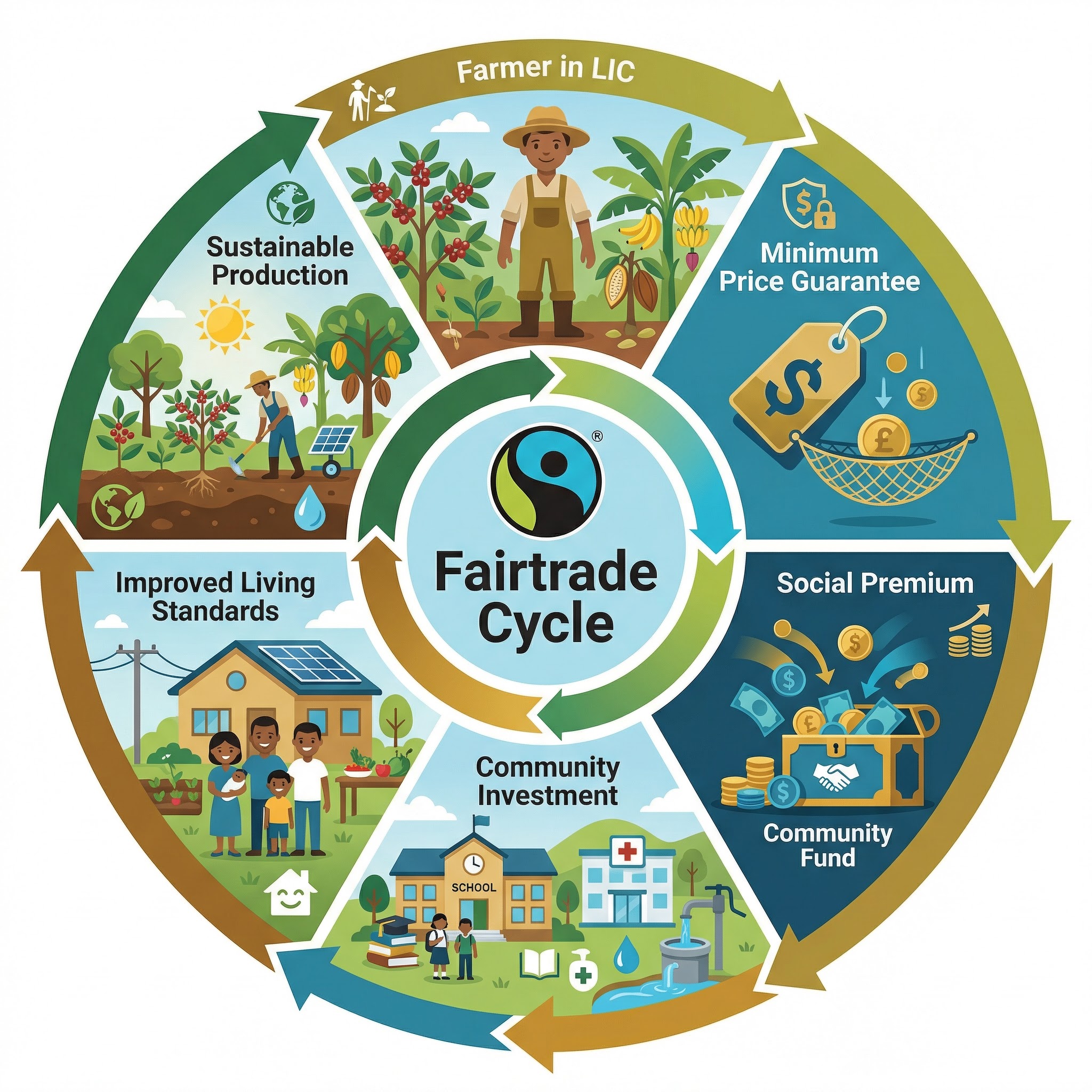
What it is: Fairtrade is an independent certification system that ensures producers in developing countries receive a fair and stable price for their products. It tackles the injustices of conventional trade, which often sees farmers and workers exploited.
Why it matters: For the exam, you must explain the two core mechanisms of Fairtrade:
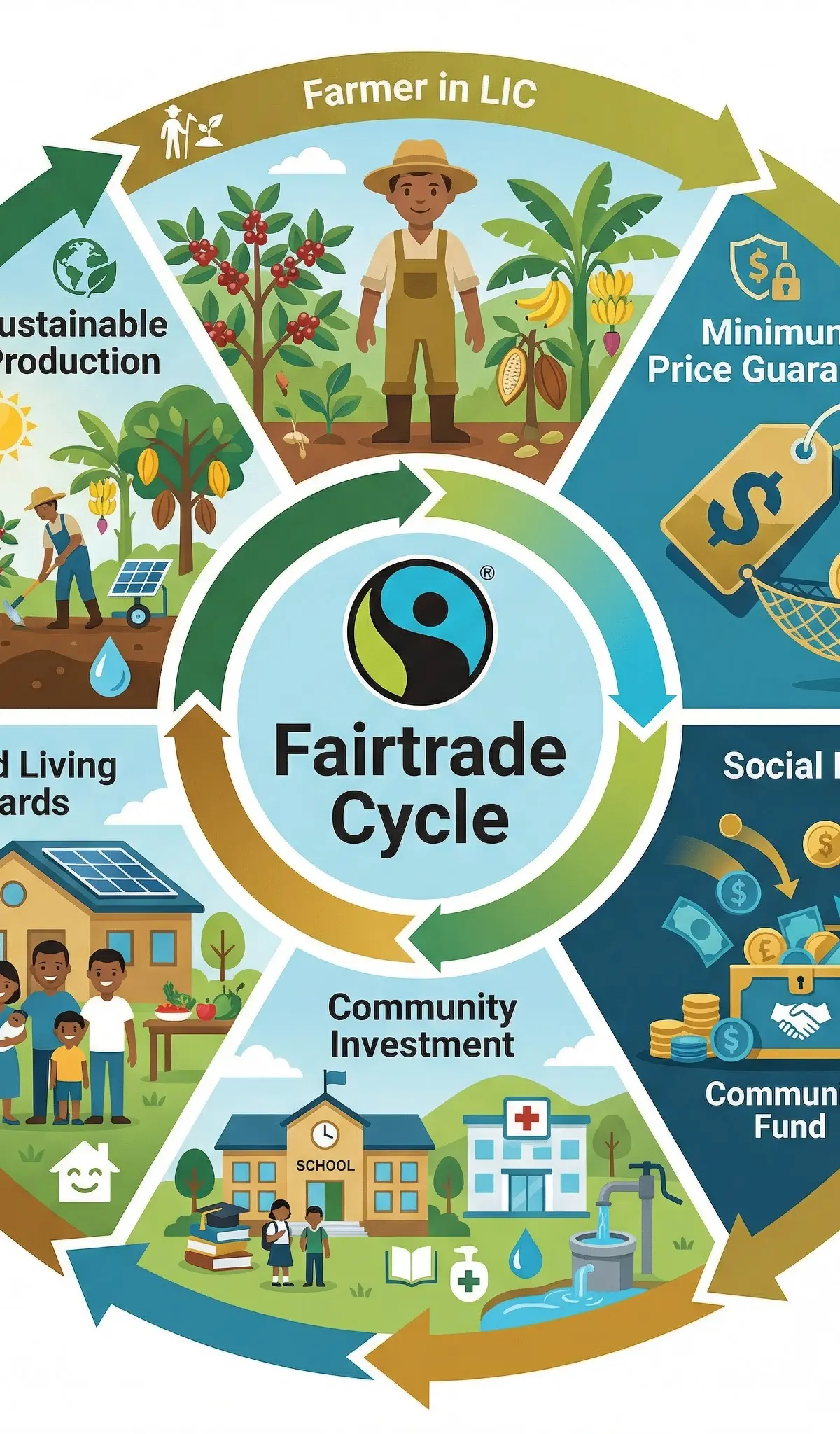
- The Fairtrade Minimum Price: This acts as a safety net for farmers, protecting them from volatile market price drops. If the global market price for a product like coffee falls, Fairtrade farmers are still guaranteed a minimum price, ensuring they can cover their costs of sustainable production.
- The Fairtrade Social Premium: This is an additional sum of money paid on top of the minimum price, which goes into a communal fund for workers and farmers to invest in projects of their choice. Examiners award high marks for specific examples of how this premium is used, such as building schools, funding medical clinics, providing clean water, or investing in better farming equipment.
Animal Welfare: Intensive vs. Extensive Farming
What it is: This area explores the conditions in which animals are reared for food. The two main systems you need to compare and contrast are intensive and extensive farming.
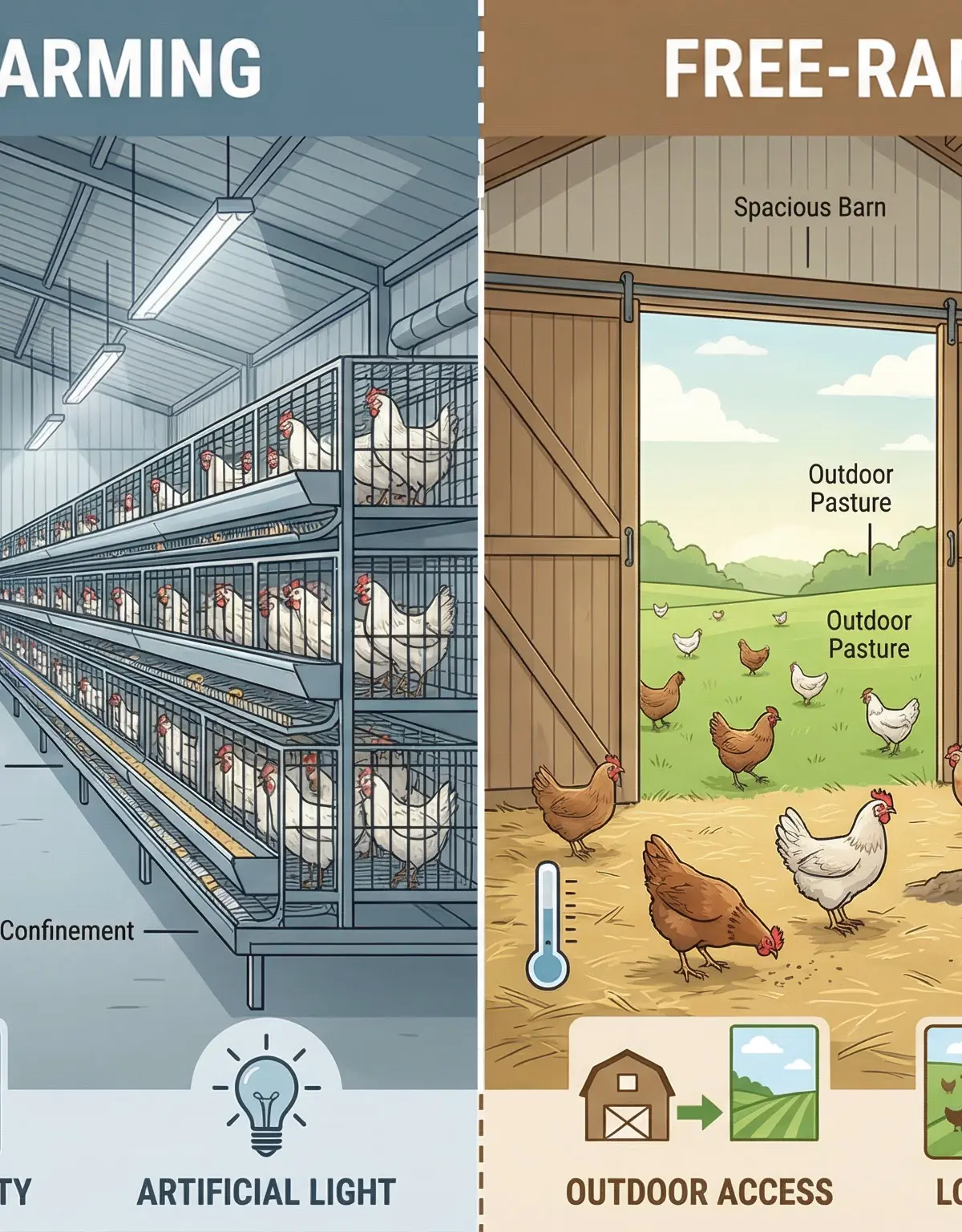
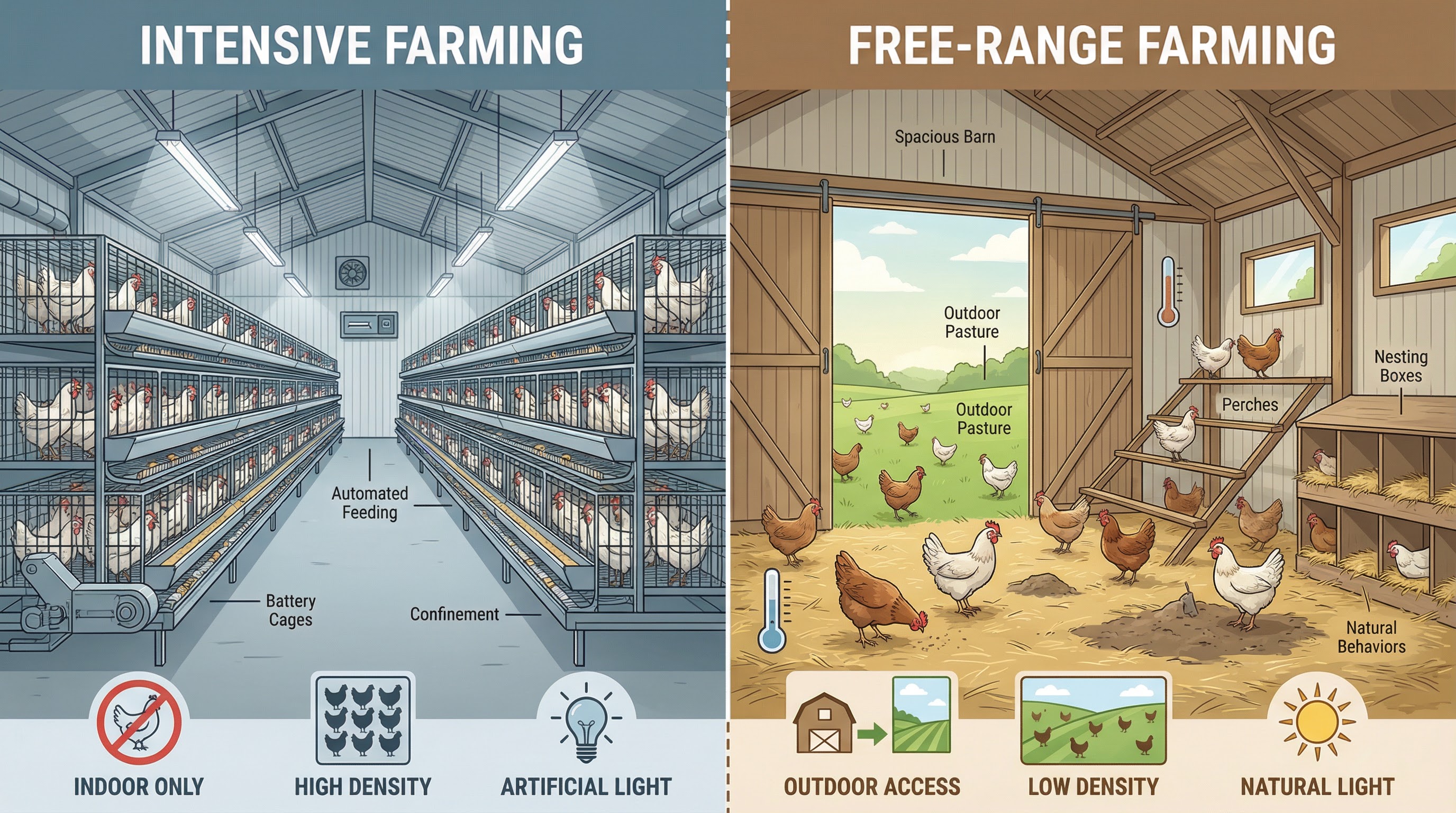
Intensive Farming (Factory Farming):
- Characteristics: High stocking densities, animals often kept indoors in controlled environments (e.g., battery cages for hens), limited space to express natural behaviours, and often reliant on prophylactic antibiotic use to prevent disease in crowded conditions.
- Advantages: High efficiency and yield, leading to lower-cost products for the consumer.
- Disadvantages: Significant animal welfare concerns, including stress, disease, and lack of a natural life.
Extensive Farming (e.g., Free-Range, Organic):
- Characteristics: Lower stocking densities, animals have access to outdoor space, ability to express natural behaviours (e.g., foraging, dust-bathing), and a focus on overall health rather than just productivity.
- Advantages: Higher animal welfare standards.
- Disadvantages: Requires more land and labour, resulting in higher production costs and more expensive products for consumers.
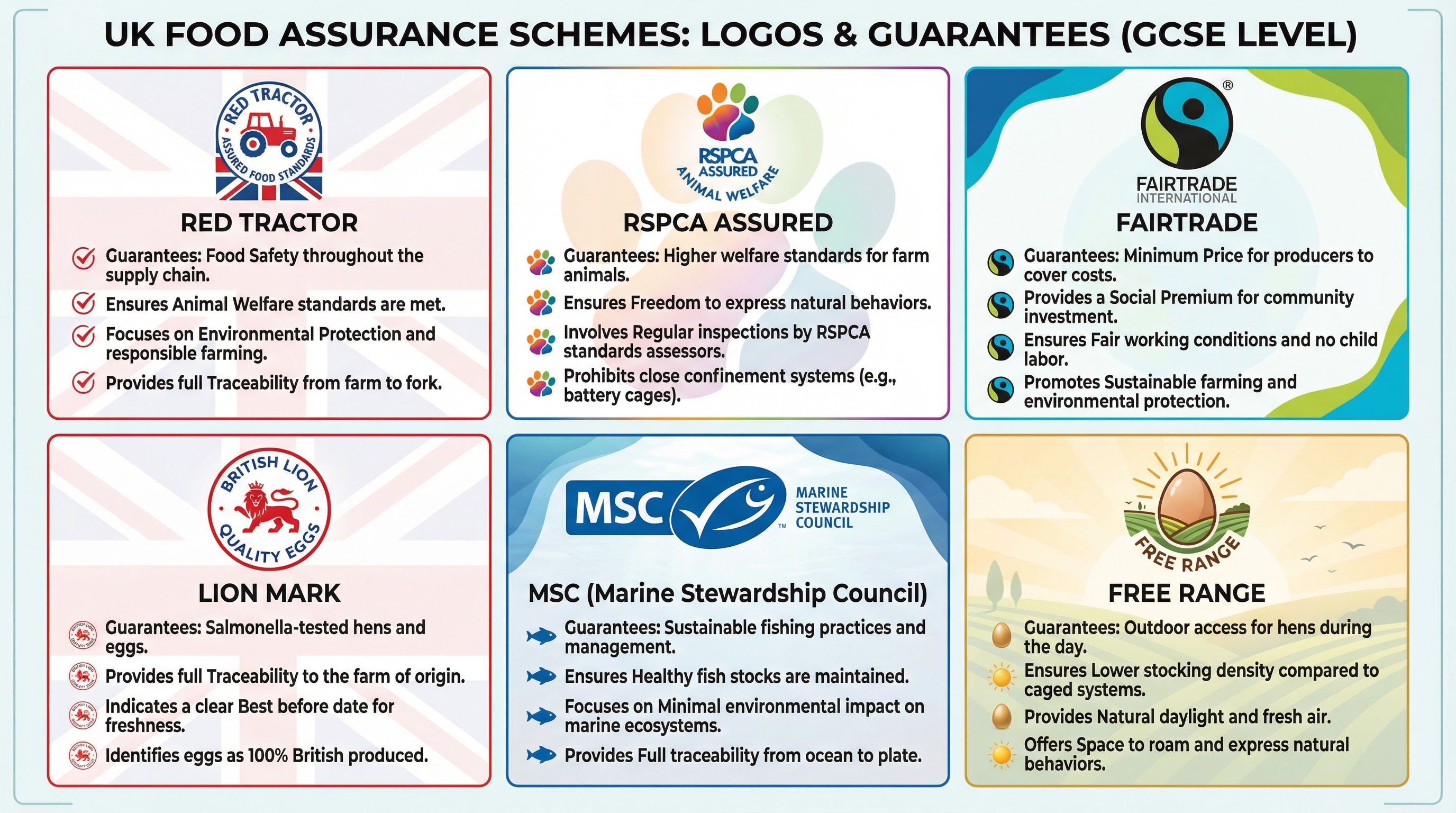
UK Food Assurance Schemes
What they are: These are logos and certifications that guarantee food has been produced to specific standards. They provide consumers with trust and traceability.
Why they matter: You must be able to identify key logos and explain the specific standards they represent. Simply listing them is not enough for high marks.
 "
"
Worked Examples
3 worked examples — open one to explore the question and available guidance.
Practice Questions
Test your understanding — click to reveal model answers
Explain two ways in which buying Fairtrade chocolate can benefit communities in Low Income Countries. (4 marks)
Hint: Think about the two main financial mechanisms of the Fairtrade system.
Describe two features of an intensive farming system for poultry. (4 marks)
Hint: Focus on the environment and conditions the birds are kept in.
To what extent do food assurance schemes like Red Tractor effectively guarantee high animal welfare? (9 marks)
Hint: Evaluate the strengths and weaknesses. Compare Red Tractor to a scheme with a stronger welfare focus.
A family is on a tight budget but wants to make ethical food choices. Discuss the challenges they might face. (6 marks)
Hint: Consider the conflict between cost and ethics.
Explain the meaning of the term 'food provenance'. (2 marks)
Hint: Think about the journey of food.
Test your understanding of Ethical considerations and Fair Trade
Active recall beats re-reading. Take an instant quiz now to test what you’ve learned and lock it into long-term memory.
7 days Premium · Then free forever · No card, no charge