OCR · GCSE · Food Preparation and Nutrition
Food security and global food challenges.
This study guide delves into the critical issues of food security and global food challenges, a core component of the OCR GCSE Food Preparation and Nutrition specification. It explores the complex interplay between food production, sustainability, and ethics, equipping candidates with the analytical skills to tackle high-mark exam questions."
- 6 min read
- 3 worked examples
- 3 practice questions
Study Notes
Overview
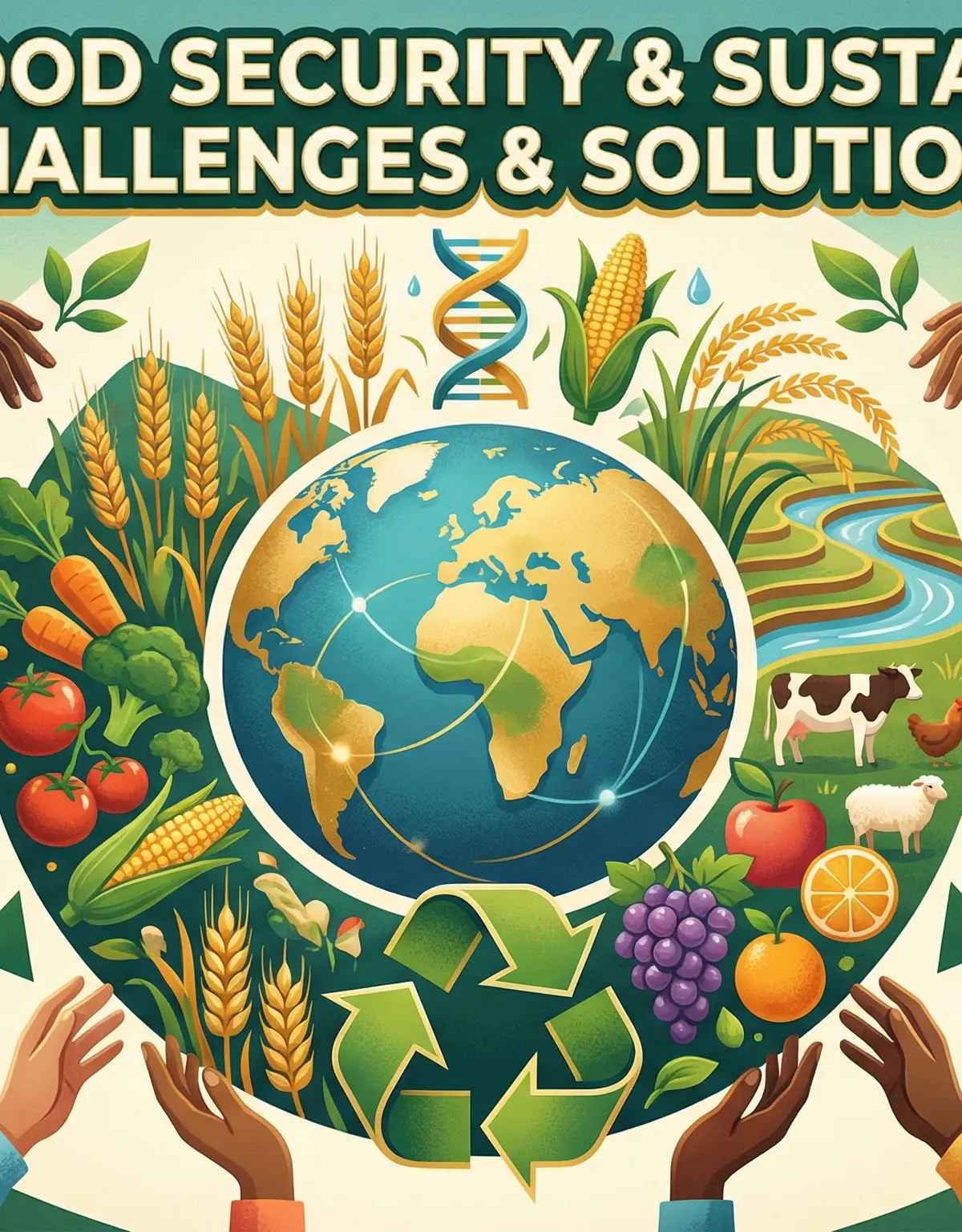
This unit explores one of the most pressing issues of our time: how to feed a growing global population sustainably. For your OCR GCSE, a thorough understanding of food security is non-negotiable. Examiners expect candidates to move beyond simple definitions and critically analyze the environmental, ethical, and economic dimensions of our food systems. This guide will break down the four pillars of food security, evaluate the impact of modern agricultural practices like intensive farming and GM technology, and provide strategies for tackling food waste. You will learn to connect concepts like food miles to their environmental consequences, such as carbon footprint, and apply the 6 Rs of sustainability. By mastering this content, you will be prepared to discuss, evaluate, and justify your arguments with the precision required to achieve top marks.
Key Concepts & Challenges
The Four Pillars of Food Security
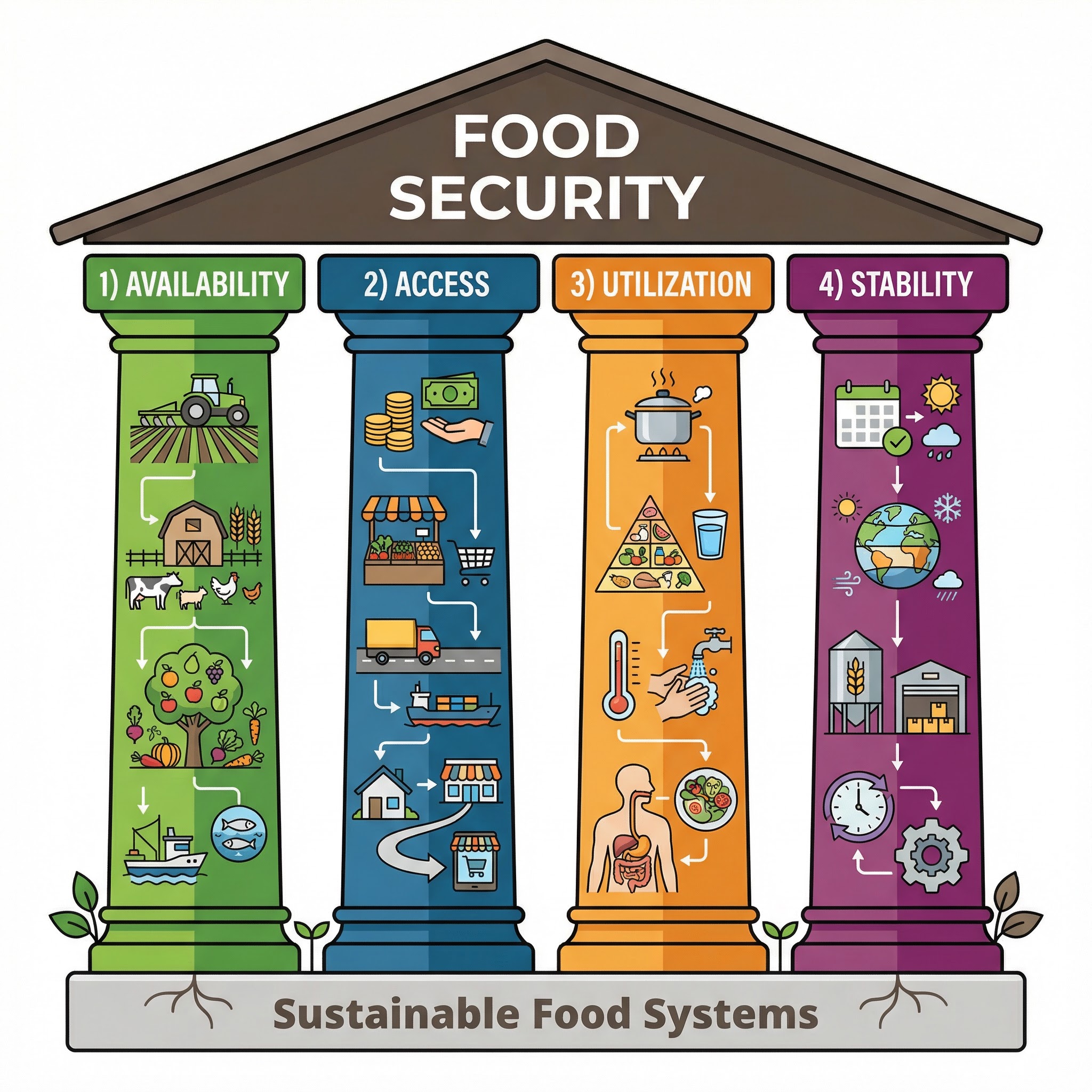
Food security is built on four essential pillars. A weakness in any one of these can lead to food insecurity. Examiners will award credit for not only naming these pillars but also for explaining how they interrelate.
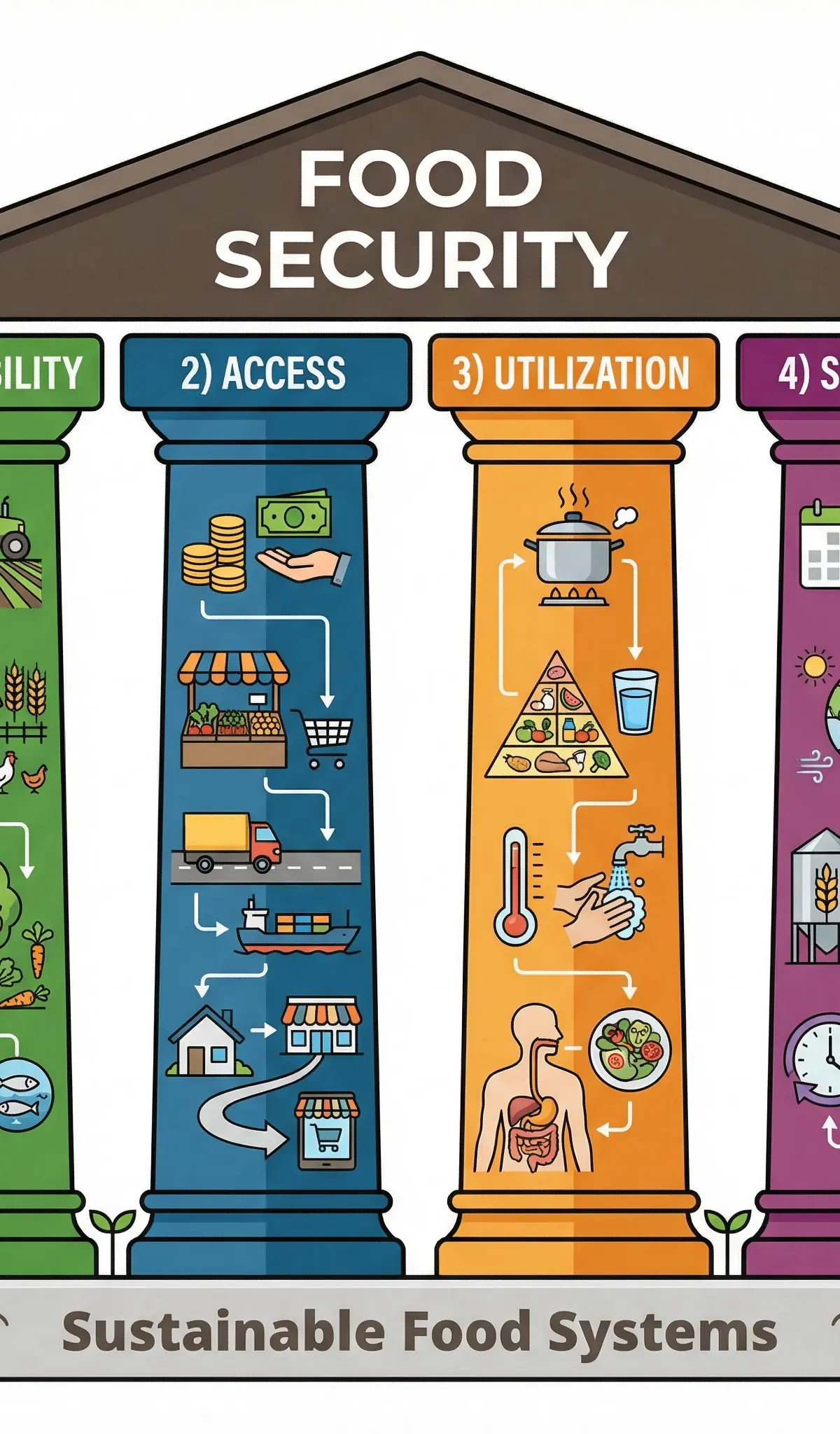
- Availability: This refers to the physical existence of food. Is enough food being grown, produced, or imported? This is influenced by factors like climate, soil quality, and agricultural technology.
- Access: This pillar concerns whether people can obtain the food that is available. Access is primarily determined by economic factors (can people afford food?) and physical factors (can people reach the markets where food is sold?).
- Utilization: This is about how well the body can use the nutrients from food. It requires a diverse diet, clean water, proper sanitation, and knowledge of basic nutrition and food preparation.
- Stability: This refers to the consistency of the other three pillars over time. Food security is only achieved if there is stable and reliable access to sufficient, safe, and nutritious food. Threats to stability include climate change, conflict, and economic crises.
Food Provenance and Food Miles
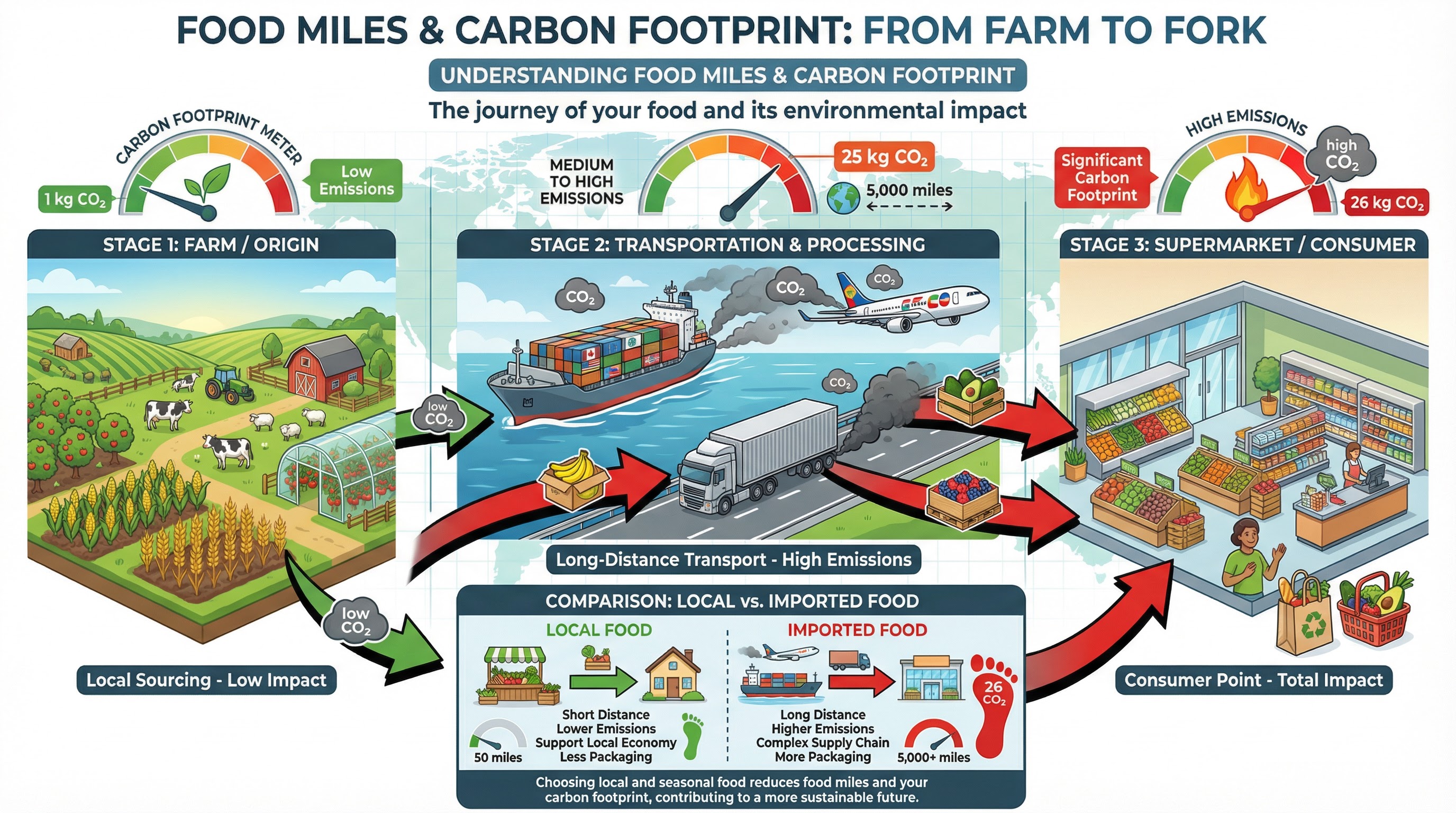
'Provenance' is a key term you must use correctly. It refers to the origin of our food – where it was grown, caught, or raised, and how it reached your plate. A major aspect of provenance is food miles, the distance food travels from producer to consumer.
High food miles are a significant concern due to their contribution to the global carbon footprint. The transportation of food, especially by air, releases large amounts of greenhouse gases.
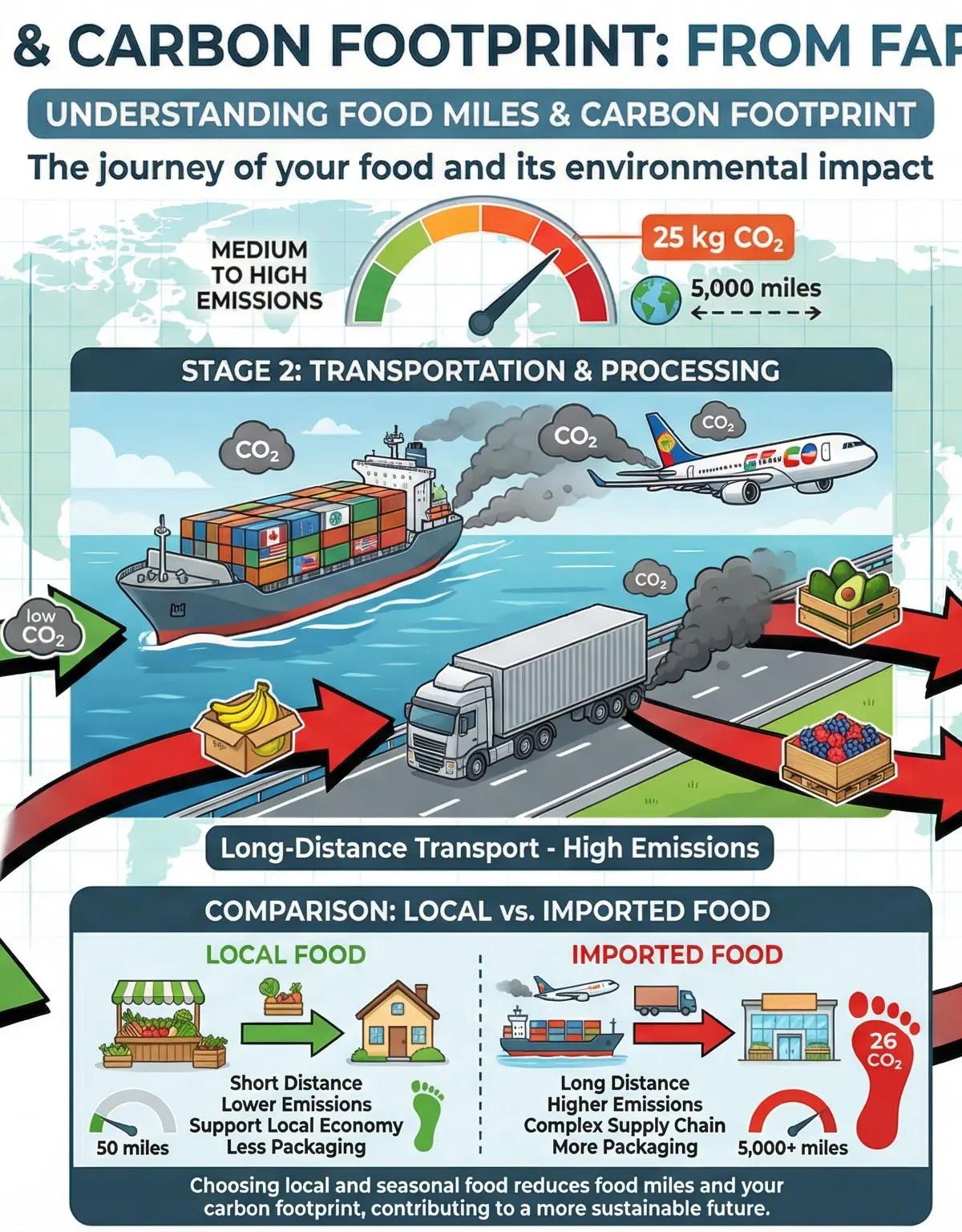
Examiner Tip: When discussing food miles, you must explain the mechanism. For instance: "Importing avocados from Peru to the UK by air requires burning large quantities of fossil fuels, which releases carbon dioxide, a greenhouse gas that contributes to global warming. This direct link between transport and emissions is what examiners are looking for."
Intensive Farming vs. Organic Farming
Candidates must be able to evaluate the trade-offs between different farming methods.
| Feature | Intensive Farming | Organic Farming |
|---|---|---|
| Goal | Maximize yield and minimize cost | Enhance biodiversity and soil health |
| Methods | High-input use of synthetic fertilizers, pesticides, and technology. Often involves monocultures. | Uses natural fertilizers (manure, compost), crop rotation, and biological pest control. Prohibits synthetic pesticides and fertilizers. |
| Positives | High yields, can feed large populations, often cheaper for the consumer. | Better for soil health and local ecosystems, no synthetic chemical residues, often higher animal welfare standards. |
| Negatives | Environmental damage (e.g., eutrophication from fertilizer runoff), soil degradation, loss of biodiversity, high fossil fuel dependency. | Lower yields, often more expensive for the consumer, can be more land-intensive. |
Genetically Modified (GM) Foods
GM technology involves altering a plant's DNA to introduce desirable traits. This is a contentious issue, and you must argue both sides.
Arguments for GM Foods:
- Increased Yield: Crops can be engineered to be resistant to pests, diseases, and herbicides.
- Enhanced Nutrition: Foods can be fortified with vitamins (e.g., Golden Rice with Vitamin A).
- Drought & Salinity Tolerance: Crops can be developed to grow in challenging climates.
Arguments Against GM Foods:
- Biodiversity Loss: Widespread use of herbicide-resistant crops can lead to the creation of 'superweeds' and reduce plant diversity.
- Unknown Long-Term Effects: The long-term impact on human health and ecosystems is not fully known.
- Corporate Control: A few large corporations control the GM seed market, which raises ethical concerns about farmer dependency.
Food Waste & The 6 Rs
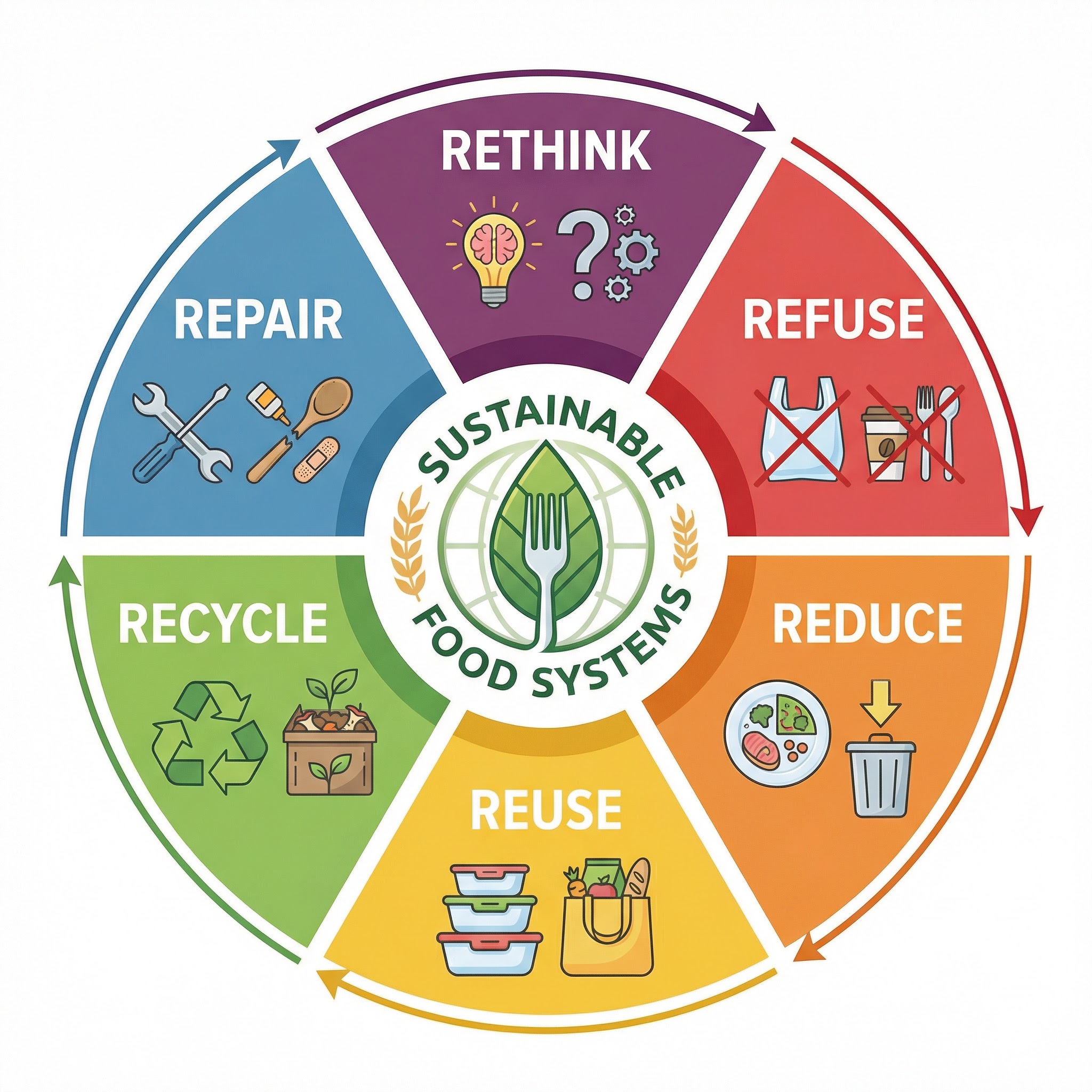
Food waste is a major economic and environmental issue. In the UK, an estimated 9.5 million tonnes of food is wasted each year. Candidates should apply the 6 Rs of Sustainability to food waste scenarios.
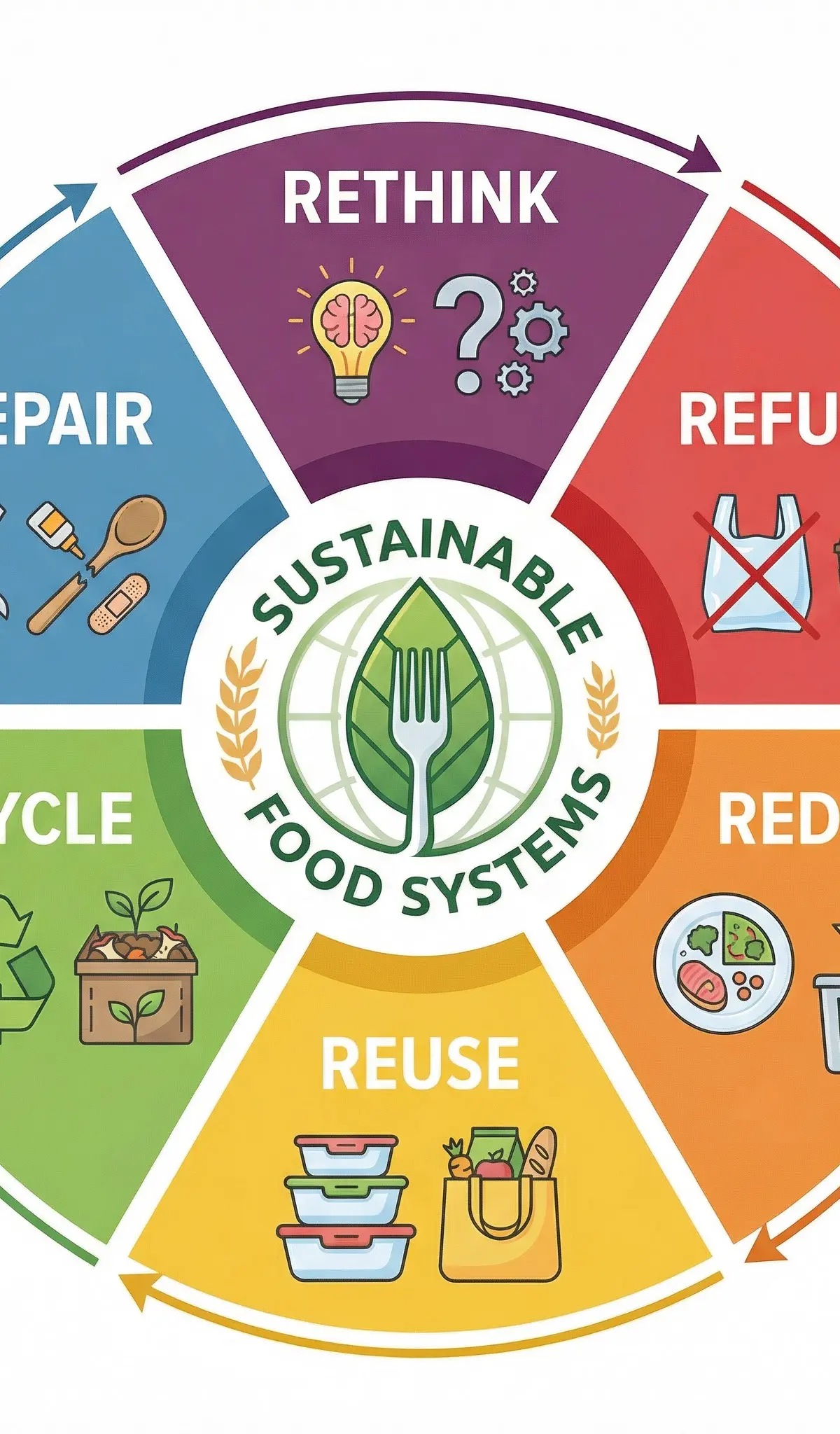
- Rethink: Question our purchasing habits. Do I need this much? Is there a local alternative?
- Refuse: Refuse unnecessary packaging, single-use plastics, and promotional offers that encourage overbuying.
- Reduce: Plan meals, write shopping lists, and understand portion sizes to reduce the amount of food purchased and wasted.
- Reuse: Use leftovers creatively in new meals. Reuse containers for storage.
- Recycle: Compost fruit and vegetable peelings. Recycle packaging correctly.
- Repair: This is less applicable to food itself, but relates to maintaining kitchen equipment to prevent food spoilage (e.g., a faulty fridge).
Key Distinction: You must know the difference between 'Use By' and 'Best Before' dates. 'Use By' is about safety and is found on high-risk foods like meat and dairy. 'Best Before' is about quality (taste, texture). Food is often safe to eat after its best before date."
Worked Examples
3 worked examples — open one to explore the question and available guidance.
Practice Questions
Test your understanding — click to reveal model answers
Explain how two different methods of farming can affect the environment. (6 marks)
Hint: Choose two contrasting methods (e.g., intensive and organic) and give one specific environmental impact for each, explaining the mechanism.
A food manufacturer is developing a new ready meal. Describe two ways they could make the packaging more sustainable. (4 marks)
Hint: Think about the materials used and the amount of packaging.
To what extent is food waste in the home the biggest challenge to UK food security? (12 marks)
Hint: This is an evaluation question. Argue both sides. Is household food waste the BIGGEST challenge, or are there other, more significant challenges? Consider production, supply chains, and poverty.
Test your understanding of Food security and global food challenges.
Active recall beats re-reading. Take an instant quiz now to test what you’ve learned and lock it into long-term memory.
7 days Premium · Then free forever · No card, no charge