OCR · GCSE · Food Preparation and Nutrition
Meat and fish preparation
Mastering the science of meat and fish preparation is essential for top marks in your OCR GCSE Food Preparation and Nutrition exam. This guide provides a deep dive into the chemical changes, technical skills, and food safety protocols that examiners look for, ensuring you can apply both practical and theoretical knowledge with confidence.
- 7 min read
- 3 worked examples
- 5 practice questions
- 6 key terms
Study Notes
Overview
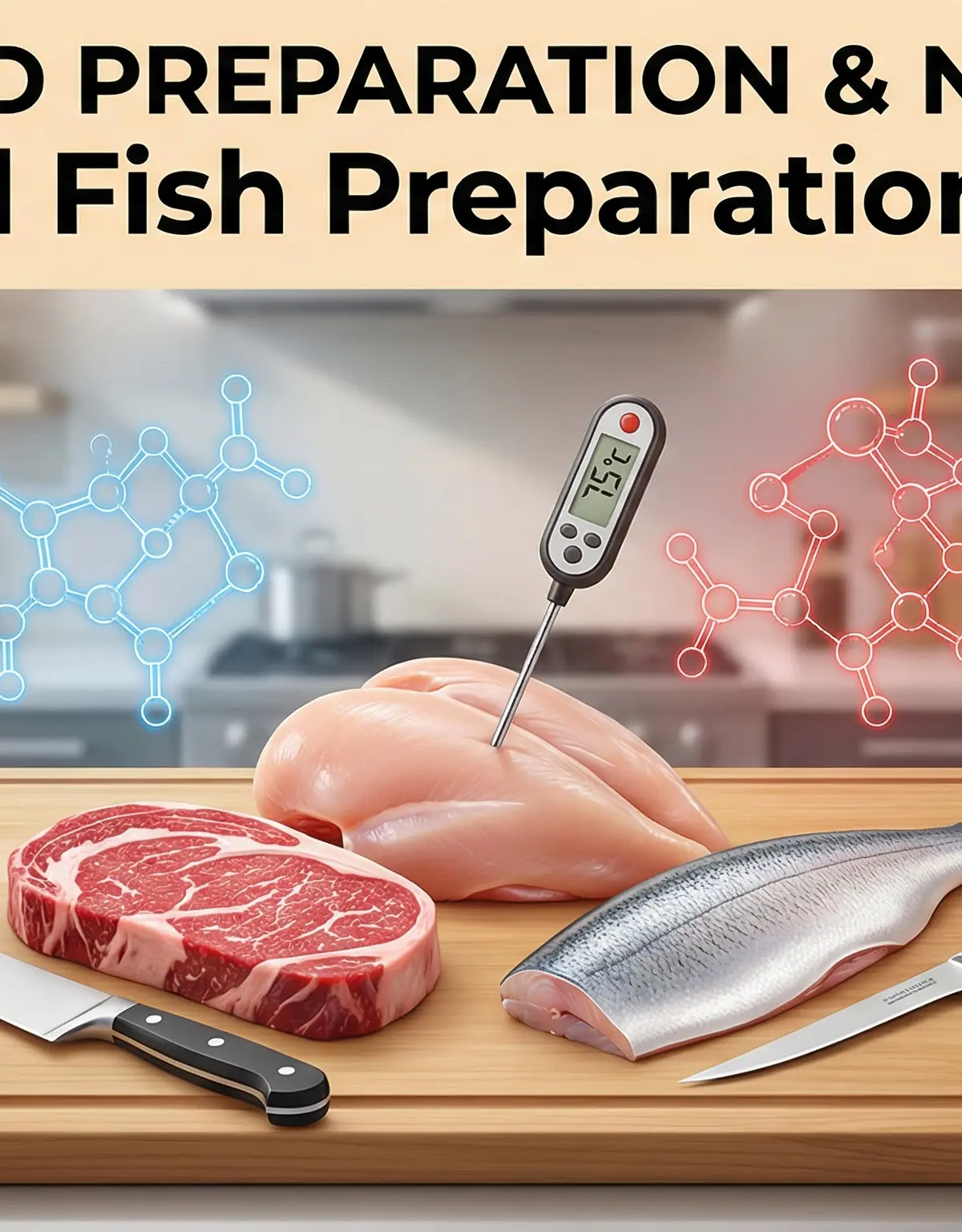
This study guide focuses on the scientific principles and practical skills required for the preparation of meat and fish, a cornerstone of the OCR GCSE Food Preparation and Nutrition specification. A thorough understanding of this topic is critical, as it integrates knowledge from food safety, nutrition, and the chemical properties of proteins. Examiners expect candidates to demonstrate not just rote learning of facts, but a deep, applied understanding of how and why different preparation and cooking methods affect the final product. This includes the chemical processes of denaturation and coagulation, the conversion of collagen to gelatin, and the Maillard reaction. Furthermore, candidates must be able to articulate and justify the rigorous food safety protocols necessary when handling high-risk foods like meat and fish, with precise knowledge of critical temperatures and pathogen control. This guide will equip you with the specific terminology, technical knowledge, and analytical skills to excel in both your written exam and practical assessments.
Key Scientific Principles
Protein Denaturation and Coagulation
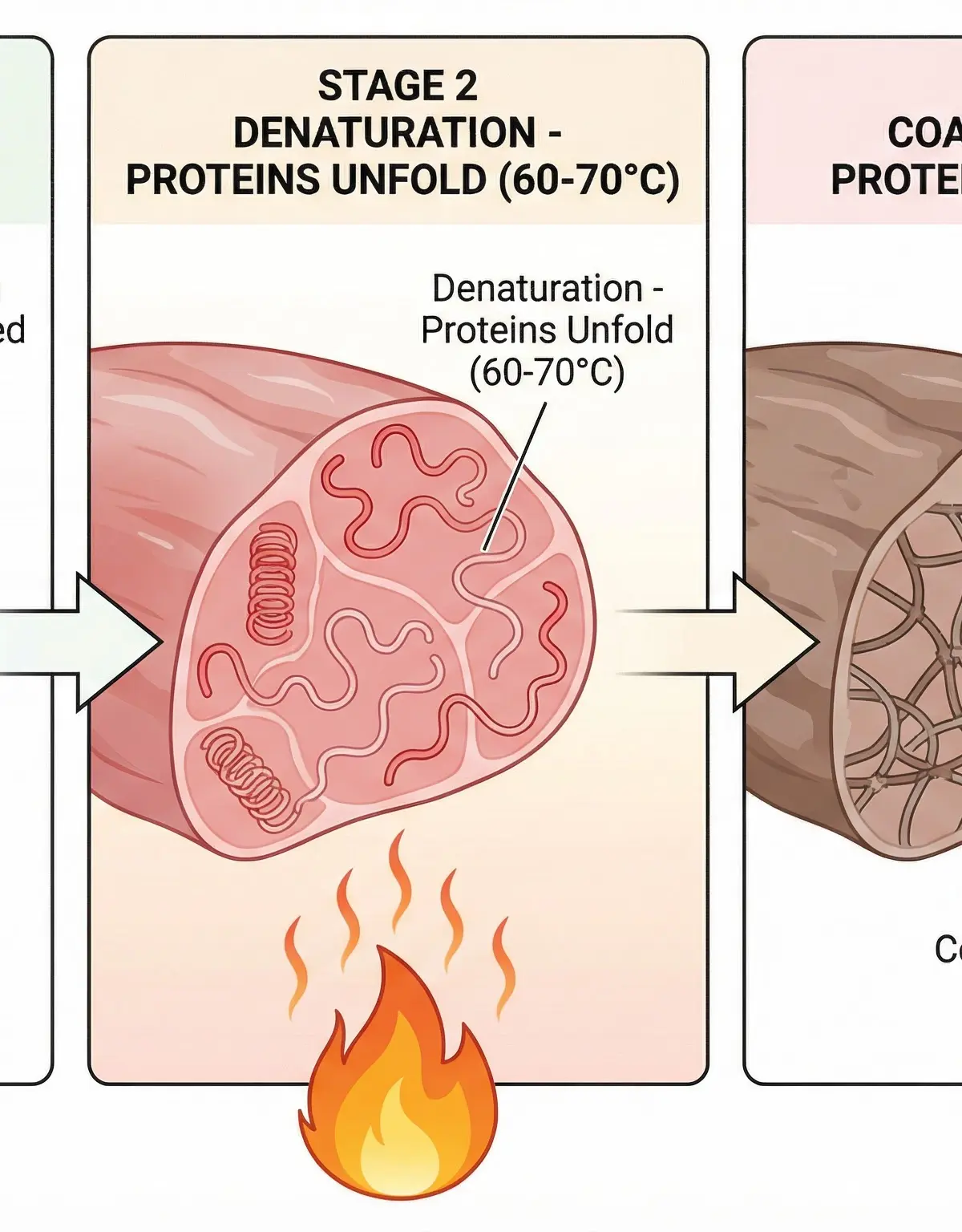
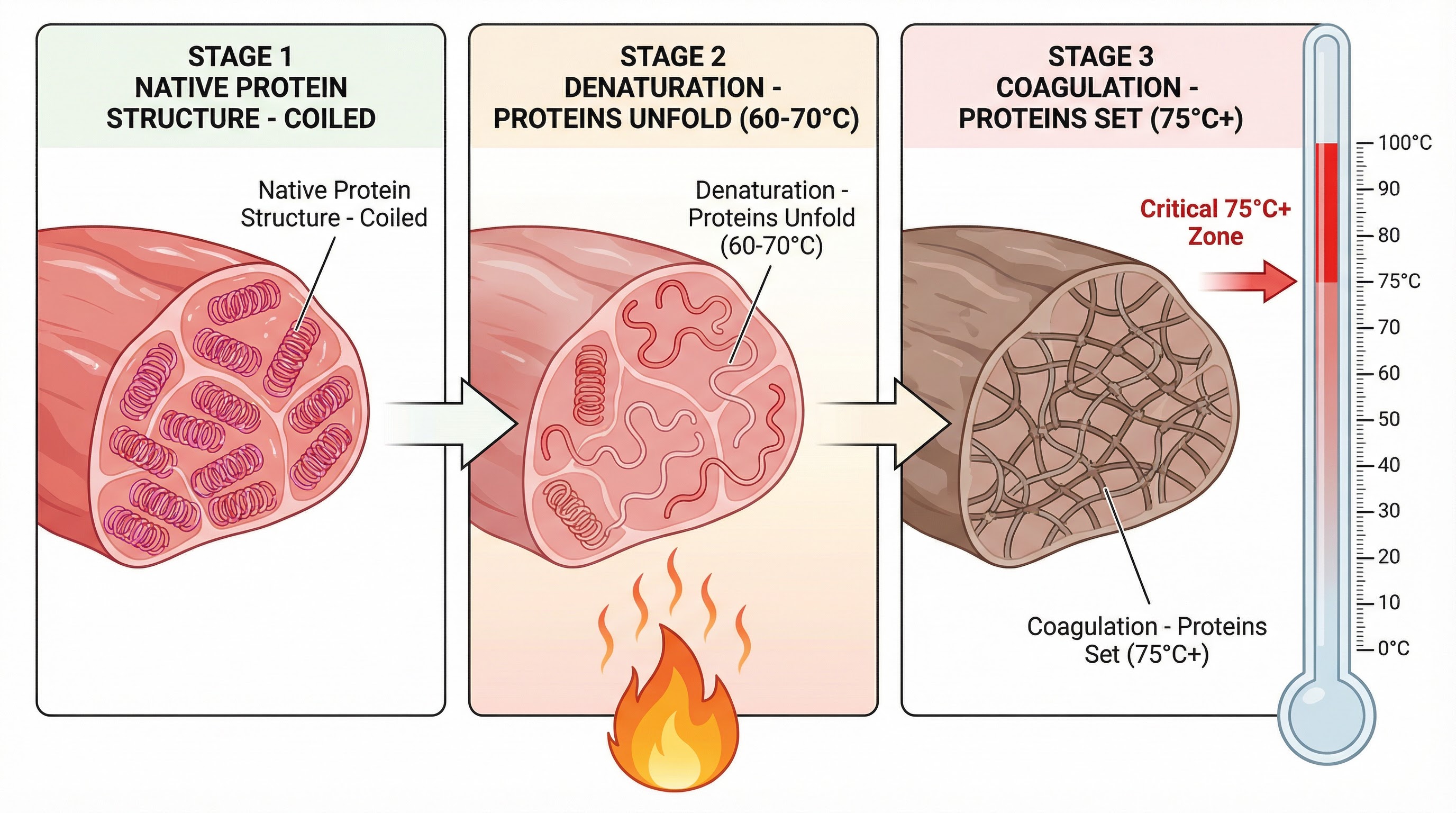
What happens: Proteins in meat and fish are made of long chains of amino acids, which are coiled into complex 3D structures. The application of heat, acid (e.g., in marinades), or mechanical action (e.g., whisking) causes these coils to unravel and lose their shape. This process is called denaturation. As heating continues, these unfolded protein strands tangle and bond together, trapping water and forming a solid, firm structure. This is known as coagulation.
Why it matters: This is the fundamental process that transforms raw meat into cooked meat. Understanding the difference is crucial. Denaturation is the unfolding; coagulation is the setting. Marks are awarded for using these terms correctly to explain changes in texture and appearance during cooking.
Specific Knowledge: Denaturation begins around 60-70°C. Coagulation occurs from 75°C upwards, which is why this temperature is critical for ensuring food is cooked through.
Collagen to Gelatin Conversion
What happens: Tougher cuts of meat (e.g., beef brisket, lamb shoulder) are rich in a connective tissue called collagen. When these cuts are cooked using slow, moist methods (e.g., stewing, braising) for a long duration, the tough collagen breaks down and is converted into gelatin. Gelatin is a soluble protein that dissolves in the cooking liquid, creating a rich mouthfeel and making the meat tender and succulent.
Why it matters: This principle explains why different cuts of meat require different cooking methods. Candidates must be able to justify the choice of cooking method based on the amount of connective tissue in a cut of meat. Credit is given for explaining that tenderness in tough cuts is achieved through collagen breakdown, not just cooking time.
The Maillard Reaction
What happens: This is a complex chemical reaction between amino acids (from proteins) and reducing sugars that occurs when meat is cooked using dry heat methods (e.g., roasting, grilling, frying) at temperatures above 140°C. It is responsible for the characteristic brown colour and savoury, roasted flavour of cooked meat.
Why it matters: This is distinct from caramelisation (which only involves sugars) and enzymic browning (which affects fruits and vegetables). Examiners will test this distinction. Marks are awarded for identifying the Maillard reaction as the cause of browning and flavour development in meat, and for specifying the conditions required (dry heat, high temperature).
Food Safety and Spoilage
Critical Core Temperatures
What happens: High-risk foods must be cooked to a specific internal temperature to ensure harmful pathogenic bacteria are destroyed. This temperature must be held for a sufficient time (e.g., 75°C for 30 seconds) to guarantee safety.
Why it matters: This is a non-negotiable area of knowledge for both practical and theory exams. Vague answers like "cook until hot" or "juices run clear" will not receive credit. Candidates must state the precise temperature for the specific food.
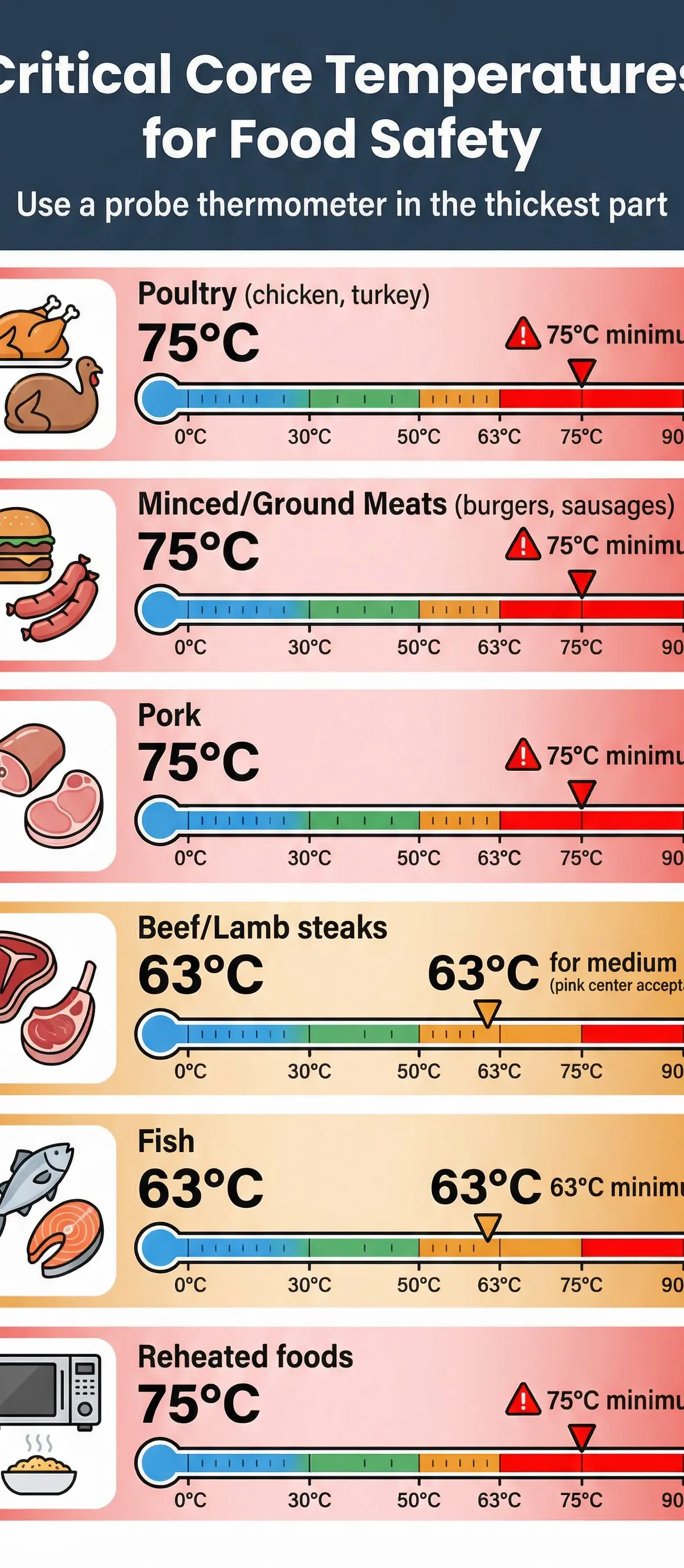
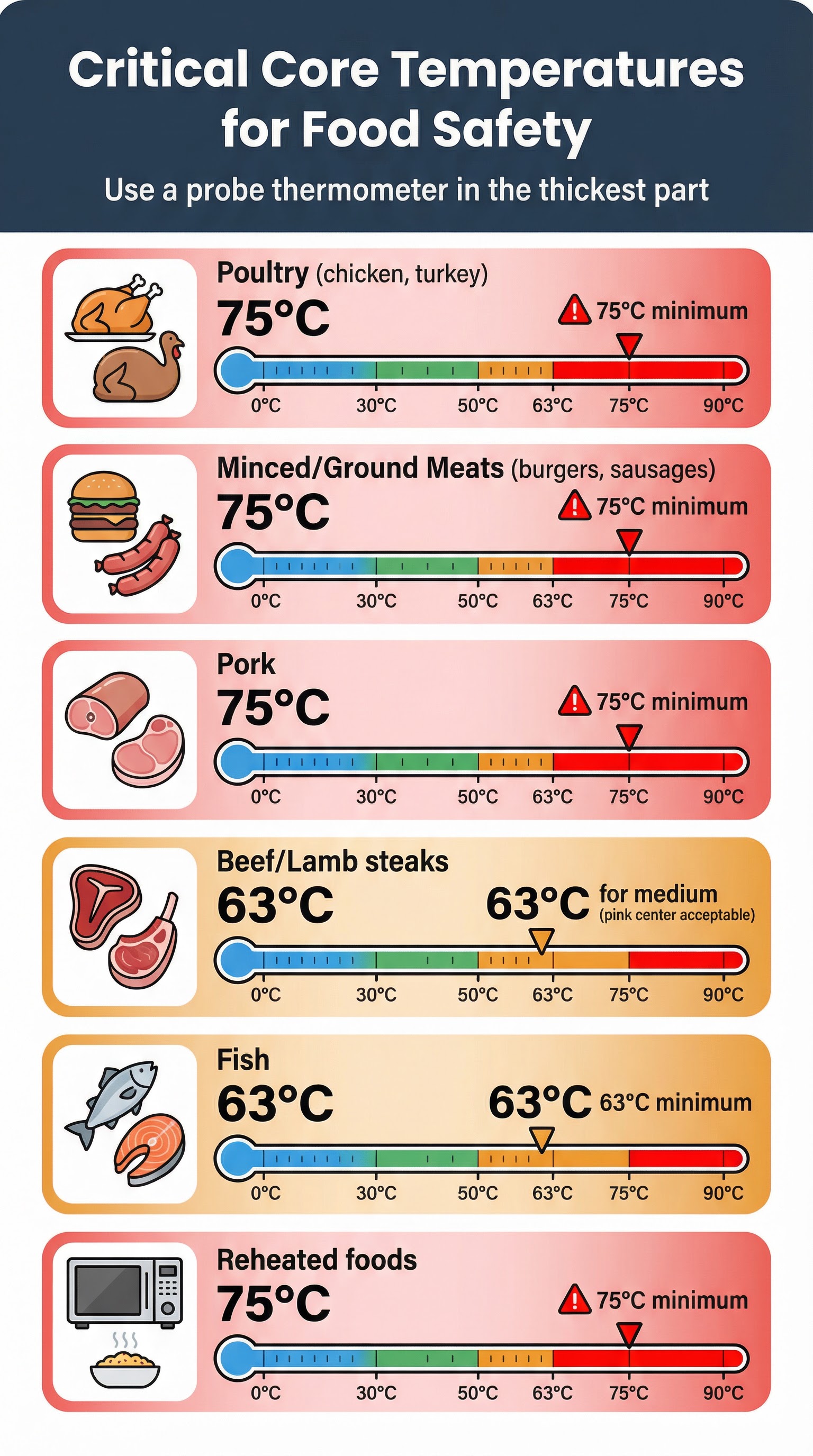
Specific Knowledge: Use a calibrated food probe in the thickest part of the food. Key temperatures to memorise are:
- Poultry (Chicken, Turkey): 75°C (due to Salmonella, Campylobacter risk)
- Minced/Comminuted Meats (Burgers, Sausages): 75°C (bacteria spread throughout during mincing)
- Pork: 75°C
- Beef/Lamb (Whole Cuts): 63°C (for medium-rare, as bacteria are on the surface only)
- Fish: 63°C
- Reheating Food: 75°C
Cross-Contamination Prevention
What happens: Pathogenic bacteria from raw meat and fish can be transferred to ready-to-eat foods, causing food poisoning. This can happen via hands, utensils, chopping boards, or surfaces.
Why it matters: Demonstrating safe handling is a core competency. In written answers, candidates must describe specific, practical steps to prevent cross-contamination.
Specific Knowledge: Use colour-coded chopping boards (Red for raw meat, Blue for raw fish); wash hands thoroughly with soap and hot water after handling raw meat; clean and sanitise all surfaces and equipment that have been in contact with raw meat; store raw meat at the bottom of the fridge, covered, to prevent drips onto other foods.
Technical Skills
Fish Filleting
What happened: This skill involves removing the flesh from the bone of a whole fish to create neat, boneless fillets.
Why it matters: It is a high-level technical skill that can be tested in the practical exam. In theory questions, candidates may be asked to describe the process, justifying each step.
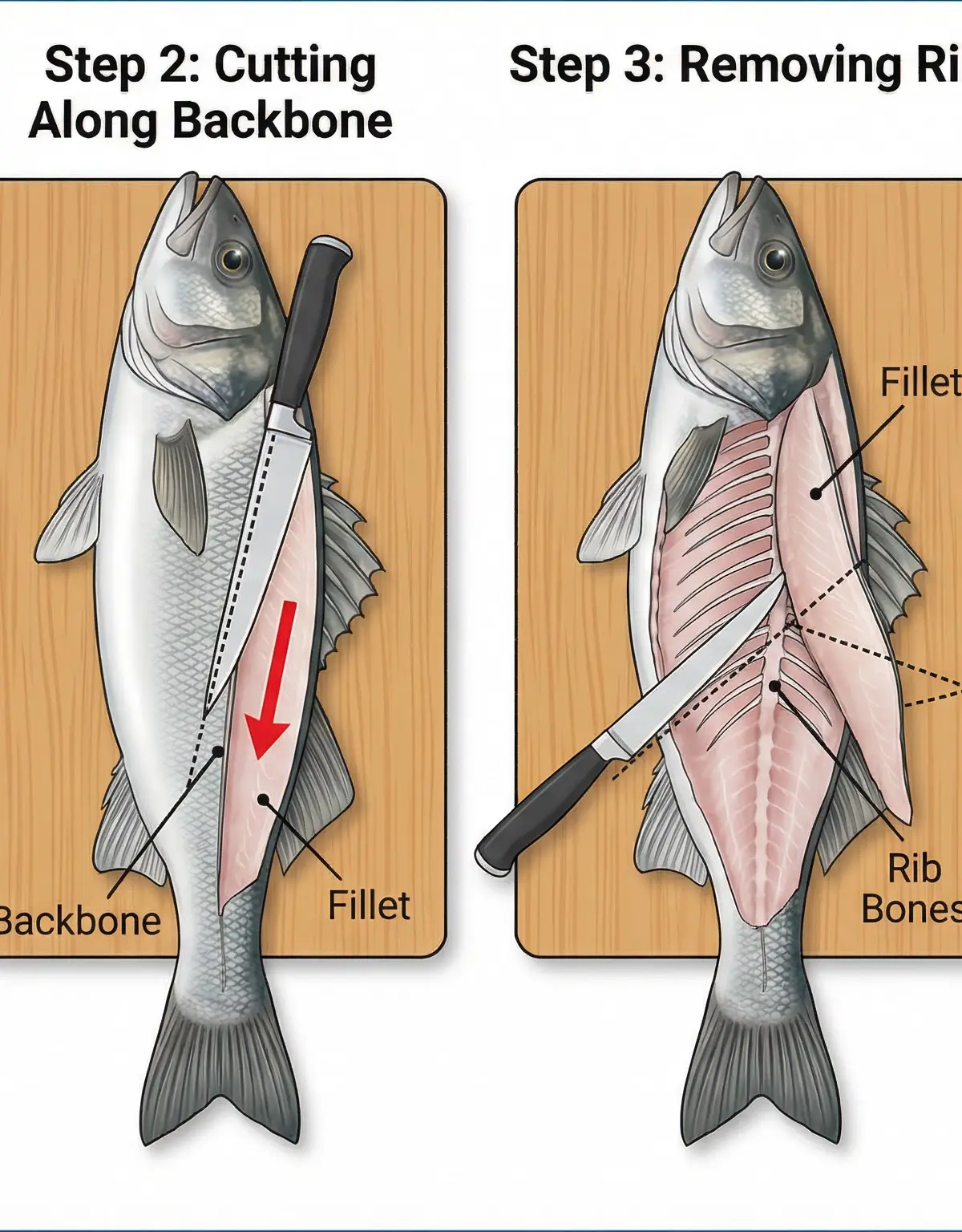
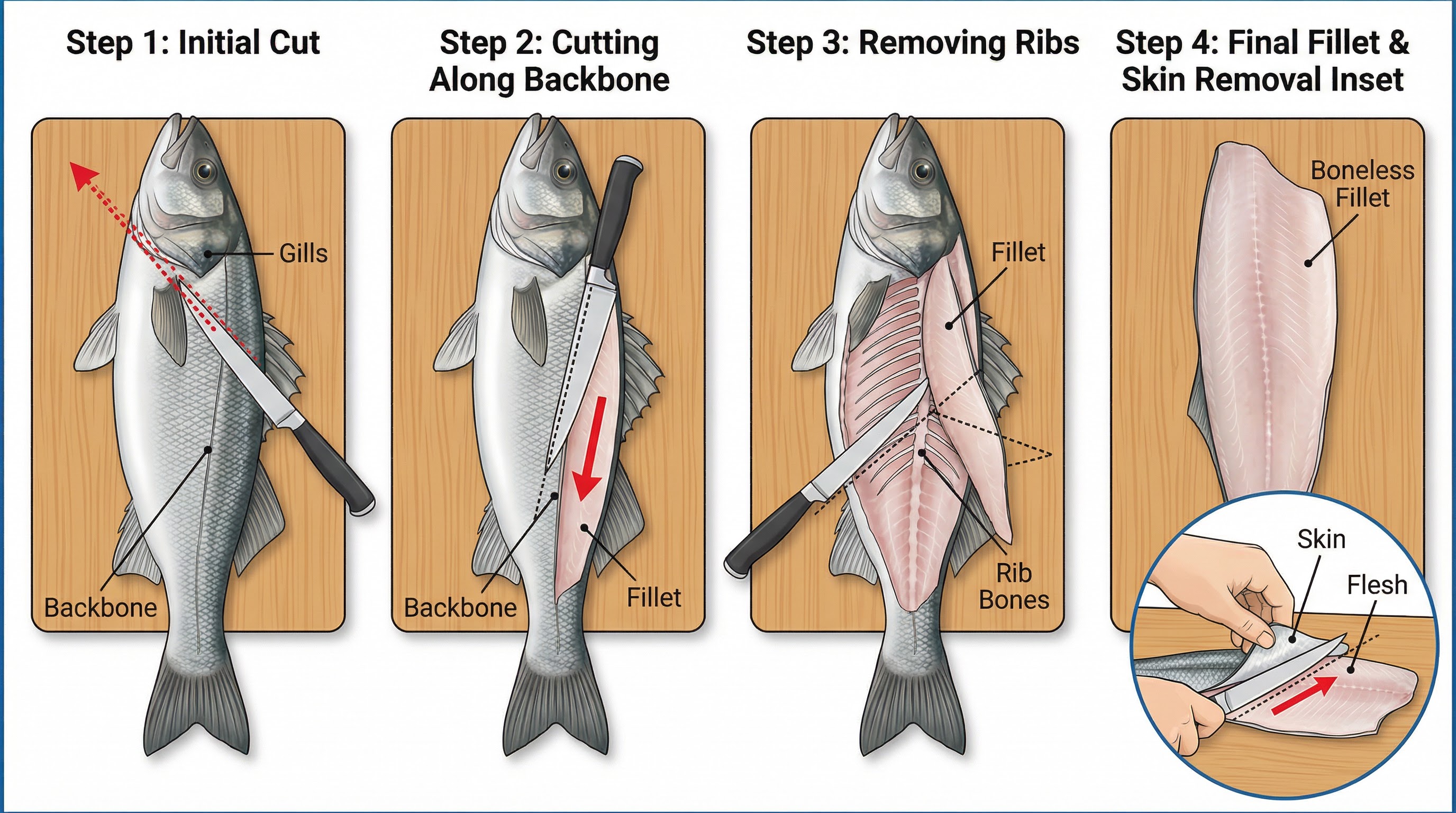
Specific Knowledge: The key steps are: 1. Cut behind the gills down to the backbone. 2. Turn the knife flat and cut along the backbone from head to tail. 3. Lift the fillet and cut it away from the rib cage. 4. Turn the fish over and repeat. 5. To skin, place fillet skin-down and slide the knife between the flesh and skin. Marks are awarded for precision and maximising the yield (minimising waste).
Meat Portioning and Preparation
What happened: This involves skills like dicing, butterflying a chicken breast, or preparing meat for different cooking methods (e.g., scoring the skin on a duck breast).
Why it matters: These skills demonstrate control and precision, allowing for even cooking and professional presentation. For example, butterflying a chicken breast creates a thinner, even thickness that cooks quickly and evenly, ideal for grilling.
Specific Knowledge: Justify the technique. E.g., "I butterflied the chicken breast to create a larger surface area for the marinade to penetrate and to ensure it cooked quickly and evenly under the grill, preventing the outside from drying out before the centre is cooked to 75°C."
Worked Examples
3 worked examples — open one to explore the question and available guidance.
Practice Questions
Test your understanding — click to reveal model answers
Describe how to fillet a round fish like a mackerel. (6 marks)
Hint: Think step-by-step. Where do you make the first cut? How do you hold the knife? What are you cutting against?
Explain why a beef burger must be cooked to a core temperature of 75°C, but a beef steak can be served rare at 63°C. (4 marks)
Hint: Think about where bacteria are found on meat and what happens during processing.
A recipe for pulled pork instructs the chef to cook a shoulder of pork for 6 hours at 140°C. Explain the changes to the connective tissue and muscle fibres during this cooking process. (6 marks)
Hint: Use the key scientific terms for the connective tissue and what it turns into. What happens to the muscle fibres as a result?
Compare the nutritional impact of baking a fish fillet in a foil parcel versus deep-frying it in batter. (8 marks)
Hint: Consider fat content, water-soluble vitamins, and heat-sensitive vitamins for both methods.
Evaluate the use of a marinade containing lemon juice and herbs when preparing a chicken breast for grilling. (6 marks)
Hint: Consider the effect of the acid (lemon juice) and the herbs on both flavour and texture.
Test your understanding of Meat and fish preparation
Active recall beats re-reading. Take an instant quiz now to test what you’ve learned and lock it into long-term memory.
7 days Premium · Then free forever · No card, no charge