Special dietary needs Revision Notes

    Subject: Food Preparation and Nutrition | Level: GCSE | Exam Board: OCR

    Special Dietary Needs is a core topic in OCR GCSE Food Preparation and Nutrition that requires candidates to demonstrate precise scientific understanding of the physiological differences between food allergies, intolerances, and medical conditions like Coeliac disease, alongside the nutritional challenges faced by vegetarians and vegans. Examiners reward candidates who can apply nutritional science to real-world scenarios, identify hidden allergens, explain protein complementation, and justify ingredient choices using specific nutrient functions.

    Revision Notes & Key Concepts

    ![Header image for Special Dietary Needs](https://xnnrgnazirrqvdgfhvou.supabase.co/storage/v1/object/public/study-guide-assets/guide_2f83bff1-0042-48e2-b615-b8e880e89f62/header_image.png) ## Overview Special Dietary Needs is a high-stakes topic in the OCR J309 specification, accounting for significant marks across both written papers and the practical assessment. This topic demands that candidates understand the scientific mechanisms behind dietary restrictions, from life-threatening allergic reactions to the autoimmune damage caused by Coeliac disease. Examiners expect you to distinguish clearly between immune-mediated allergies and enzyme-deficiency intolerances, to identify at-risk nutrients in plant-based diets, and to propose safe, nutritionally adequate alternatives. This is not about personal preference; it is about applying biochemistry, physiology, and nutritional science to protect health and optimise wellbeing. Candidates who demonstrate precise terminology, specific knowledge of nutrient functions, and an understanding of protein complementation will access the highest mark bands. ## Core Concepts: Allergies vs. Intolerances ### Food Allergies: Immune System Response A **food allergy** is an abnormal immune system reaction to a specific food protein. The body mistakenly identifies the protein as a harmful pathogen and mounts a defence by releasing **histamine** and other chemicals. Symptoms range from mild (skin rashes, hives, itching) to severe and life-threatening. The most serious reaction is **anaphylactic shock**, a rapid, systemic response that can cause swelling of the airways, a dangerous drop in blood pressure, and loss of consciousness. Anaphylaxis requires immediate treatment with an adrenaline auto-injector (EpiPen) and emergency medical attention. Common allergens include peanuts, tree nuts, shellfish, fish, eggs, milk, soya, and wheat. In the UK, food businesses must declare the presence of these 14 major allergens by law. **Key Point for Exams**: Always use the term **anaphylactic shock** when describing severe allergic reactions. This demonstrates precise knowledge and will earn you marks. Do not use vague terms like "illness" or "bad reaction." ### Food Intolerances: Digestive System Problem A **food intolerance** is a **digestive system issue**, not an immune response. It occurs when the body lacks a specific enzyme needed to break down a component of food. The most common example is **lactose intolerance**, where the body does not produce enough of the enzyme **lactase** to digest lactose, the sugar found in milk and dairy products. Undigested lactose passes into the large intestine, where bacteria ferment it, causing bloating, gas, abdominal pain, and diarrhoea. These symptoms are uncomfortable but not life-threatening. Other intolerances include reactions to food additives like sulphites or monosodium glutamate (MSG). **Exam Tip**: Examiners frequently test whether candidates can distinguish between allergies and intolerances. A foolproof way to remember: **Allergy = Immune system (histamine, anaphylaxis)**; **Intolerance = Digestive system (enzyme deficiency, discomfort)**. ![GCSE Dietary Groups Comparison Chart: Understanding Restrictions, Nutrients, and Alternatives](https://xnnrgnazirrqvdgfhvou.supabase.co/storage/v1/object/public/study-guide-assets/guide_2f83bff1-0042-48e2-b615-b8e880e89f62/dietary_groups_comparison.png) ## Coeliac Disease: Autoimmune Condition **Coeliac disease** is an autoimmune disorder triggered by the ingestion of **gluten**, a protein found in wheat, barley, and rye. When a person with coeliac disease consumes gluten, their immune system attacks the lining of the small intestine, specifically damaging the **villi**. Villi are tiny, finger-like projections that line the small intestine and dramatically increase the surface area available for nutrient absorption. When villi are damaged and flattened, the surface area is reduced, leading to **malabsorption** of essential nutrients including iron, calcium, folate, and B vitamins. This can result in anaemia, osteoporosis, fatigue, and stunted growth in children. The only treatment is a strict, lifelong **gluten-free diet**. **Hidden Gluten**: Candidates must be aware that gluten can be hidden in processed foods. Examples include soy sauce (often contains wheat), some processed meats, stock cubes, and even certain medications. Reading labels carefully is essential. **Gluten-Free Alternatives**: Safe grains and starches include rice, corn (maize), potatoes, quinoa, and buckwheat. Gluten-free bread, pasta, and flour are widely available and often fortified with vitamins and minerals to compensate for nutrient losses. ![Healthy Small Intestine vs. Coeliac Disease - Gluten Damage to Villi](https://xnnrgnazirrqvdgfhvou.supabase.co/storage/v1/object/public/study-guide-assets/guide_2f83bff1-0042-48e2-b615-b8e880e89f62/coeliac_disease_diagram.png) **Exam Application**: When asked to plan a meal for someone with coeliac disease, justify every ingredient. For example: "I have chosen rice noodles instead of wheat pasta because rice is naturally gluten-free and safe for coeliacs. I have also used tamari (gluten-free soy sauce) to add flavour without triggering an immune response." ## Vegetarian Diets ### Lacto-Ovo Vegetarian A **lacto-ovo vegetarian** excludes all meat, poultry, and fish but includes **dairy products** (lacto) and **eggs** (ovo). This diet is relatively easy to balance nutritionally because eggs and dairy provide high biological value (HBV) protein, vitamin B12, calcium, and vitamin D. However, vegetarians may still be at risk of **iron** and **zinc** deficiencies, as plant-based sources of these minerals (non-haem iron) are less easily absorbed than those from meat (haem iron). **Iron Absorption Tip**: Consuming vitamin C-rich foods (e.g., orange juice, peppers, tomatoes) alongside iron-rich plant foods (e.g., spinach, lentils, fortified cereals) significantly enhances iron absorption. ### Nutritional Considerations for Vegetarians - **Protein**: Easily met through eggs, dairy, pulses, nuts, seeds, and soya products. - **Iron**: Found in dark green leafy vegetables, pulses, fortified cereals, and dried fruit. Pair with vitamin C. - **Vitamin B12**: Present in eggs, milk, cheese, and fortified foods. - **Calcium**: Abundant in dairy products, fortified plant milks, tofu (if set with calcium), and leafy greens. - **Omega-3 Fatty Acids**: Found in eggs (especially omega-3 enriched), walnuts, flaxseeds, and chia seeds. ## Vegan Diets A **vegan** excludes all animal products: meat, fish, dairy, eggs, honey, and any ingredient derived from animals (e.g., gelatine, whey, casein). Veganism is often motivated by ethical, environmental, or health reasons. Nutritionally, a vegan diet requires careful planning to avoid deficiencies in several key nutrients. ### At-Risk Nutrients for Vegans 1. **Vitamin B12**: This vitamin is **only found naturally in animal products**. Vegans must obtain B12 from fortified foods (plant milks, breakfast cereals, nutritional yeast) or supplements. Deficiency leads to anaemia and neurological damage. 2. **Iron**: While plant foods contain iron, it is non-haem iron, which is less bioavailable than haem iron from meat. Good sources include lentils, chickpeas, tofu, quinoa, fortified cereals, and dark leafy greens. Always pair with vitamin C. 3. **Calcium**: Dairy is a major source of calcium, so vegans must seek alternatives: fortified plant milks (soya, almond, oat), calcium-set tofu, tahini, almonds, and leafy greens like kale and bok choy. 4. **Vitamin D**: Found in fortified plant milks, fortified cereals, and produced by the skin in sunlight. Supplementation may be necessary, especially in winter. 5. **Omega-3 Fatty Acids**: Vegans can obtain ALA (a type of omega-3) from flaxseeds, chia seeds, hemp seeds, and walnuts. Some algae-based supplements provide EPA and DHA. 6. **Iodine**: Seaweed and iodised salt are vegan sources, but intake can be inconsistent. 7. **Zinc**: Found in pulses, nuts, seeds, and wholegrains, but absorption is lower than from animal sources. ### Protein Complementation: The Key to Vegan Protein **Protein complementation** is a concept examiners love to test. Most plant proteins are **Low Biological Value (LBV)**, meaning they lack one or more of the nine **essential amino acids** that the body cannot synthesise. However, by combining different plant foods, you can provide all nine essential amino acids, creating a **complete protein**. **Classic Combinations**: - **Rice + Beans**: Rice is low in lysine; beans are low in methionine. Together, they provide all essential amino acids. - **Hummus + Pitta Bread**: Chickpeas and wheat complement each other. - **Peanut Butter + Whole Wheat Toast**: Peanuts and wheat provide complementary amino acids. - **Lentil Dhal + Rice**: A staple in many cuisines for good reason. **Important Note**: The foods do not need to be eaten in the same meal, just within the same day. **High Biological Value (HBV) Plant Proteins**: **Soya** (tofu, tempeh, edamame) and **quinoa** are complete proteins on their own, containing all nine essential amino acids. ![Protein Complementation: Combining Plant Proteins for Complete Nutrition](https://xnnrgnazirrqvdgfhvou.supabase.co/storage/v1/object/public/study-guide-assets/guide_2f83bff1-0042-48e2-b615-b8e880e89f62/protein_complementation.png) **Exam Application**: When asked to plan a vegan meal, always mention protein complementation. For example: "I have included a chickpea and vegetable curry served with brown rice. Chickpeas are a good source of protein but are LBV, lacking the amino acid methionine. Brown rice provides methionine, so together they form a complete protein, ensuring the individual receives all nine essential amino acids." ## Lactose Intolerance **Lactose intolerance** is the inability to digest **lactose**, the sugar in milk, due to a deficiency of the enzyme **lactase**. Symptoms include bloating, gas, diarrhoea, and abdominal cramps after consuming dairy. It is not life-threatening, but it can significantly affect quality of life. Lactose intolerance is more common in adults of Asian, African, and Hispanic descent. **Dietary Management**: - **Lactose-free dairy products**: Milk, yogurt, and cheese with lactose removed or broken down. - **Plant-based alternatives**: Soya milk, almond milk, oat milk, coconut yogurt (choose fortified versions for calcium and vitamin D). - **Hard cheeses**: Cheddar, Parmesan, and other aged cheeses contain very little lactose and are often tolerated. - **Lactase enzyme supplements**: Taken before consuming dairy to aid digestion. **At-Risk Nutrients**: Calcium and vitamin D, as dairy is a primary source. Ensure adequate intake from fortified plant milks, leafy greens, and fortified foods. ## Hidden Allergens and Cross-Contamination Candidates must demonstrate awareness that allergens can be hidden in processed foods and that cross-contamination is a serious risk. **Examples of Hidden Allergens**: - **Gluten**: Soy sauce, stock cubes, processed meats, beer. - **Dairy**: Casein in wine (used for fining), whey in crisps and processed foods. - **Eggs**: Pasta, mayonnaise, some baked goods. - **Nuts**: Pesto (pine nuts), marzipan, some curries and sauces. **Cross-Contamination**: Occurs when allergen-free food comes into contact with allergens through shared equipment, utensils, or preparation surfaces. In a kitchen preparing food for someone with a severe allergy, separate chopping boards, knives, and cooking equipment must be used, and surfaces must be thoroughly cleaned. ## Exam Technique: Command Words and Mark Schemes ### "Explain why" Questions (4-6 marks) Examiners want you to provide **reasons** with **supporting detail**. Use the **PEEL** structure: - **Point**: State the reason. - **Evidence**: Provide specific knowledge (e.g., nutrient name, function, food source). - **Explanation**: Explain the link between the evidence and the point. - **Link**: Connect back to the question. **Example Question**: "Explain why a vegan diet may lead to Vitamin B12 deficiency." (4 marks) **Model Answer**: "Vitamin B12 is only found naturally in animal products such as meat, fish, eggs, and dairy (Point). Vegans exclude all animal products from their diet, so they do not consume these natural sources of B12 (Evidence). Without adequate B12 intake, the body cannot produce healthy red blood cells, leading to megaloblastic anaemia and potential nerve damage (Explanation). Therefore, vegans must obtain B12 from fortified foods or supplements to prevent deficiency (Link)." ### "Plan a meal" Questions (6-9 marks) Do not just list ingredients. **Justify every choice** with reference to specific nutrients and their functions. **Example Question**: "Plan a main meal suitable for a vegan. Justify your choices." (9 marks) **Model Answer**: "I would prepare a chickpea and spinach curry served with brown rice and a side of fortified soya yogurt. Chickpeas provide protein, but as an LBV source, they lack the amino acid methionine. Brown rice provides methionine, so together they form a complete protein through complementation, ensuring all nine essential amino acids are available for growth and repair. Spinach is rich in non-haem iron, which is essential for the production of haemoglobin in red blood cells to prevent anaemia. I have included tomatoes in the curry, which are high in vitamin C, to enhance the absorption of iron from the spinach. The fortified soya yogurt provides calcium for bone health and vitamin D to aid calcium absorption, both of which are at risk in a vegan diet. I have also used fortified plant milk in the curry to contribute additional B12, which is absent from plant foods and essential for red blood cell formation and nervous system function. By carefully selecting and combining these ingredients, the meal meets the nutritional needs of a vegan while being flavourful and satisfying." **Examiner's Commentary**: This answer would achieve full marks because it identifies specific nutrients, explains their functions, justifies ingredient choices with reference to nutritional science, and demonstrates understanding of protein complementation and nutrient absorption. ![Special Dietary Needs Revision Podcast (10 minutes)](https://xnnrgnazirrqvdgfhvou.supabase.co/storage/v1/object/public/study-guide-assets/guide_2f83bff1-0042-48e2-b615-b8e880e89f62/special_dietary_needs_podcast.mp3) ## Named Example Bank 1. **Anaphylactic Shock**: A severe, life-threatening allergic reaction involving rapid swelling of airways, drop in blood pressure, and potential loss of consciousness. Requires immediate adrenaline injection (EpiPen) and emergency medical care. 2. **Lactase Enzyme**: The enzyme required to break down lactose (milk sugar) in the small intestine. Deficiency leads to lactose intolerance. 3. **Villi Damage in Coeliac Disease**: Gluten triggers an autoimmune response that flattens the villi in the small intestine, reducing surface area and causing malabsorption of iron, calcium, folate, and B vitamins. 4. **Protein Complementation Example - Rice and Beans**: Rice lacks lysine; beans lack methionine. Consumed together (or within the same day), they provide all nine essential amino acids, forming a complete protein. 5. **Fortified Plant Milk**: Soya, almond, and oat milks fortified with calcium (120mg per 100ml, comparable to cow's milk), vitamin D, and vitamin B12 to support vegans and those with lactose intolerance. 6. **Soya and Quinoa as HBV Plant Proteins**: Unlike most plant proteins, soya (tofu, tempeh, edamame) and quinoa contain all nine essential amino acids, making them complete proteins suitable for vegans. 7. **Hidden Gluten in Soy Sauce**: Traditional soy sauce contains wheat and is unsafe for coeliacs. Tamari (gluten-free soy sauce) is a safe alternative. 8. **Vitamin C Enhances Iron Absorption**: Consuming vitamin C-rich foods (e.g., orange juice, peppers, tomatoes) with non-haem iron sources (e.g., spinach, lentils) increases iron bioavailability, helping to prevent anaemia in vegetarians and vegans. 9. **Casein in Wine**: Casein (a milk protein) is sometimes used in the fining process to clarify wine, making some wines unsuitable for vegans and those with dairy allergies. 10. **Cross-Contamination Risk**: Using the same chopping board or knife for gluten-containing bread and gluten-free bread can transfer gluten proteins, triggering a reaction in coeliacs. Separate equipment and thorough cleaning are essential. ## Quick Summary - **Food Allergy**: Immune system response; histamine release; can cause anaphylactic shock (life-threatening). - **Food Intolerance**: Digestive system problem; enzyme deficiency (e.g., lactase for lactose); uncomfortable but not life-threatening. - **Coeliac Disease**: Autoimmune condition; gluten damages villi in small intestine; causes malabsorption of iron, calcium, B vitamins; requires lifelong gluten-free diet. - **Lacto-Ovo Vegetarian**: Excludes meat and fish; includes dairy and eggs; at risk for iron and zinc deficiency. - **Vegan**: Excludes all animal products; at risk for B12, iron, calcium, vitamin D, omega-3, iodine, and zinc deficiencies; requires fortified foods and supplements. - **Protein Complementation**: Combining LBV plant proteins (e.g., rice + beans, hummus + pitta) to provide all nine essential amino acids. - **HBV Plant Proteins**: Soya and quinoa are complete proteins. - **Hidden Allergens**: Gluten in soy sauce, casein in wine, eggs in pasta. - **Exam Strategy**: Use precise terminology (anaphylactic shock, villi, malabsorption, complementation); justify ingredient choices with nutrient functions; always mention B12 fortification for vegans.

    Revision Podcast Transcript

    Welcome to the GCSE Food Preparation and Nutrition revision podcast. I'm your guide, and today we're tackling a topic that guarantees marks in your exam: Special Dietary Needs. This isn't just about being a picky eater; it's about understanding the science behind why people follow specific diets, from life-threatening allergies to ethical choices. Examiners want to see that you can distinguish between different needs, identify nutritional risks, and suggest practical, safe solutions. Get this right, and you're showing top-level understanding. So, let's get started. First, let's nail the absolute core distinction: what is the difference between a food allergy and a food intolerance? Get this wrong, and you lose easy marks. A food allergy is an immune system response. The body mistakenly thinks a food, like peanuts or shellfish, is a harmful invader. It releases chemicals like histamine, causing reactions from a rash or hives to, in severe cases, life-threatening anaphylactic shock. This is a rapid, severe reaction where the airway can swell, and it requires immediate medical attention. An intolerance, on the other hand, is a digestive system problem. It means the body can't break down a certain food properly. The most common example is lactose intolerance, where the body lacks the enzyme lactase to break down the sugar in milk. The symptoms are unpleasant – like bloating and stomach pain – but not life-threatening. So, remember: Allergy equals immune system, intolerance equals digestive system. Now, let's talk about Coeliac disease. This is often confused with a wheat allergy, but it's an autoimmune condition. When a person with coeliac disease eats gluten – a protein found in wheat, barley, and rye – their immune system attacks their own small intestine. This damages the tiny, finger-like projections called villi. Healthy villi create a huge surface area to absorb nutrients from food. When they get flattened, the body can't absorb nutrients properly, leading to malabsorption. This is why coeliacs can suffer from deficiencies in iron, calcium, and B vitamins, leading to conditions like anaemia and osteoporosis. They must follow a strict, lifelong gluten-free diet. Next up, vegetarian and vegan diets. A Lacto-ovo vegetarian avoids meat and fish but will eat dairy products and eggs. A vegan avoids all animal products entirely – no meat, fish, dairy, eggs, or even honey. The main nutritional challenge for vegans is getting all the essential nutrients. Three key ones to remember are Vitamin B12, which is only found naturally in animal products, so vegans must get it from fortified foods like plant milks and breakfast cereals. Iron and Calcium are also crucial. While they are found in plants like spinach and kale, they are often less easily absorbed than from animal sources. This brings us to a key concept examiners love: protein complementation. Most plant foods are 'Low Biological Value' or LBV proteins, meaning they lack one or more of the nine essential amino acids our bodies can't make. However, by combining different LBV foods, you can get the full set. Think of it like a jigsaw puzzle. Beans are missing one piece, and rice is missing another, but when you eat them together, like in a chilli with rice, you get the complete picture. Other classic combinations are hummus and pitta bread, or beans on toast. You don't even need to eat them in the same meal, just over the course of the same day. For a guaranteed HBV plant source, remember soya and quinoa. Now for the exam tips. A common mistake candidates make is confusing allergies and intolerances. Remember the rule: immune vs. digestive. Another pitfall is stating that vegans can't get enough protein. Wrong. You must mention HBV plant sources like soya and quinoa, and explain protein complementation to get top marks. When you're asked to 'plan a meal' for someone with a special dietary need, don't just list foods. Justify your choices. For example, 'I have included spinach in the vegan curry for its iron content, which is vital for healthy red blood cells, and served it with a fortified plant-based yogurt to provide calcium for bone health.' That's how you get the marks. And for allergies, use the specific term 'anaphylactic shock' to describe a severe reaction; it shows precise knowledge. Finally, always, always mention Vitamin B12 fortification when discussing a vegan diet. It's a guaranteed mark-winner. Okay, time for a quick-fire recall quiz. Cover your notes. One: Is a food allergy an immune or digestive response? (Immune). Two: What is the name of the enzyme missing in lactose intolerance? (Lactase). Three: Name the finger-like projections in the small intestine damaged by gluten in coeliacs. (Villi). Four: Name a plant-based source of High Biological Value protein. (Soya or Quinoa). Five: Which vitamin must vegans get from fortified foods? (Vitamin B12). How did you do? Go back and review any you weren't sure about. So, to summarise: Special dietary needs are all about the science. Know the difference between allergies and intolerances. Understand the mechanism of coeliac disease and villi damage. And for vegan and vegetarian diets, focus on the key nutrients at risk – B12, iron, and calcium – and know how to solve the protein puzzle with complementation. Apply this knowledge in the exam, use the right terminology, and you'll be well on your way to a top grade. Thanks for listening, and best of luck with your revision.

    Key Terms & Definitions

    Food Allergy
    An abnormal immune system response to a specific food protein, causing the release of histamine and other chemicals, leading to symptoms ranging from mild (rash, itching) to severe and life-threatening (anaphylactic shock).
    Food Intolerance
    A digestive system problem caused by the body's inability to break down a specific component of food, usually due to an enzyme deficiency (e.g., lactase deficiency in lactose intolerance). Symptoms are uncomfortable but not life-threatening.
    Anaphylactic Shock
    A severe, rapid, life-threatening allergic reaction involving swelling of the airways, a dangerous drop in blood pressure, and potential loss of consciousness. Requires immediate treatment with an adrenaline auto-injector (EpiPen) and emergency medical care.
    Coeliac Disease
    An autoimmune condition in which the ingestion of gluten (a protein in wheat, barley, and rye) triggers the immune system to attack the lining of the small intestine, damaging the villi and causing malabsorption of nutrients.
    Villi
    Tiny, finger-like projections lining the small intestine that dramatically increase the surface area available for nutrient absorption. In coeliac disease, gluten causes the villi to become flattened and damaged, reducing absorption.
    Malabsorption
    The inadequate absorption of nutrients from the digestive tract into the bloodstream, often due to damage to the intestinal lining (e.g., flattened villi in coeliac disease). Leads to deficiencies in iron, calcium, folate, and B vitamins.
    Protein Complementation
    The practice of combining different Low Biological Value (LBV) plant proteins to provide all nine essential amino acids. For example, rice (low in lysine) + beans (low in methionine) = complete protein.
    High Biological Value (HBV) Protein
    A protein source that contains all nine essential amino acids in sufficient quantities. Animal products (meat, fish, eggs, dairy) are HBV. Plant-based HBV sources include soya (tofu, tempeh) and quinoa.
    Low Biological Value (LBV) Protein
    A protein source that lacks one or more of the nine essential amino acids. Most plant proteins (grains, legumes, nuts, seeds) are LBV and must be combined to form complete proteins.
    Lactose Intolerance
    A digestive condition caused by a deficiency of the enzyme lactase, which is needed to break down lactose (the sugar in milk). Symptoms include bloating, gas, diarrhoea, and abdominal pain after consuming dairy.
    Lactase
    The enzyme produced in the small intestine that breaks down lactose (milk sugar) into glucose and galactose for absorption. Deficiency of lactase leads to lactose intolerance.
    Fortified Foods
    Foods to which nutrients have been added during processing to increase their nutritional value. Examples include plant milks fortified with calcium, vitamin D, and B12, and breakfast cereals fortified with iron and B vitamins.
    Non-Haem Iron
    The form of iron found in plant-based foods (e.g., spinach, lentils, fortified cereals). It is less easily absorbed by the body than haem iron (from meat). Absorption is enhanced by consuming vitamin C at the same time.
    Cross-Contamination
    The unintentional transfer of allergens or gluten from one food to another through shared equipment, utensils, or preparation surfaces. Can trigger reactions in people with severe allergies or coeliac disease.

    Worked Examples

    Practice Questions

    Special dietary needs

    Special Dietary Needs is a core topic in OCR GCSE Food Preparation and Nutrition that requires candidates to demonstrate precise scientific understanding of the physiological differences between food allergies, intolerances, and medical conditions like Coeliac disease, alongside the nutritional challenges faced by vegetarians and vegans. Examiners reward candidates who can apply nutritional science to real-world scenarios, identify hidden allergens, explain protein complementation, and justify ingredient choices using specific nutrient functions.

    15
    Min Read
    5
    Examples
    6
    Questions
    14
    Key Terms
    🎙 Podcast Episode
    Special dietary needs
    0:00-0:00

    Study Notes

    Header image for Special Dietary Needs

    Overview

    Special Dietary Needs is a high-stakes topic in the OCR J309 specification, accounting for significant marks across both written papers and the practical assessment. This topic demands that candidates understand the scientific mechanisms behind dietary restrictions, from life-threatening allergic reactions to the autoimmune damage caused by Coeliac disease. Examiners expect you to distinguish clearly between immune-mediated allergies and enzyme-deficiency intolerances, to identify at-risk nutrients in plant-based diets, and to propose safe, nutritionally adequate alternatives. This is not about personal preference; it is about applying biochemistry, physiology, and nutritional science to protect health and optimise wellbeing. Candidates who demonstrate precise terminology, specific knowledge of nutrient functions, and an understanding of protein complementation will access the highest mark bands.

    Core Concepts: Allergies vs. Intolerances

    Food Allergies: Immune System Response

    A food allergy is an abnormal immune system reaction to a specific food protein. The body mistakenly identifies the protein as a harmful pathogen and mounts a defence by releasing histamine and other chemicals. Symptoms range from mild (skin rashes, hives, itching) to severe and life-threatening. The most serious reaction is anaphylactic shock, a rapid, systemic response that can cause swelling of the airways, a dangerous drop in blood pressure, and loss of consciousness. Anaphylaxis requires immediate treatment with an adrenaline auto-injector (EpiPen) and emergency medical attention. Common allergens include peanuts, tree nuts, shellfish, fish, eggs, milk, soya, and wheat. In the UK, food businesses must declare the presence of these 14 major allergens by law.

    Key Point for Exams: Always use the term anaphylactic shock when describing severe allergic reactions. This demonstrates precise knowledge and will earn you marks. Do not use vague terms like "illness" or "bad reaction."

    Food Intolerances: Digestive System Problem

    A food intolerance is a digestive system issue, not an immune response. It occurs when the body lacks a specific enzyme needed to break down a component of food. The most common example is lactose intolerance, where the body does not produce enough of the enzyme lactase to digest lactose, the sugar found in milk and dairy products. Undigested lactose passes into the large intestine, where bacteria ferment it, causing bloating, gas, abdominal pain, and diarrhoea. These symptoms are uncomfortable but not life-threatening. Other intolerances include reactions to food additives like sulphites or monosodium glutamate (MSG).

    Exam Tip: Examiners frequently test whether candidates can distinguish between allergies and intolerances. A foolproof way to remember: Allergy = Immune system (histamine, anaphylaxis); Intolerance = Digestive system (enzyme deficiency, discomfort).
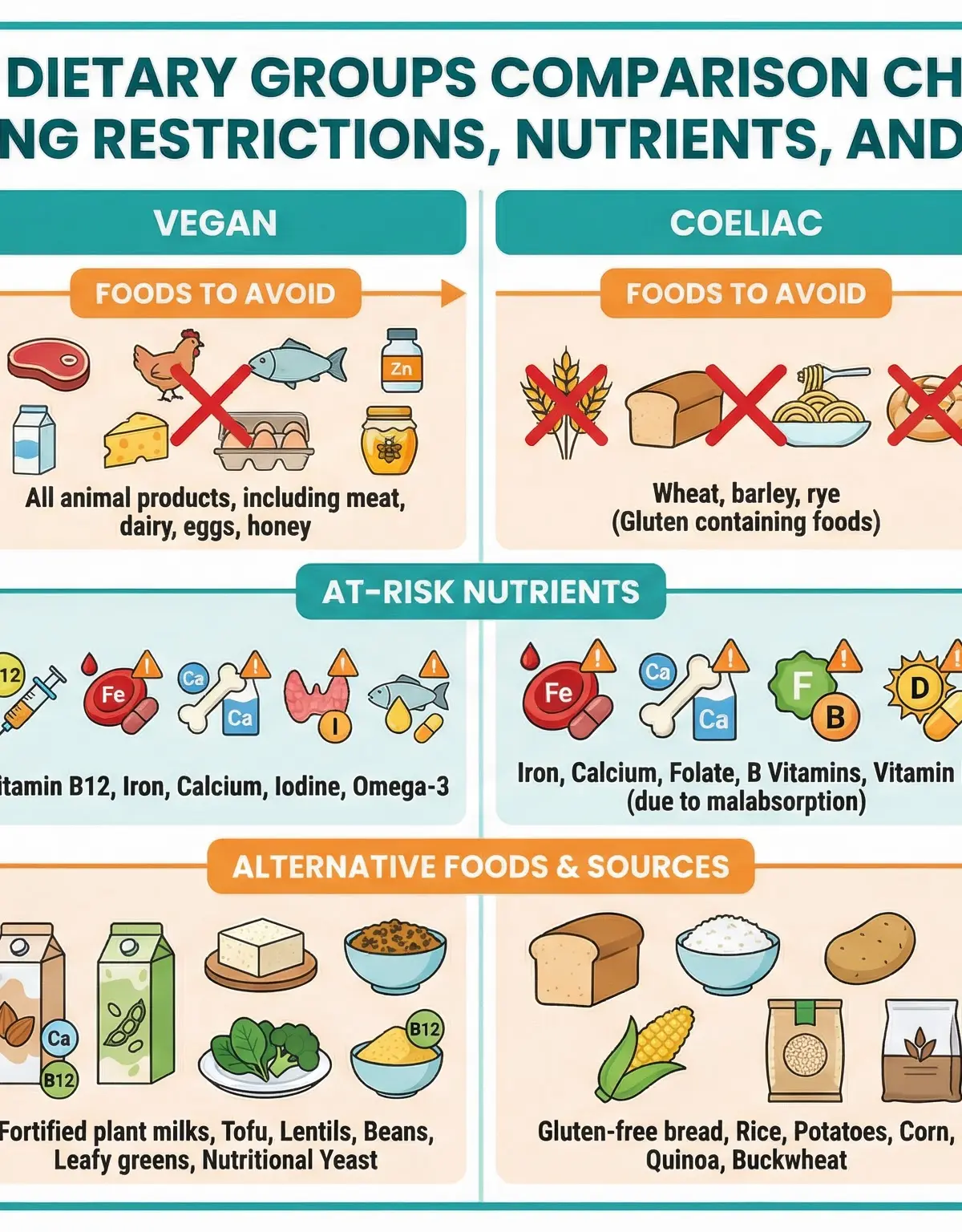
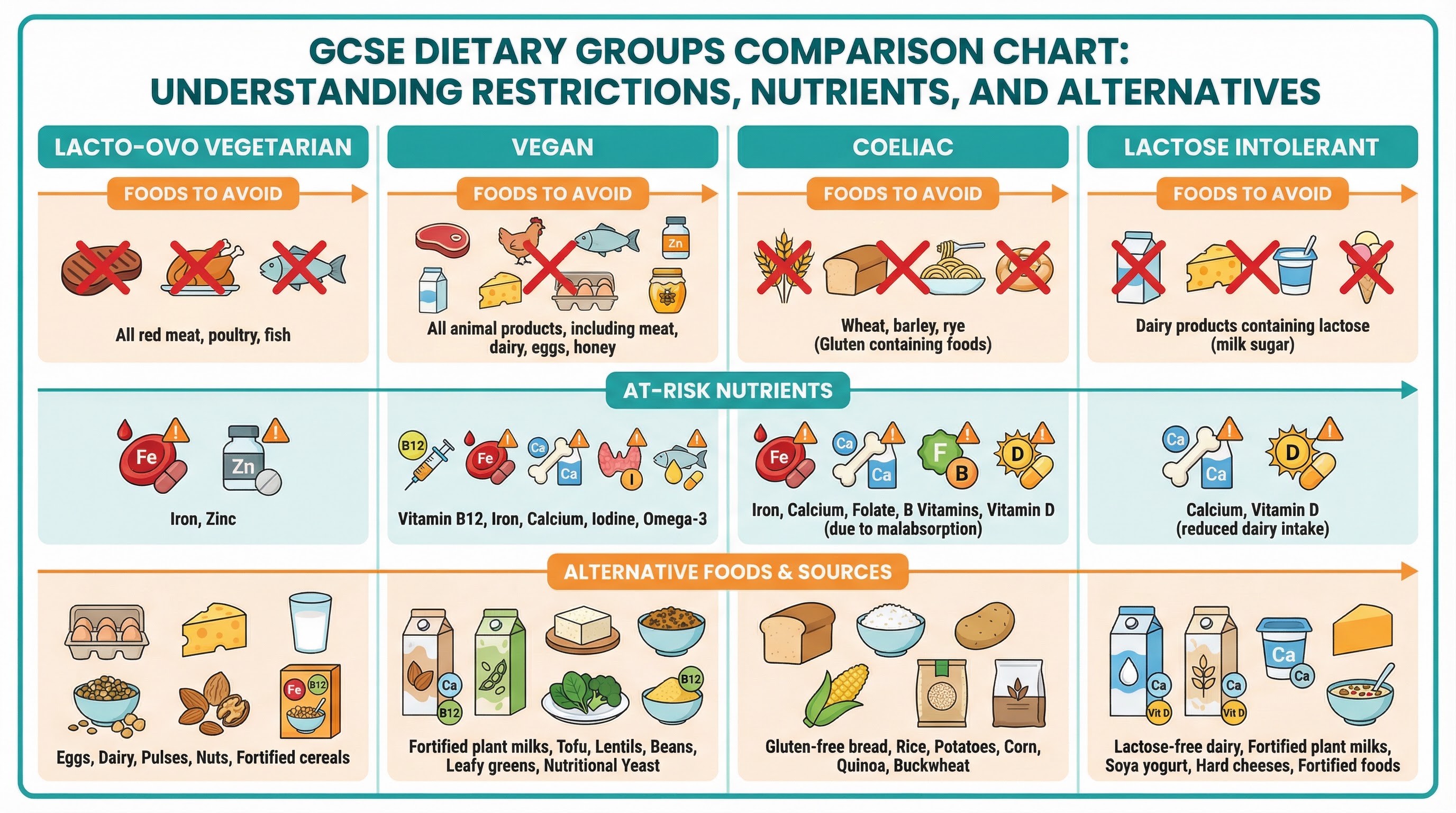
    GCSE Dietary Groups Comparison Chart: Understanding Restrictions, Nutrients, and Alternatives

    Coeliac Disease: Autoimmune Condition

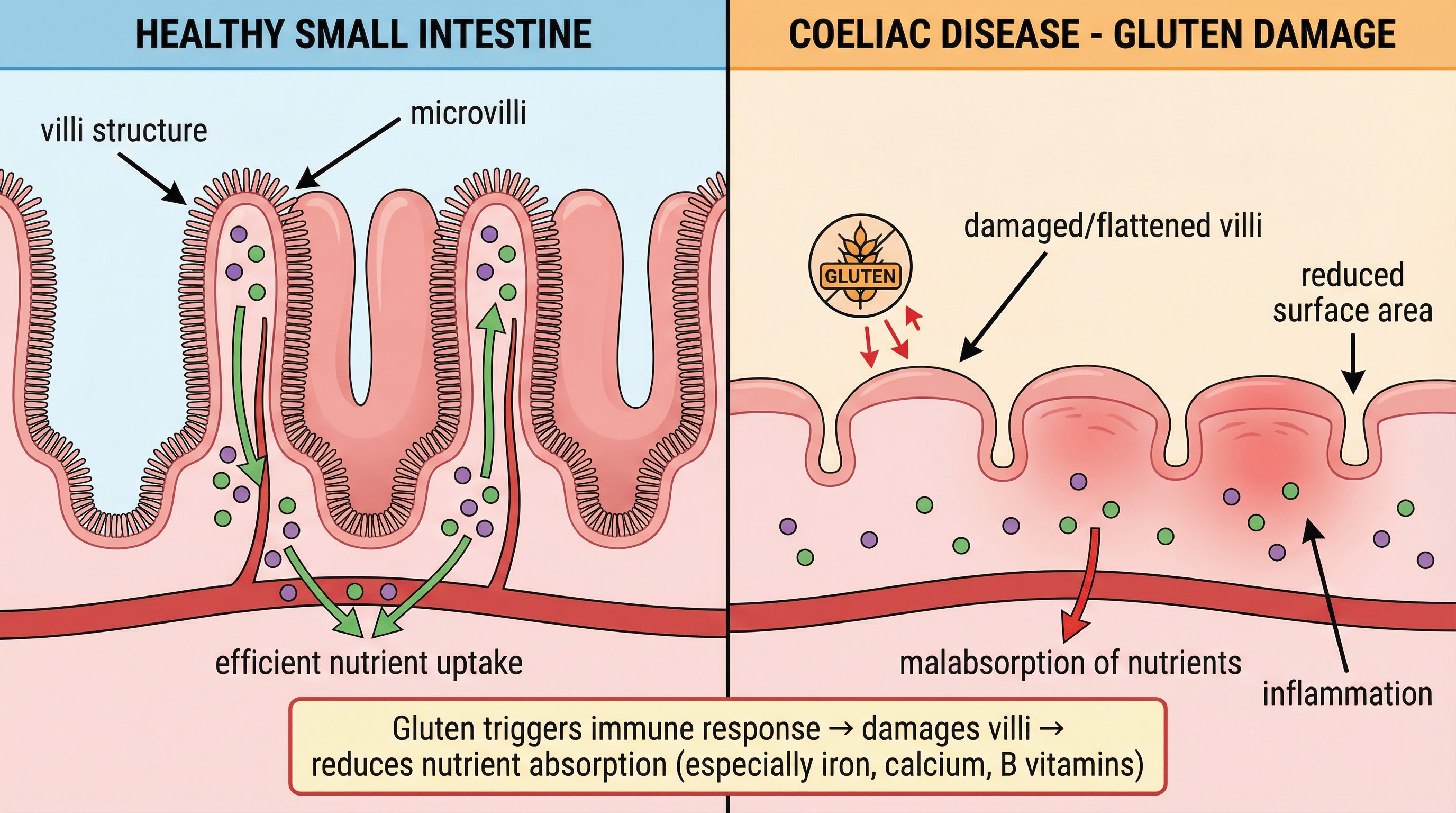
    Coeliac disease is an autoimmune disorder triggered by the ingestion of gluten, a protein found in wheat, barley, and rye. When a person with coeliac disease consumes gluten, their immune system attacks the lining of the small intestine, specifically damaging the villi. Villi are tiny, finger-like projections that line the small intestine and dramatically increase the surface area available for nutrient absorption. When villi are damaged and flattened, the surface area is reduced, leading to malabsorption of essential nutrients including iron, calcium, folate, and B vitamins. This can result in anaemia, osteoporosis, fatigue, and stunted growth in children. The only treatment is a strict, lifelong gluten-free diet.

    Hidden Gluten: Candidates must be aware that gluten can be hidden in processed foods. Examples include soy sauce (often contains wheat), some processed meats, stock cubes, and even certain medications. Reading labels carefully is essential.

    Gluten-Free Alternatives: Safe grains and starches include rice, corn (maize), potatoes, quinoa, and buckwheat. Gluten-free bread, pasta, and flour are widely available and often fortified with vitamins and minerals to compensate for nutrient losses.
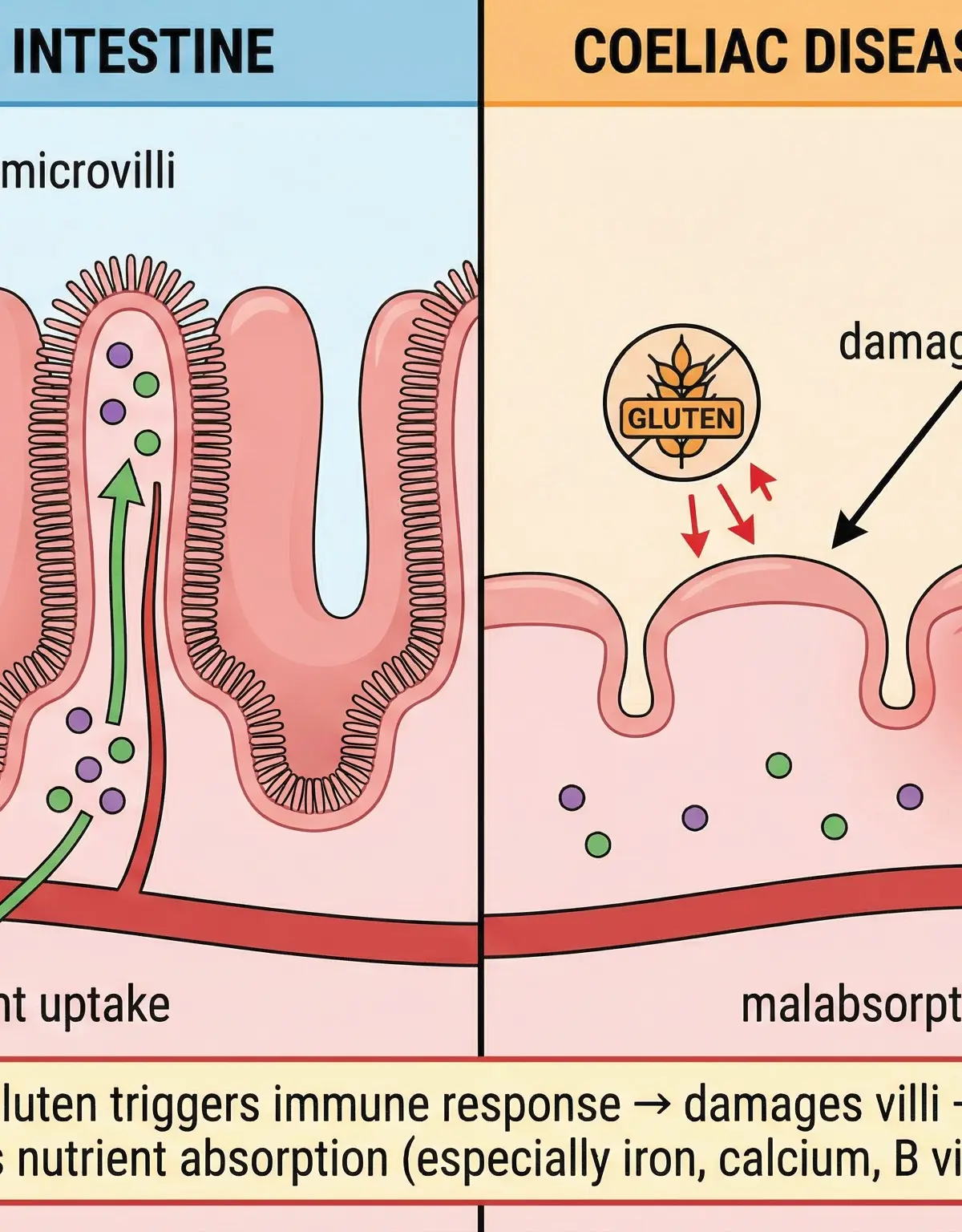
    Healthy Small Intestine vs. Coeliac Disease - Gluten Damage to Villi

    Exam Application: When asked to plan a meal for someone with coeliac disease, justify every ingredient. For example: "I have chosen rice noodles instead of wheat pasta because rice is naturally gluten-free and safe for coeliacs. I have also used tamari (gluten-free soy sauce) to add flavour without triggering an immune response."

    Vegetarian Diets

    Lacto-Ovo Vegetarian

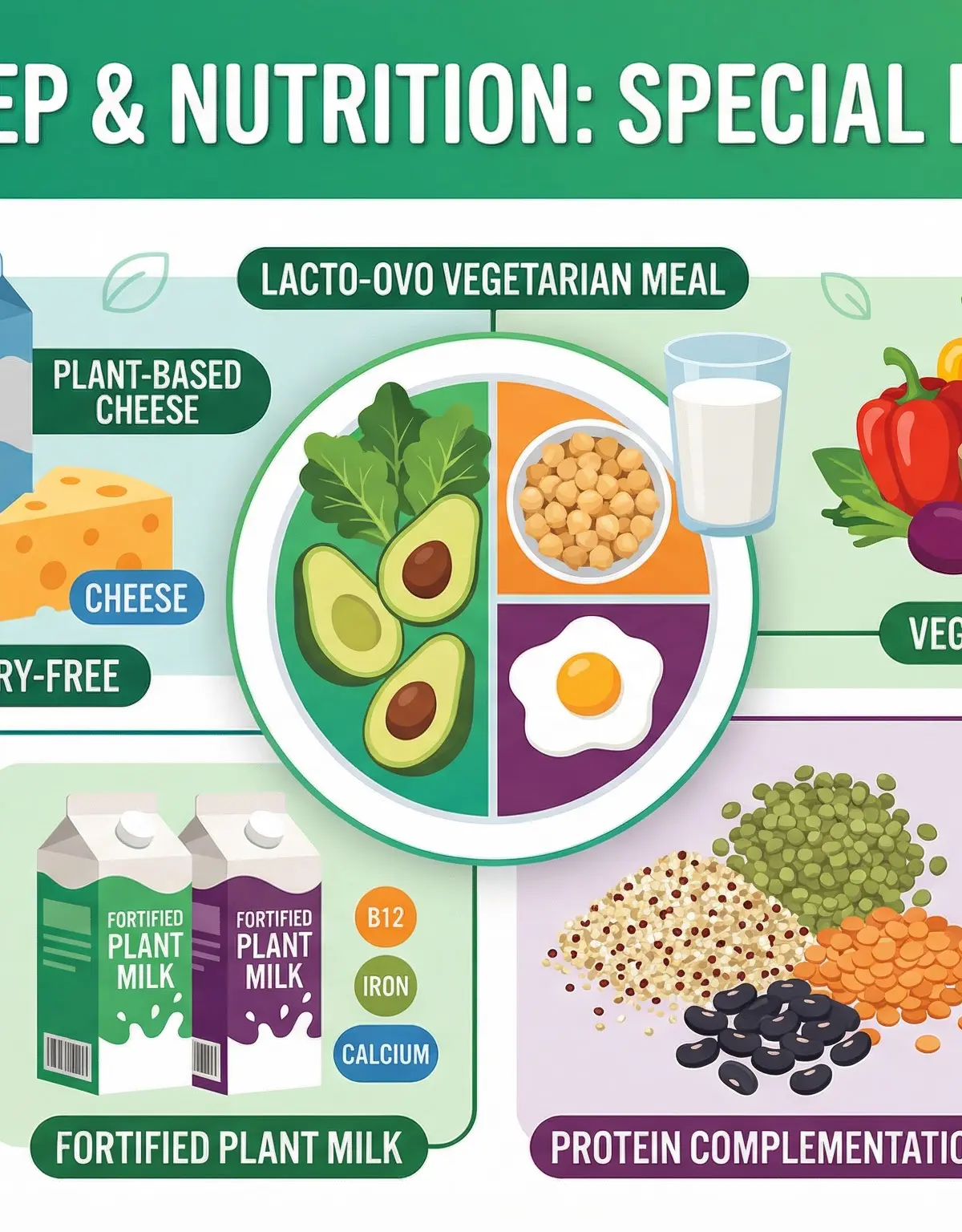
    A lacto-ovo vegetarian excludes all meat, poultry, and fish but includes dairy products (lacto) and eggs (ovo). This diet is relatively easy to balance nutritionally because eggs and dairy provide high biological value (HBV) protein, vitamin B12, calcium, and vitamin D. However, vegetarians may still be at risk of iron and zinc deficiencies, as plant-based sources of these minerals (non-haem iron) are less easily absorbed than those from meat (haem iron).

    Iron Absorption Tip: Consuming vitamin C-rich foods (e.g., orange juice, peppers, tomatoes) alongside iron-rich plant foods (e.g., spinach, lentils, fortified cereals) significantly enhances iron absorption.

    Nutritional Considerations for Vegetarians

    • Protein: Easily met through eggs, dairy, pulses, nuts, seeds, and soya products.
    • Iron: Found in dark green leafy vegetables, pulses, fortified cereals, and dried fruit. Pair with vitamin C.
    • Vitamin B12: Present in eggs, milk, cheese, and fortified foods.
    • Calcium: Abundant in dairy products, fortified plant milks, tofu (if set with calcium), and leafy greens.
    • Omega-3 Fatty Acids: Found in eggs (especially omega-3 enriched), walnuts, flaxseeds, and chia seeds.

    Vegan Diets

    A vegan excludes all animal products: meat, fish, dairy, eggs, honey, and any ingredient derived from animals (e.g., gelatine, whey, casein). Veganism is often motivated by ethical, environmental, or health reasons. Nutritionally, a vegan diet requires careful planning to avoid deficiencies in several key nutrients.

    At-Risk Nutrients for Vegans

    1. Vitamin B12: This vitamin is only found naturally in animal products. Vegans must obtain B12 from fortified foods (plant milks, breakfast cereals, nutritional yeast) or supplements. Deficiency leads to anaemia and neurological damage.

    2. Iron: While plant foods contain iron, it is non-haem iron, which is less bioavailable than haem iron from meat. Good sources include lentils, chickpeas, tofu, quinoa, fortified cereals, and dark leafy greens. Always pair with vitamin C.

    3. Calcium: Dairy is a major source of calcium, so vegans must seek alternatives: fortified plant milks (soya, almond, oat), calcium-set tofu, tahini, almonds, and leafy greens like kale and bok choy.

    4. Vitamin D: Found in fortified plant milks, fortified cereals, and produced by the skin in sunlight. Supplementation may be necessary, especially in winter.

    5. Omega-3 Fatty Acids: Vegans can obtain ALA (a type of omega-3) from flaxseeds, chia seeds, hemp seeds, and walnuts. Some algae-based supplements provide EPA and DHA.

    6. Iodine: Seaweed and iodised salt are vegan sources, but intake can be inconsistent.

    7. Zinc: Found in pulses, nuts, seeds, and wholegrains, but absorption is lower than from animal sources.

    Protein Complementation: The Key to Vegan Protein

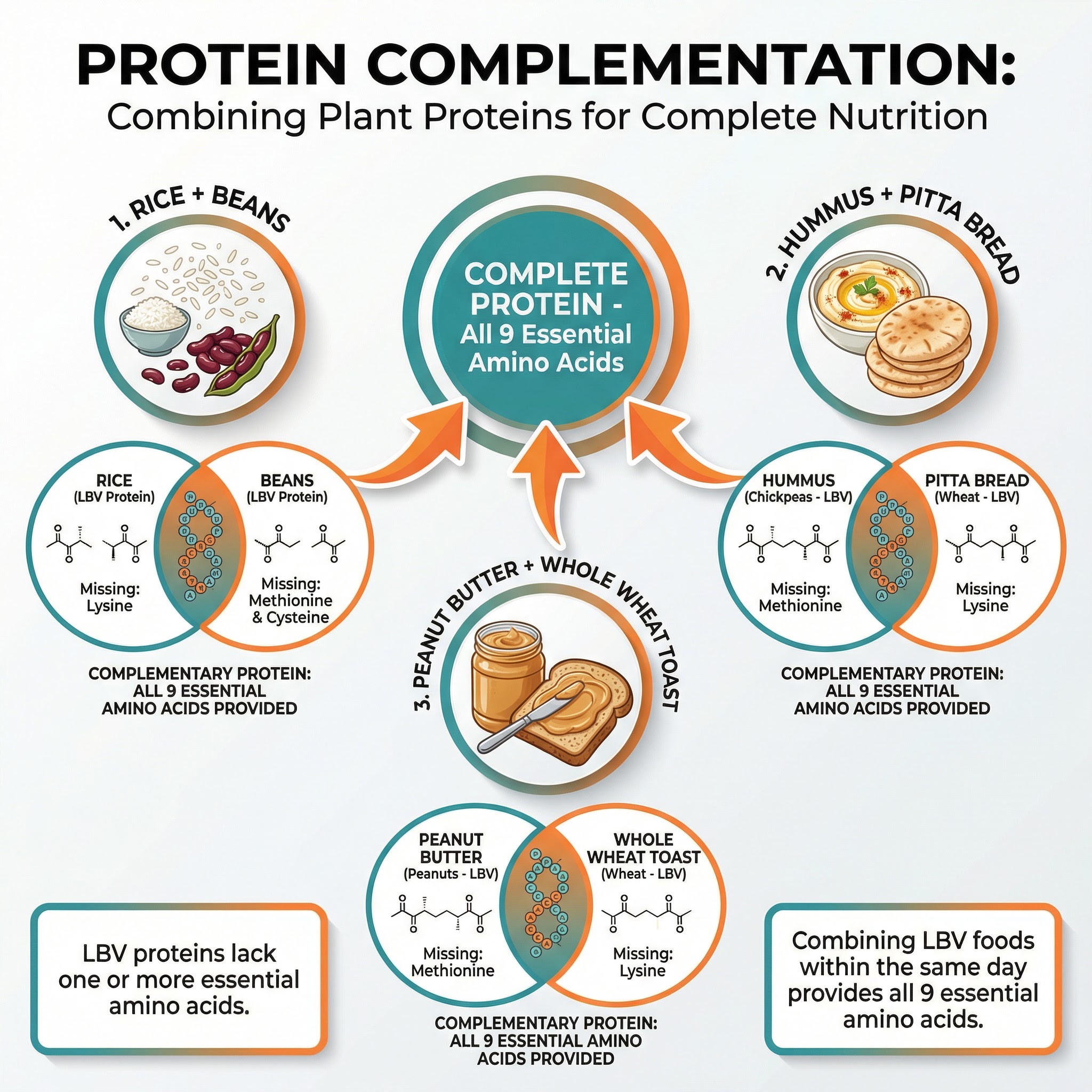
    Protein complementation is a concept examiners love to test. Most plant proteins are Low Biological Value (LBV), meaning they lack one or more of the nine essential amino acids that the body cannot synthesise. However, by combining different plant foods, you can provide all nine essential amino acids, creating a complete protein.

    Classic Combinations:

    • Rice + Beans: Rice is low in lysine; beans are low in methionine. Together, they provide all essential amino acids.
    • Hummus + Pitta Bread: Chickpeas and wheat complement each other.
    • Peanut Butter + Whole Wheat Toast: Peanuts and wheat provide complementary amino acids.
    • Lentil Dhal + Rice: A staple in many cuisines for good reason.

    Important Note: The foods do not need to be eaten in the same meal, just within the same day.

    High Biological Value (HBV) Plant Proteins: Soya (tofu, tempeh, edamame) and quinoa are complete proteins on their own, containing all nine essential amino acids.
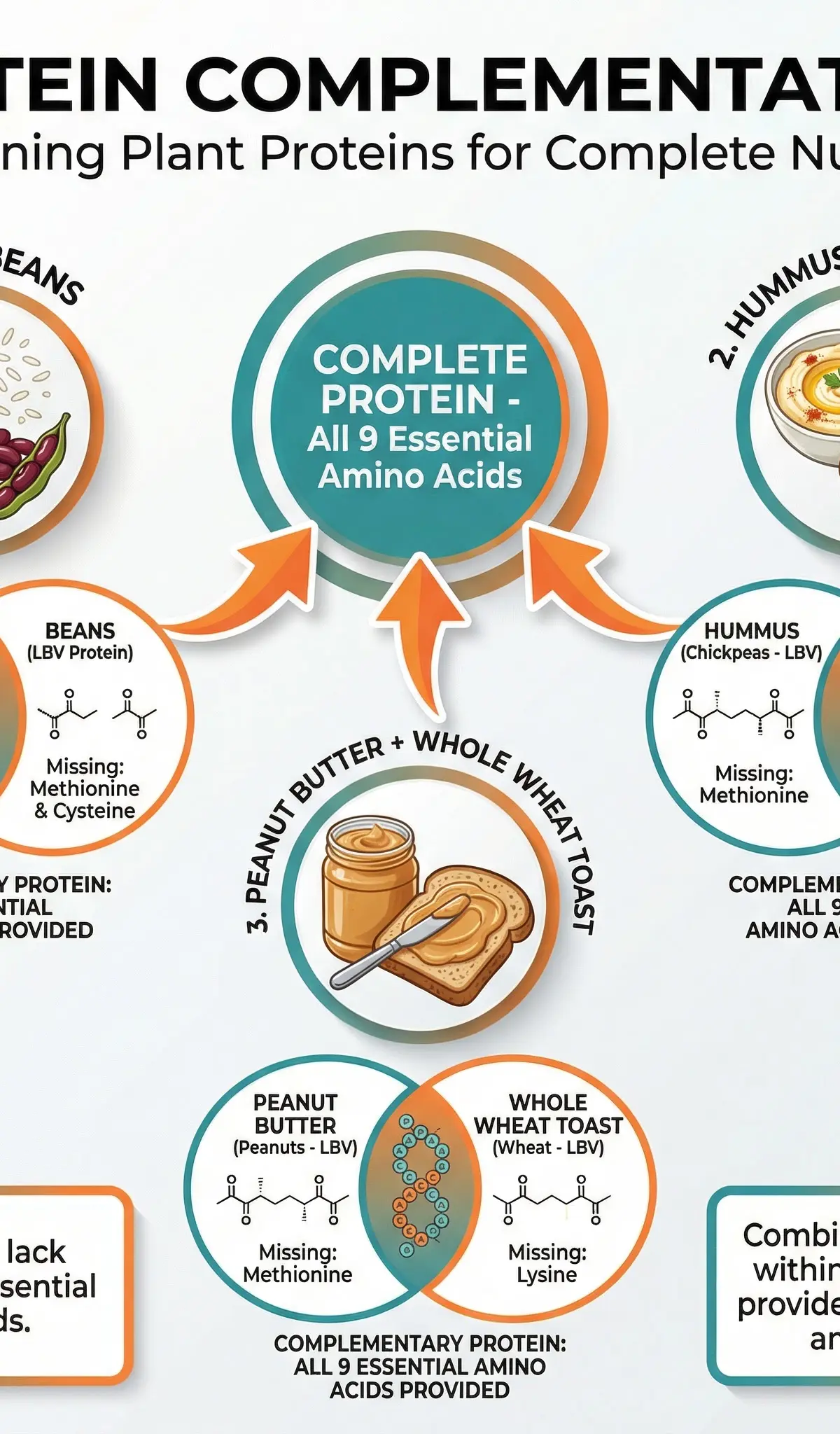
    Protein Complementation: Combining Plant Proteins for Complete Nutrition

    Exam Application: When asked to plan a vegan meal, always mention protein complementation. For example: "I have included a chickpea and vegetable curry served with brown rice. Chickpeas are a good source of protein but are LBV, lacking the amino acid methionine. Brown rice provides methionine, so together they form a complete protein, ensuring the individual receives all nine essential amino acids."

    Lactose Intolerance

    Lactose intolerance is the inability to digest lactose, the sugar in milk, due to a deficiency of the enzyme lactase. Symptoms include bloating, gas, diarrhoea, and abdominal cramps after consuming dairy. It is not life-threatening, but it can significantly affect quality of life. Lactose intolerance is more common in adults of Asian, African, and Hispanic descent.

    Dietary Management:

    • Lactose-free dairy products: Milk, yogurt, and cheese with lactose removed or broken down.
    • Plant-based alternatives: Soya milk, almond milk, oat milk, coconut yogurt (choose fortified versions for calcium and vitamin D).
    • Hard cheeses: Cheddar, Parmesan, and other aged cheeses contain very little lactose and are often tolerated.
    • Lactase enzyme supplements: Taken before consuming dairy to aid digestion.

    At-Risk Nutrients: Calcium and vitamin D, as dairy is a primary source. Ensure adequate intake from fortified plant milks, leafy greens, and fortified foods.

    Hidden Allergens and Cross-Contamination

    Candidates must demonstrate awareness that allergens can be hidden in processed foods and that cross-contamination is a serious risk.

    Examples of Hidden Allergens:

    • Gluten: Soy sauce, stock cubes, processed meats, beer.
    • Dairy: Casein in wine (used for fining), whey in crisps and processed foods.
    • Eggs: Pasta, mayonnaise, some baked goods.
    • Nuts: Pesto (pine nuts), marzipan, some curries and sauces.

    Cross-Contamination: Occurs when allergen-free food comes into contact with allergens through shared equipment, utensils, or preparation surfaces. In a kitchen preparing food for someone with a severe allergy, separate chopping boards, knives, and cooking equipment must be used, and surfaces must be thoroughly cleaned.

    Exam Technique: Command Words and Mark Schemes

    "Explain why" Questions (4-6 marks)

    Examiners want you to provide reasons with supporting detail. Use the PEEL structure:

    • Point: State the reason.
    • Evidence: Provide specific knowledge (e.g., nutrient name, function, food source).
    • Explanation: Explain the link between the evidence and the point.
    • Link: Connect back to the question.

    Example Question: "Explain why a vegan diet may lead to Vitamin B12 deficiency." (4 marks)

    Model Answer: "Vitamin B12 is only found naturally in animal products such as meat, fish, eggs, and dairy (Point). Vegans exclude all animal products from their diet, so they do not consume these natural sources of B12 (Evidence). Without adequate B12 intake, the body cannot produce healthy red blood cells, leading to megaloblastic anaemia and potential nerve damage (Explanation). Therefore, vegans must obtain B12 from fortified foods or supplements to prevent deficiency (Link)."

    "Plan a meal" Questions (6-9 marks)

    Do not just list ingredients. Justify every choice with reference to specific nutrients and their functions.

    Example Question: "Plan a main meal suitable for a vegan. Justify your choices." (9 marks)

    Model Answer: "I would prepare a chickpea and spinach curry served with brown rice and a side of fortified soya yogurt. Chickpeas provide protein, but as an LBV source, they lack the amino acid methionine. Brown rice provides methionine, so together they form a complete protein through complementation, ensuring all nine essential amino acids are available for growth and repair. Spinach is rich in non-haem iron, which is essential for the production of haemoglobin in red blood cells to prevent anaemia. I have included tomatoes in the curry, which are high in vitamin C, to enhance the absorption of iron from the spinach. The fortified soya yogurt provides calcium for bone health and vitamin D to aid calcium absorption, both of which are at risk in a vegan diet. I have also used fortified plant milk in the curry to contribute additional B12, which is absent from plant foods and essential for red blood cell formation and nervous system function. By carefully selecting and combining these ingredients, the meal meets the nutritional needs of a vegan while being flavourful and satisfying."

    Examiner's Commentary: This answer would achieve full marks because it identifies specific nutrients, explains their functions, justifies ingredient choices with reference to nutritional science, and demonstrates understanding of protein complementation and nutrient absorption.

    Special Dietary Needs Revision Podcast (10 minutes)

    Named Example Bank

    1. Anaphylactic Shock: A severe, life-threatening allergic reaction involving rapid swelling of airways, drop in blood pressure, and potential loss of consciousness. Requires immediate adrenaline injection (EpiPen) and emergency medical care.

    2. Lactase Enzyme: The enzyme required to break down lactose (milk sugar) in the small intestine. Deficiency leads to lactose intolerance.

    3. Villi Damage in Coeliac Disease: Gluten triggers an autoimmune response that flattens the villi in the small intestine, reducing surface area and causing malabsorption of iron, calcium, folate, and B vitamins.

    4. Protein Complementation Example - Rice and Beans: Rice lacks lysine; beans lack methionine. Consumed together (or within the same day), they provide all nine essential amino acids, forming a complete protein.

    5. Fortified Plant Milk: Soya, almond, and oat milks fortified with calcium (120mg per 100ml, comparable to cow's milk), vitamin D, and vitamin B12 to support vegans and those with lactose intolerance.

    6. Soya and Quinoa as HBV Plant Proteins: Unlike most plant proteins, soya (tofu, tempeh, edamame) and quinoa contain all nine essential amino acids, making them complete proteins suitable for vegans.

    7. Hidden Gluten in Soy Sauce: Traditional soy sauce contains wheat and is unsafe for coeliacs. Tamari (gluten-free soy sauce) is a safe alternative.

    8. Vitamin C Enhances Iron Absorption: Consuming vitamin C-rich foods (e.g., orange juice, peppers, tomatoes) with non-haem iron sources (e.g., spinach, lentils) increases iron bioavailability, helping to prevent anaemia in vegetarians and vegans.

    9. Casein in Wine: Casein (a milk protein) is sometimes used in the fining process to clarify wine, making some wines unsuitable for vegans and those with dairy allergies.

    10. Cross-Contamination Risk: Using the same chopping board or knife for gluten-containing bread and gluten-free bread can transfer gluten proteins, triggering a reaction in coeliacs. Separate equipment and thorough cleaning are essential.

    Quick Summary

    • Food Allergy: Immune system response; histamine release; can cause anaphylactic shock (life-threatening).
    • Food Intolerance: Digestive system problem; enzyme deficiency (e.g., lactase for lactose); uncomfortable but not life-threatening.
    • Coeliac Disease: Autoimmune condition; gluten damages villi in small intestine; causes malabsorption of iron, calcium, B vitamins; requires lifelong gluten-free diet.
    • Lacto-Ovo Vegetarian: Excludes meat and fish; includes dairy and eggs; at risk for iron and zinc deficiency.
    • Vegan: Excludes all animal products; at risk for B12, iron, calcium, vitamin D, omega-3, iodine, and zinc deficiencies; requires fortified foods and supplements.
    • Protein Complementation: Combining LBV plant proteins (e.g., rice + beans, hummus + pitta) to provide all nine essential amino acids.
    • HBV Plant Proteins: Soya and quinoa are complete proteins.
    • Hidden Allergens: Gluten in soy sauce, casein in wine, eggs in pasta.
    • Exam Strategy: Use precise terminology (anaphylactic shock, villi, malabsorption, complementation); justify ingredient choices with nutrient functions; always mention B12 fortification for vegans.
    Visual Resources

    3 diagrams and illustrations

    Protein Complementation: Combining Plant Proteins for Complete Nutrition
    Protein Complementation: Combining Plant Proteins for Complete Nutrition
    Healthy Small Intestine vs. Coeliac Disease - Gluten Damage to Villi
    Healthy Small Intestine vs. Coeliac Disease - Gluten Damage to Villi
    GCSE Dietary Groups Comparison Chart: Understanding Restrictions, Nutrients, and Alternatives
    GCSE Dietary Groups Comparison Chart: Understanding Restrictions, Nutrients, and Alternatives

    Worked Examples

    5 detailed examples with solutions and examiner commentary

    Practice Questions

    Test your understanding — click to reveal model answers

    Q1

    Explain the difference between a food allergy and a food intolerance. (4 marks)

    4 marks
    standard

    Hint: Think about which body system is involved in each case and the severity of the symptoms.

    Q2

    Explain why a person with Coeliac disease must follow a gluten-free diet. (6 marks)

    6 marks
    standard

    Hint: Think about what happens to the small intestine when gluten is consumed and the consequences for nutrient absorption.

    Q3

    A vegan teenager is concerned about getting enough protein. Explain what is meant by 'protein complementation' and suggest two combinations of foods that would provide complete protein. (6 marks)

    6 marks
    standard

    Hint: Think about Low Biological Value proteins and how combining them provides all essential amino acids.

    Q4

    Plan a main meal suitable for a person with lactose intolerance. Justify your ingredient choices with reference to nutrients. (9 marks)

    9 marks
    standard

    Hint: Focus on providing calcium and vitamin D from non-dairy sources, and justify every ingredient.

    Q5

    Explain why Vitamin B12 is a nutrient at risk in a vegan diet and suggest how a vegan can ensure adequate intake. (4 marks)

    4 marks
    standard

    Hint: Think about where B12 is naturally found and what happens if you don't get enough.

    Q6

    Describe two ways that cross-contamination can occur in a kitchen preparing food for someone with a severe nut allergy, and explain how to prevent it. (6 marks)

    6 marks
    standard

    Hint: Think about shared equipment and surfaces.

    Key Terms

    Essential vocabulary to know