AQA · A-Level · French
Social issues and trends
An exam-focused GCSE Higher Tier / A-level transition guide to French social issues and trends. It develops precise cultural knowledge, balanced arguments, source evaluation, French-language structures, worked examples and retrieval practice across changing families, the cyber-society and volunteering.
- 13 min read
- 3 worked examples
- 5 practice questions
- 12 key terms
Study Notes

GCSE French: Social Issues and Trends in France
Specification alert: The exact trio La famille en voie de changement, La « cyber-société » and Le rôle du bénévolat appears in AQA A-level French 7652, Theme 1. This resource is therefore written as GCSE Higher Tier / transition practice: the language and examiner habits transfer well, but candidates must check their own board’s GCSE specification before treating it as a prescribed topic. 6
What earns marks
This topic rewards candidates who can do more than list facts. A basic answer says that families are changing or that social media is dangerous. A high-scoring answer states a view, uses a precise named example, explains a consequence, then weighs up the alternative view. In examiner language, credit is given for relevant development, accurate cultural knowledge, justified opinions and a range of language. Candidates should make their judgement explicit with phrases such as dans l’ensemble, il faut pourtant reconnaître que and cela dépend de….
| Theme | Precise evidence to learn | What an examiner can credit |
|---|---|---|
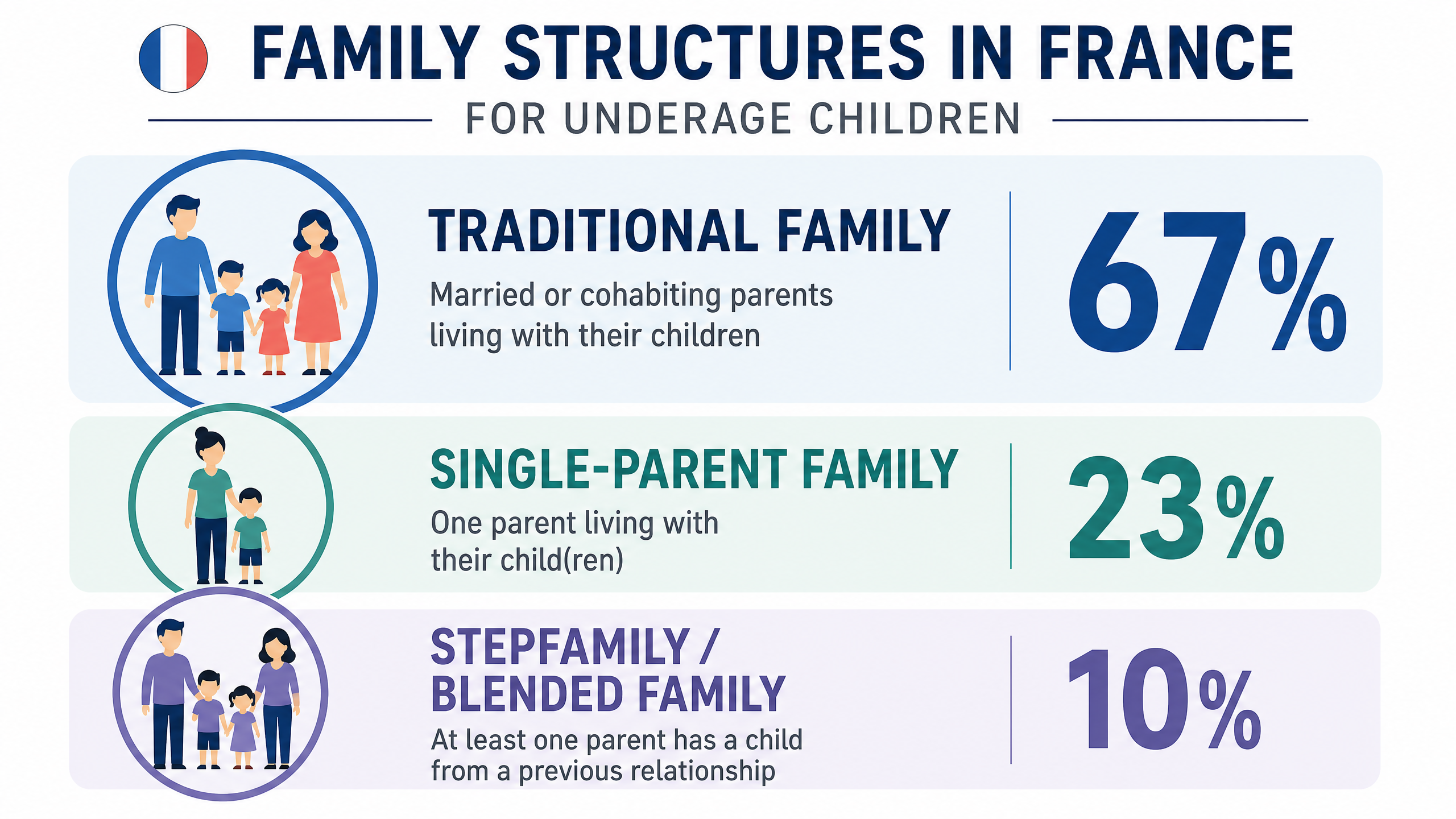
| Family change | 67% traditional; 23% single-parent; 10% blended (INSEE, 2023) | Comparison, consequence and informed judgement |
| Legal recognition | PACS: 15 November 1999; marriage equality: 17 May 2013; PMA access: 2 August 2021 | Dated cultural knowledge and accurate explanation |
| Cyber-society | 15% cyberbullied in the WHO/Europe study across 44 countries/regions | Careful use of evidence and balanced evaluation |
| Volunteering | 5 million people, or 11%, gave time weekly to associations in 2025 | Scale, social impact and a named case study |
1. La famille en voie de changement
The evidence: diversity, not disappearance
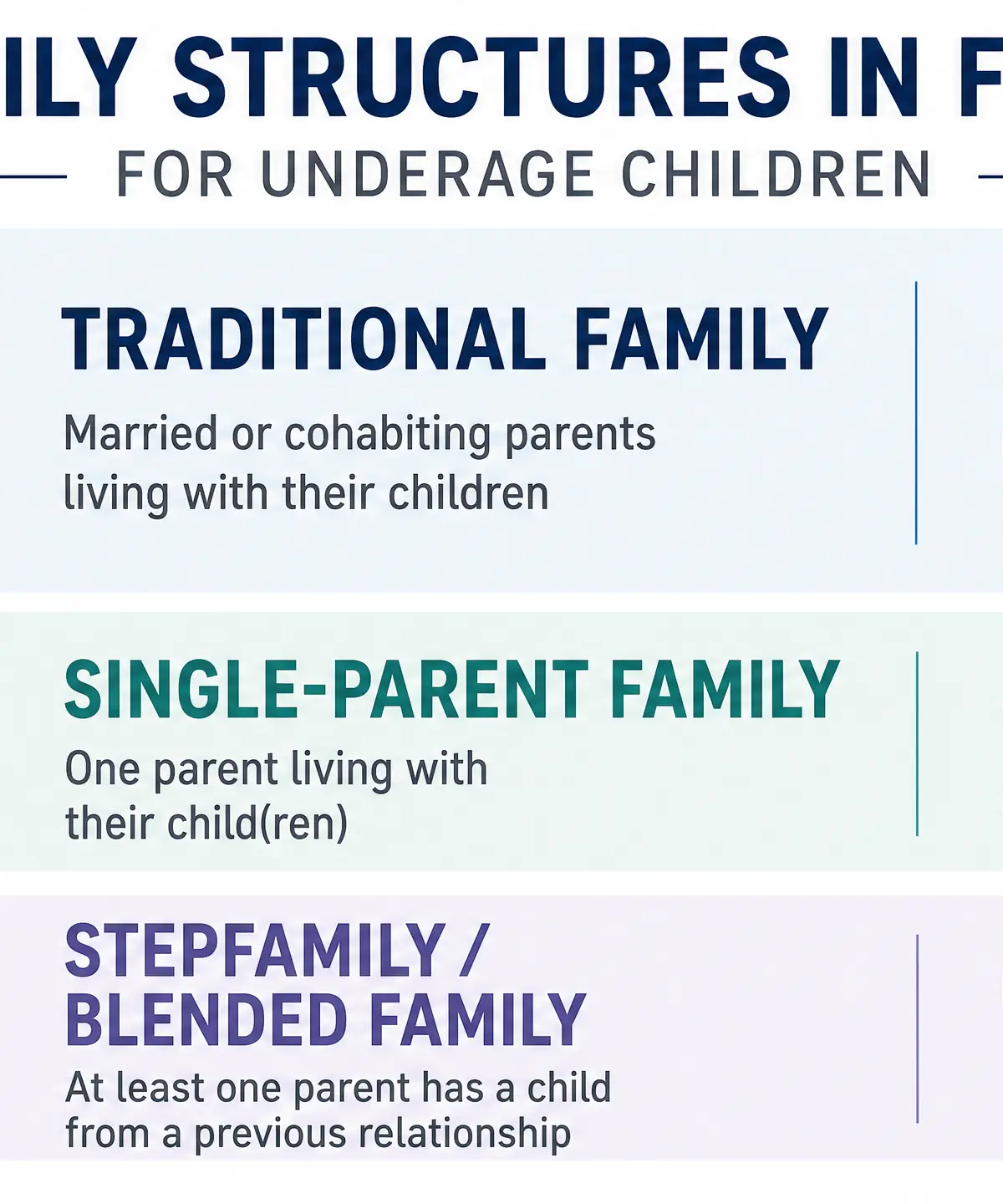
Do not write that the traditional family has vanished. The strongest argument is more nuanced. In data published by INSEE in 2023, 67% of underage children in France lived in a traditional family, while 23% lived in a single-parent family (une famille monoparentale) and 10% in a blended/stepfamily (une famille recomposée). 1 In other words, the traditional model remained the largest group, but one child in three was outside it. That contrast is far more useful in an essay than an absolute claim.
The vocabulary needs to be precise. Le concubinage means cohabitation without marriage; le divorce means divorce; la garde alternée is shared custody; and un beau-parent is a step-parent. A family can be stable and supportive in many forms, so avoid implying that every single-parent or blended household is automatically a problem. A developed answer might argue that a sole parent can face extra financial and time pressures, whereas a blended household may create wider support networks but also require adjustment between step-siblings and parents.
Examiner move: Make the contrast, then explain it. “Although X, Y” is more analytical than two disconnected statements.
High-value French frame: Bien que la famille traditionnelle reste majoritaire, la diversité des structures familiales est devenue évidente. The phrase bien que normally takes the subjunctive, so reste demonstrates controlled complexity. Follow it with evidence: Selon l’INSEE, vingt-trois pour cent des mineurs vivent dans une famille monoparentale. Then explain: Cela peut accroître la charge financière et émotionnelle du parent seul.
Law, rights and social change
Three dates give candidates secure cultural detail. The PACS (Pacte civil de solidarité) was established by a law of 15 November 1999. The law opening marriage to same-sex couples, commonly called le mariage pour tous, dates from 17 May 2013. A further bioethics law dated 2 August 2021 opened medically assisted reproduction, la PMA, to all women, including women in same-sex couples. 2 These milestones show changing legal recognition, but a sophisticated candidate will not claim that law is the sole cause of social change. Law can reflect new attitudes, protect rights and sometimes accelerate acceptance; personal choices, economic pressures and changing gender roles also matter.
Use a chained judgement: D’une part, ces lois reconnaissent mieux la diversité des couples. D’autre part, elles ne font pas disparaître les inégalités économiques auxquelles certaines familles monoparentales sont confrontées. Dans l’ensemble, elles constituent un progrès juridique important. This is stronger than merely reciting dates because it answers “why does this matter?”.
Four cover-and-recall prompts
Cover the right-hand column and answer aloud before checking it. First: What are the three INSEE percentages? Answer: 67, 23 and 10. Second: What does PACS stand for and when was it created? Answer: Pacte civil de solidarité, 15 November 1999. Third: Which law is associated with 17 May 2013? Answer: le mariage pour tous. Fourth: Why should you avoid saying the traditional family has disappeared? Answer: because it remains the largest group at 67%.
2. La « cyber-société »
Use a balanced argument, not a technology panic
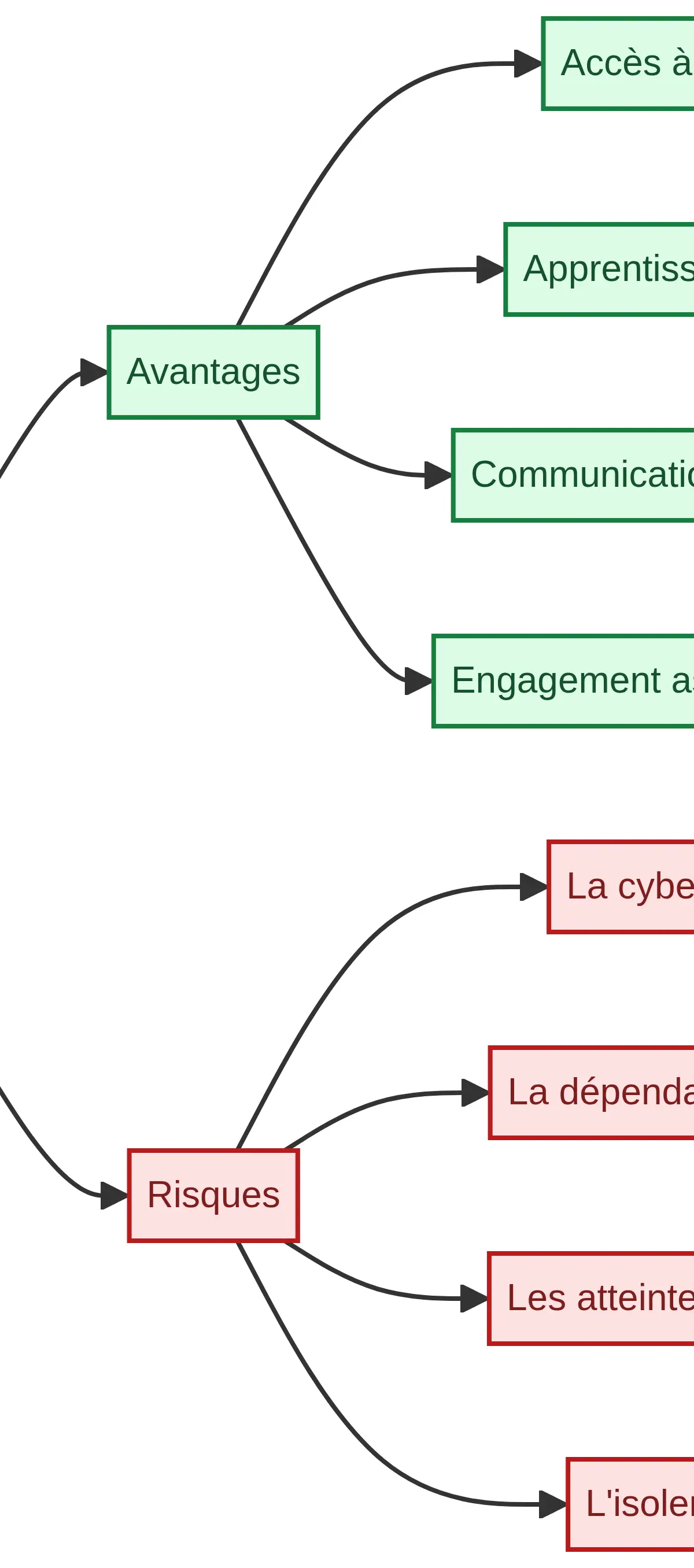
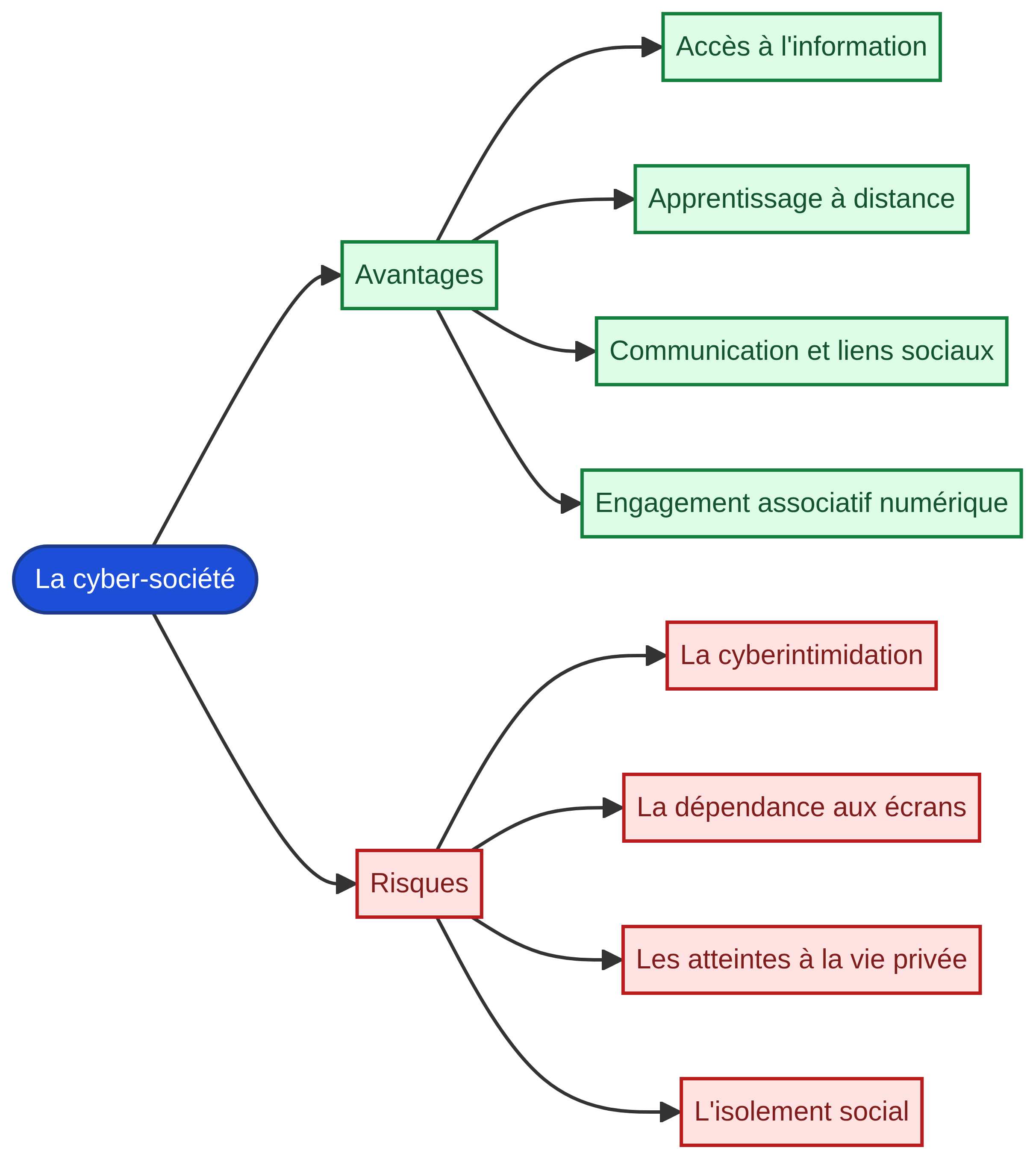
The cyber-society refers to the way digital tools shape communication, work, education, shopping and civic life. It is tempting to call the internet either entirely liberating or entirely harmful. Neither extreme wins the best marks. Candidates should show how digital tools can give rapid access to information, enable contact with distant relatives, support remote learning and help associations publicise campaigns. A useful positive statement is: Grâce aux outils numériques, il est plus facile de rester en contact avec des proches qui habitent loin.
However, the counterargument must be specific. Risks include la dépendance aux écrans (screen dependency), les atteintes à la vie privée (invasions of privacy), la désinformation (misinformation), l’isolement social and la cyberintimidation or le cyberharcèlement. Use pourtant or néanmoins to make the balance clear: Pourtant, l’usage excessif des réseaux sociaux peut nuire au sommeil, à la concentration et à l’estime de soi.
Cyberbullying: evidence used carefully
The WHO/Europe study published in 2024 found that 15% of adolescents surveyed had experienced cyberbullying. Its evidence covered 44 countries and regions, so candidates must not present it as a France-only statistic. 3 This precision itself is impressive. A safe sentence is: Selon une étude de l’OMS en Europe, quinze pour cent des adolescents interrogés ont subi de la cyberintimidation.
Why can cyberbullying be serious? It may follow a young person beyond the school day, spread quickly through screenshots and group chats, and feel difficult to escape. The best answers also identify solutions: education about privacy, reporting systems, supportive adults, platform accountability and respectful digital behaviour. A top-level judgement is: La technologie n’est pas intrinsèquement dangereuse ; c’est son utilisation irresponsable qui peut devenir problématique. The phrase intrinsèquement is ambitious, but only use it if you can control it accurately.
Memory hook – A-I-V: Addiction, Intimidation, Vie privée. These are three risks. Counter them with E-C-S: Éducation, Contrôle, Soutien.
Short speaking routine
If the examiner asks Les réseaux sociaux font-ils plus de mal que de bien ?, give a five-stage response. Start with an opinion: À mon avis, ils ont des avantages incontestables. Add a precise positive: they facilitate learning and communication. Introduce the other side: Cependant, la cyberintimidation peut avoir des conséquences graves. Give the WHO/Europe evidence accurately. Finish with a judgement: Donc, il faudrait mieux éduquer les jeunes plutôt que d’interdire complètement les réseaux sociaux. This routine prevents candidates from becoming descriptive.
3. Le rôle du bénévolat
Scale and value
Le bénévolat is unpaid voluntary work, usually for an association, charity, community group or social cause. In 2025, a French government association portal reported that 11% of people in France—around 5 million people—gave time weekly to associations. 4 Use the figure as evidence of scale, not as decoration. It supports the claim that voluntary action makes a substantial contribution to social solidarity.
Volunteering may provide food aid, mentoring, sport coaching, visiting services, environmental action or cultural events. It can benefit recipients through practical support and human contact. It can also benefit volunteers through des compétences, de l’expérience, la confiance en soi and a sense of belonging. The strongest answer evaluates both sides: it is not selfish for a volunteer to learn skills, but it becomes problematic if governments treat unpaid work as a substitute for funding essential services.
A strong judgement is: Le bénévolat est indispensable, mais il ne devrait pas remplacer la responsabilité de l’État. This is exactly the kind of qualified conclusion that candidates can sustain in a discussion.
Named case study: Les Restos du Cœur
Les Restos du Cœur is an excellent named example. In 1985, the comedian Coluche called on people via Europe 1 to support a free canteen project for people in need. In the first winter, more than 5,000 volunteers responded and distributed 8.5 million meals. 5 This example earns credit because it joins a person, a date, a platform, a social problem and a measurable outcome. It also allows a candidate to argue that voluntary organisations can respond rapidly to poverty and exclusion.
High-value French frame: Les Restos du Cœur illustrent le fait que le bénévolat peut répondre à des besoins urgents lorsque les services publics ne suffisent pas à eux seuls. Follow it with balance: Néanmoins, la lutte contre la pauvreté exige aussi des politiques publiques à long terme.
Memory hook – R-E-P: Restos, Europe 1, 1985. Add C-E-S for the benefits of volunteering: Compétences, Expérience, Solidarité.
How to approach assessment tasks
For an explain question, use PEEL: make a Point, select Evidence, Explain why it matters, then Link back to the question. For an essay, plan a judgement first. A 16-mark practice essay can use four short paragraphs: a position, an argument with evidence, a counterargument with evidence, then a reasoned conclusion. With approximately one minute per mark as a planning benchmark, candidates should leave enough time to check agreements, verb endings and accents.
For speaking, prepare ideas rather than a memorised speech. Candidates should be ready to extend with parce que, ce qui veut dire que, même si, bien que and afin que. A relevant follow-up question shows genuine interaction: Pensez-vous que le gouvernement devrait aider davantage les associations ? Do not ask a question merely to fill time; listen and respond to the answer.
Command words decoded
| Command word | What candidates must do | Useful opening |
|---|---|---|
| Décrivez | Give accurate features and examples | Il y a plusieurs aspects à considérer… |
| Expliquez / Analysez | Show causes, consequences and connections | Cela s’explique en partie par… |
| Dans quelle mesure | Argue both sides and make a judgement | Cette affirmation est vraie dans une certaine mesure… |
| Évaluez | Weigh strengths and limitations | L’avantage principal est…, mais la limite est… |
Source evaluation: C-P-L-J
Where a source or statistic is supplied, use Content → Provenance → Limitations → Judgement. First, identify the message or statistic. Second, ask who produced it and when: an official statistical office, an association, a campaign group or an individual has a different purpose. Third, explain a limitation: a regional WHO study is not automatically France-specific; an association may present its work positively; a statistic may not reveal personal experience. Finally, reach a reasoned judgement about how useful the source is. This structure gives candidates a disciplined route from description to evaluation.
Synoptic links and deepening questions
The themes connect. First, family diversity links to cyber-society because technology can maintain intergenerational contact in separated or blended families, while also creating privacy risks for children. Second, the cyber-society links to volunteering because digital platforms can recruit volunteers, coordinate campaigns and increase awareness. Third, volunteering links to family change because community organisations may support parents facing financial or social pressure. These links help candidates reuse vocabulary across topics rather than revise three isolated lists.
Push your thinking further with these questions. To what extent do legal reforms change attitudes rather than simply reflect them? How far can digital education reduce cyberbullying without restricting young people’s freedom? To what extent should volunteering complement, rather than replace, state action against poverty?
Audio revision podcast

Listen to the approximately ten-minute female-voiced revision episode after reading the guide. Pause at each retrieval cue, answer aloud in French, then replay the model explanation. The episode reinforces the date ladder, the source-scope warning for cyberbullying, the Les Restos du Cœur case study and a five-stage speaking response.
Final examiner checklist
Before handing in, candidates should check: Have I answered the command word? Have I included at least one precise example or date? Have I explained its relevance? Have I used a counterargument where the question requires evaluation? Have I ended with a clear judgement? A response that does all five is much more likely to earn credit across content, communication and language.
References
Worked Examples
3 worked examples — open one to explore the question and available guidance.
Practice Questions
Test your understanding — click to reveal model answers
Donnez deux chiffres montrant la diversité des structures familiales en France. (4 marks)
Expliquez pourquoi le PACS et le mariage pour tous sont importants dans l’évolution de la famille française. (8 marks)
A youth charity publishes an infographic claiming ‘social media isolates all teenagers’. Evaluate the usefulness of this claim. (10 marks)
Translate into French: ‘Although volunteering helps vulnerable people, it should not replace the responsibility of the state.’ (10 marks)
Le bénévolat profite davantage aux bénévoles qu’à la société. Qu’en pensez-vous ? (10 marks)