Pearson Edexcel · GCSE · French
Daily life
Master the 'La Vie Quotidienne' topic to unlock top marks across all GCSE French papers. This guide provides the essential vocabulary, grammar structures, and exam techniques needed to confidently discuss your daily routine, opinions, and future plans.
- 3 min read
- 3 worked examples
- 5 practice questions
- 6 key terms
Study Notes

Overview
The 'Daily Life' (La Vie Quotidienne) topic sits within the 'My Personal World' thematic context of the GCSE French specification. It is a fundamental topic because it provides the building blocks for expressing who you are, what you do, and how you feel. Examiners expect candidates to seamlessly weave daily routine vocabulary with opinion phrases and multiple tenses. Mastering this topic not only prepares you for specific questions on family and routine but also equips you with the grammatical flexibility needed to excel in the speaking and writing papers. Listen to our comprehensive podcast revision session here:
Key Vocabulary: Verbes Pronominaux
Reflexive verbs are essential for describing daily routines. Candidates must remember to use the correct reflexive pronoun (me, te, se, nous, vous, se) before the verb.
Morning Routine
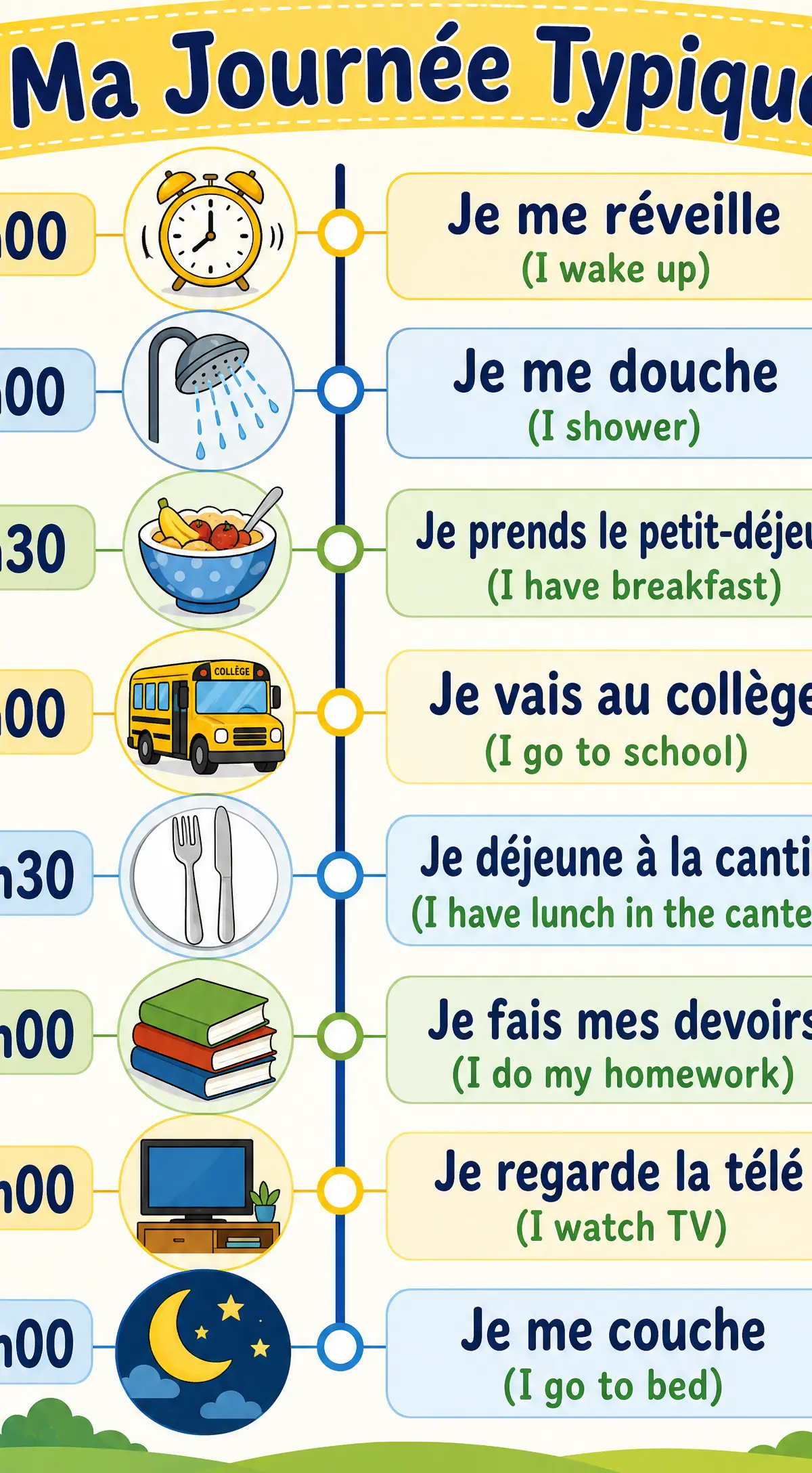
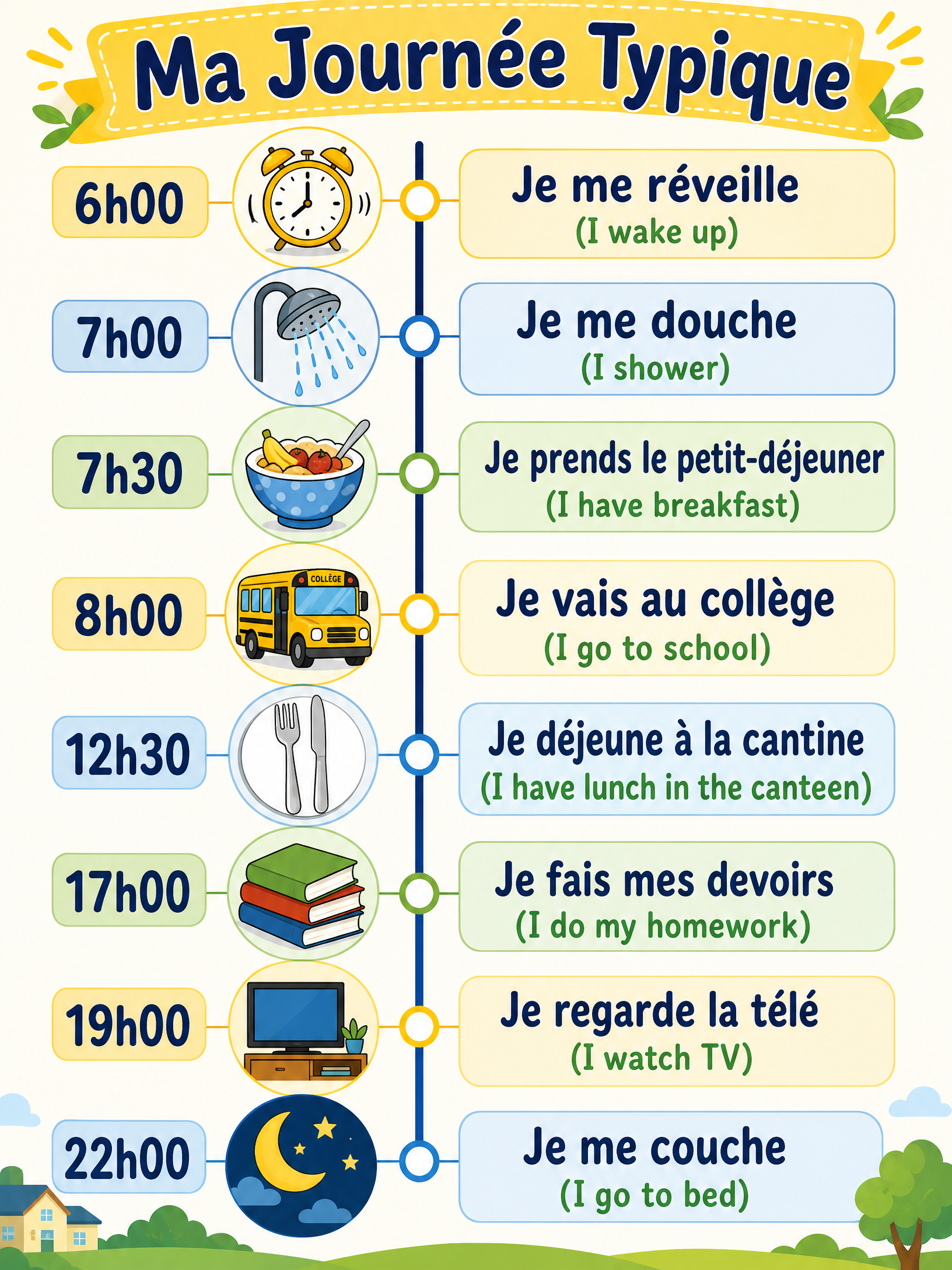
Se réveiller (to wake up): Je me réveille à six heures.
Se lever (to get up): Je me lève à six heures et demie.
Se doucher (to shower): Je me douche tous les matins.
S'habiller (to get dressed): Je m'habille rapidement.
Prendre le petit-déjeuner (to have breakfast): Je prends le petit-déjeuner à sept heures.
The School Day
Aller au collège (to go to school): Je vais au collège à pied.
Déjeuner (to have lunch): Je déjeune à la cantine.
Rentrer à la maison (to come home): Je rentre à la maison à quatre heures.
Evening Routine
Faire les devoirs (to do homework): Je fais mes devoirs dans ma chambre.
Dîner (to have dinner): On dîne en famille à sept heures.
Se coucher (to go to bed): Je me couche à dix heures.
Grammatical Structures
The Three Tenses
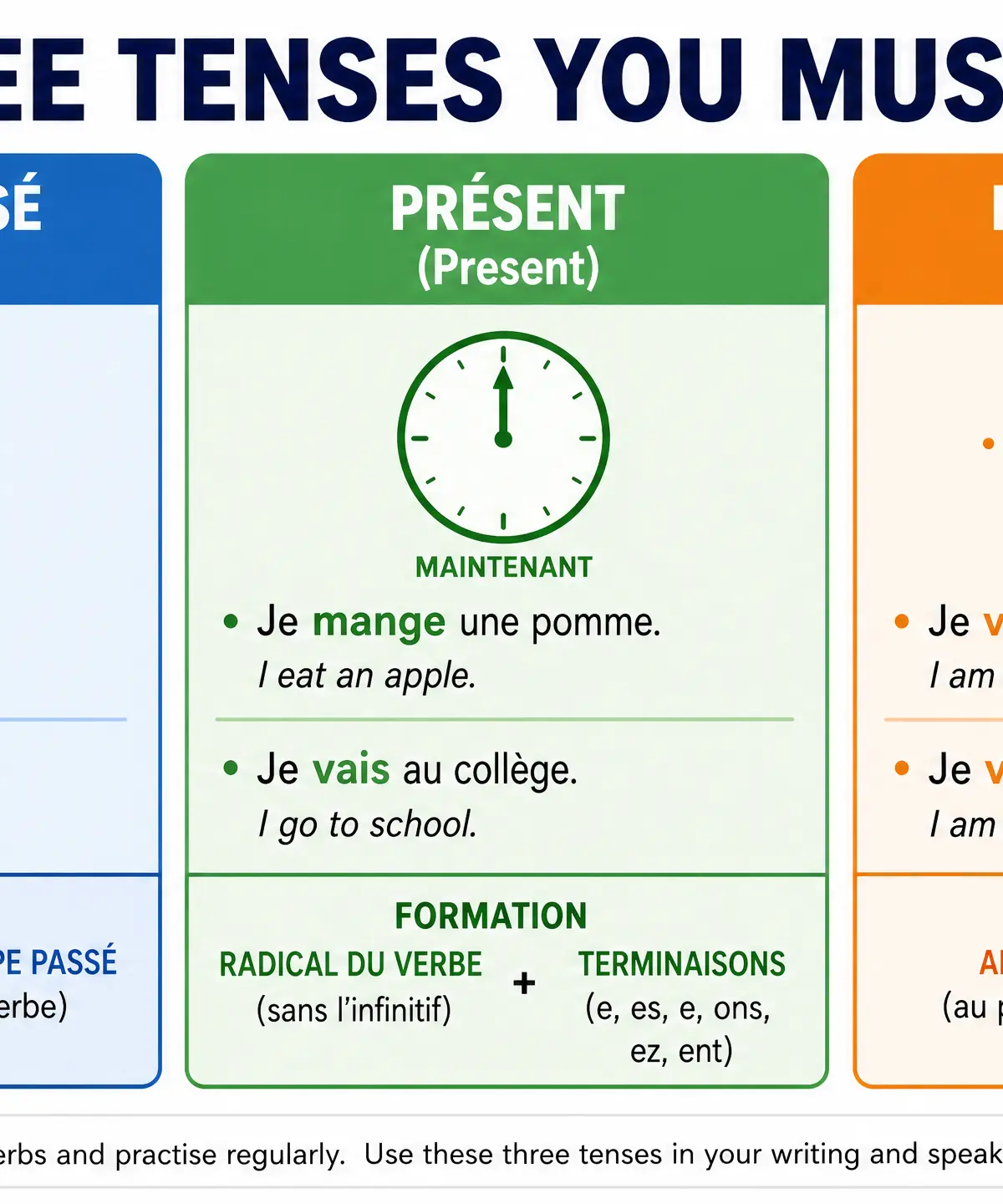
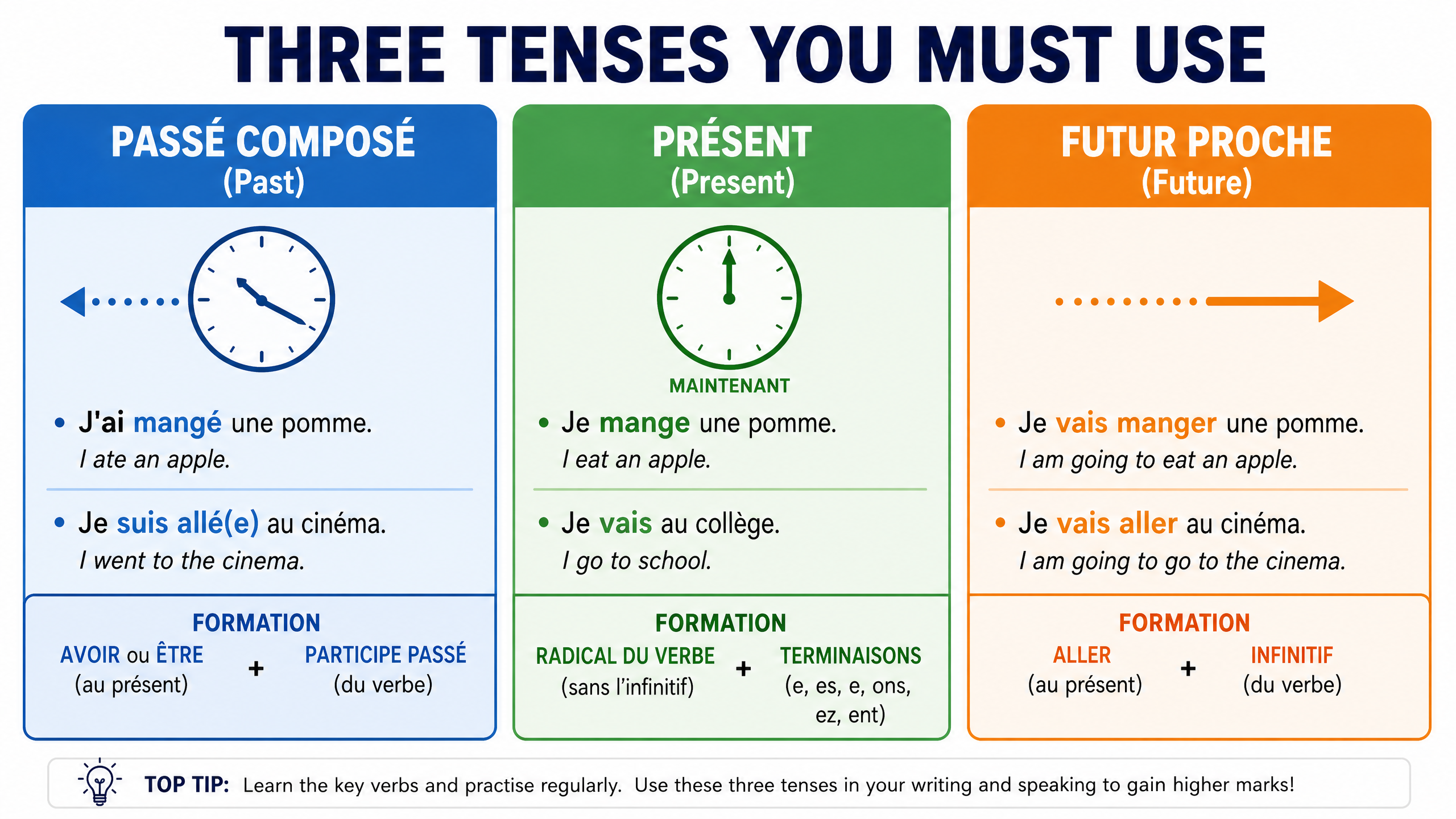
To access higher mark bands, candidates must demonstrate the ability to refer to past, present, and future events accurately.
Présent: Je vais au collège en bus. (I go to school by bus.)
Passé Composé: Hier, je suis allé(e) au collège en bus. (Yesterday, I went to school by bus.) Note the use of être as the auxiliary verb for aller.
Futur Proche: Demain, je vais aller au collège en bus. (Tomorrow, I am going to go to school by bus.)
Giving and Justifying Opinions
Examiners actively look for justified opinions. Always follow an opinion with parce que (because) or car (as).
J'aime (I like): J'aime faire du sport parce que c'est bon pour la santé.
Je n'aime pas (I don't like): Je n'aime pas me lever tôt parce que je suis fatigué(e) le matin.
À mon avis (In my opinion): À mon avis, il est important d'avoir une routine régulière.
Communication Skills
Effective communication requires moving beyond simple sentences. Candidates should use connectives (e.g., cependant, donc, bien que) to link ideas and create complex sentence structures. In speaking assessments, clear pronunciation and accurate sound-symbol correspondences are vital.
Visual Resources
2 diagrams and illustrations
Interactive Diagrams
1 interactive diagram to visualise key concepts
Conceptual Flow Outline
Structure of a Reflexive Verb in the Present Tense
Worked Examples
3 worked examples — open one to explore the question and available guidance.
Practice Questions
Test your understanding — click to reveal model answers
Translate into French: I wake up at seven o'clock, but I prefer to get up at half past seven.
Hint: Remember your reflexive pronouns and the connective 'but'.
Writing: Tu écris un blog sur ta routine. Décris: ce que tu fais le matin, ce que tu as fait hier soir, et tes projets pour ce week-end. (90 words)
Hint: Ensure you cover all three bullet points using three different tenses.
Speaking (Photo Card): Look at the photo of a family eating breakfast. Describe what is in the photo and give your opinion on eating breakfast with family.
Hint: Use PALM (People, Action, Location, Mood) to structure your description.
Translate into English: Hier, je suis allé(e) au collège à vélo. C'était fatigant.
Hint: Pay attention to the tense.
Reading: Vrai, Faux ou Pas Mentionné? 'Le matin, je n'ai pas le temps de prendre une douche, donc je me lave le soir.' The person showers in the morning.
Hint: Look closely at the negative structure.
Test your understanding of Daily life
Active recall beats re-reading. Take an instant quiz now to test what you’ve learned and lock it into long-term memory.
7 days Premium · Then free forever · No card, no charge