Study Notes
Overview
This study guide focuses on a core requirement of the Edexcel GCSE French specification (1FR0): the ability to produce detailed and engaging descriptions. Covering aspects of Theme 1 (Identity and culture) and Theme 2 (Local area, holiday, and travel), this skill is fundamental to success in both the writing and speaking examinations. Examiners are looking for candidates who can move beyond simple statements and use a variety of grammatical structures and vocabulary to paint a vivid picture for the reader. Credit is awarded for accurate adjectival agreement, the correct manipulation of past, present, and future tenses, and the use of sophisticated language. This guide will equip you with the tools to describe physical appearances, character traits, geographical locations, and specific events, ensuring you can meet and exceed the examiner's expectations.
Key Skill 1: Describing People (Décrire les Personnes)
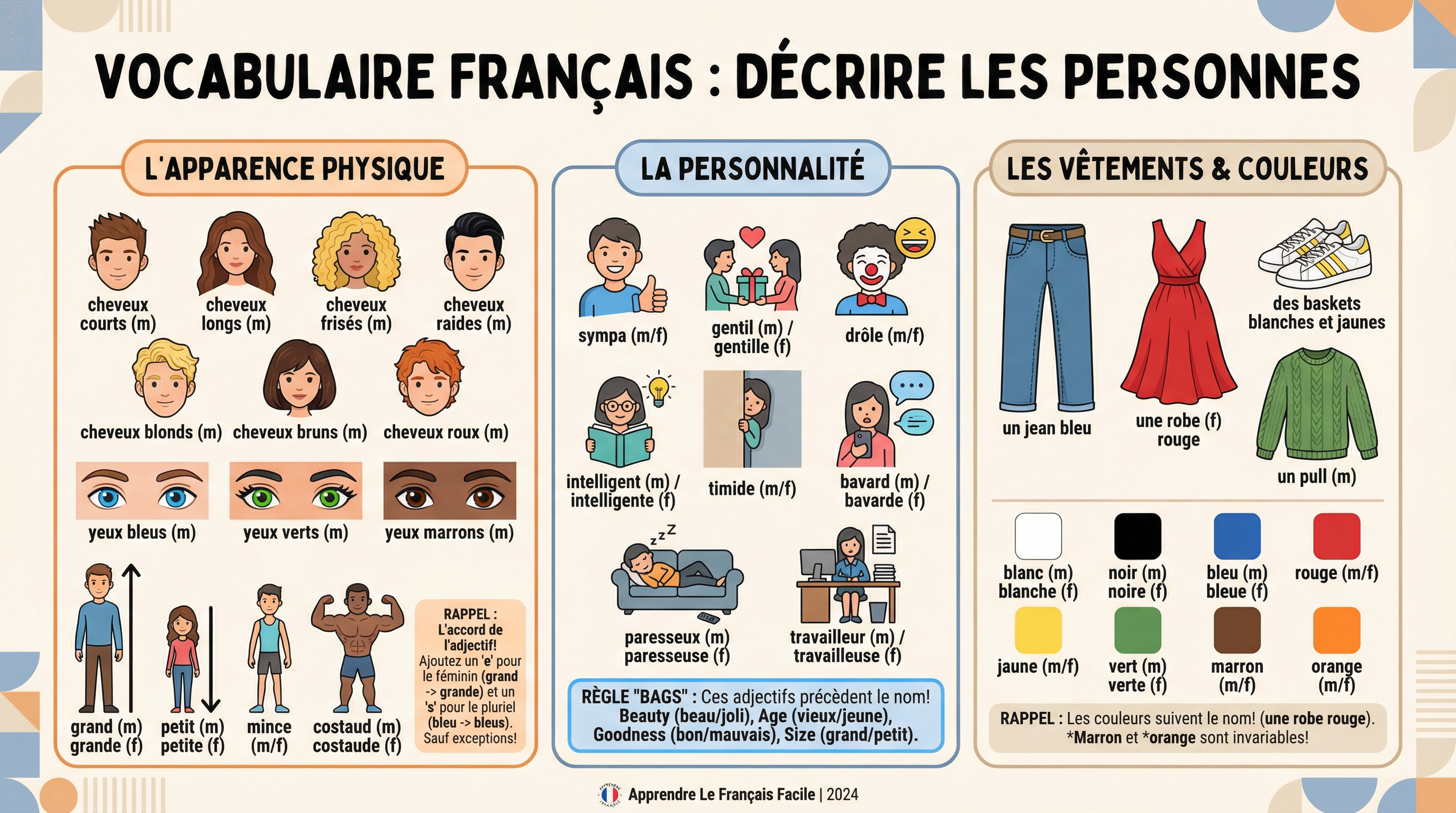
To earn high marks, your descriptions of people must be detailed. This involves commenting on both physical appearance (l'apparence physique) and personality (la personnalité).
Physical Appearance: Go beyond basic height and build. Candidates should be able to describe hair, eyes, and general appearance with accuracy. For example, instead of 'Il a les cheveux bruns', a top-band answer would be, 'Mon ami a les cheveux bruns, mi-longs et légèrement ondulés.'
Personality: Use a range of adjectives and justify your opinions. Instead of just 'Elle est sympa', try 'À mon avis, elle est très gentille et incroyablement drôle, puisqu'elle raconte toujours des blagues.'
Key Skill 2: Describing Places (Décrire les Lieux)
Whether describing your town, a holiday destination, or a region of France, variety and precision are key. Avoid over-relying on 'il y a'.
Vocabulary: Use more descriptive verbs and phrases like 'on peut trouver', 'se situe', 'offre une vue imprenable sur...'.
Structures: Employ relative clauses to add detail. For example: 'C'est une petite ville historique qui se trouve au bord de la mer, ce que je trouve très relaxant.' This use of 'qui' and 'ce que' demonstrates a command of complex structures that examiners reward.
Key Skill 3: Describing Events (Décrire les Événements)
Narrating events requires confident handling of different time frames. You must be able to recount what happened (past), what is happening (present), and what will happen (future).
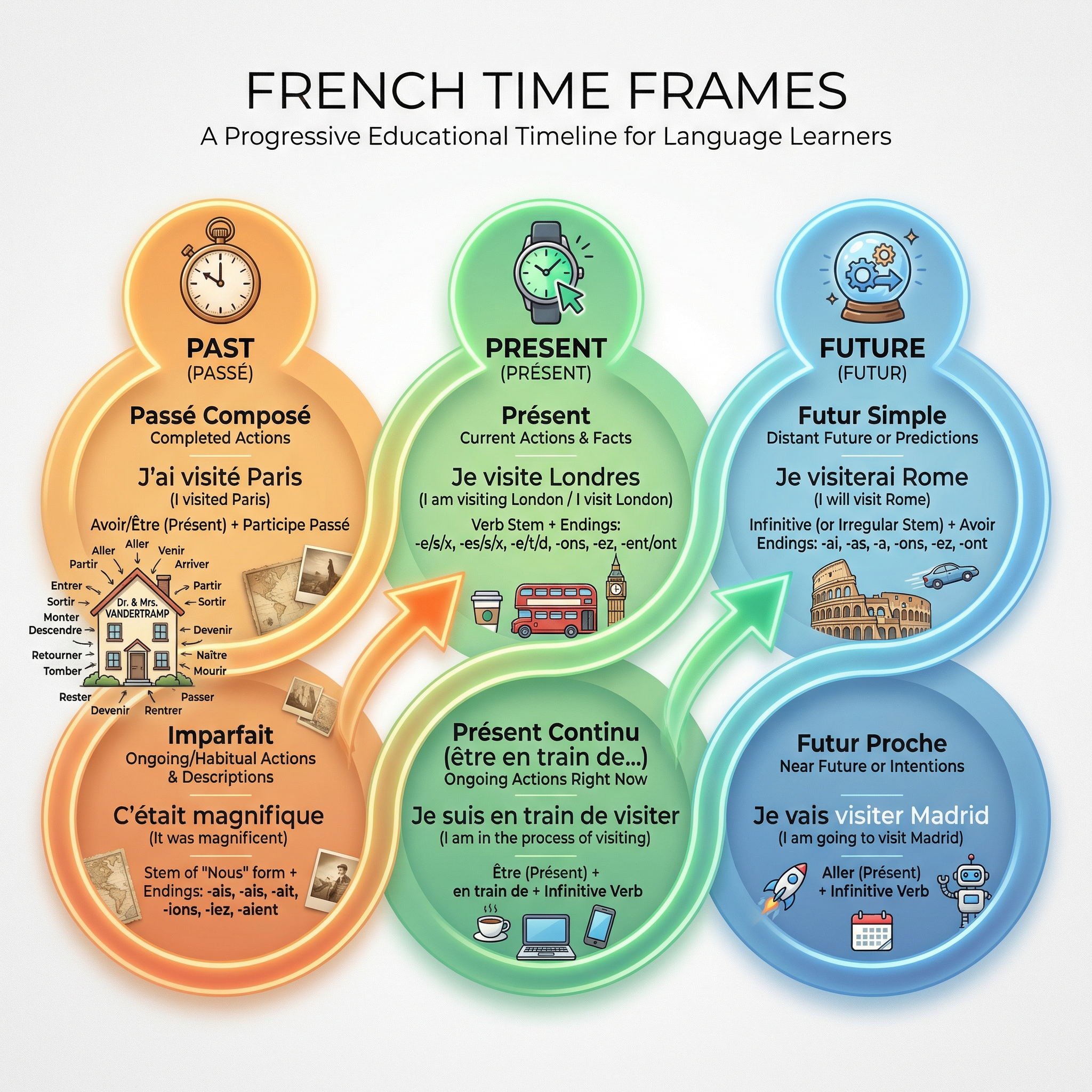
Past Events: Use a combination of the Passé Composé for key actions and the Imparfait for background descriptions and habitual actions. For example: 'Pendant que je visitais le musée (Imparfait), j'ai vu un tableau de Monet (Passé Composé). C'était magnifique (Imparfait).'
Future Events: Show range by using both the Futur Proche (aller + infinitive) for immediate plans and the Futur Simple for more distant or formal predictions. Example: 'Ce week-end, je vais sortir avec mes amis, mais l'année prochaine, j'irai en France pour perfectionner mon français.'
Grammar Focus: Adjectival Agreement
A fundamental but frequently mishandled area. Marks are consistently lost for incorrect agreement. Adjectives must agree in gender (masculine/feminine) and number (singular/plural) with the noun they describe.
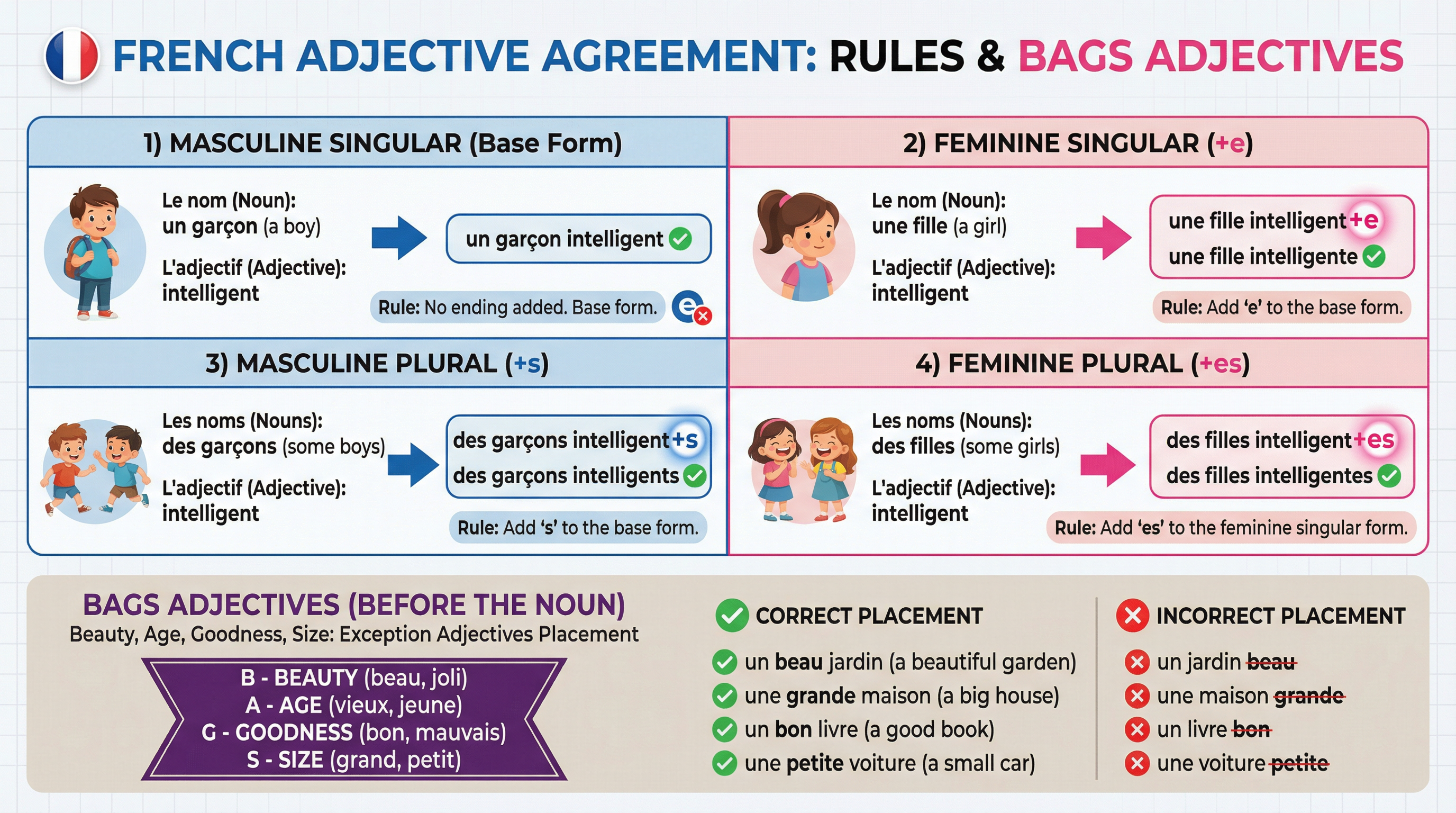
Remember the general rule: add '-e' for feminine and '-s' for plural. For feminine plural, add '-es'. Be aware of irregular adjectives (e.g., beau -> belle, nouveau -> nouvelle, vieux -> vieille).
Listen and Learn: The Description Podcast
Reinforce your learning with our dedicated podcast episode. Our expert tutor walks you through the key concepts, provides examples, and shares examiner insights to help you secure every mark available.
{{asset:describing_people_places_and_events_podcast.mp3