AQA · A-Level · Geography
Course version: 7037 · Version from Sept 2018
The role of NGOs in monitoring threats and enhancing protection of…
Full specification wording
Antarctica as a global common: The role of NGOs in monitoring threats and enhancing protection of Antarctica.
Non-Governmental Organisations (NGOs) are vital for safeguarding Antarctica by monitoring threats and lobbying for enhanced protection.
Checked against the AQA 7037 specification (opens in a new tab) on .
- Point 4 of 4
- 2 key terms
Study notes
From the checked teaching notes for this specification point.
The idea
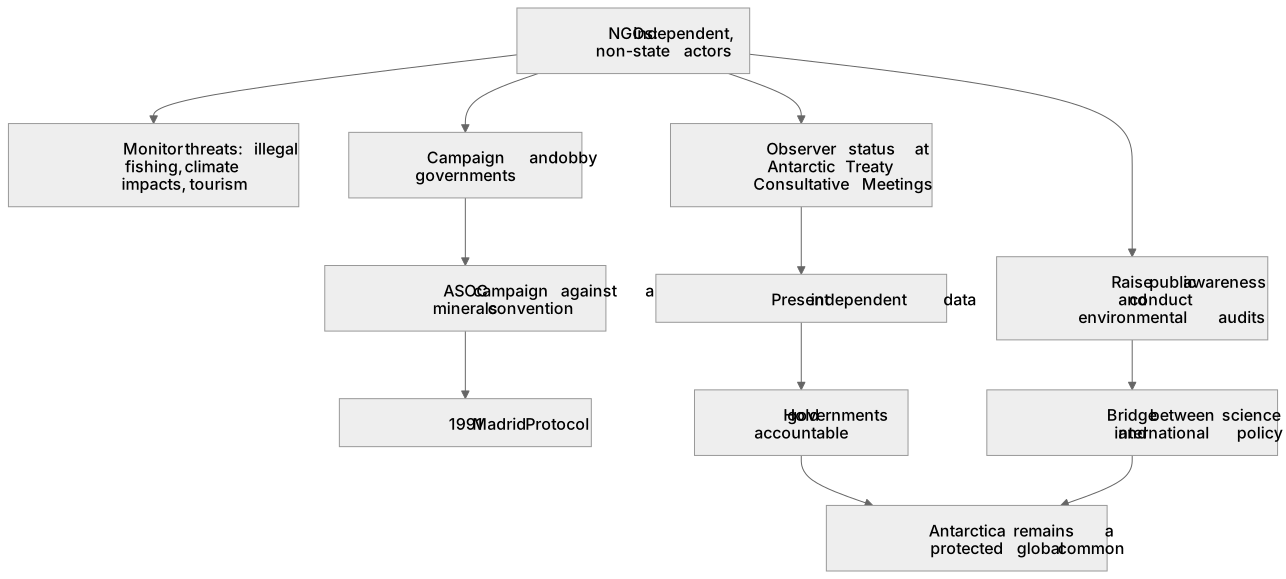
Non-Governmental Organisations (NGOs) are vital for safeguarding Antarctica by monitoring threats and lobbying for enhanced protection. The Antarctic and Southern Ocean Coalition (ASOC) successfully campaigned against a minerals convention, leading to the 1991 Madrid Protocol. Today, ASOC monitors the Antarctic Treaty System, scrutinising illegal fishing, climate impacts, and tourism. While NGOs lack voting power, they hold observer status at Antarctic Treaty Consultative Meetings. This allows them to present independent data and hold governments accountable. By raising public awareness and conducting environmental audits, NGOs bridge the gap between science and international policy, ensuring the continent remains a protected global common.
What earns the marks
- Identifies specific NGOs, such as the Antarctic and Southern Ocean Coalition (ASOC), and their historical role in securing the 1991 Madrid Protocol.
- Explains how NGOs monitor contemporary threats to Antarctica, including unregulated tourism, overfishing, and climate change.
- Evaluates the influence of NGOs at Antarctic Treaty Consultative Meetings (ATCMs) through their observer status and provision of independent scientific expertise.
- Discusses the role of NGOs in enhancing protection by mobilising global public opinion and applying diplomatic pressure on national governments.
Common mistakes and how to put them right
Confusing NGOs with intergovernmental organisations (IGOs) like the UN or UNEP.
Put it right: Clearly distinguish NGOs as independent, non-state actors, unlike IGOs which are formed by member states.
Stating that NGOs have the power to make laws or enforce regulations in Antarctica.
Put it right: Explain that NGOs can only lobby, monitor, and advise; they rely on Antarctic Treaty member states to enact and enforce actual regulations.
Discussing general environmental NGO work without specific reference to Antarctica.
Put it right: Use Antarctica-specific examples, such as ASOC's campaign for a Southern Ocean whale sanctuary or monitoring of krill fisheries.
Exam tips
- Use ASOC as your primary case study for an NGO, as it acts as an umbrella group for over 30 different environmental organisations focused specifically on Antarctica.
- When discussing how NGOs 'enhance protection', explicitly link their monitoring activities to the subsequent policy changes made by treaty nations.
- Contrast the agility and public-facing nature of NGOs with the slow, consensus-based decision-making of the Antarctic Treaty System to show critical evaluation.
Try the lesson
The start of the Antarctica as a global common: The role of NGOs in monitoring threats and enhancing protection of Antarctica. lesson, made from checked teaching notes for this specification point.
Have a go first
Which of the following best describes a primary role of Non-Governmental Organisations (NGOs) such as the Antarctic and Southern Ocean Coalition (ASOC) in Antarctica?
Listen
Non-Governmental Organisations (NGOs) are vital for safeguarding Antarctica by monitoring threats and lobbying for enhanced protection. The Antarctic and Southern Ocean Coalition (ASOC) successfully campaigned against a minerals convention, leading to the 1991 Madrid Protocol. Today, ASOC monitors the Antarctic Treaty System, scrutinising illegal fishing, climate impacts, and tourism. While NGOs lack voting power, they hold observer status at Antarctic Treaty Consultative Meetings. This allows them to present independent data and hold governments accountable. By raising public awareness and conducting environmental audits, NGOs bridge the gap between science and international policy, ensuring the continent remains a protected global common. A strong answer earns marks for these points. Identifies specific NGOs, such as the Antarctic and Southern Ocean Coalition (ASOC), and their historical role in securing the 1991 Madrid Protocol. Explains how NGOs monitor contemporary threats to Antarctica, including unregulated tourism, overfishing, and climate change. Evaluates the influence of NGOs at Antarctic Treaty Consultative Meetings (ATCMs) through their observer status and provision of independent scientific expertise. Discusses the role of NGOs in enhancing protection by mobilising global public opinion and applying diplomatic pressure on national governments. A common slip: Confusing NGOs with intergovernmental organisations (IGOs) like the UN or UNEP. Instead, Clearly distinguish NGOs as independent, non-state actors, unlike IGOs which are formed by member states. Exam tip: Use ASOC as your primary case study for an NGO, as it acts as an umbrella group for over 30 different environmental organisations focused specifically on Antarctica.
See it
Key words
Say what each word means before you turn the card.
Non-state actors
Try answering aloud or in your head before turning the card.
Environmental advocacy
Try answering aloud or in your head before turning the card.
See every definition
- Non-state actors
- Independent organisations, such as NGOs, that are not formed by member states, unlike intergovernmental organisations.
- Environmental advocacy
- Campaigning and lobbying for enhanced protection of the environment, as when NGOs successfully campaigned against a minerals convention.
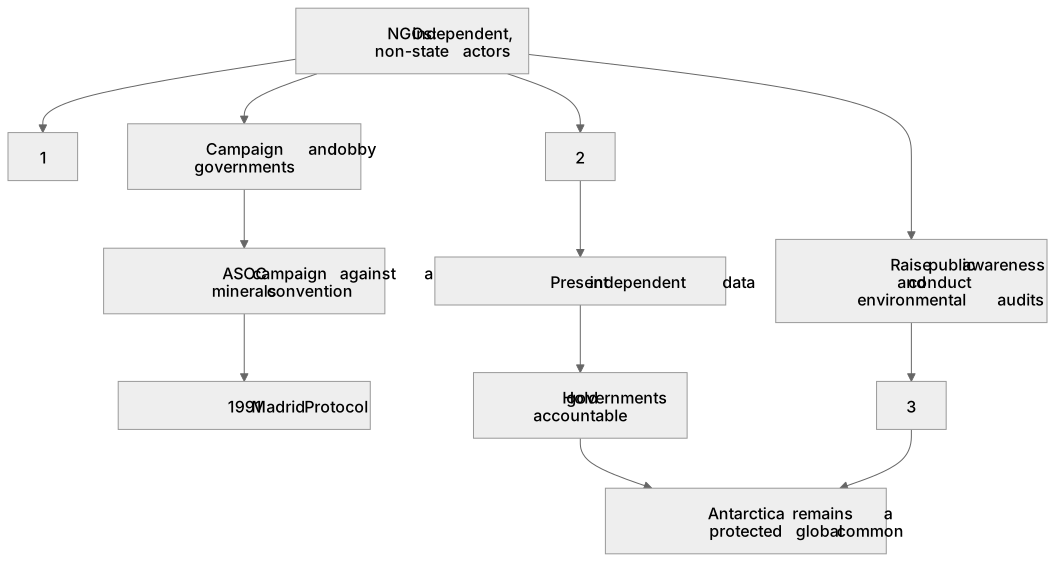
Label the diagram
Some boxes have lost their names. Pick the right name for each number.
1Box 1
2Box 2
3Box 3
There is more to this lesson
The full lesson goes on to check your understanding and help you earn the marks. Create a free account to carry on, with your progress saved.
A week of Premium from your first lesson · Then the free plan continues · No card, no charge
Test your understanding of Antarctica as a global common: The role of NGOs in monitoring threats and enhancing protection of Antarctica.
Active recall beats re-reading. Take an instant quiz now to test what you’ve learned and lock it into long-term memory.
A week of Premium from your first lesson · Then the free plan continues · No card, no charge