AQA · A-Level · Geography
Course version: 7037 · Version from Sept 2018
The concept of the biome. The global distribution of major terrestrial…
Full specification wording
Biomes: The concept of the biome. The global distribution of major terrestrial biomes.
A biome is a large-scale, global ecosystem characterised by specific climatic conditions and distinct climax vegetation communities.
Checked against the AQA 7037 specification (opens in a new tab) on .
Study notes
From the checked teaching notes for this specification point.
The idea
A biome is a large-scale, global ecosystem characterised by specific climatic conditions and distinct climax vegetation communities. The global distribution of major terrestrial biomes, such as tropical rainforests, savannahs, temperate deciduous forests, and tundra, is primarily dictated by latitude, which influences insolation, temperature, and precipitation patterns. For instance, tropical rainforests are concentrated near the equator where low pressure systems provide abundant, year-round rainfall and high temperatures. Conversely, deserts typically align with the descending dry air of the Hadley cells around 30 degrees north and south. Secondary factors like altitude and continentality also modify these broad latitudinal bands.
What earns the marks
- Define a biome accurately as a large-scale ecosystem characterised by its dominant vegetation and climate.
- Describe the global distribution of at least three major terrestrial biomes using specific latitudinal references.
- Explain the role of global atmospheric circulation, such as the Hadley, Ferrel, and Polar cells, in determining biome distribution.
- Account for anomalies in latitudinal distribution by referencing local factors such as ocean currents, continentality, and altitude.
Common mistakes and how to put them right
Using the terms 'biome' and 'ecosystem' interchangeably.
Put it right: Define a biome as a macro-scale classification of similar ecosystems across the globe, whereas an ecosystem can be of any size.
Describing biome distribution using vague geographical terms like 'hot places'.
Put it right: Use precise geographical terminology, such as specific latitudes, tropics, or global atmospheric circulation cells.
Ignoring the influence of precipitation and focusing solely on temperature.
Put it right: Emphasise that both temperature and precipitation are the primary climatic determinants of terrestrial biomes.
Exam tips
- Memorise a global map of major terrestrial biomes and be prepared to describe their distribution using specific lines of latitude.
- When explaining distribution, always link the location of the biome back to the climatic factors that allow its dominant vegetation to thrive.
- Be ready to discuss how the boundaries of these biomes might shift under future climate change scenarios.
Try the lesson
The start of the Biomes: The concept of the biome. The global distribution of major terrestrial biomes. lesson, made from checked teaching notes for this specification point.
Have a go first
Which of the following best defines a terrestrial biome?
Listen
A biome is a large-scale, global ecosystem characterised by specific climatic conditions and distinct climax vegetation communities. The global distribution of major terrestrial biomes, such as tropical rainforests, savannahs, temperate deciduous forests, and tundra, is primarily dictated by latitude, which influences insolation, temperature, and precipitation patterns. For instance, tropical rainforests are concentrated near the equator where low pressure systems provide abundant, year-round rainfall and high temperatures. Conversely, deserts typically align with the descending dry air of the Hadley cells around 30 degrees north and south. Secondary factors like altitude and continentality also modify these broad latitudinal bands. A strong answer earns marks for these points. Define a biome accurately as a large-scale ecosystem characterised by its dominant vegetation and climate. Describe the global distribution of at least three major terrestrial biomes using specific latitudinal references. Explain the role of global atmospheric circulation, such as the Hadley, Ferrel, and Polar cells, in determining biome distribution. Account for anomalies in latitudinal distribution by referencing local factors such as ocean currents, continentality, and altitude. A common slip: Using the terms 'biome' and 'ecosystem' interchangeably. Instead, Define a biome as a macro-scale classification of similar ecosystems across the globe, whereas an ecosystem can be of any size. Exam tip: Memorise a global map of major terrestrial biomes and be prepared to describe their distribution using specific lines of latitude.
See it
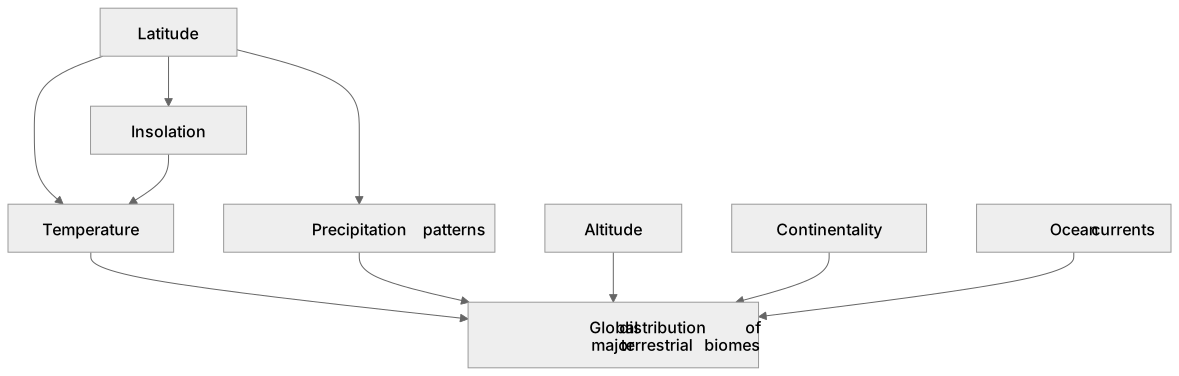
Label the diagram
Some boxes have lost their names. Pick the right name for each number.
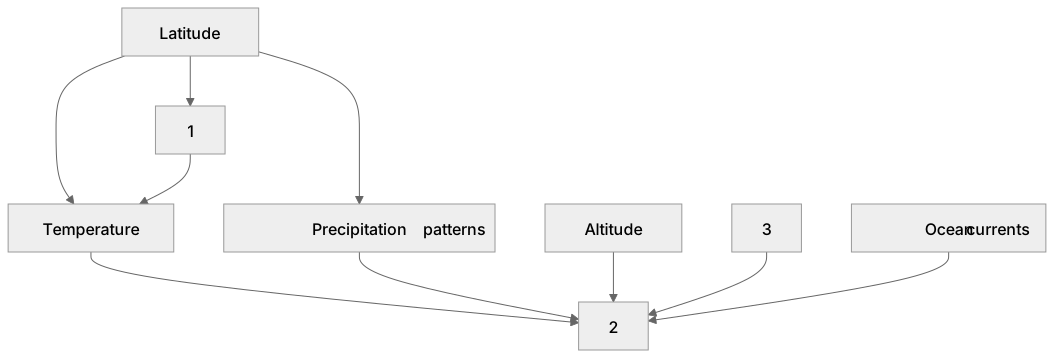
1Box 1
2Box 2
3Box 3
There is more to this lesson
The full lesson goes on to check your understanding and help you earn the marks. Create a free account to carry on, with your progress saved.
A week of Premium from your first lesson · Then the free plan continues · No card, no charge
Test your understanding of Biomes: The concept of the biome. The global distribution of major terrestrial biomes.
Active recall beats re-reading. Take an instant quiz now to test what you’ve learned and lock it into long-term memory.
A week of Premium from your first lesson · Then the free plan continues · No card, no charge