AQA · A-Level · Geography
Course version: 7037 · Version from Sept 2018
Strategies to increase energy supply (oil and gas exploration, nuclear…
Full specification wording
Energy security: Strategies to increase energy supply (oil and gas exploration, nuclear power and development of renewable sources).
To secure energy supplies, nations employ diverse strategies to boost domestic production.
Checked against the AQA 7037 specification (opens in a new tab) on .
- Point 5 of 7
- 4 key terms
Study notes
From the checked teaching notes for this specification point.
The idea
To secure energy supplies, nations employ diverse strategies to boost domestic production. Oil and gas exploration increasingly targets unconventional reserves, such as deep-water drilling in the Gulf of Mexico or hydraulic fracturing for shale gas, despite significant environmental concerns. Nuclear power offers a high-yield, low-carbon alternative to fossil fuels, exemplified by the UK's Hinkley Point C, though it faces challenges regarding high capital costs and radioactive waste disposal. Concurrently, the development of renewable sources, including wind, solar, and hydroelectric power, provides sustainable, long-term energy security. For instance, offshore wind farms in the North Sea capitalise on favourable geography to significantly increase the national energy mix while mitigating climate change impacts.
What earns the marks
- Explain how technological advancements enable oil and gas exploration in previously inaccessible or unconventional environments.
- Evaluate the role of nuclear power in providing continuous baseload electricity with low greenhouse gas emissions.
- Assess the geographical factors that determine the viability of specific renewable energy developments, such as wind or solar power.
- Compare the economic costs and environmental impacts of expanding fossil fuel extraction versus investing in renewable infrastructure.
Common mistakes and how to put them right
Confusing renewable energy with low-carbon energy.
Put it right: Specify that nuclear power is low-carbon but non-renewable, whereas solar and wind are both.
Assuming oil and gas exploration only occurs in traditional onshore fields.
Put it right: Acknowledge that modern exploration heavily involves unconventional sources like shale gas and deep-water reserves.
Stating that renewable energy provides a constant, uninterrupted supply.
Put it right: Discuss the intermittency of renewables like wind and solar, and the need for energy storage or baseload power.
Exam tips
- Use specific, named examples of energy projects (e.g., Hinkley Point C, Hornsea Wind Farm) to support your evaluation of supply strategies.
- When assessing nuclear power, balance the benefits of high energy density and low emissions against the risks and costs of waste management.
- Link strategies to increase supply directly to the concept of energy security and reducing reliance on imported fuels.
Try the lesson
The start of the Energy security: Strategies to increase energy supply (oil and gas exploration, nuclear power and development of renewable sources). lesson, made from checked teaching notes for this specification point.
Have a go first
Which of the following describes a strategy to increase a country's domestic energy supply through fossil fuel exploration?
Listen
To secure energy supplies, nations employ diverse strategies to boost domestic production. Oil and gas exploration increasingly targets unconventional reserves, such as deep-water drilling in the Gulf of Mexico or hydraulic fracturing for shale gas, despite significant environmental concerns. Nuclear power offers a high-yield, low-carbon alternative to fossil fuels, exemplified by the UK's Hinkley Point C, though it faces challenges regarding high capital costs and radioactive waste disposal. Concurrently, the development of renewable sources, including wind, solar, and hydroelectric power, provides sustainable, long-term energy security. For instance, offshore wind farms in the North Sea capitalise on favourable geography to significantly increase the national energy mix while mitigating climate change impacts. A strong answer earns marks for these points. Explain how technological advancements enable oil and gas exploration in previously inaccessible or unconventional environments. Evaluate the role of nuclear power in providing continuous baseload electricity with low greenhouse gas emissions. Assess the geographical factors that determine the viability of specific renewable energy developments, such as wind or solar power. Compare the economic costs and environmental impacts of expanding fossil fuel extraction versus investing in renewable infrastructure. A common slip: Confusing renewable energy with low-carbon energy. Instead, Specify that nuclear power is low-carbon but non-renewable, whereas solar and wind are both. Exam tip: Use specific, named examples of energy projects (e.g., Hinkley Point C, Hornsea Wind Farm) to support your evaluation of supply strategies.
See it

Key words
Say what each word means before you turn the card.
Energy security
Try answering aloud or in your head before turning the card.
Nuclear power
Try answering aloud or in your head before turning the card.
Renewable sources
Try answering aloud or in your head before turning the card.
Technological innovation
Try answering aloud or in your head before turning the card.
See every definition
- Energy security
- Achieved by employing diverse strategies to boost domestic production and by reducing reliance on imported fuels.
- Nuclear power
- A high-yield, low-carbon alternative to fossil fuels that faces challenges regarding high capital costs and radioactive waste disposal.
- Renewable sources
- Wind, solar and hydroelectric power, whose development provides sustainable, long-term energy security.
- Technological innovation
- Technological advancements that enable oil and gas exploration in previously inaccessible or unconventional environments.
Label the diagram
Some boxes have lost their names. Pick the right name for each number.
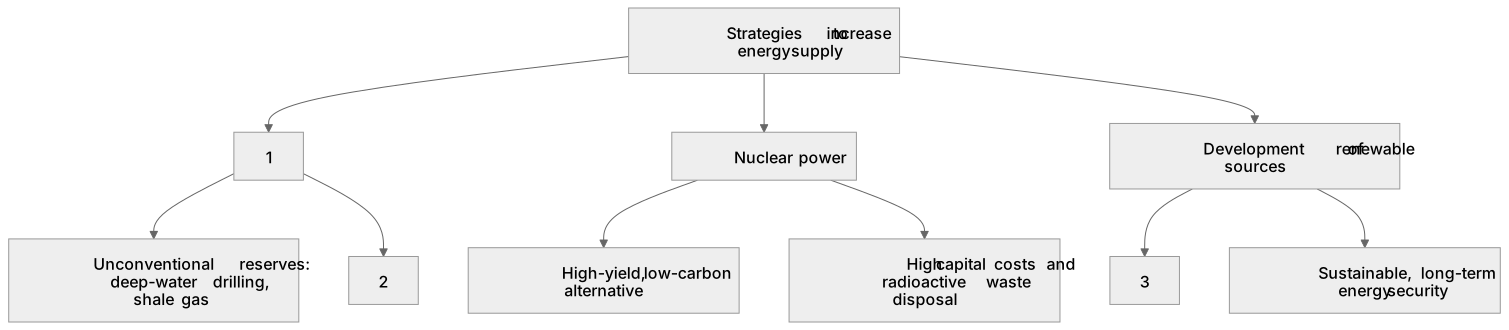
1Box 1
2Box 2
3Box 3
There is more to this lesson
The full lesson goes on to check your understanding and help you earn the marks. Create a free account to carry on, with your progress saved.
A week of Premium from your first lesson · Then the free plan continues · No card, no charge
Test your understanding of Energy security: Strategies to increase energy supply (oil and gas exploration, nuclear power and development of renewable sources).
Active recall beats re-reading. Take an instant quiz now to test what you’ve learned and lock it into long-term memory.
A week of Premium from your first lesson · Then the free plan continues · No card, no charge