AQA · A-Level · Geography
Course version: 7037 · Version from Sept 2018
Sustainability issues associated with energy production, trade and…
Full specification wording
Energy security: Sustainability issues associated with energy production, trade and consumption: acid rain, the enhanced greenhouse effect, nuclear waste and energy conservation.
The sustainability of energy involves evaluating the environmental and social impacts of its production, trade, and consumption.
Checked against the AQA 7037 specification (opens in a new tab) on .
- Point 7 of 7
- 4 key terms
Study notes
From the checked teaching notes for this specification point.
The idea
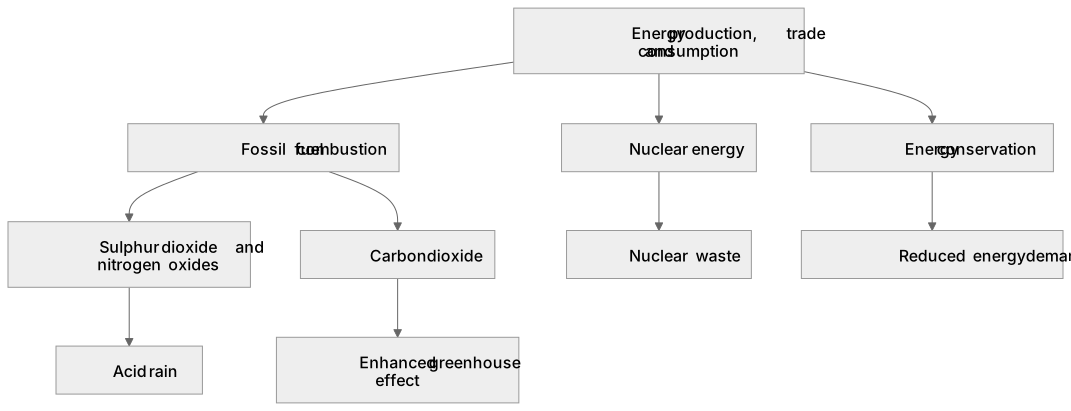
The sustainability of energy involves evaluating the environmental and social impacts of its production, trade, and consumption. Fossil fuel combustion releases sulphur dioxide and nitrogen oxides, leading to acid rain which damages aquatic ecosystems and forests. It also emits carbon dioxide, driving the enhanced greenhouse effect and global climate change. While nuclear energy provides low-carbon power, the production and consumption cycle generates highly radioactive nuclear waste, requiring secure, long-term geological disposal. To mitigate these impacts, energy conservation strategies are essential. These include improving domestic insulation, adopting smart grid technologies, and reducing international trade distances for energy resources to lower transit emissions.
What earns the marks
- Explain how fossil fuel combustion during energy production and consumption releases greenhouse gases, exacerbating the enhanced greenhouse effect.
- Describe the formation of acid rain from sulphur dioxide and nitrogen oxides emitted during energy generation, and its transboundary impacts.
- Evaluate the sustainability of nuclear power, contrasting its low carbon footprint with the long-term hazards and storage challenges of nuclear waste.
- Assess the role of energy conservation, such as improved efficiency in transport and homes, in reducing overall energy demand and consumption.
Common mistakes and how to put them right
Confusing the enhanced greenhouse effect with ozone depletion.
Put it right by specifying that greenhouse gases trap infrared radiation rather than destroying the ozone layer.
Assuming nuclear energy is entirely renewable.
Put it right by stating it relies on finite uranium resources and produces hazardous nuclear waste.
Overlooking the impacts of energy trade.
Put it right by including the emissions and environmental risks associated with transporting fuels globally, such as oil spills.
Exam tips
- Use specific examples of energy conservation schemes, such as smart meters or home insulation grants, to support your evaluation.
- When discussing acid rain, explicitly link the emissions from energy production in one country to the environmental impacts in another to highlight transboundary issues.
- Balance your arguments regarding nuclear power by weighing the benefits of low greenhouse gas emissions against the long-term risks of nuclear waste disposal.
Try the lesson
The start of the Energy security: Sustainability issues associated with energy production, trade and consumption: acid rain, the enhanced greenhouse effect, nuclear waste and energy conservation. lesson, made from checked teaching notes for this specification point.
Have a go first
Which of the following emissions from fossil fuel combustion is a primary contributor to the formation of acid rain?
Listen
The sustainability of energy involves evaluating the environmental and social impacts of its production, trade, and consumption. Fossil fuel combustion releases sulphur dioxide and nitrogen oxides, leading to acid rain which damages aquatic ecosystems and forests. It also emits carbon dioxide, driving the enhanced greenhouse effect and global climate change. While nuclear energy provides low-carbon power, the production and consumption cycle generates highly radioactive nuclear waste, requiring secure, long-term geological disposal. To mitigate these impacts, energy conservation strategies are essential. These include improving domestic insulation, adopting smart grid technologies, and reducing international trade distances for energy resources to lower transit emissions. A strong answer earns marks for these points. Explain how fossil fuel combustion during energy production and consumption releases greenhouse gases, exacerbating the enhanced greenhouse effect. Describe the formation of acid rain from sulphur dioxide and nitrogen oxides emitted during energy generation, and its transboundary impacts. Evaluate the sustainability of nuclear power, contrasting its low carbon footprint with the long-term hazards and storage challenges of nuclear waste. Assess the role of energy conservation, such as improved efficiency in transport and homes, in reducing overall energy demand and consumption. A common slip: Confusing the enhanced greenhouse effect with ozone depletion. Instead, specifying that greenhouse gases trap infrared radiation rather than destroying the ozone layer. Exam tip: Use specific examples of energy conservation schemes, such as smart meters or home insulation grants, to support your evaluation.
See it
Key words
Say what each word means before you turn the card.
Acid rain
Try answering aloud or in your head before turning the card.
Enhanced greenhouse effect
Try answering aloud or in your head before turning the card.
Nuclear waste
Try answering aloud or in your head before turning the card.
Energy conservation
Try answering aloud or in your head before turning the card.
See every definition
- Acid rain
- Formed from sulphur dioxide and nitrogen oxides emitted during energy generation, it damages aquatic ecosystems and forests and has transboundary impacts.
- Enhanced greenhouse effect
- Driven by carbon dioxide emitted from fossil fuel combustion, it traps infrared radiation and leads to global climate change.
- Nuclear waste
- Highly radioactive material generated by the production and consumption cycle of nuclear energy, requiring secure, long-term geological disposal.
- Energy conservation
- Strategies essential to mitigate impacts, including improving domestic insulation, adopting smart grid technologies and reducing international trade distances for energy resources.
Label the diagram
Some boxes have lost their names. Pick the right name for each number.
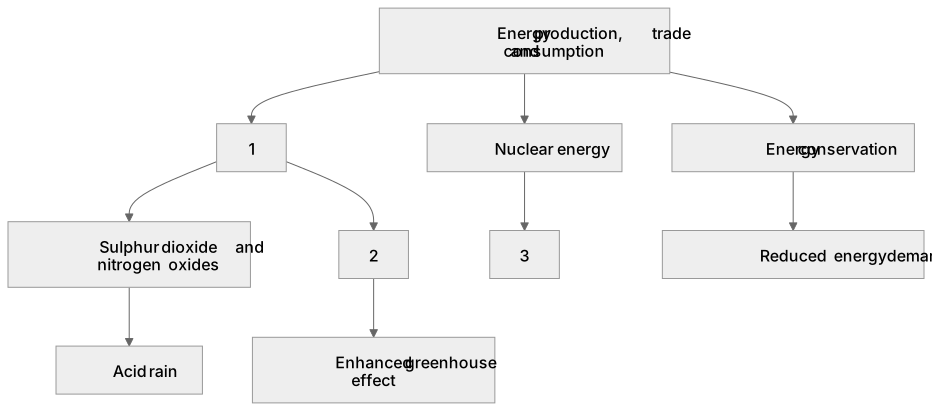
1Box 1
2Box 2
3Box 3
There is more to this lesson
The full lesson goes on to check your understanding and help you earn the marks. Create a free account to carry on, with your progress saved.
A week of Premium from your first lesson · Then the free plan continues · No card, no charge
Test your understanding of Energy security: Sustainability issues associated with energy production, trade and consumption: acid rain, the enhanced greenhouse effect, nuclear waste and energy conservation.
Active recall beats re-reading. Take an instant quiz now to test what you’ve learned and lock it into long-term memory.
A week of Premium from your first lesson · Then the free plan continues · No card, no charge