AQA · GCSE · Geography
Living with the physical environment
This crucial GCSE Geography topic explores the dramatic natural forces that shape our world and threaten human populations. Understanding tectonic hazards, extreme weather, and climate change is essential for grasping the fragile balance between humanity and the physical environment.
- 6 min read
- 3 worked examples
- 5 practice questions
- 6 key terms
Study Notes
Overview
The 'Living with the Physical Environment' unit is a cornerstone of GCSE Geography. It challenges candidates to understand the dynamic, often destructive natural processes that shape our planet and the complex ways human populations interact with them. Examiners expect you to demonstrate a deep understanding of physical processes—from the slow drift of tectonic plates to the rapid intensification of tropical storms—and the varied human responses to these hazards. A key discriminator in exams is the ability to link physical causes to human impacts, and to evaluate how factors like a country's wealth influence its vulnerability and capacity to respond. Furthermore, you must engage with the defining issue of our time: climate change, understanding its causes, wide-ranging effects, and the strategies used to mitigate and adapt to it. You will be assessed across AO1 (knowledge), AO2 (understanding), and AO3 (application and evaluation), so precise terminology and specific named examples are vital.
Tectonic Hazards
Plate Tectonics Theory
Key Concept: The Earth's crust is divided into large tectonic plates that float on the semi-molten mantle. Movement is driven by convection currents.
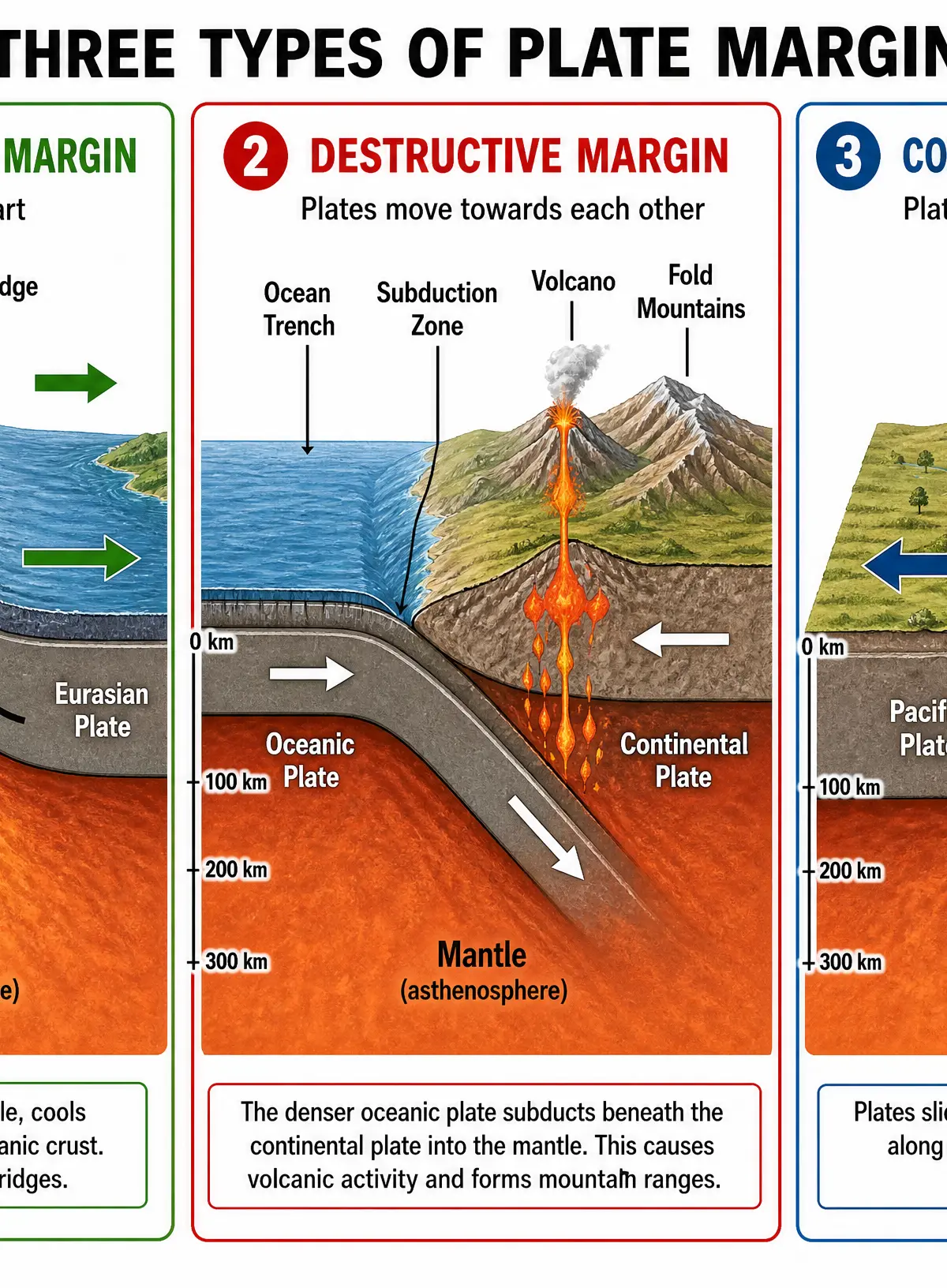
Plate Margins:
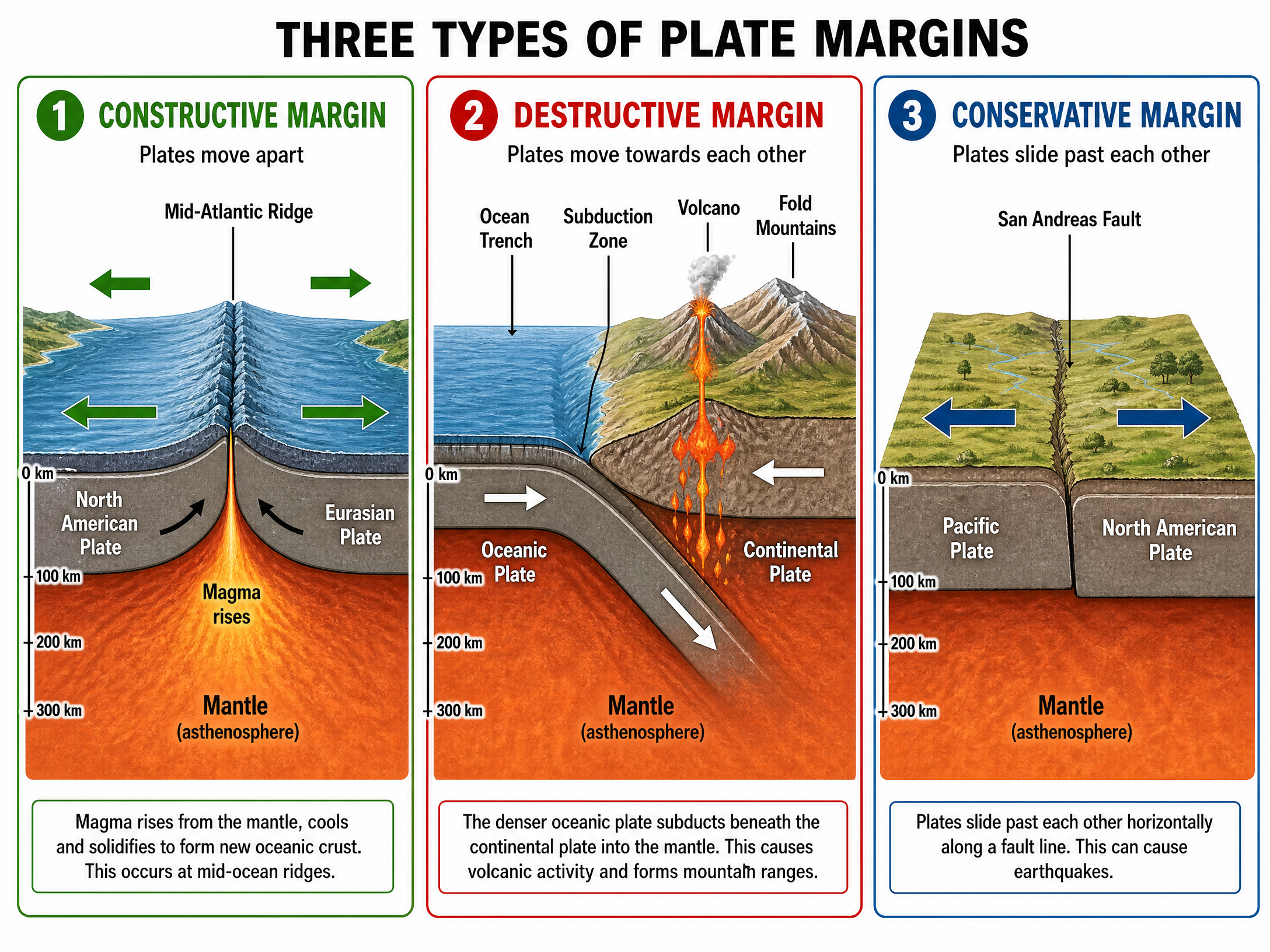
- Constructive: Plates move apart. Magma rises to form new crust (e.g., Mid-Atlantic Ridge). Volcanoes are typically less explosive.
- Destructive: Denser oceanic plate subducts under a continental plate, melting in the mantle. Creates deep ocean trenches, fold mountains, and explosive volcanoes (e.g., the Andes, Pacific Ring of Fire). The friction causes powerful earthquakes.
- Conservative: Plates slide past each other horizontally. Friction builds immense stress, released as powerful earthquakes (e.g., San Andreas Fault). No volcanoes occur here.
Effects and Responses: Haiti (2010) vs Japan (2011)
Examiners frequently ask candidates to compare the effects and responses of tectonic hazards in countries with contrasting levels of wealth (LIC/NEE vs HIC).
Haiti Earthquake (2010) - LIC/NEE:
- Magnitude: 7.0
- Primary Effects: 220,000+ deaths, 1.5 million homeless, 250,000 homes collapsed.
- Secondary Effects: Cholera outbreak killed thousands; blocked roads hindered aid.
- Immediate Responses: International search and rescue, emergency field hospitals.
- Long-term Responses: Slow rebuilding due to corruption and lack of funds; heavy reliance on NGOs.
Tōhoku Earthquake, Japan (2011) - HIC:
- Magnitude: 9.0 (much more powerful)
- Primary Effects: ~16,000 deaths (mostly from the secondary tsunami), widespread infrastructure damage.
- Secondary Effects: Fukushima nuclear disaster, massive economic disruption.
- Immediate Responses: Rapid military deployment, excellent early warning systems saved lives.
- Long-term Responses: Rebuilding higher sea walls, reviewing national energy policy.
Why it matters: This comparison demonstrates how wealth dictates vulnerability. Japan's strict building codes and preparation drastically reduced primary deaths compared to Haiti, despite experiencing a much stronger earthquake.
Weather Hazards: Tropical Storms
Formation and Structure
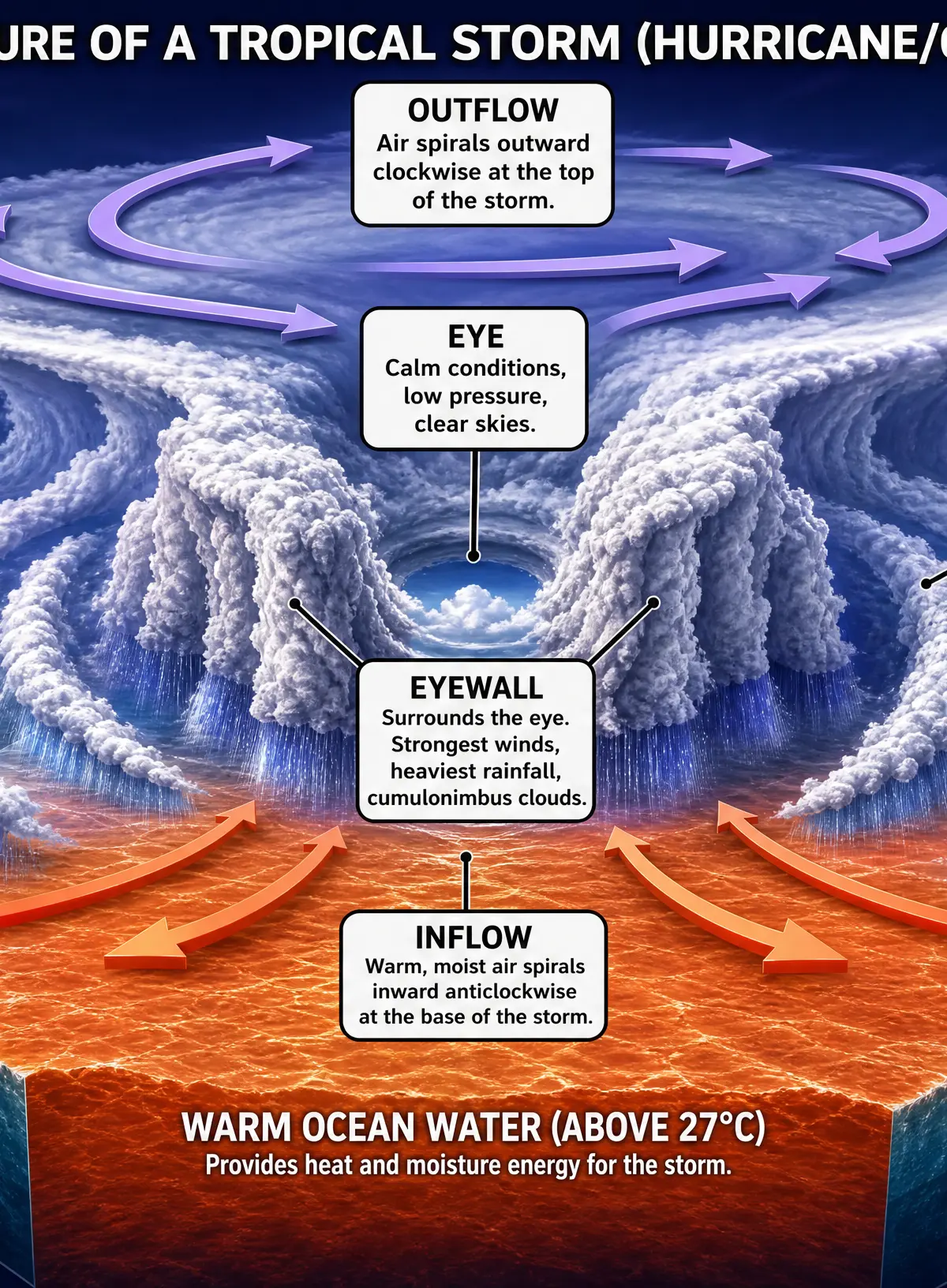
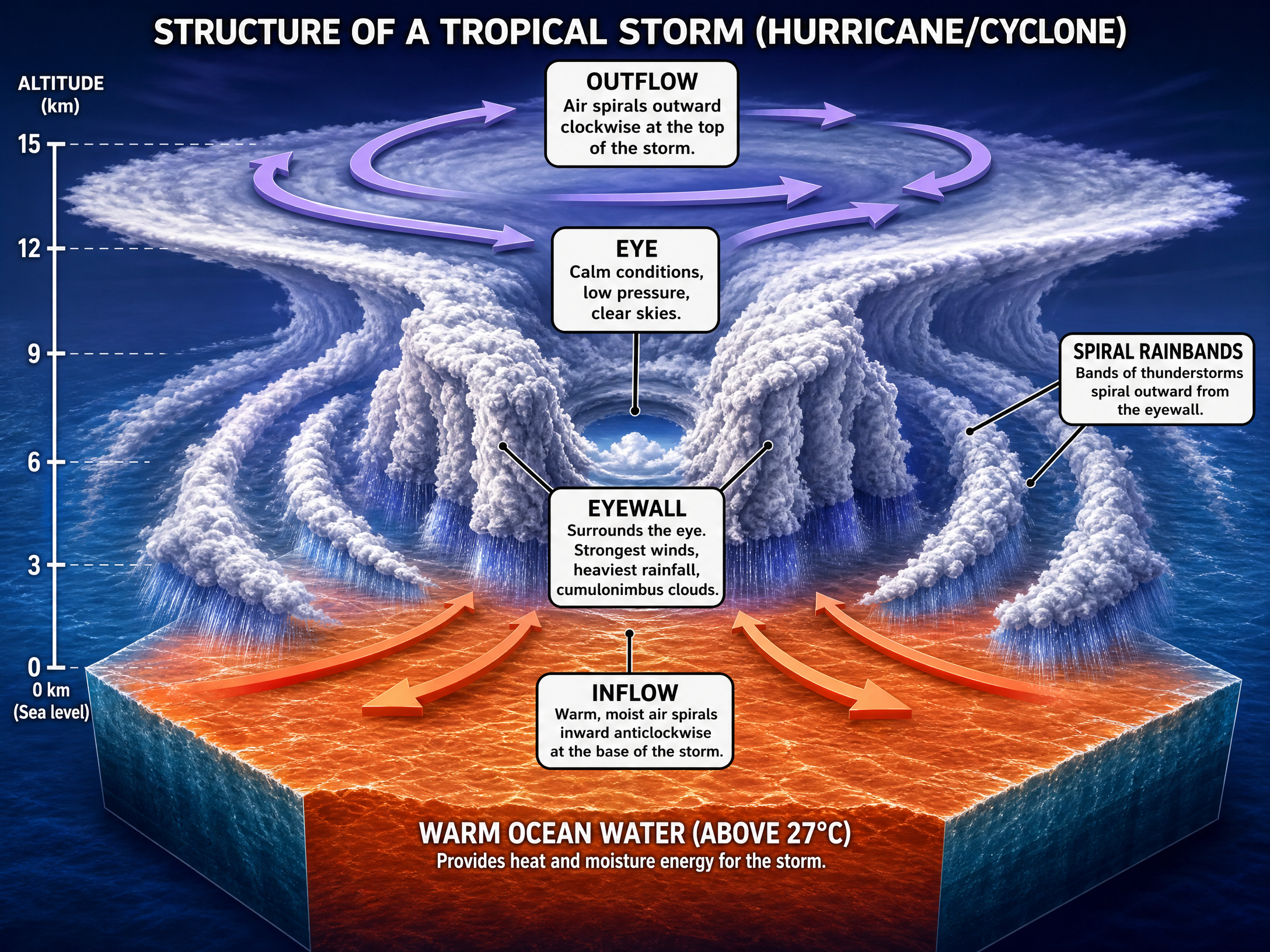
Conditions: Tropical storms require sea surface temperatures of at least 27°C and low wind shear. They form between 5° and 30° north and south of the equator.
Process: Warm, moist air rises rapidly, creating intense low pressure. The air cools, condenses, and forms towering cumulonimbus clouds, releasing latent heat which powers the storm. The Coriolis effect causes the system to spin.
Structure:
- Eye: Calm, clear, low pressure centre.
- Eyewall: Strongest winds and heaviest rainfall.
- Spiral Rainbands: Bands of thunderstorms radiating outward.
Typhoon Haiyan (2013)
What happened: Category 5 super typhoon struck the Philippines with winds exceeding 315 km/h and a massive 5-metre storm surge.
Primary Effects: Over 6,000 deaths, 4 million displaced, Tacloban city devastated.
Secondary Effects: Looting broke out, disease spread due to contaminated water, severe economic impact on fishing and agriculture.
Responses: Immediate international aid (UK pledged £50m); long-term 'Build Back Better' scheme to upgrade buildings and early warning systems.
Climate Change
Causes
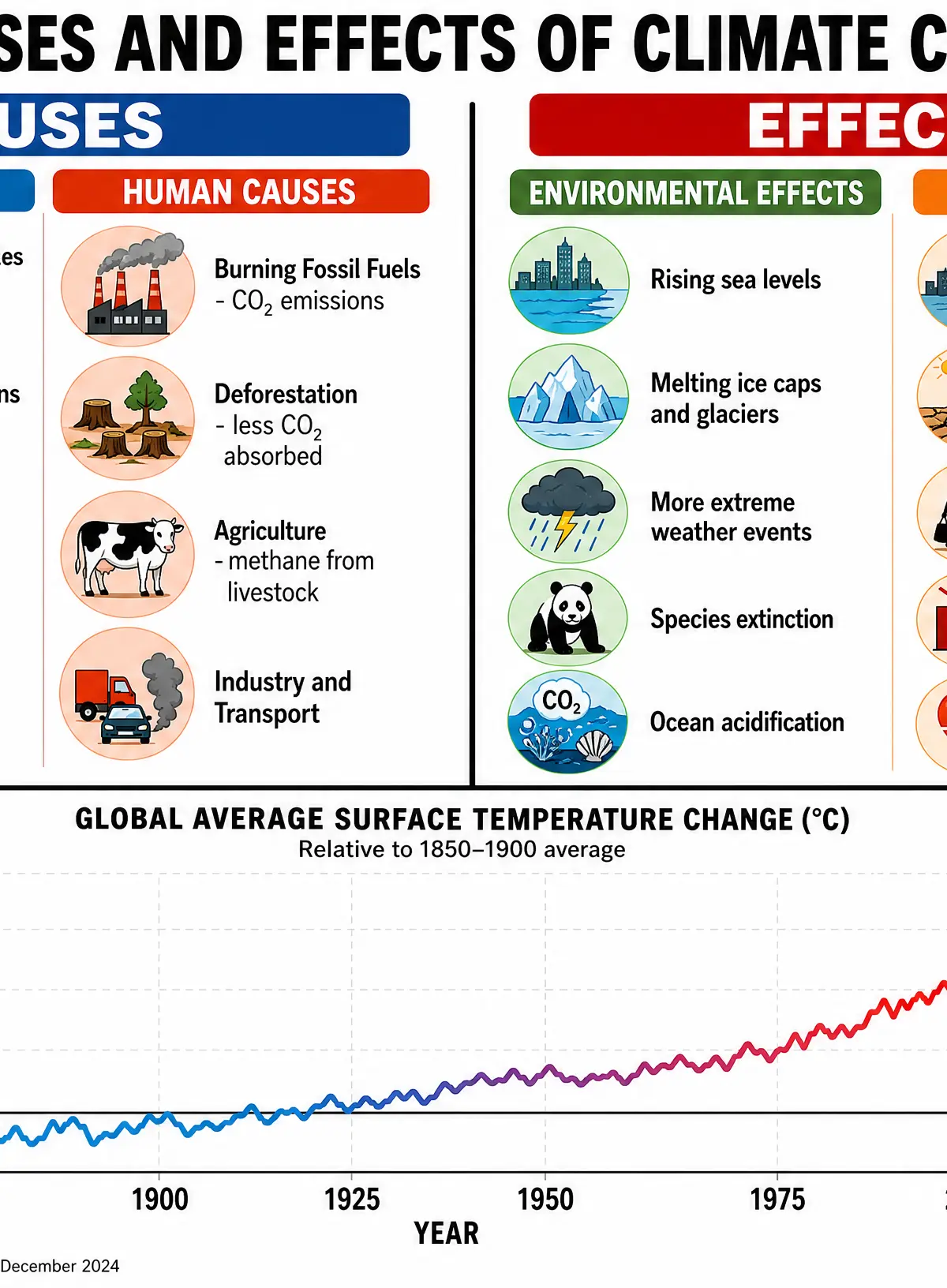
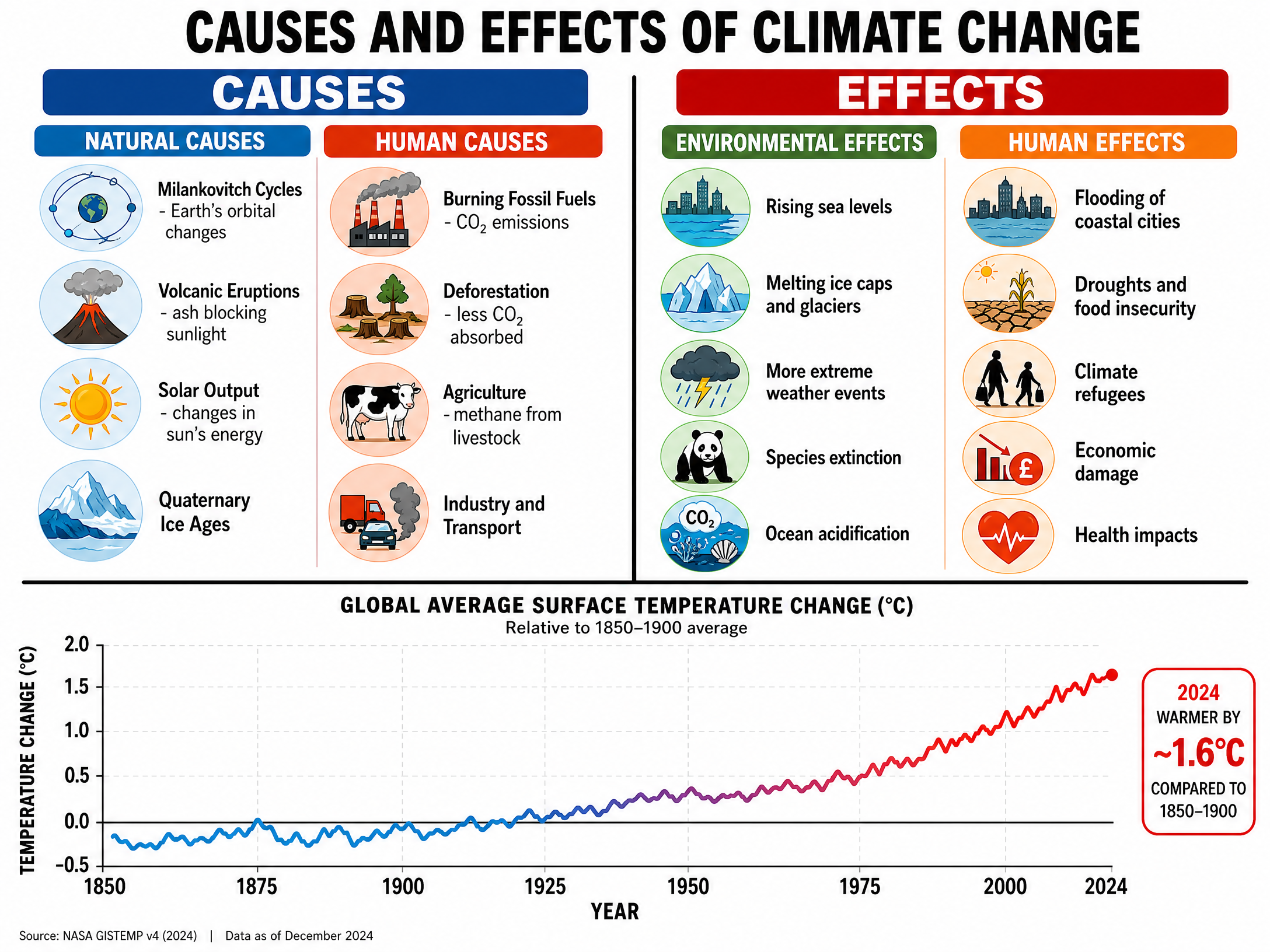
Natural: Milankovitch cycles (orbital changes), volcanic activity (ash blocking sunlight), solar output variations.
Human (Enhanced Greenhouse Effect): Burning fossil fuels (CO2), deforestation (reduced carbon sinks), agriculture (methane from cattle and rice paddies).
Managing Climate Change
Examiners strictly distinguish between mitigation and adaptation. Do not confuse them.
Mitigation (Tackling the cause):
- Alternative energy production (solar, wind)
- Carbon capture and storage
- Planting trees (afforestation)
- International agreements (e.g., Paris Agreement)
Adaptation (Responding to the effects):
- Agricultural adaptation (drought-resistant crops)
- Managing water supply (desalination, water meters)
- Reducing risk from rising sea levels (sea walls, Thames Barrier)
Audio Revision Resource
Listen to this 10-minute podcast covering the entire topic, including an examiner-style quiz at the end to test your recall.

Visual Resources
3 diagrams and illustrations
Interactive Diagrams
1 interactive diagram to visualise key concepts
Conceptual Flow Outline
Flowchart showing the formation of a tropical storm.
Worked Examples
3 worked examples — open one to explore the question and available guidance.
Practice Questions
Test your understanding — click to reveal model answers
Using a named example, evaluate the immediate and long-term responses to a tectonic hazard. (9 marks)
Hint: Choose either Haiti or Japan. Make sure you clearly separate immediate and long-term responses, and 'evaluate' how successful they were.
Explain how physical conditions cause tropical storms to form. (4 marks)
Hint: Focus on temperature, air movement, and the Earth's rotation.
Give two pieces of evidence that show climate change has taken place since the end of the Quaternary period. (2 marks)
Hint: Think about what scientists measure to prove the Earth is warming.
Explain the formation of a composite volcano at a destructive plate margin. (4 marks)
Hint: Describe the movement of the plates and what happens to the oceanic crust.
State one mitigation strategy and one adaptation strategy for managing climate change. (2 marks)
Hint: Mitigation tackles the cause; adaptation tackles the effects.