Pearson Edexcel · GCSE · Geography
Renewable and non-renewable energy resources can be developed
This topic is critical for understanding how we power our modern world and the environmental consequences of our choices. You will explore the shift from finite fossil fuels to sustainable renewables, and learn how different stakeholders view the future of global energy.
- 7 min read
- 3 worked examples
- 5 practice questions
- 6 key terms
Study Notes
Overview
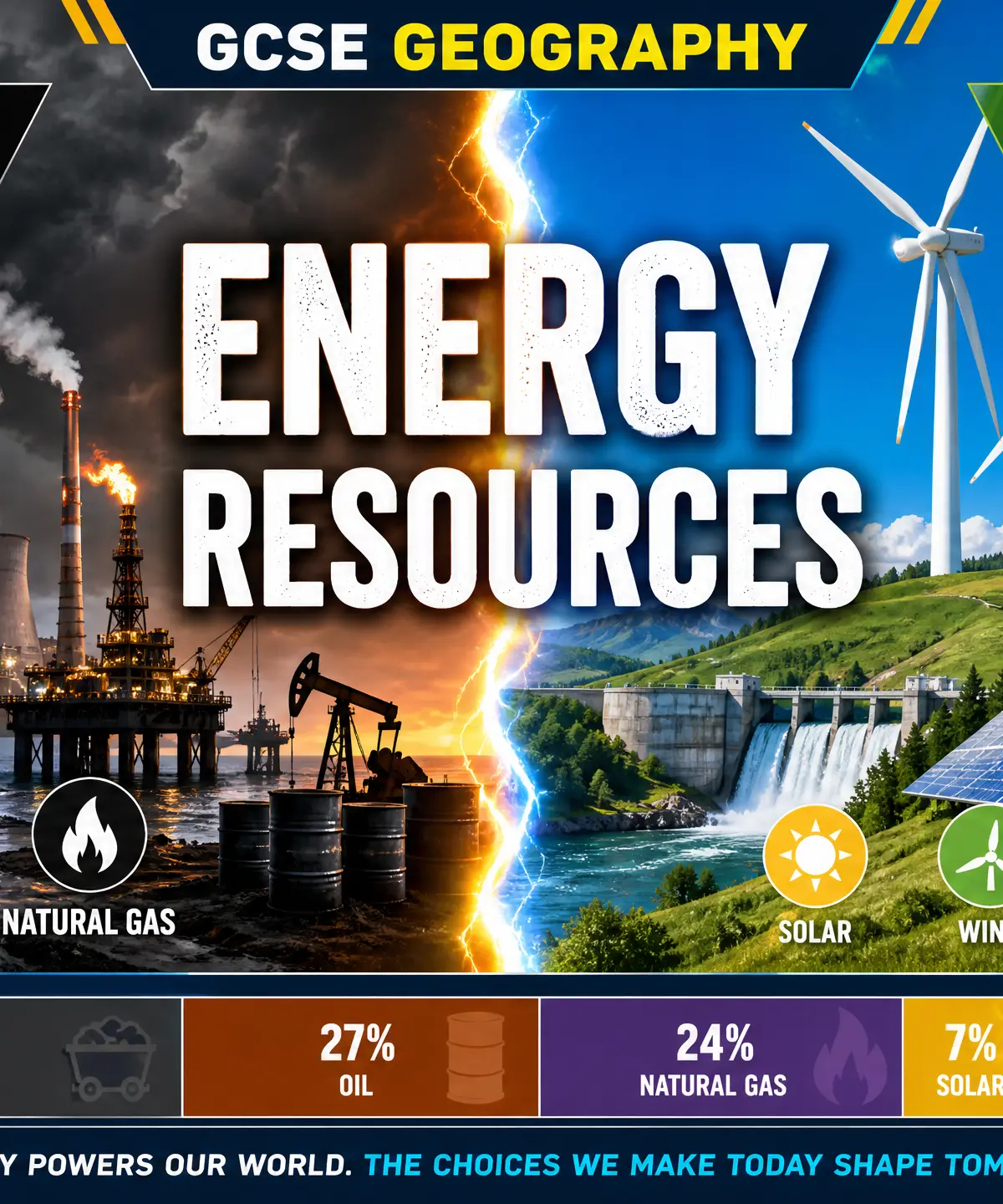
Energy is the lifeblood of modern society, driving economic growth, technological advancement, and rising living standards. However, the ways in which we generate this energy have profound implications for our planet. This topic covers the fundamental classification of energy resources into renewable (naturally replenished, such as wind and solar) and non-renewable (finite and depletable, such as coal, oil, and natural gas).
Examiners expect candidates to move beyond simple definitions. You must be able to evaluate the specific advantages and disadvantages of different energy sources, understand the concept of a country's energy mix, and explain the complex factors—population growth, wealth, and technology—that drive global energy demand. Furthermore, you will need to assess the varying attitudes of different stakeholders towards energy exploitation and apply your knowledge to specific case studies of sustainable energy management in both developed and emerging countries.
The Energy Mix and Global Demand
The UK's Changing Energy Mix
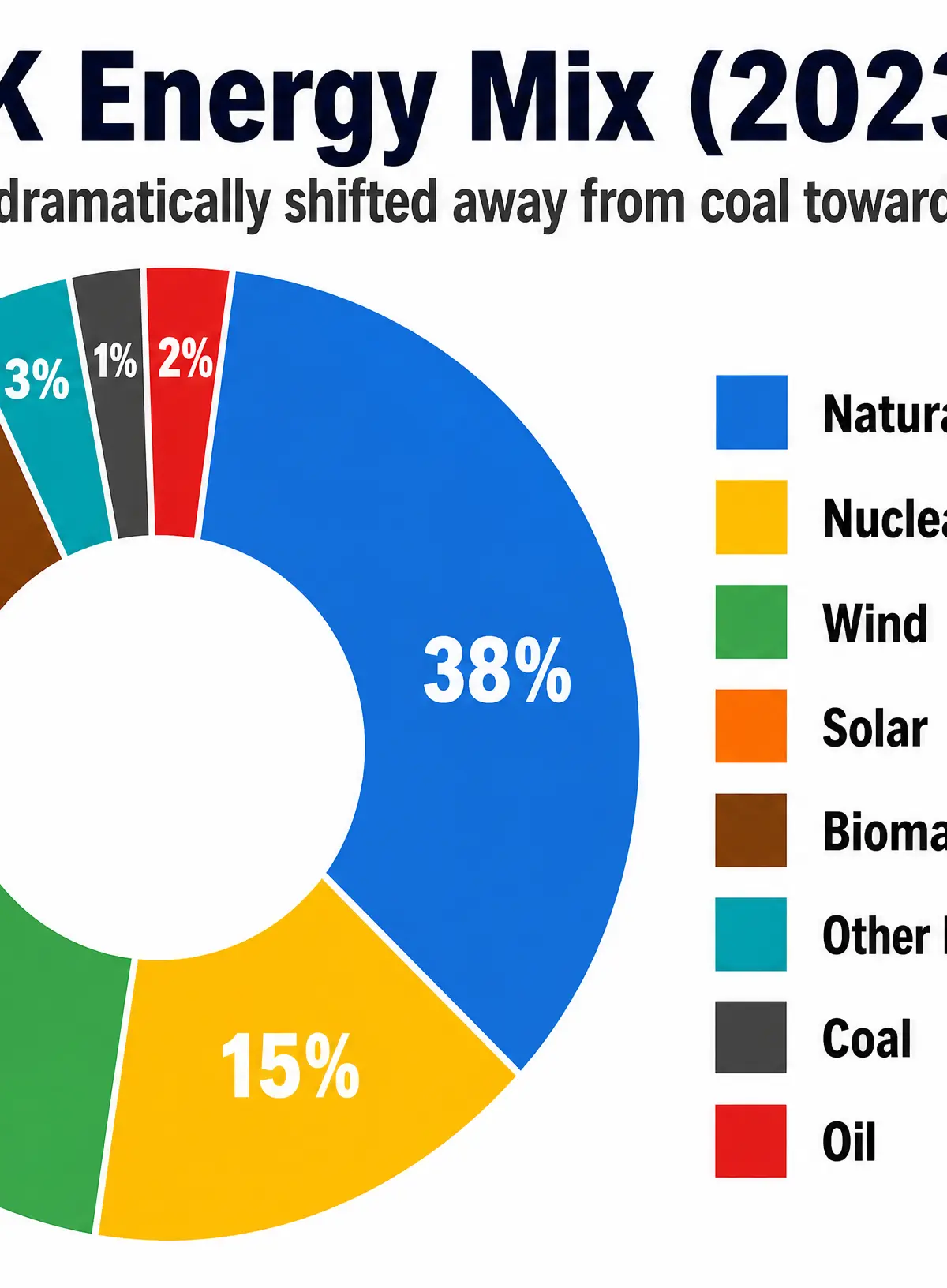
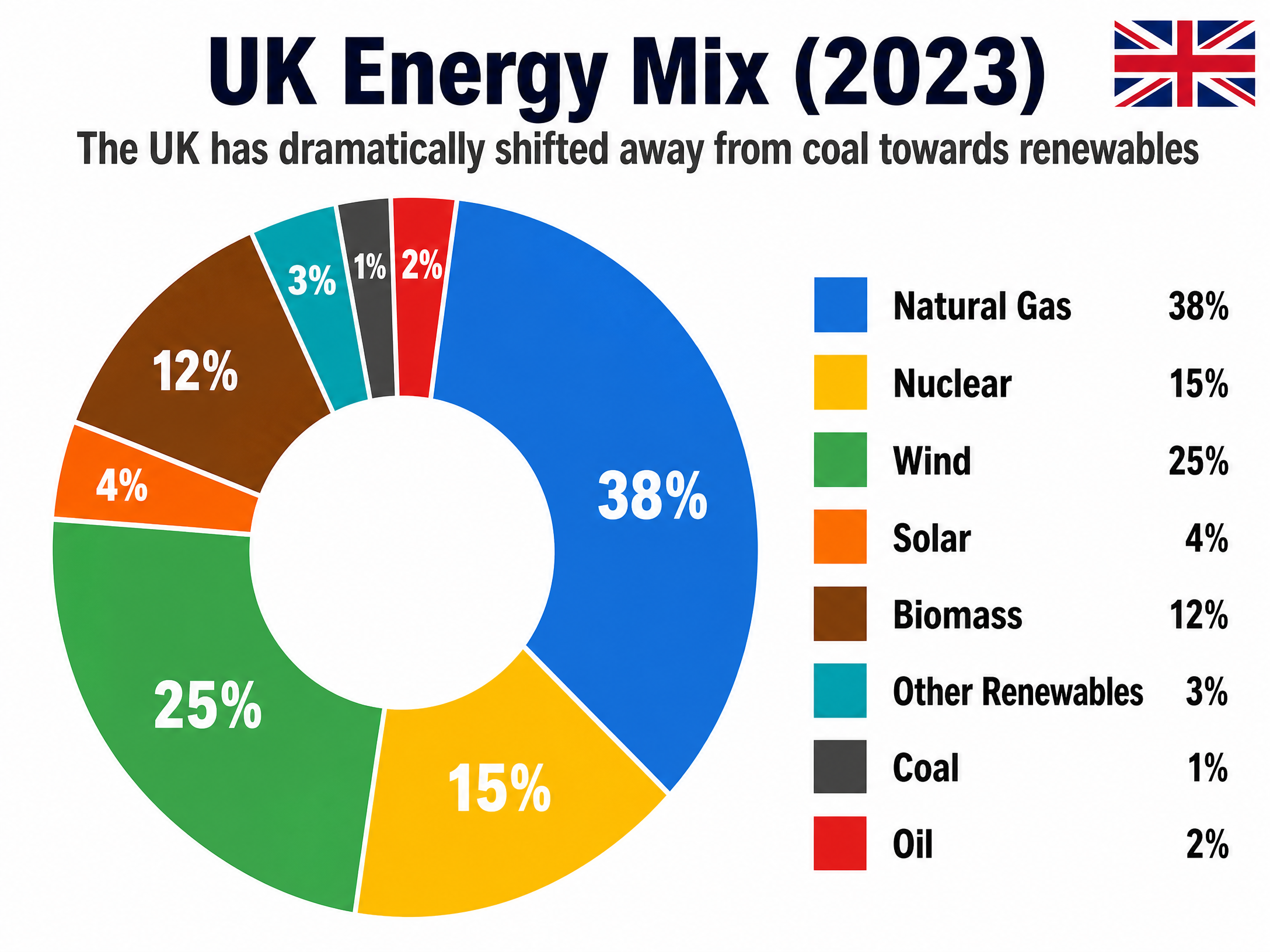
The energy mix refers to the proportion of different energy sources a country uses to meet its total energy demand. The UK's energy mix has undergone a dramatic transformation. In the 1970s, coal was the dominant fuel, generating over 70% of electricity. By 2023, this had plummeted to around 1%. Natural gas is now the primary source (approx. 38%), acting as a transition fuel, while renewables (particularly wind, at approx. 25%) have seen massive growth due to government subsidies and international climate commitments.
Drivers of Global Energy Demand
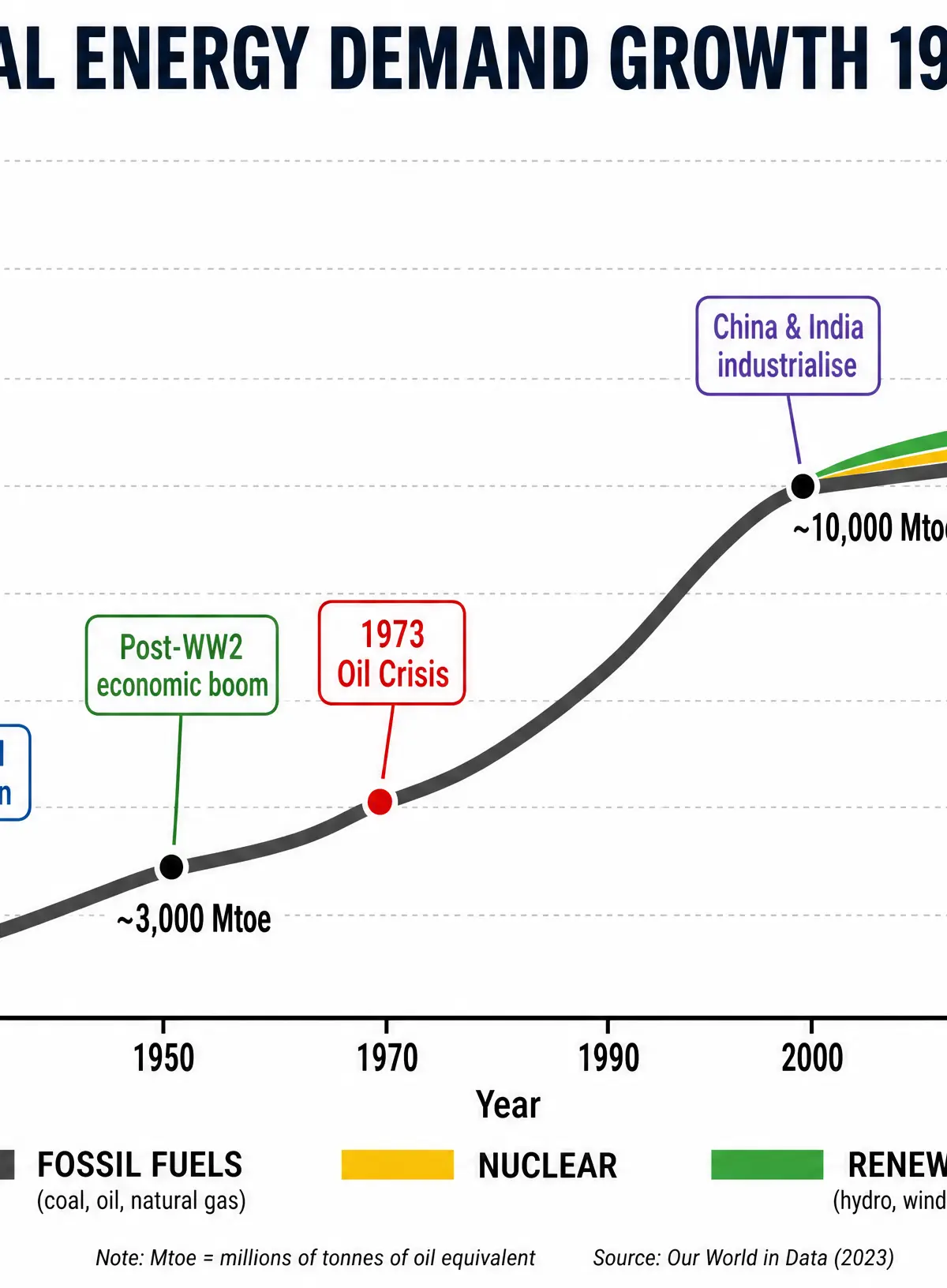
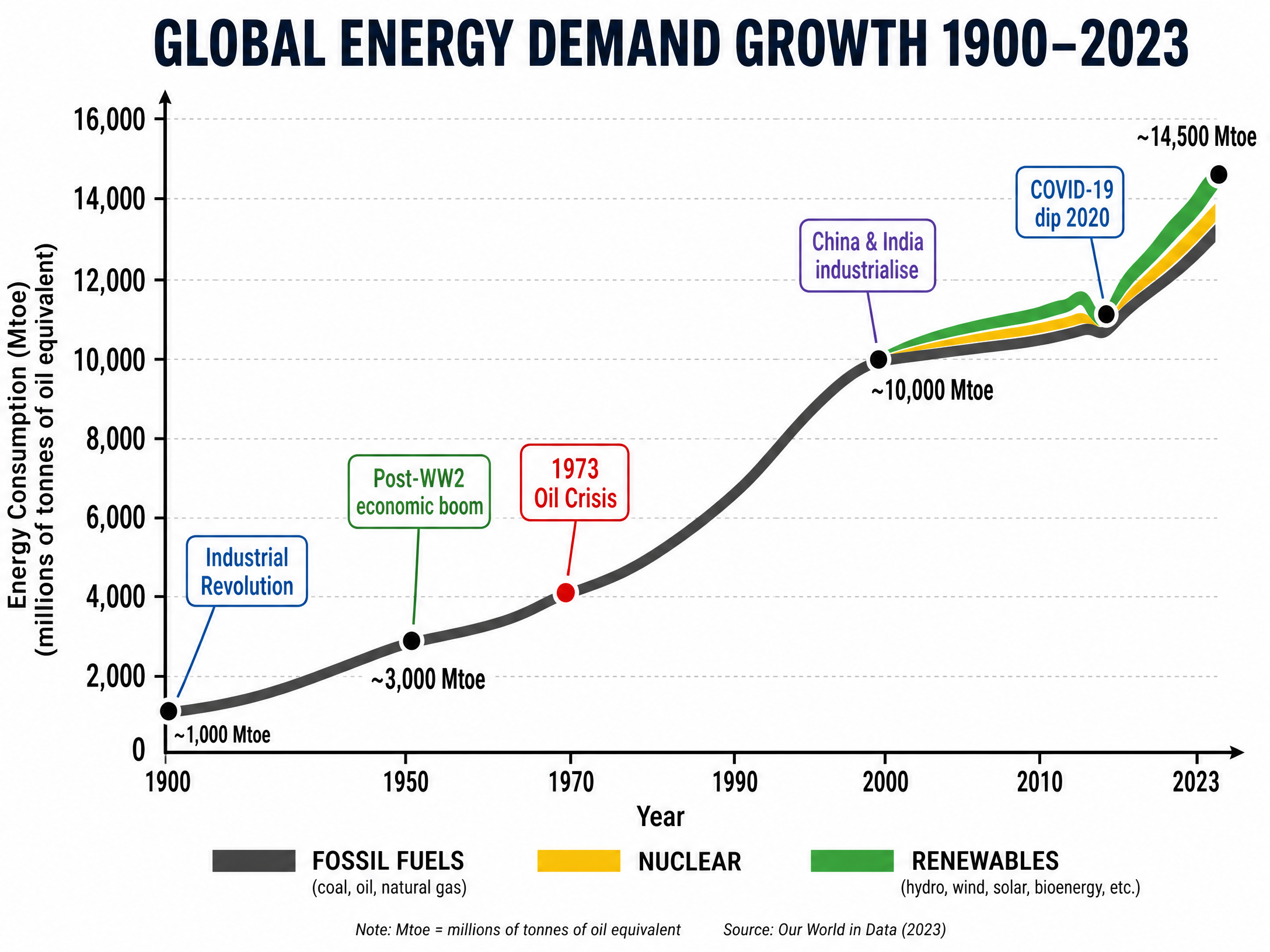
Global energy consumption has risen exponentially, from roughly 1,000 Mtoe (millions of tonnes of oil equivalent) in 1900 to over 14,500 Mtoe today. This fourteen-fold increase is driven by three primary factors:
- Population Growth: The global population has grown from 1.6 billion in 1900 to over 8 billion today, directly increasing the baseline need for heating, lighting, and food production.
- Increasing Wealth: As countries develop, living standards rise. This leads to increased car ownership, greater use of domestic appliances, and higher demand for manufactured goods, all of which require energy.
- Technological Development: While new technologies can improve energy efficiency, the proliferation of electronic devices and energy-intensive industries has historically driven demand upwards.
Evaluating Energy Resources
Non-Renewable Resources (e.g., Coal)
Advantages:
- Reliability: Provides a consistent 'baseload' of electricity, unaffected by weather conditions.
- Cost: Historically cheap to extract and process, with established infrastructure globally.
- Reserves: Large global reserves still exist, particularly in countries like the USA, China, and Australia.
Disadvantages:
- Environmental Impact: Burning coal releases large amounts of carbon dioxide (contributing to the greenhouse effect) and sulphur dioxide (causing acid rain).
- Finite Supply: As a fossil fuel, reserves will eventually be exhausted.
- Extraction Damage: Mining causes visual pollution, habitat destruction, and potential water contamination.
Renewable Resources (e.g., Wind Power)
Advantages:
- Sustainability: Wind is infinite and will never run out.
- Clean Energy: Produces no greenhouse gas emissions during operation.
- Running Costs: Once constructed, the fuel (wind) is entirely free.
Disadvantages:
- Intermittency: Turbines only generate electricity when the wind blows at suitable speeds, requiring backup power sources or large-scale battery storage.
- Visual and Noise Pollution: Often opposed by local communities due to aesthetic impacts and noise.
- Initial Costs: High capital costs for manufacturing and installation, particularly for offshore wind farms.
Stakeholders and Technology
The Role of Technology: Fracking
Hydraulic fracturing (fracking) involves injecting high-pressure fluid into shale rock to release trapped natural gas.
- Pros: It can increase domestic energy security (reducing reliance on imports) and provide a 'cleaner' fossil fuel compared to coal.
- Cons: Strongly opposed by environmentalists due to risks of groundwater contamination, minor seismic tremors, and the continued reliance on fossil fuels rather than transitioning to renewables.
Stakeholder Attitudes
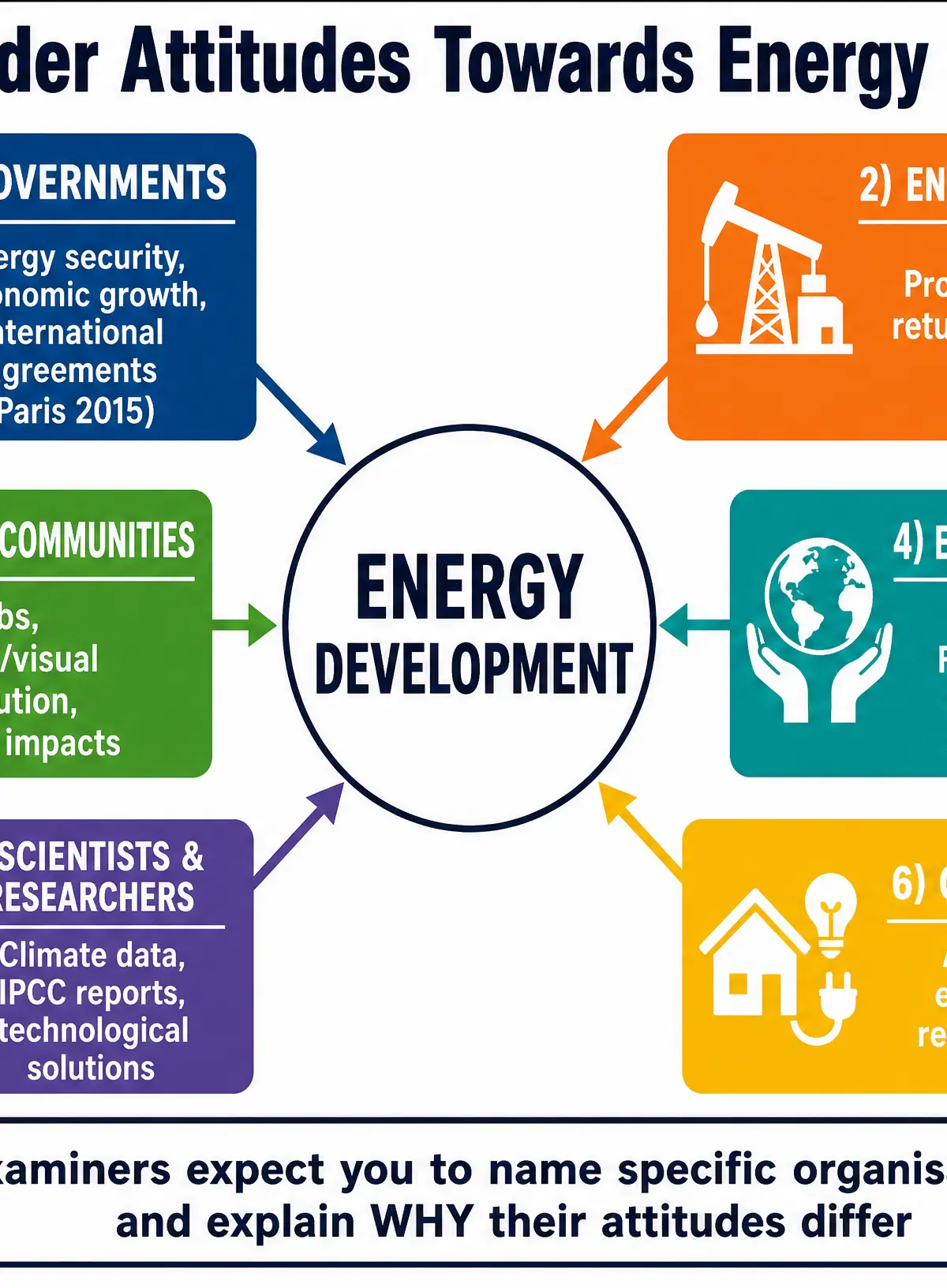
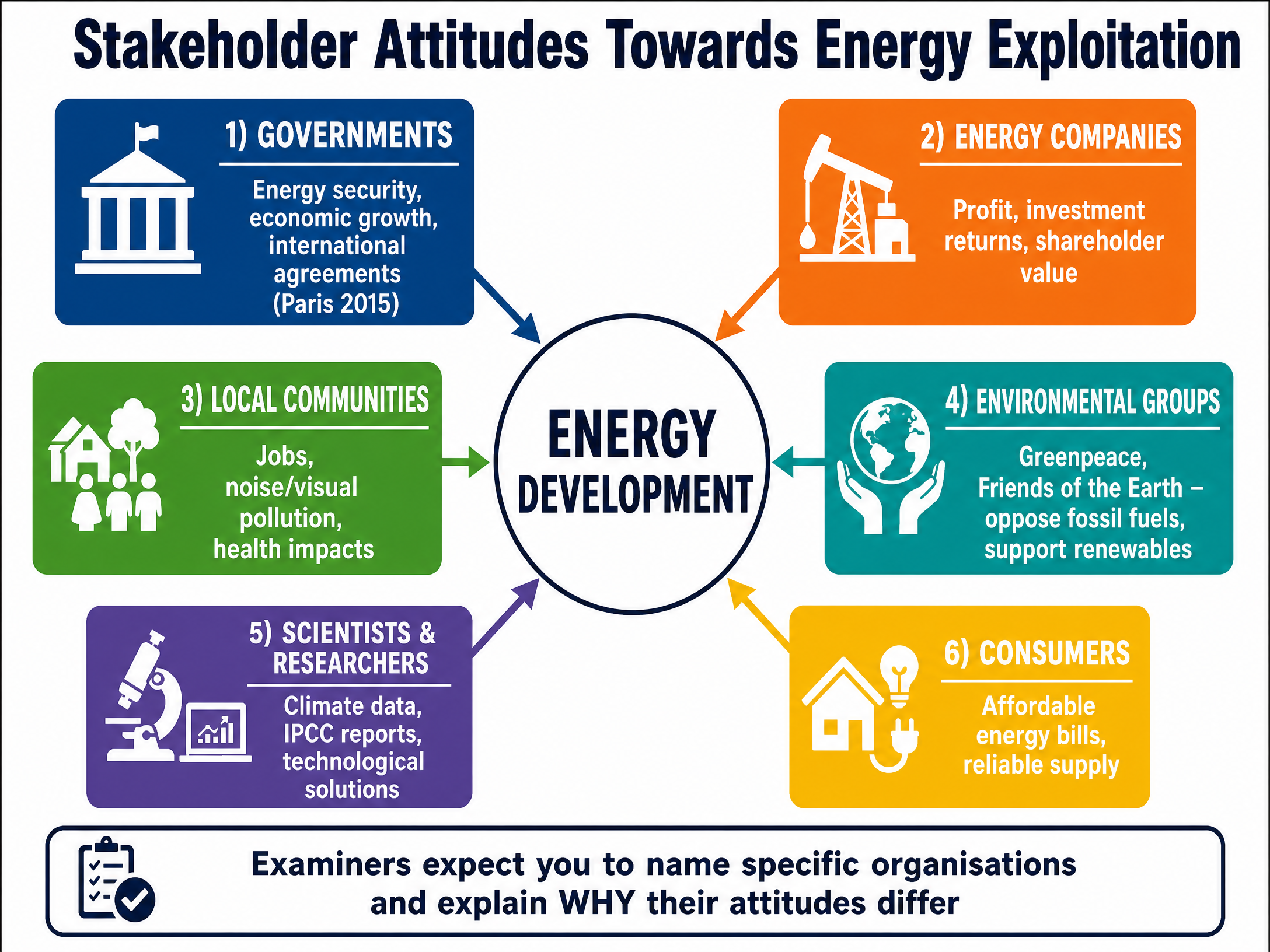
Different groups hold conflicting views on energy exploitation:
- Governments: Focus on energy security, economic growth, and meeting international agreements (e.g., the Paris Agreement).
- Energy Companies: Driven by profit and shareholder value, though increasingly investing in 'green' portfolios.
- Environmental Groups: (e.g., Greenpeace) Strongly oppose fossil fuel extraction and advocate for rapid transition to 100% renewables.
- Local Communities: May welcome job creation but often oppose developments due to noise, traffic, and environmental risks (the NIMBY - Not In My Back Yard - phenomenon).
Sustainable Energy Management Case Studies
Developed Country: Germany
Germany's Energiewende (Energy Transition) is a major policy shift towards sustainability. By 2023, renewables provided over 50% of electricity. The government heavily subsidised solar and wind power through feed-in tariffs, encouraging widespread adoption. Germany has also committed to phasing out nuclear power and ending coal use by 2038.
Emerging/Developing Country: Costa Rica
Costa Rica frequently generates over 99% of its electricity from renewable sources. It utilises its mountainous terrain and high rainfall for hydroelectric power (approx. 70% of the mix) and its volcanic geology for geothermal energy (approx. 15%). This demonstrates that strong government policy combined with favourable physical geography can achieve near-total sustainability, even without the vast wealth of developed nations.
Revision Podcast
Listen to this 6-minute audio summary of the entire topic, covering the key concepts, case studies, and exam tips.

Visual Resources
3 diagrams and illustrations
Interactive Diagrams
1 interactive diagram to visualise key concepts
Diagram could not be rendered
Approximate Global Energy Mix showing continued reliance on fossil fuels
Worked Examples
3 worked examples — open one to explore the question and available guidance.
Practice Questions
Test your understanding — click to reveal model answers
Describe the difference between renewable and non-renewable energy resources. (2 marks)
Hint: Provide a clear definition for both terms.
Explain two reasons why global energy demand has increased over the past 100 years. (4 marks)
Hint: Identify a factor, then explain *how* it leads to higher energy use.
For a named developed country, explain how it is managing its energy resources sustainably. (6 marks)
Hint: Name the country, identify specific policies or methods, and explain how they achieve sustainability.
Assess the role of technology in resolving energy shortages. (8 marks)
Hint: Discuss how technology helps (e.g., fracking, better renewables), but also the limitations or negative impacts of relying on tech.
State one advantage and one disadvantage of extracting natural gas. (2 marks)
Hint: Keep it brief. One clear pro, one clear con.