Pearson Edexcel · GCSE · Geography
There are differences between the water consumption patterns of developing countries and developed countries
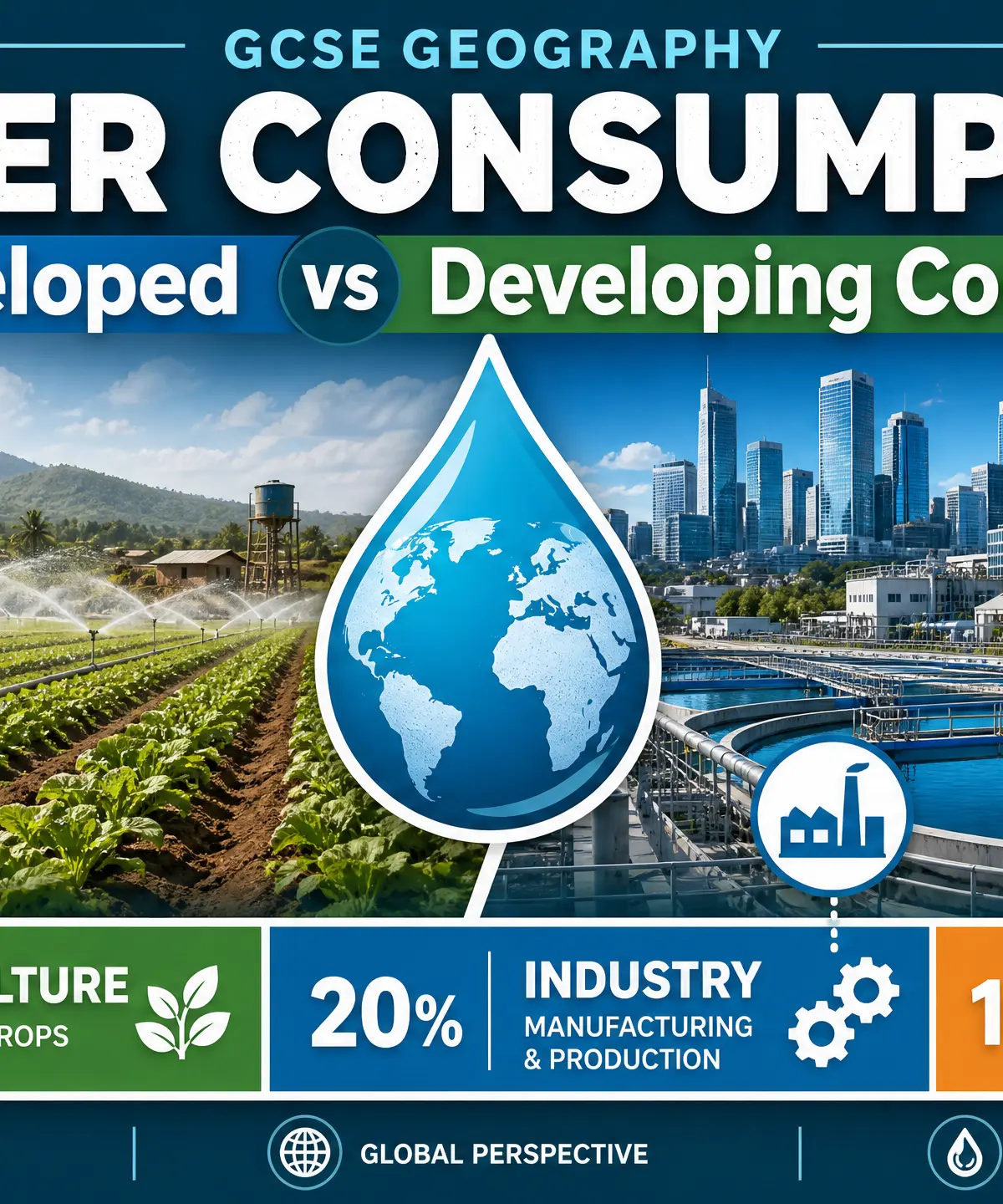
This study guide explores the dramatic differences in water consumption patterns between developed and developing countries. Understanding these variations is crucial for exams, as examiners frequently ask candidates to explain the complex socio-economic factors driving global water inequality.
- 4 min read
- 3 worked examples
- 5 practice questions
- 6 key terms
Study Notes
Overview
Water is essential for life, but how it is used varies dramatically across the globe. This topic examines the proportions of water used by agriculture, industry, and domestic sectors, comparing patterns in High Income Countries (HICs) with those in Low Income Countries (LICs) and Newly Emerging Economies (NEEs). Examiners expect candidates to not only describe these differences using specific data but also to explain the underlying economic, technological, and climatic reasons driving them. A strong grasp of these concepts is vital for answering 'explain' and 'evaluate' questions effectively.
Key Patterns & Sectors
Developing Countries (LICs/NEEs)
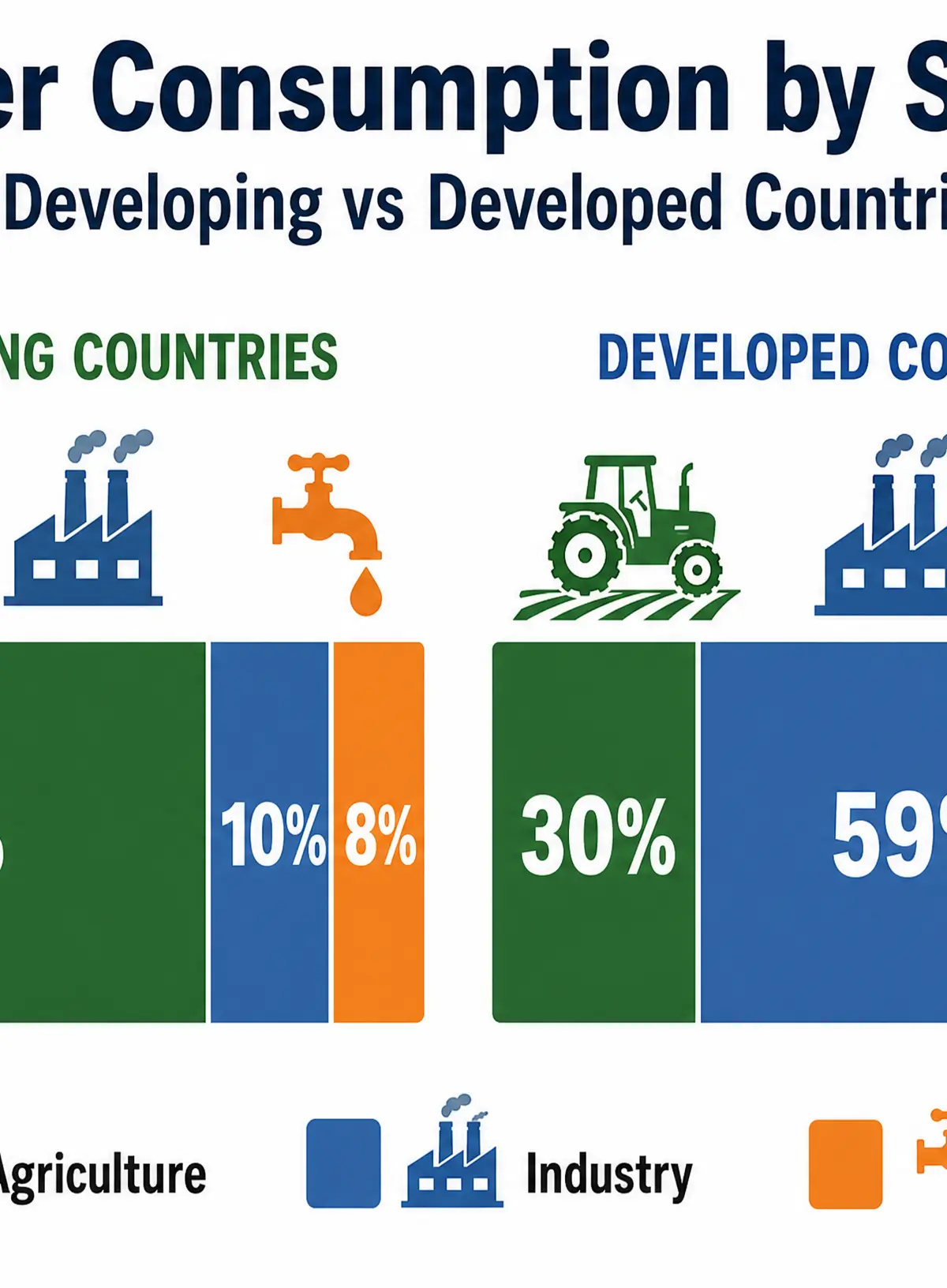
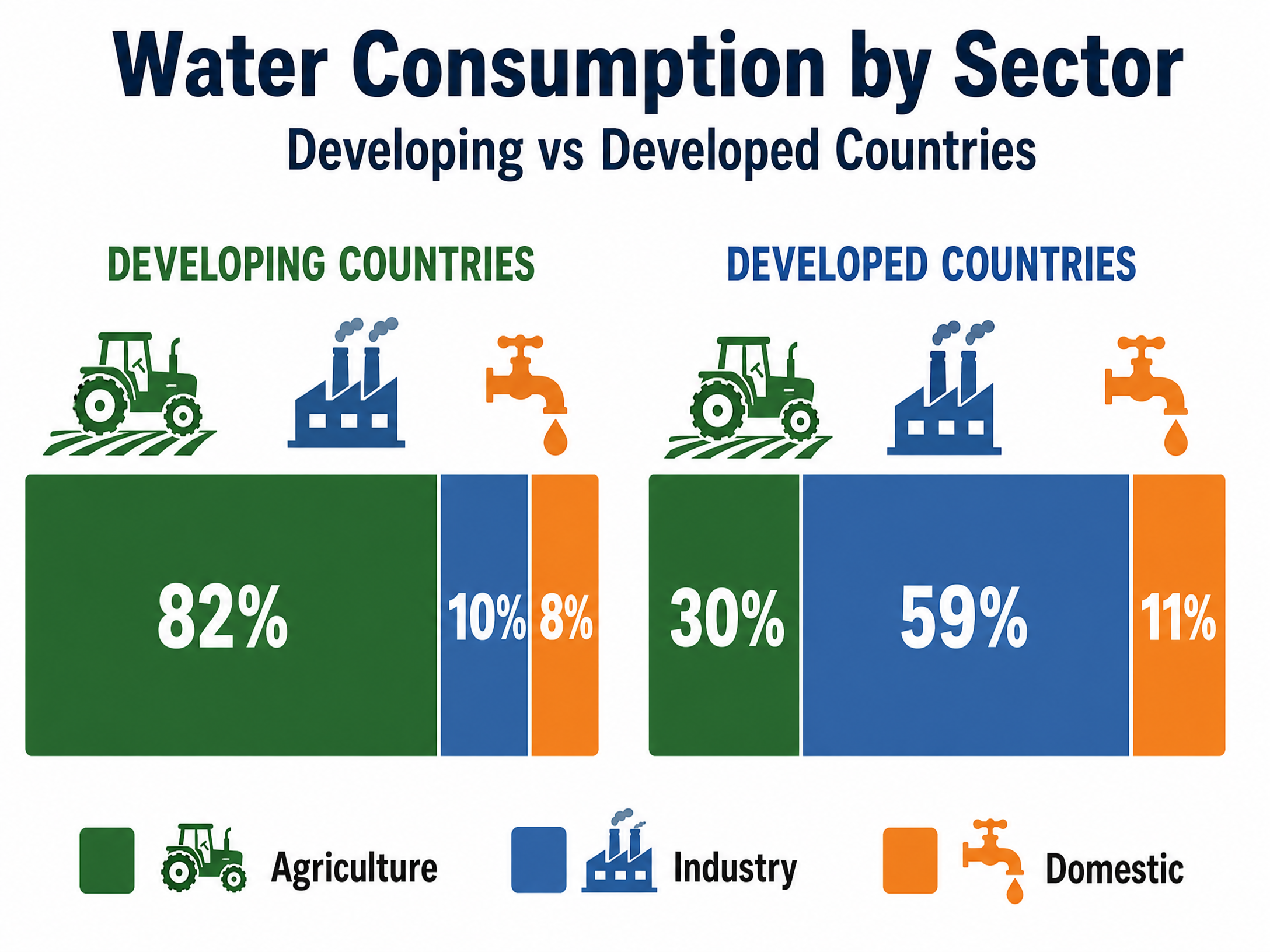
Data: Agriculture dominates, accounting for approximately 82% of water use. Industry uses roughly 10%, and domestic use is around 8%.
What this means: The vast majority of water resources are directed towards growing food and sustaining livestock.
Why it matters: This pattern highlights a reliance on primary economic activities and the critical need to feed growing populations, often in climates where rainfall is unreliable.
Specific Knowledge: In India, over 60% of the workforce is employed in agriculture, driving massive irrigation demands.
Developed Countries (HICs)
Data: Industry is the primary consumer, using about 59% of water. Agriculture accounts for 30%, and domestic use is 11%.
What this means: Post-industrial economies require enormous volumes of water for manufacturing, processing, and energy generation.
Why it matters: It demonstrates how economic advancement shifts water demand from the fields to the factories and power stations.
Specific Knowledge: In the USA, thermoelectric power generation alone accounts for roughly 40% of all freshwater withdrawals.
Reasons for Differences
Economic Structure
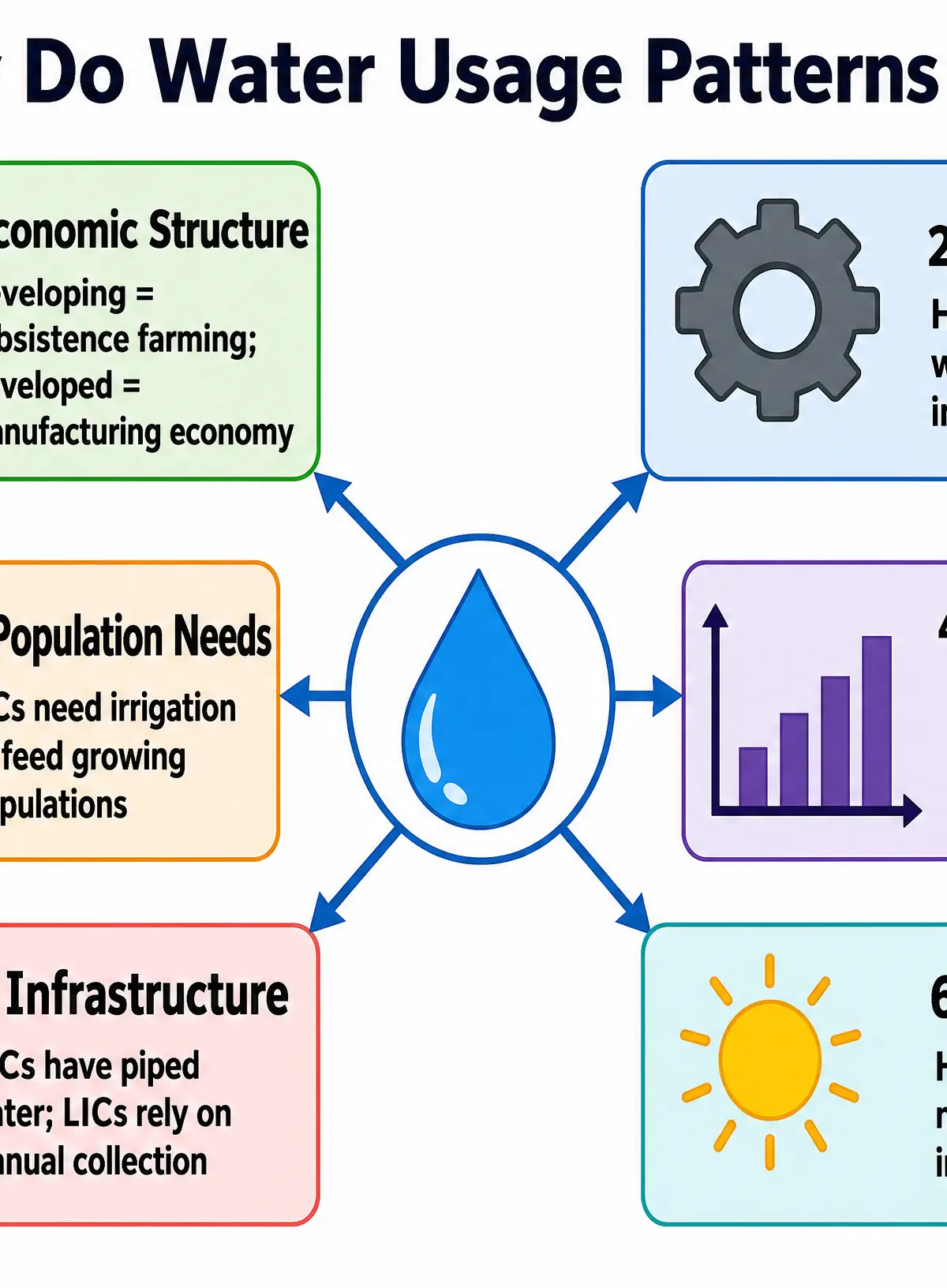
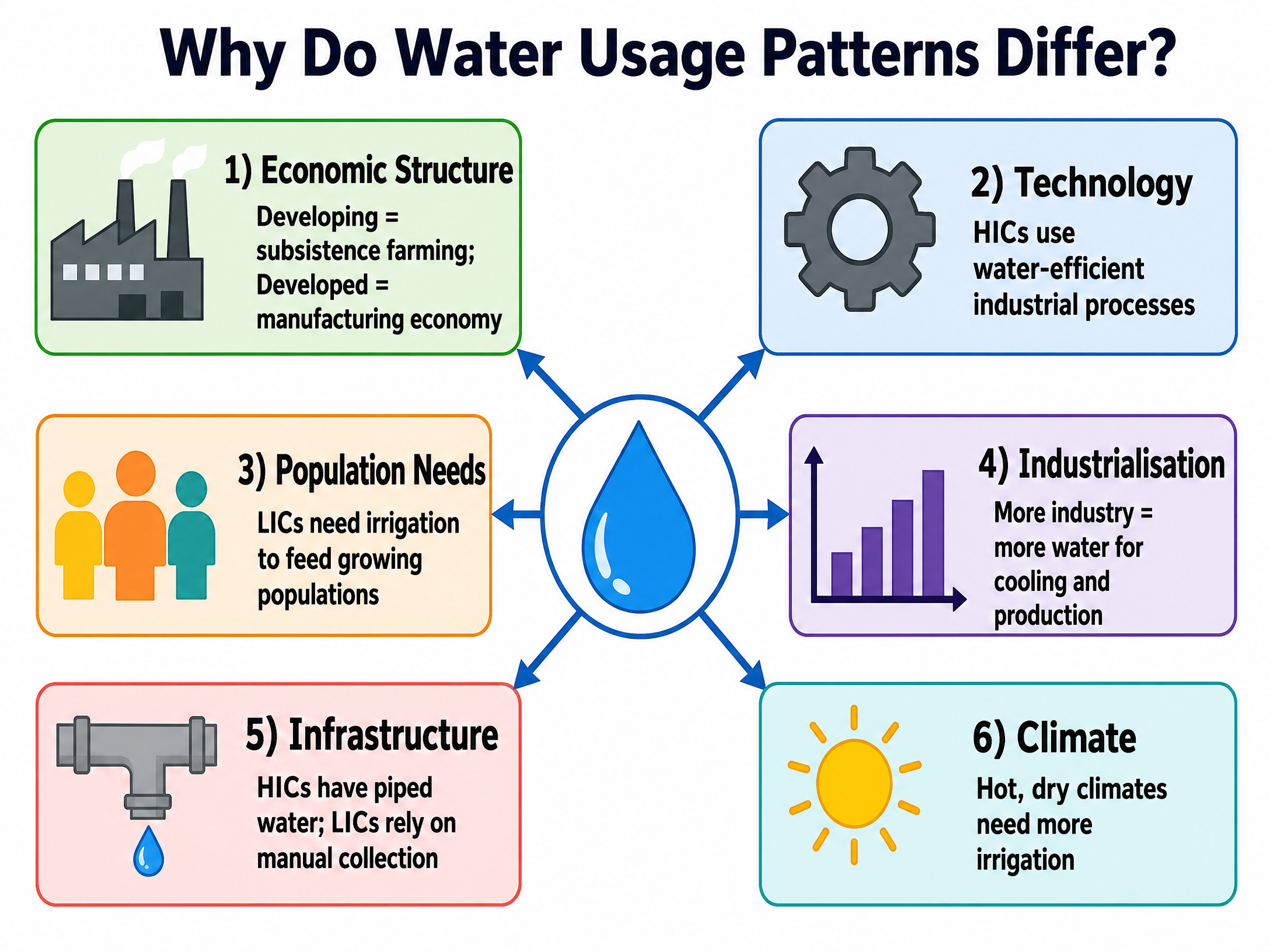
Developing countries have economies based largely on primary industries (farming), which require extensive irrigation. Developed countries have transitioned to secondary (manufacturing) and tertiary (services) industries, shifting the bulk of water demand to industrial processes.
Technology
HICs possess advanced, water-efficient technologies (e.g., drip irrigation, industrial recycling) that reduce agricultural water waste but increase overall industrial capacity. LICs often lack access to these technologies, leading to less efficient agricultural water use.
Population Needs & Climate
Many LICs are located in hot, dry climates (e.g., the Sahel region in Africa) with unreliable rainfall, making irrigation essential for survival. Rapid population growth in these regions further intensifies the need to secure food supplies through agriculture.
Audio Revision
Listen to our comprehensive 10-minute podcast covering all these concepts, complete with exam tips and a quick-fire quiz:

Visual Resources
2 diagrams and illustrations
Interactive Diagrams
2 interactive diagrams to visualise key concepts
Diagram could not be rendered
Pie chart showing typical water consumption in LICs/NEEs
Diagram could not be rendered
Pie chart showing typical water consumption in HICs
Worked Examples
3 worked examples — open one to explore the question and available guidance.
Practice Questions
Test your understanding — click to reveal model answers
Compare the domestic water use in developed and developing countries. (2 marks)
Hint: Look at the percentages, but also consider per-person usage.
Explain how technology affects water consumption patterns in developed countries. (4 marks)
Hint: Think about both agricultural efficiency and industrial processes.
Using a named example, explain why agriculture dominates water use in developing countries. (4 marks)
Hint: Name a country, state its main economic activity, and mention climate.
Assess the impact of industrialisation on a country's water consumption pattern. (6 marks)
Hint: How does the pie chart change as a country moves from an LIC to an NEE to an HIC?
Explain two reasons why domestic water consumption is likely to increase globally in the future. (4 marks)
Hint: Think about population trends and improvements in living standards.