Pearson Edexcel · GCSE · Geography
There are positive and negative impacts of rapid development for the people and environment of the chosen developing or emerging country
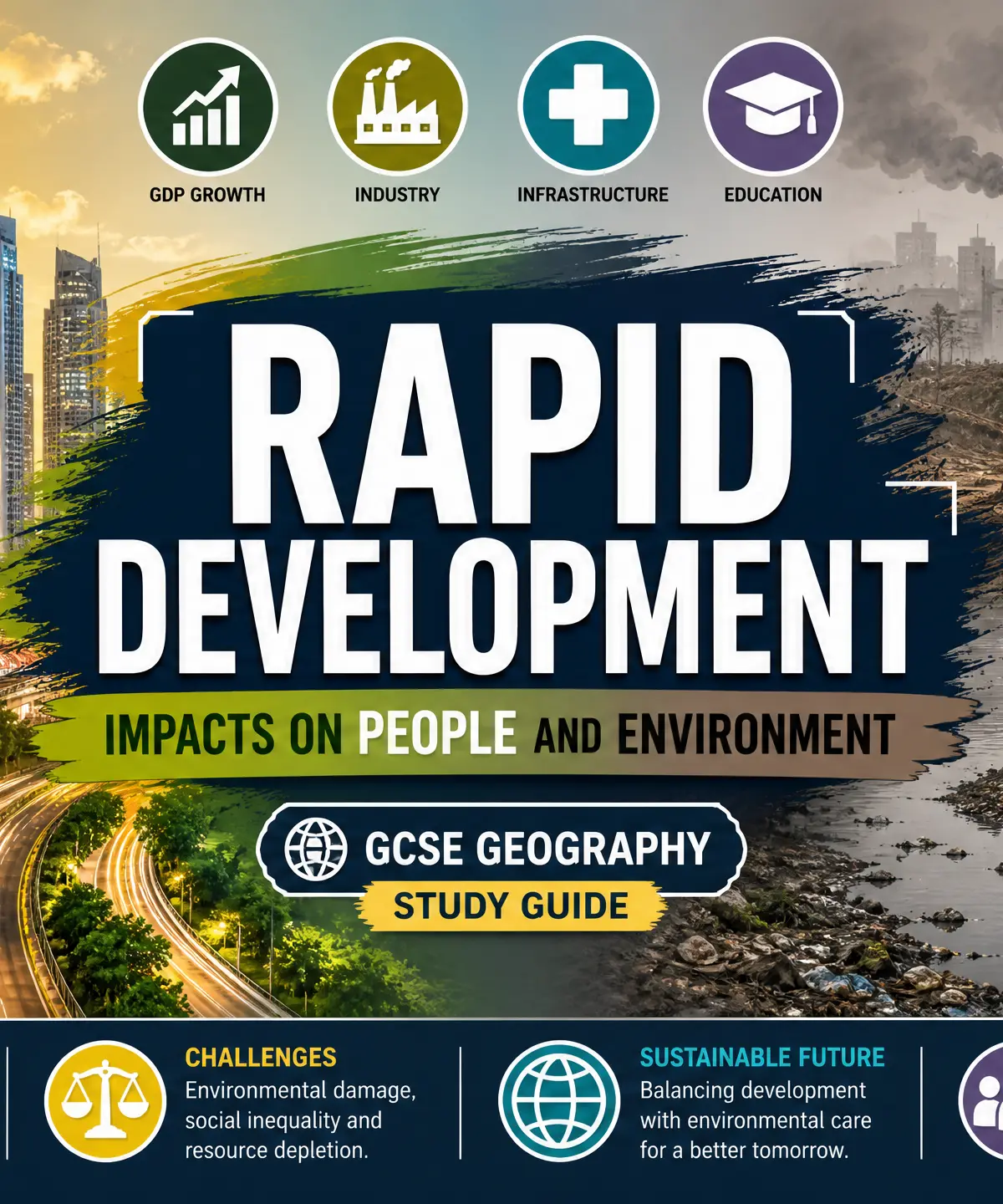
Rapid development transforms nations, lifting millions out of poverty while creating profound environmental and social challenges. This study guide explores the complex reality of economic growth in emerging economies like India, equipping you to evaluate both the triumphs and the hidden costs of progress for your GCSE exam.
- 7 min read
- 3 worked examples
- 5 practice questions
- 6 key terms
Study Notes
Overview
Rapid development is a defining feature of the modern global economy. Over the past three decades, emerging and developing countries (EDCs) like India, China, Nigeria, and Brazil have experienced unprecedented economic growth. This transformation has reshaped global trade, lifted hundreds of millions of people out of poverty, and created new global superpowers.
However, examiners want you to understand that development is a double-edged sword. While economic indicators soar, the rapid pace of change often outstrips a country's ability to manage the consequences. The environment frequently pays the highest price through severe pollution and resource depletion. Socially, while a new middle class emerges, inequality often widens, leaving marginalized communities behind in expanding urban slums.
For your GCSE Geography exam, you must be able to categorize these impacts into social, economic, and environmental dimensions. More importantly, top marks are awarded for evaluating how effectively governments and communities are managing these impacts. This guide uses India as a primary case study to provide the specific data and examples examiners look for.

The Indian Context: A Profile of Rapid Development
India provides a perfect case study of rapid development. Since economic reforms in 1991, it has transitioned from a low-income country to a major emerging economy.
Economic Transformation
Data Points:
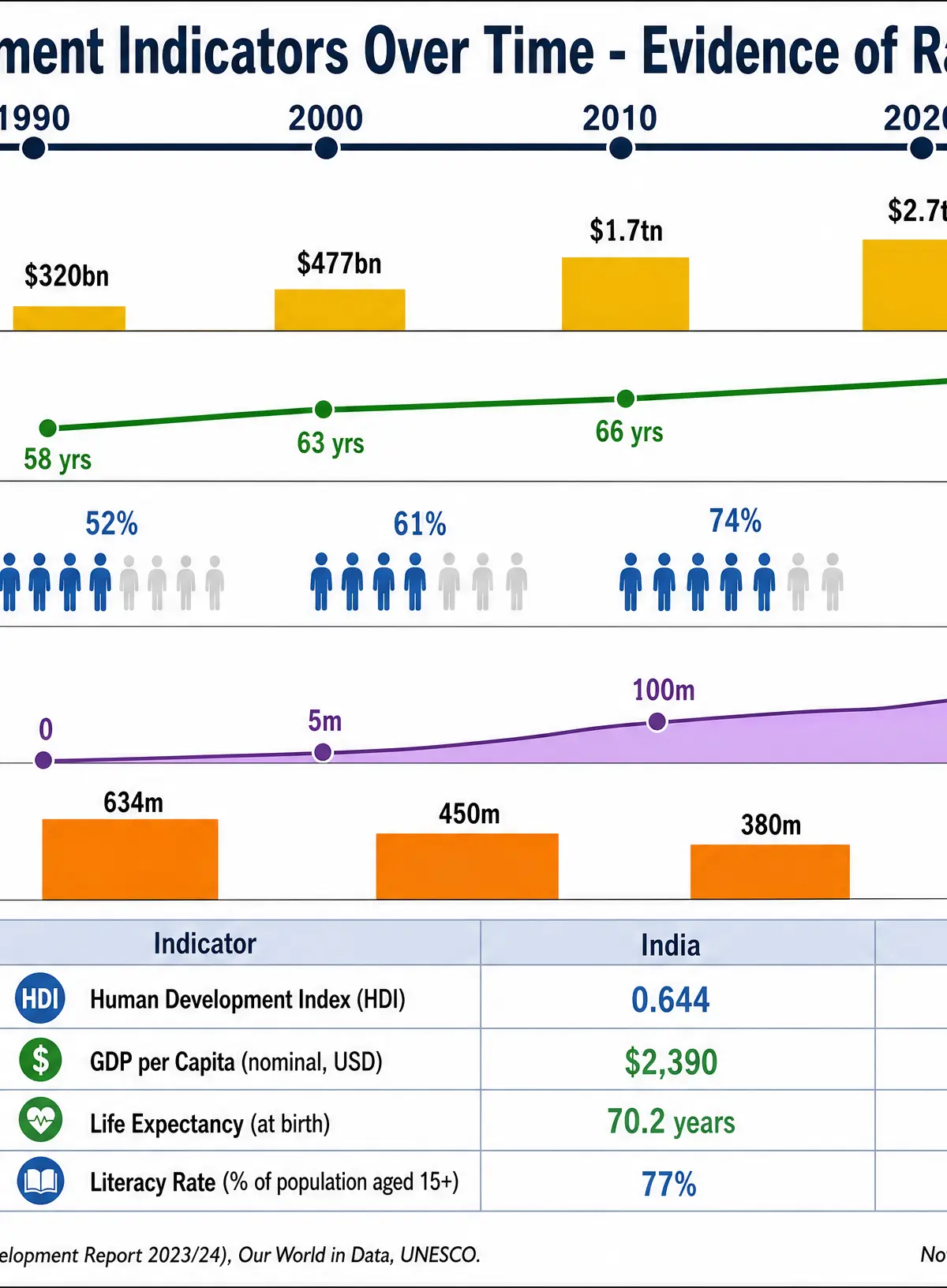
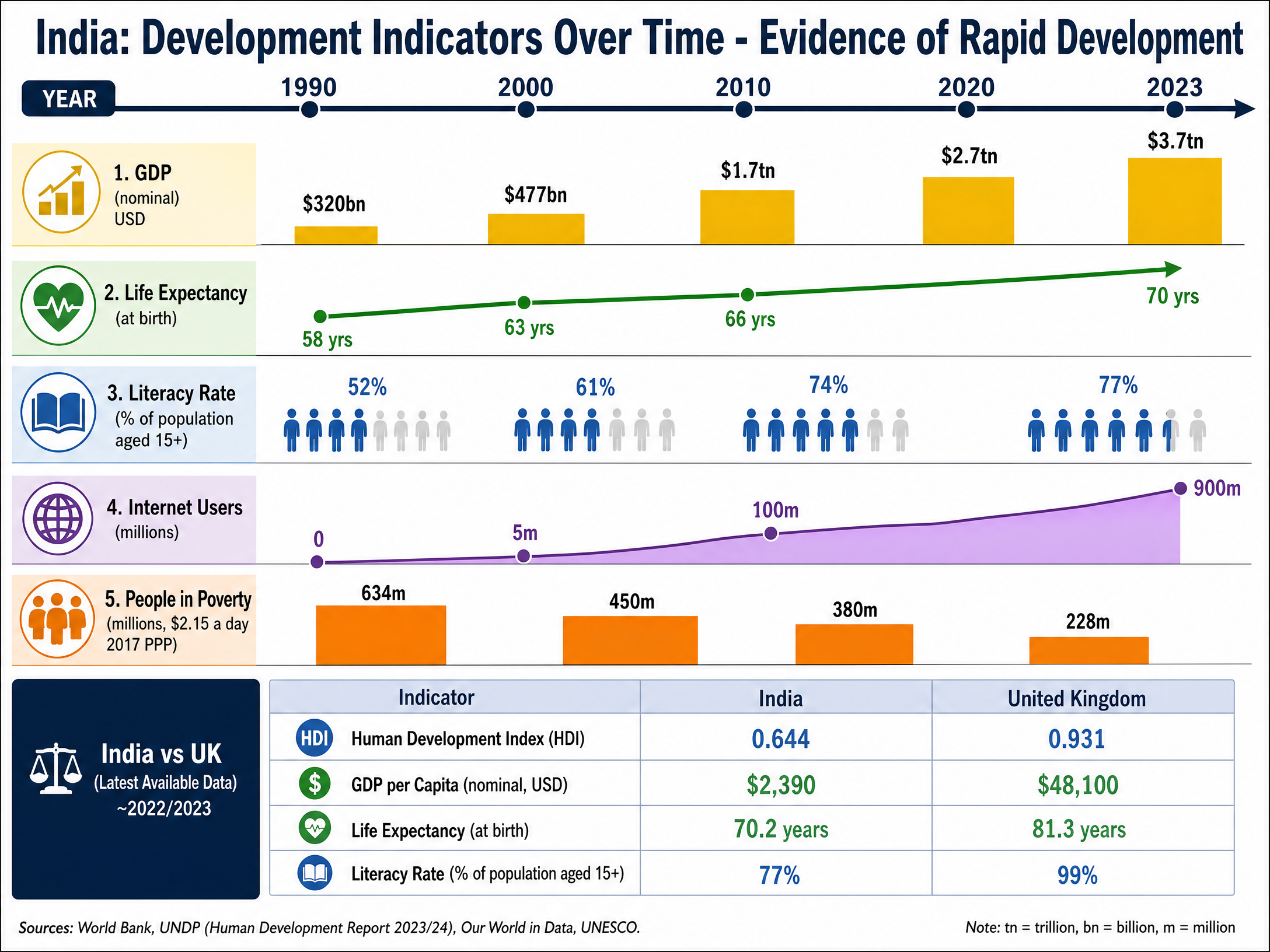
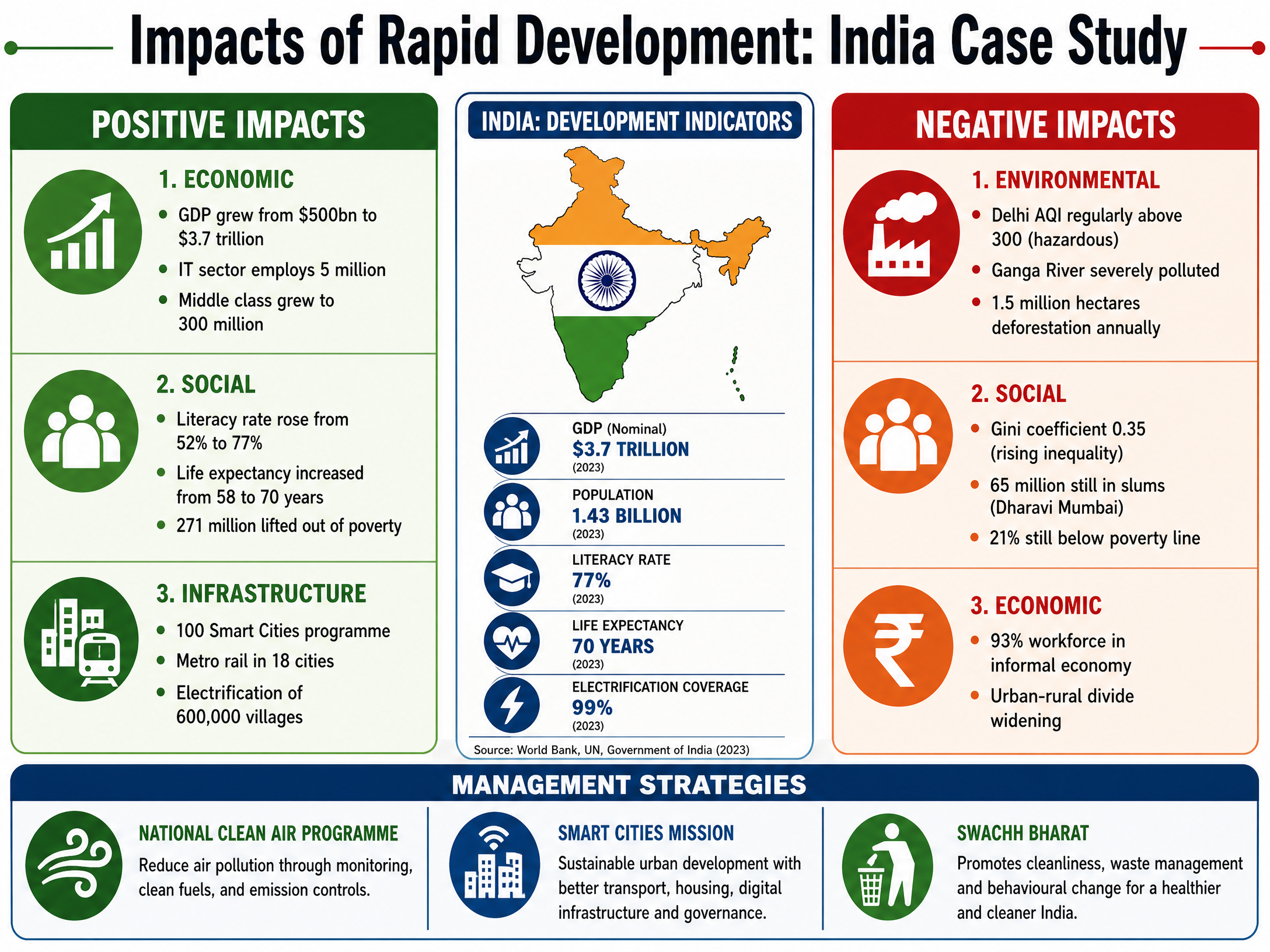
- GDP grew from 320 billion in 1990 to3.7 trillion in 2023.
- The IT and services sector now employs over 5 million people directly and millions more indirectly.
- Foreign Direct Investment (FDI) reached $71 billion in 2022-23.
Significance: This economic engine has created a burgeoning middle class (estimated at 300 million people) with significant purchasing power, shifting India from an agricultural economy to a services and manufacturing powerhouse.
Positive Impacts of Rapid Development
Examiners expect you to categorize impacts clearly. Use the SEE framework (Social, Economic, Environmental).
Positive Social Impacts
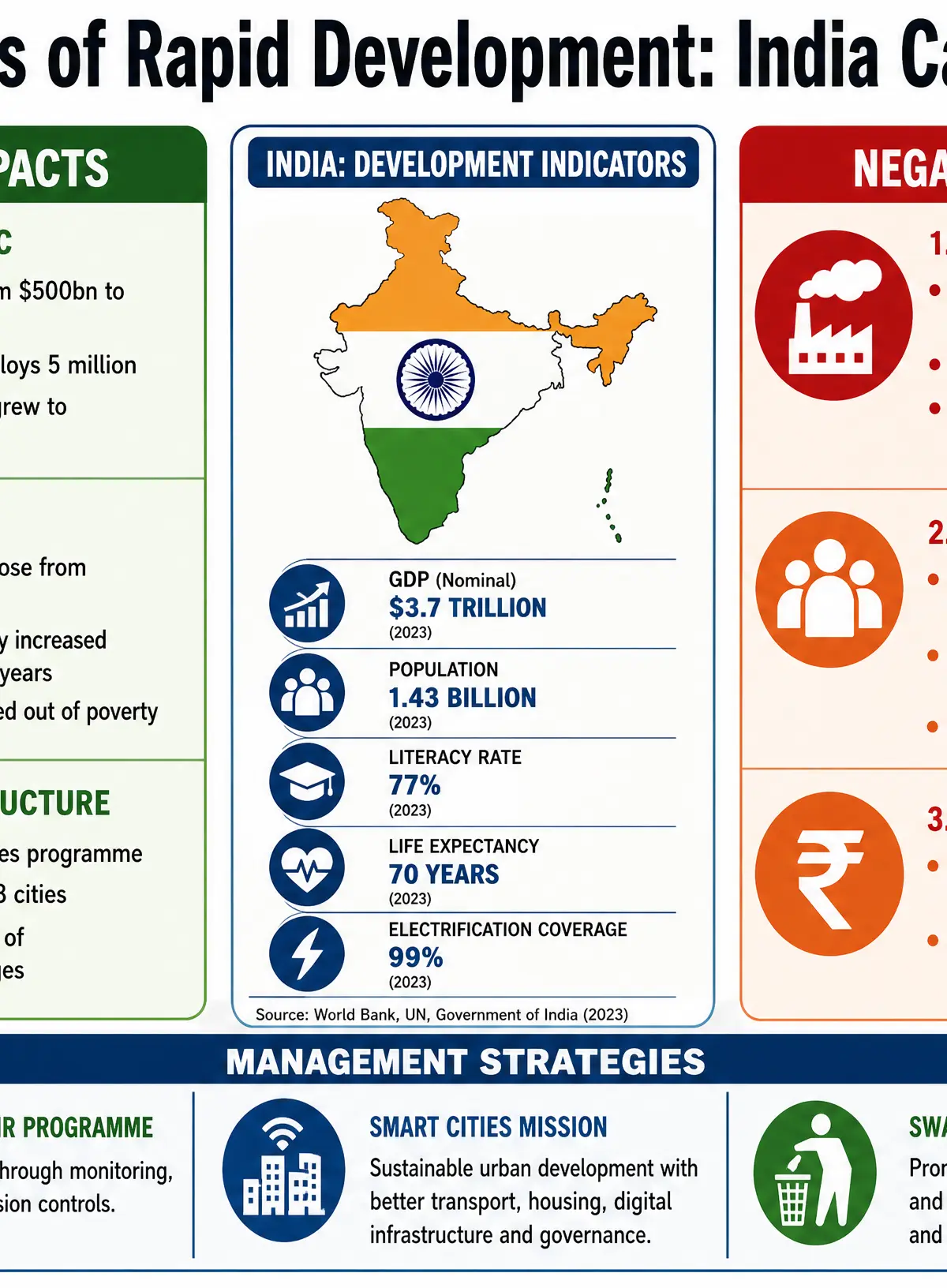
Poverty Reduction: Between 2011 and 2023, approximately 271 million people in India were lifted out of multidimensional poverty. This is one of the fastest poverty reduction rates in history.
Health and Education: Life expectancy has increased from 58 years (1990) to 70 years (2023). The adult literacy rate has risen from 52% to 77% over the same period, driven by government investment and the Right to Education Act.
Positive Economic Impacts
Employment: The growth of transnational corporations (TNCs) and domestic industries has created millions of formal sector jobs with higher wages, better conditions, and reliable income compared to subsistence farming.
Infrastructure Investment: Economic growth generates tax revenue, allowing the government to invest heavily in infrastructure. India's electrification program reached 99% of villages by 2023, and major cities now feature extensive metro rail networks.
Positive Environmental Impacts
While rare, rapid development can eventually lead to positive environmental outcomes as a country becomes wealthy enough to invest in green technology. India is now the world's 4th largest producer of renewable energy, with 73 GW of installed solar capacity.
Negative Impacts of Rapid Development
To achieve top marks, you must balance the positives with the significant challenges rapid development creates.
Negative Environmental Impacts
Air Pollution: Industrial emissions, vehicle exhaust, and construction dust have created an air quality crisis. Delhi's Air Quality Index (AQI) regularly exceeds 300 (hazardous), leading to widespread respiratory diseases and premature deaths.
Water Contamination: Rapid industrialization without adequate regulation has severely polluted major waterways. The River Ganga suffers from industrial effluent and untreated sewage from rapidly expanding cities.
Resource Depletion: Economic growth requires vast resources. India loses approximately 1.5 million hectares of forest annually to make way for agriculture, mining, and urban expansion, destroying vital habitats.
Negative Social Impacts
Rising Inequality: While the middle class grows, the gap between rich and poor is widening. India's Gini coefficient (a measure of inequality) stands at 0.35 and is rising.
Urban Slums: Rural-to-urban migration, driven by the promise of jobs, happens faster than cities can build housing. Approximately 65 million people live in slums (like Dharavi in Mumbai) lacking basic sanitation and clean water.
Negative Economic Impacts
The Informal Economy: Despite headline growth, 93% of India's workforce remains in the informal economy. These workers lack job security, pensions, and safety regulations, leaving them highly vulnerable to economic shocks.
Regional Disparities: Development is highly uneven. States like Maharashtra (home to Mumbai) attract massive investment, while rural states like Bihar lag far behind, creating a divided economy.
Management Strategies
Evaluation questions (e.g., 'Assess the effectiveness of...') require you to analyze how governments manage these impacts.
Environmental Management
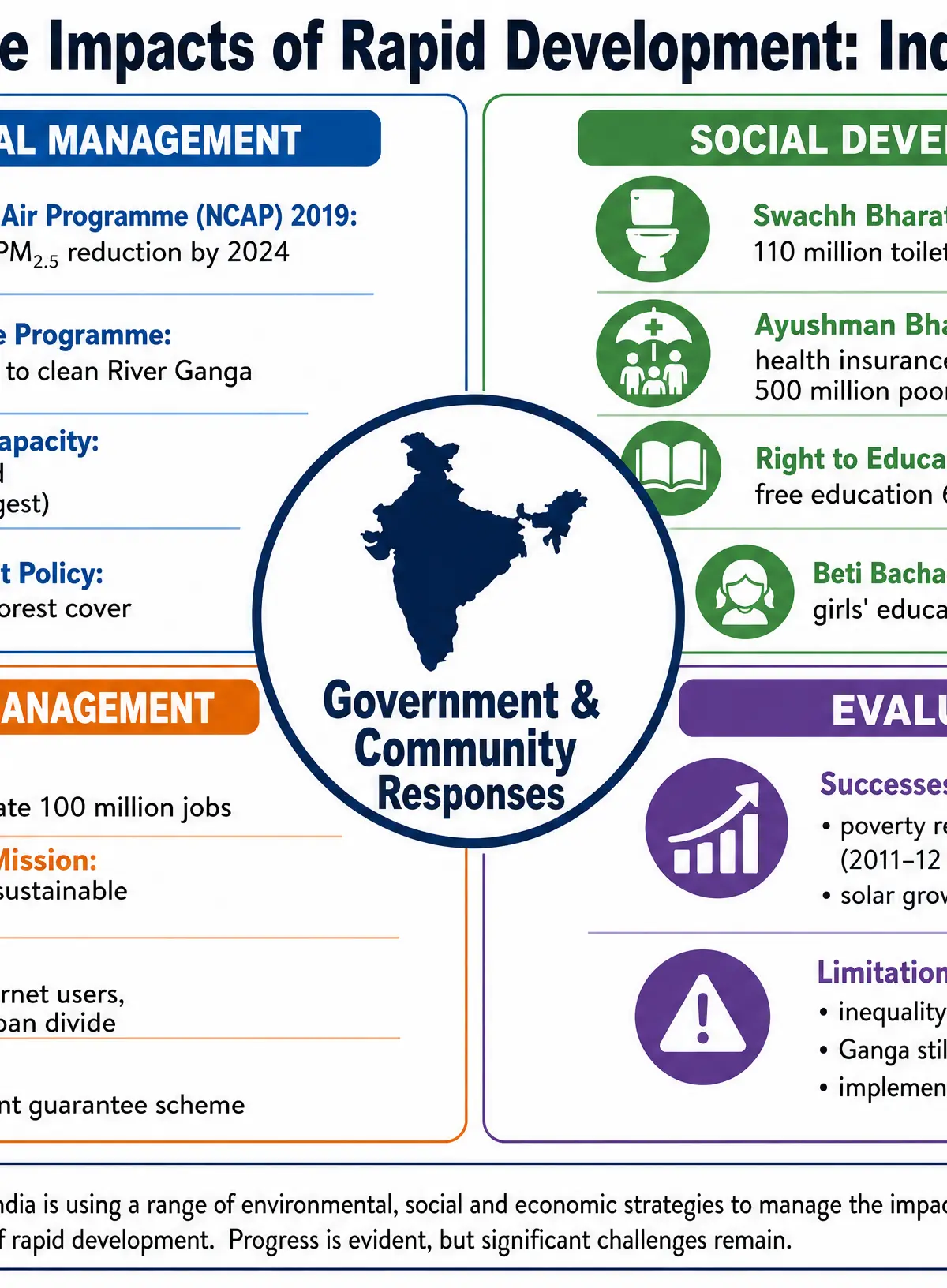
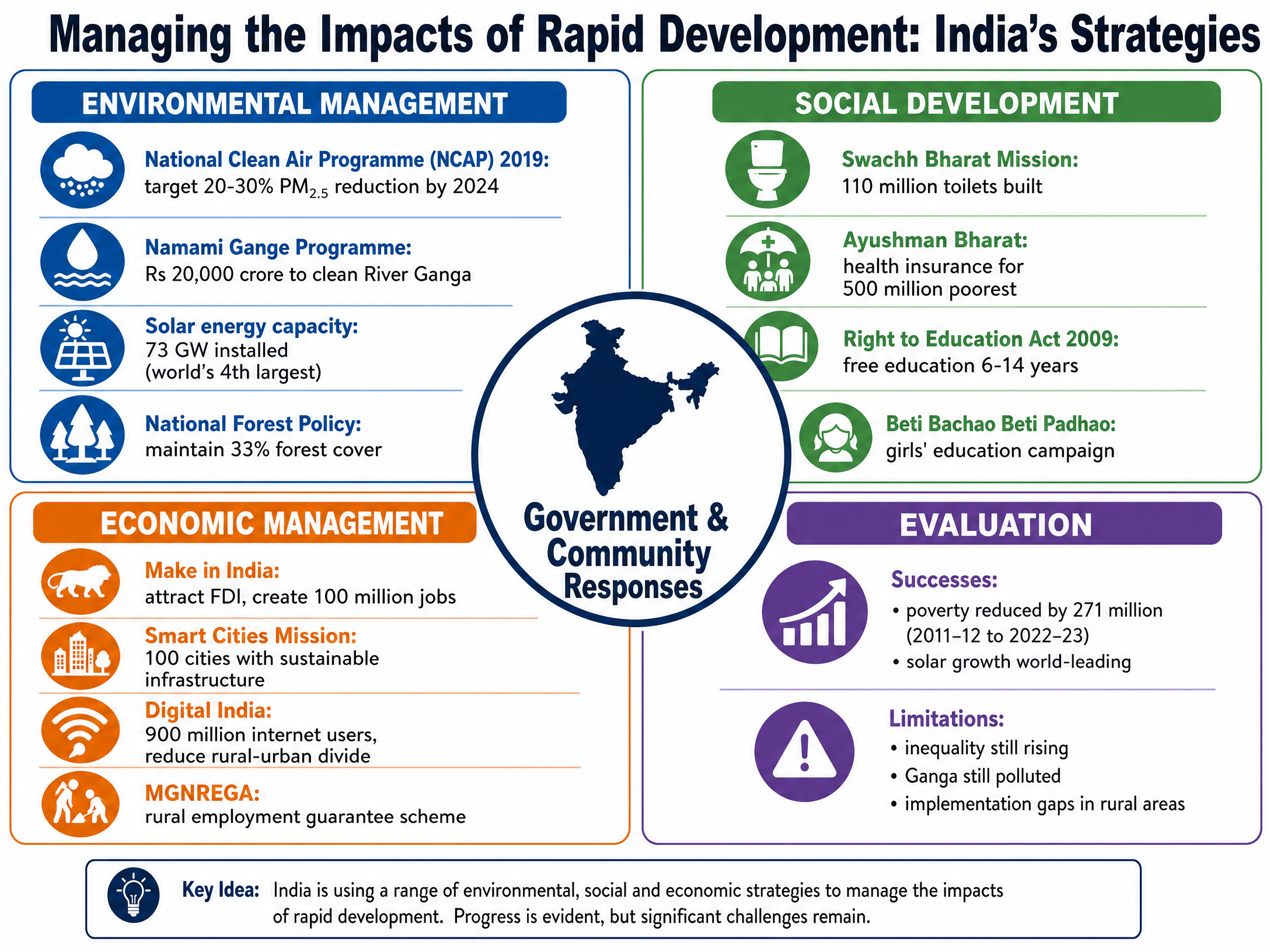
Strategy: The National Clean Air Programme (NCAP)
Aim: Reduce particulate matter (PM2.5) pollution by 20-30% by 2024.
Evaluation: While it sets crucial targets and improves monitoring, enforcement remains weak at the local level, and air quality in major cities remains dangerous during winter months.
Social Management
Strategy: Swachh Bharat (Clean India) Mission
Aim: Eliminate open defecation and improve solid waste management.
Evaluation: Highly successful in building over 110 million toilets, significantly improving public health and dignity, particularly for women. However, maintaining the infrastructure and changing long-term behavior remains an ongoing challenge.
Economic Management
Strategy: Smart Cities Mission
Aim: Develop 100 cities with sustainable infrastructure, clean environments, and smart solutions.
Evaluation: Has driven significant urban renewal and digital integration, but critics argue it focuses too heavily on affluent areas while ignoring the needs of the urban poor living in slums.
Visual Resources
3 diagrams and illustrations
Interactive Diagrams
1 interactive diagram to visualise key concepts
Conceptual Flow Outline
The interconnected impacts of rapid development
Worked Examples
3 worked examples — open one to explore the question and available guidance.
Practice Questions
Test your understanding — click to reveal model answers
Using a named emerging country, evaluate the social and economic impacts of its rapid development. (9 marks)
Hint: Ensure you cover BOTH social and economic impacts, and provide a balanced evaluation of positives and negatives. Conclude with an overall judgement.
Explain how rapid economic development can lead to negative social impacts. (4 marks)
Hint: Think about the gap between rich and poor, and what happens when people migrate to cities faster than houses can be built.
Describe one strategy used to manage the environmental impacts of rapid development. (2 marks)
Hint: Name a specific government policy or action aimed at reducing pollution or protecting nature.
Explain two positive economic impacts of rapid development for a developing or emerging country. (4 marks)
Hint: Think about jobs, income, and government money.
Assess the success of strategies used to improve quality of life in a rapidly developing country. (6 marks)
Hint: Quality of life is a social indicator. Name a strategy, explain how it helps, and then evaluate its limitations.