Pearson Edexcel · GCSE · Geography
Uneven global development has had a range of consequences
Uneven global development creates stark contrasts in quality of life across the world. Understanding these consequences is crucial for geography students, as it highlights the pressing need for sustainable solutions to bridge the development gap.
- 6 min read
- 3 worked examples
- 5 practice questions
- 6 key terms
Study Notes
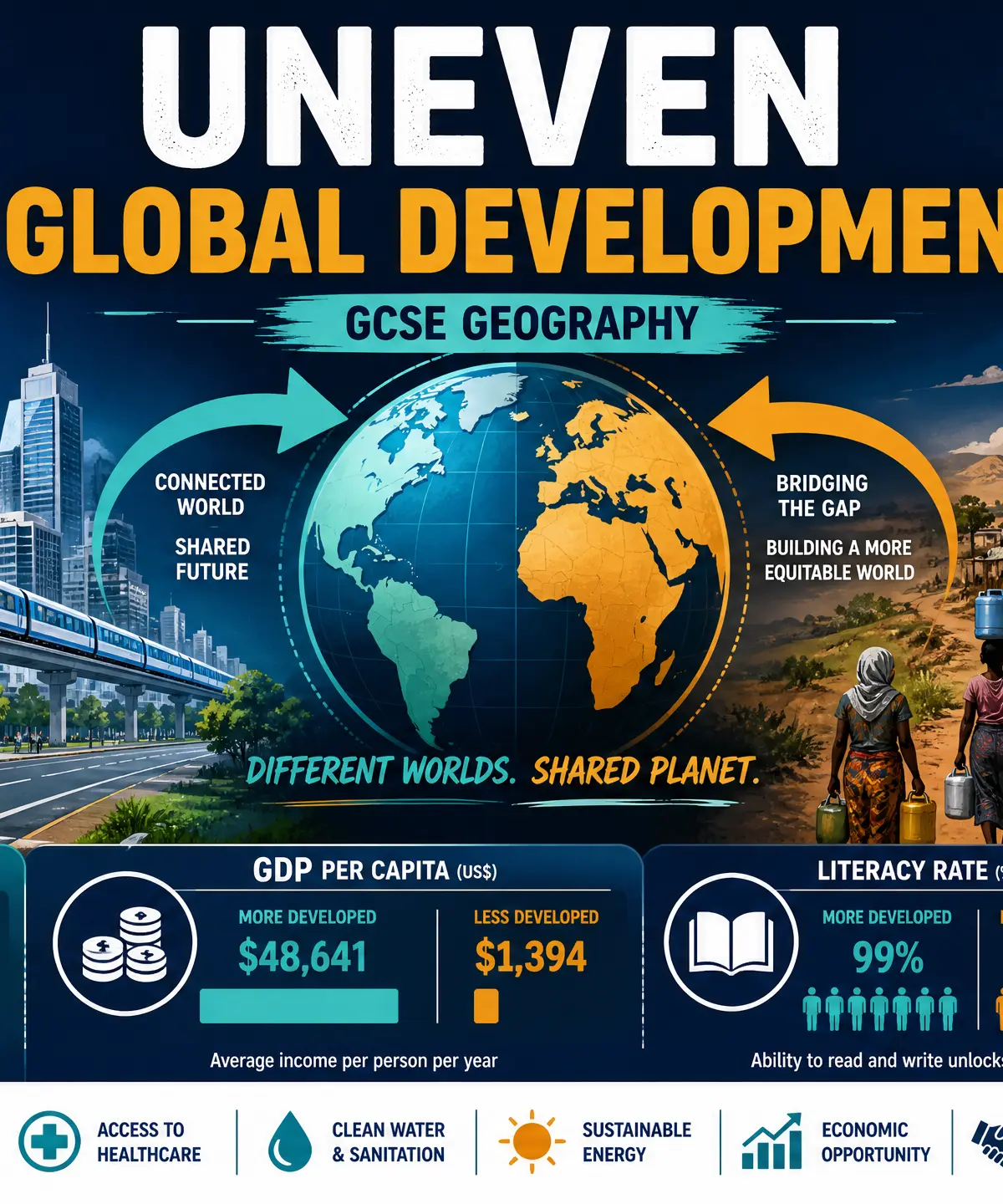
Overview
Uneven global development is one of the most significant challenges facing our modern world. It refers to the unequal distribution of wealth, resources, and opportunities between different regions and countries. This study guide explores the profound consequences of this disparity on the quality of life for billions of people. Examiners expect you to understand how uneven development manifests in various sectors, including housing, health, education, and employment, and to support your answers with specific, named case studies. By mastering these concepts, you will not only be prepared for your GCSE Geography exams but also gain a deeper understanding of the complex global systems that shape our shared future.
Key Consequences of Uneven Development
1. Access to Housing
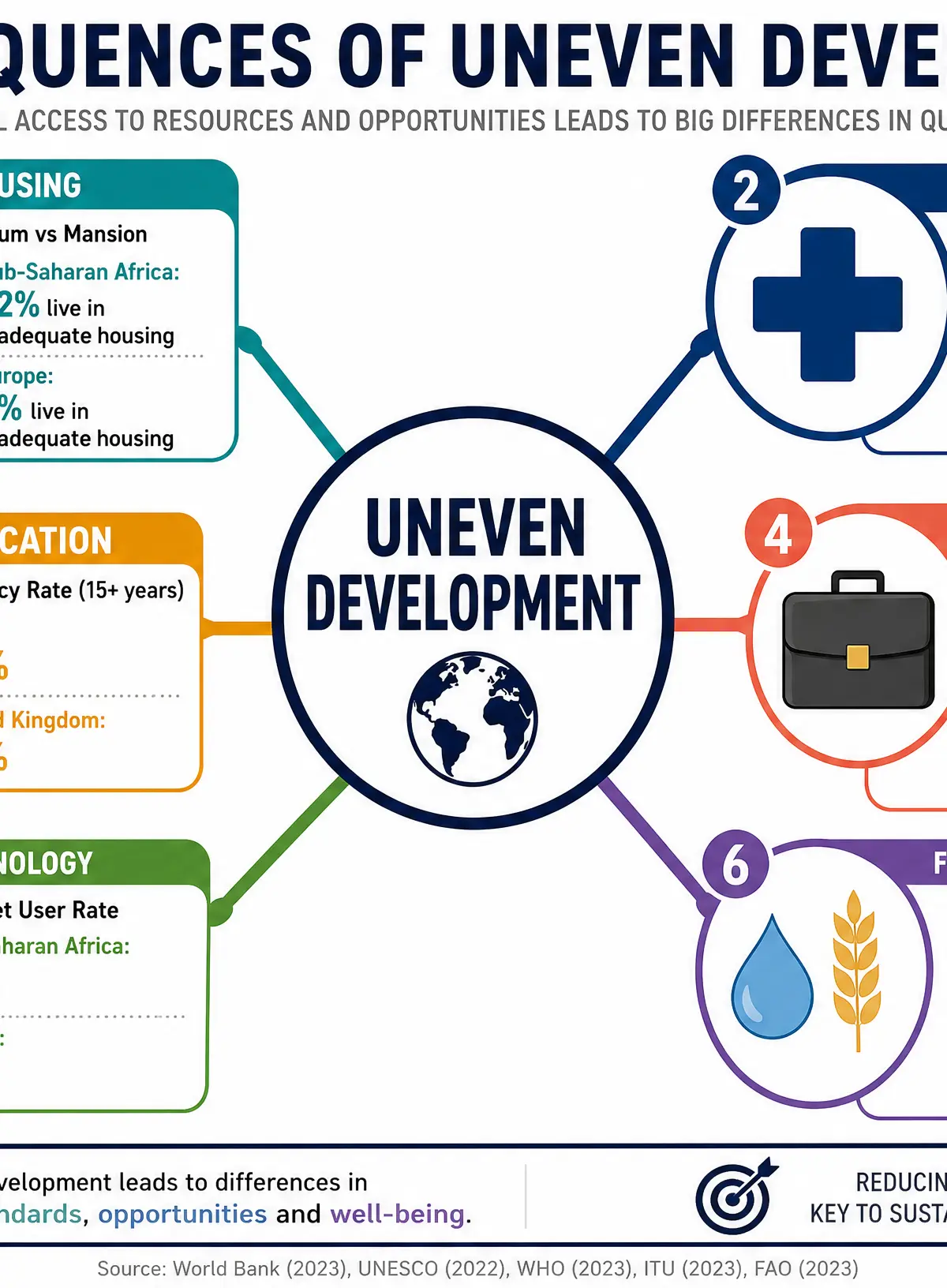
The Reality: In High Income Countries (HICs), the vast majority of the population has access to safe, permanent housing with basic amenities. Conversely, in Low Income Countries (LICs) and Newly Emerging Economies (NEEs), rapid urbanization often leads to the growth of informal settlements or slums.
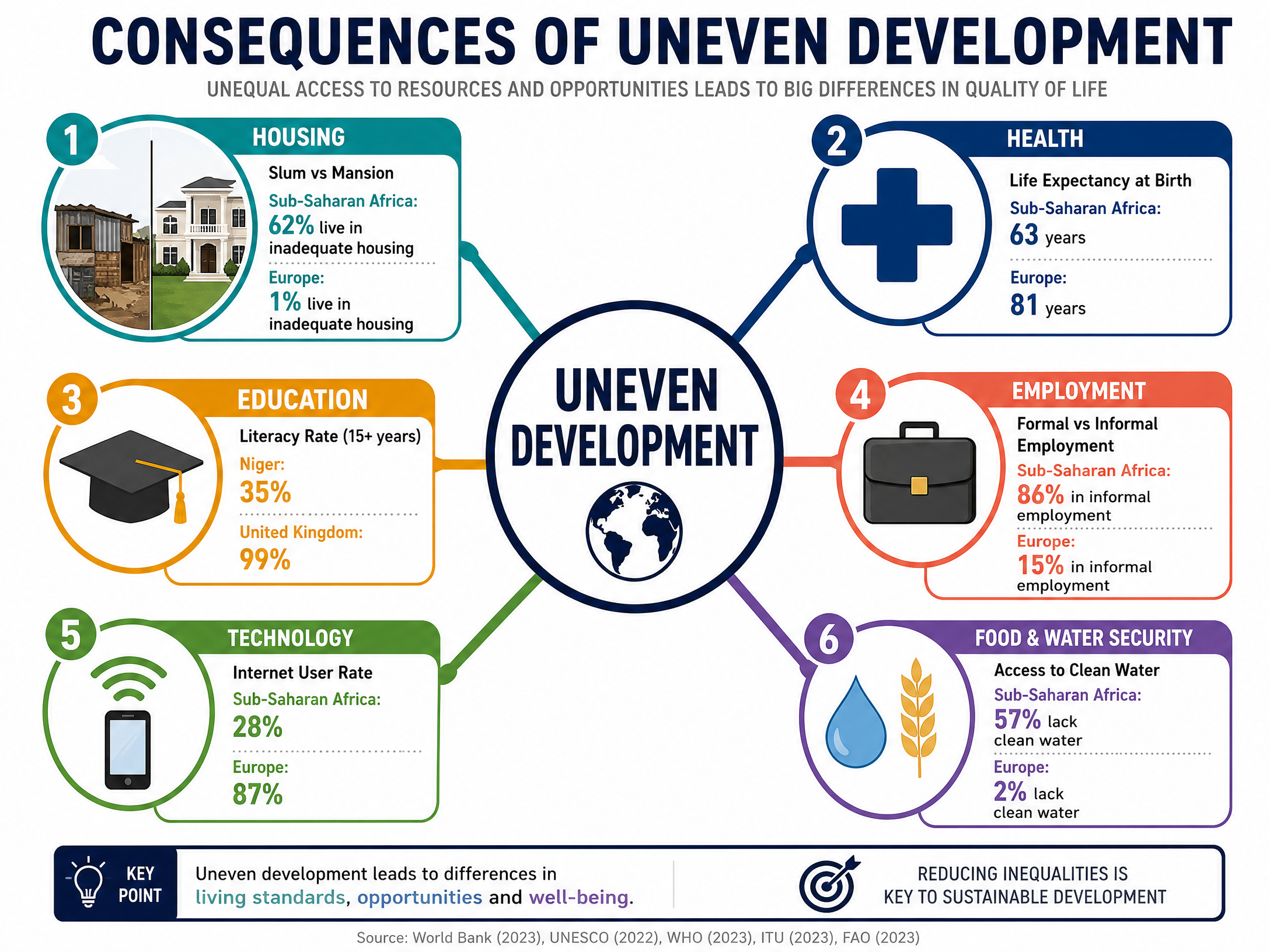
Specific Knowledge: In Sub-Saharan Africa, approximately 62% of the urban population lives in inadequate housing. A key example is Kibera in Nairobi, Kenya, where over a million people live in cramped conditions with limited access to clean water and sanitation.
Why it matters: Poor housing directly impacts health, safety, and educational outcomes, creating a cycle of poverty that is difficult to break.
2. Access to Health
The Reality: Health outcomes are inextricably linked to development. HICs benefit from advanced healthcare systems, trained medical professionals, and access to medicines. LICs often struggle with high infant mortality rates and lower life expectancies due to preventable diseases.
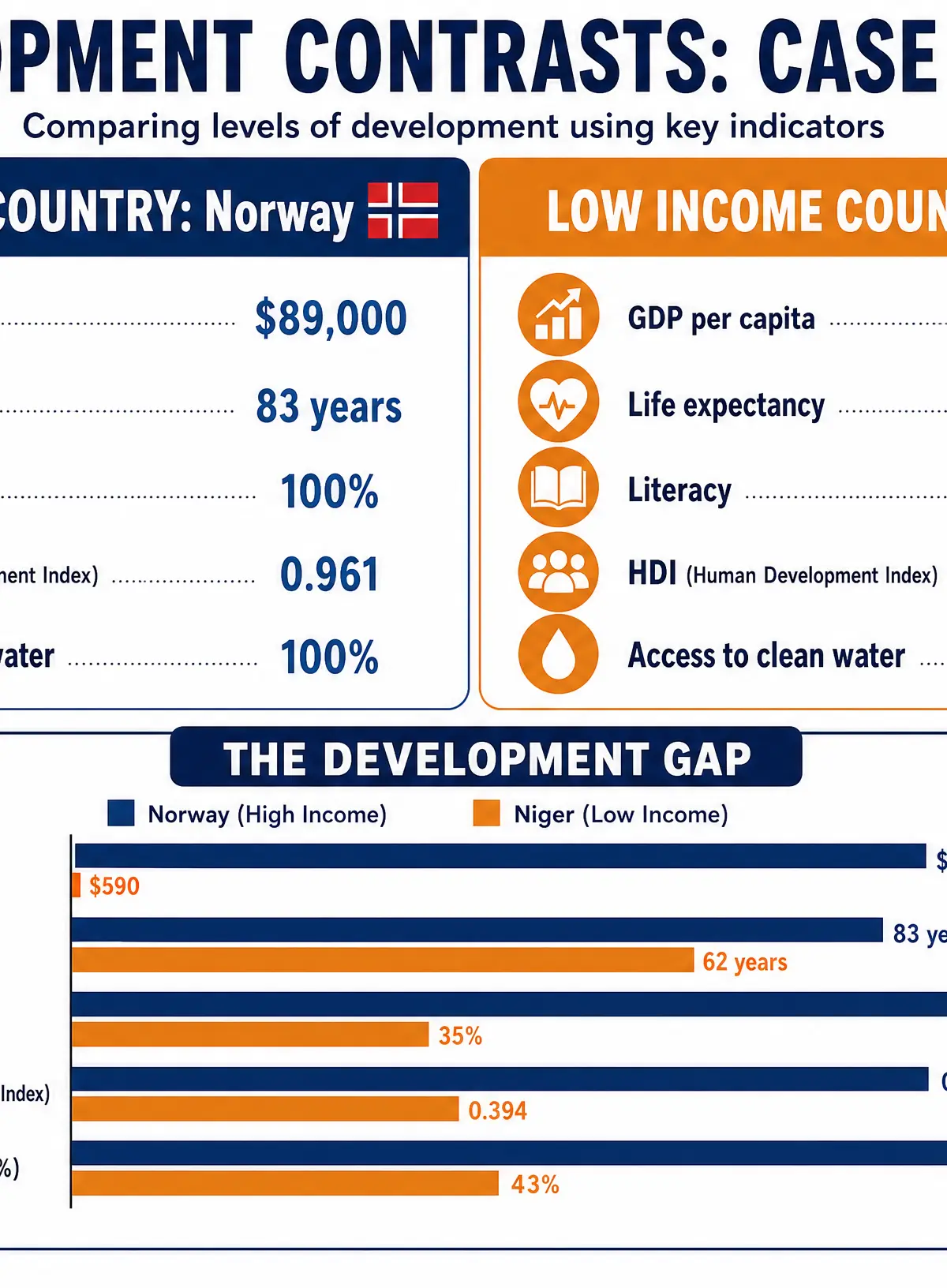
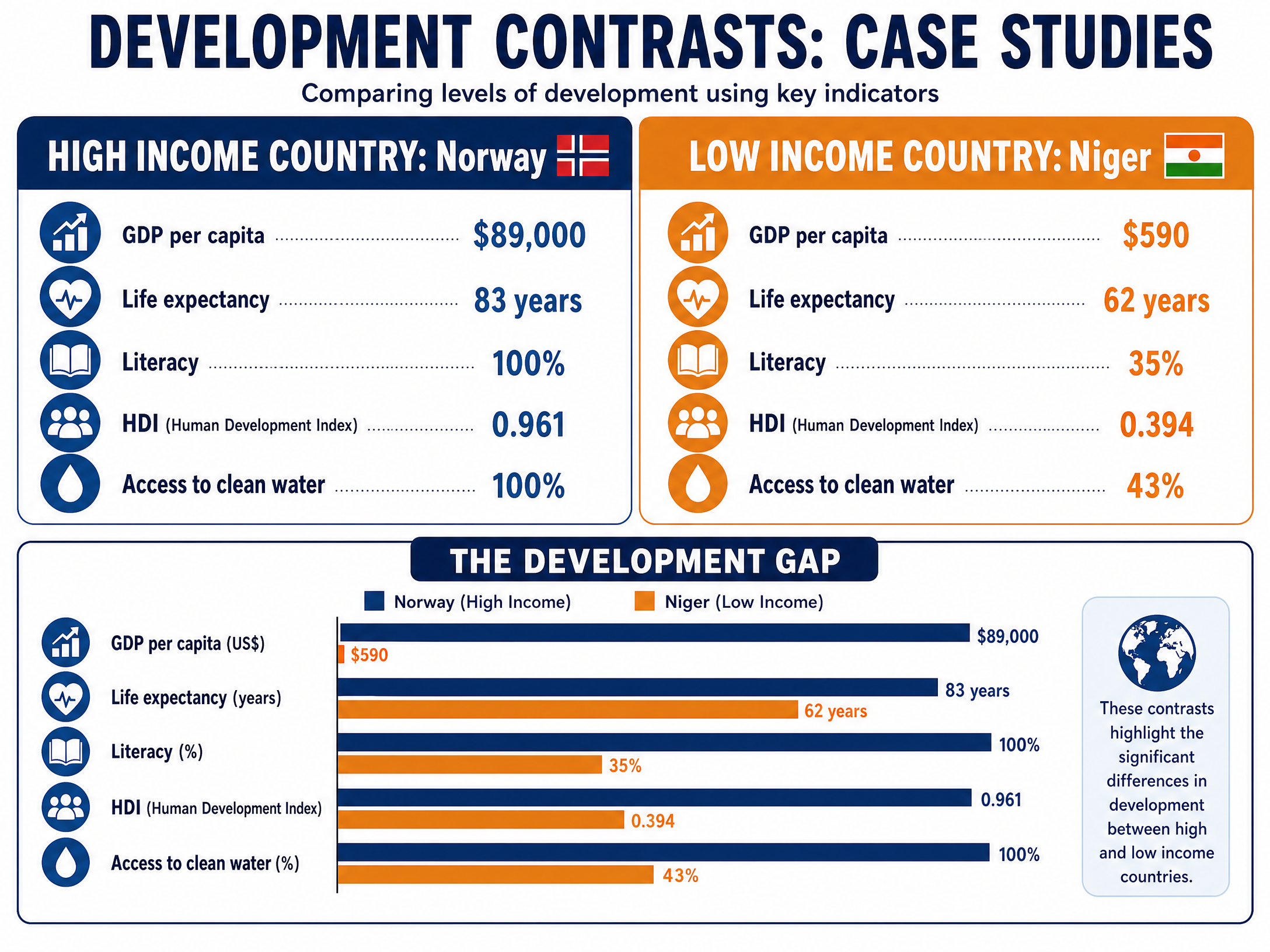
Specific Knowledge: Life expectancy in Norway (HIC) is 83 years, compared to just 62 years in Niger (LIC). Diseases such as malaria and cholera remain significant threats in less developed regions.
Why it matters: A healthy population is essential for economic productivity. Poor health limits a country's ability to develop its workforce and economy.
3. Access to Education
The Reality: Education is a primary driver of development. HICs typically offer free, compulsory education, resulting in near-universal literacy. In LICs, barriers such as cost, lack of infrastructure, and the need for children to work can severely limit educational access.
Specific Knowledge: The literacy rate in the UK is 99%, whereas in Niger it is only 35%. This disparity is often more pronounced for girls, limiting their future opportunities.
Why it matters: Education empowers individuals to secure better employment and make informed health choices. Low literacy rates perpetuate the development gap through a negative multiplier effect.
4. Access to Employment
The Reality: The structure of the economy differs vastly between development levels. HICs are dominated by formal employment in the tertiary (services) and quaternary (research) sectors. LICs rely heavily on the primary sector (agriculture) and the informal economy.
Specific Knowledge: In Sub-Saharan Africa, 86% of employment is informal. This means workers lack job security, legal protections, and stable incomes.
Why it matters: Informal employment leaves populations vulnerable to economic shocks and limits the government's ability to collect taxes to fund public services.
5. Access to Technology
The Reality: The 'digital divide' is a modern consequence of uneven development. Access to the internet and modern technology is widespread in HICs but limited in LICs due to lack of infrastructure and affordability.
Specific Knowledge: Internet penetration in Europe is around 87%, compared to just 28% in Sub-Saharan Africa.
Why it matters: Technology drives modern economies. Lack of access limits opportunities in e-commerce, online education, and global connectivity, further isolating less developed regions.
6. Food and Water Security
The Reality: Access to fundamental resources like clean water and sufficient food is not guaranteed globally. HICs have reliable infrastructure for water and agriculture, while LICs often face scarcity and contamination.
Specific Knowledge: 57% of people in Sub-Saharan Africa lack access to safely managed drinking water. Globally, over 800 million people face food insecurity.
Why it matters: Waterborne diseases and malnutrition are major causes of mortality in LICs. Time spent collecting water (often by women and children) detracts from education and employment.
Case Study Comparison
Podcast Episode
Listen to the full audio guide covering these topics in detail:

Source Skills in Geography
When evaluating geographical data or sources (such as maps, graphs, or photographs) showing uneven development, consider:
- Content: What does the data show? Identify trends, anomalies, and specific figures.
- Provenance: Who collected the data? Is it from a reliable source like the World Bank or UN?
- Limitations: What does the data not show? Does it mask regional inequalities within a country? Is it outdated?
Visual Resources
2 diagrams and illustrations
Interactive Diagrams
1 interactive diagram to visualise key concepts
Conceptual Flow Outline
The Cycle of Poverty (Negative Multiplier Effect)
Worked Examples
3 worked examples — open one to explore the question and available guidance.
Practice Questions
Test your understanding — click to reveal model answers
Describe the differences in access to technology between HICs and LICs. (4 marks)
Hint: Use the term 'digital divide' and provide specific percentages if you can remember them.
Explain how a lack of access to clean water affects a country's economic development. (4 marks)
Hint: Think about the time spent collecting water and the impact of waterborne diseases on the workforce.
Assess the impact of uneven development on housing in LICs. (6 marks)
Hint: Use a named example of a slum and explain the knock-on effects of poor housing.
Outline one reason why informal employment is common in LICs. (2 marks)
Hint: Think about the types of jobs available and the level of education.
Evaluate the usefulness of the Human Development Index (HDI) in measuring the consequences of uneven development. (6 marks)
Hint: Discuss what HDI includes (income, health, education) and what it misses (inequality, environment).