AQA · A-Level · History
Course version: 7042 · Version from Sept 2017
England, 1485–1603 – Henry VII, 1485–1509: Henry Tudor’s consolidation of…
Full specification wording
1C The Tudors: England, 1485–1603 – Henry VII, 1485–1509: Henry Tudor’s consolidation of power: character and aims; establishing the Tudor dynasty
Henry Tudor’s consolidation of power after Bosworth in 1485 was driven by his shrewd, suspicious character and his primary aim to secure the throne.
Checked against the AQA 7042 specification (opens in a new tab) on .
- Point 1 of 6
Study notes
From the checked teaching notes for this specification point.
The idea
Henry Tudor’s consolidation of power after Bosworth in 1485 was driven by his shrewd, suspicious character and his primary aim to secure the throne. To establish the Tudor dynasty, Henry immediately backdated his reign to the day before the battle, allowing him to declare Richard III's supporters as traitors. He arranged his coronation before his first Parliament to demonstrate his divine right to rule, independent of parliamentary sanction. Furthermore, his marriage to Elizabeth of York in 1486 united the warring houses of Lancaster and York, neutralising Yorkist threats and producing an heir, Prince Arthur. His character, shaped by exile, made him highly effective at neutralising rivals through attainders, ensuring the dynasty's survival.
What earns the marks
- Evaluate how Henry's character, particularly his suspicion and financial prudence developed during exile, influenced his approach to kingship.
- Assess the effectiveness of Henry's immediate actions in 1485, such as backdating his reign and his coronation timing, in consolidating his power.
- Analyse the political significance of his marriage to Elizabeth of York in establishing the Tudor dynasty and securing succession.
- Explain how Henry dealt with surviving Yorkist claimants, such as the Earl of Warwick, to eliminate threats to his newly established dynasty.
Common mistakes and how to put them right
Claiming Henry VII's claim to the throne was strong.
Put it right: Acknowledge that his claim was weak, derived through the female line (Margaret Beaufort) and an illegitimate branch (the Beauforts).
Stating Henry married Elizabeth of York before his coronation.
Put it right: Note that he deliberately delayed the marriage until after his coronation to prove he claimed the throne in his own right, not through his wife.
Assuming Henry's primary aim was religious reform or foreign conquest.
Put it right: Emphasise that his overriding aim was dynastic security and the consolidation of his own power.
Exam tips
- When discussing Henry's character, link his years of exile in Brittany and France directly to his cautious and suspicious style of government.
- Use specific dates, such as the backdating of his reign to 21 August 1485, to demonstrate precise knowledge of his consolidation tactics.
- Evaluate the relative importance of different methods of consolidation, comparing symbolic acts like the coronation with practical steps like dealing with claimants.
Try the lesson
The start of the 1C The Tudors: England, 1485–1603 – Henry VII, 1485–1509: Henry Tudor’s consolidation of power: character and aims; establishing the Tudor dynasty lesson, made from checked teaching notes for this specification point.
Have a go first
Which action did Henry VII take immediately after the Battle of Bosworth to legally consolidate his claim to the throne?
Listen
Henry Tudor’s consolidation of power after Bosworth in 1485 was driven by his shrewd, suspicious character and his primary aim to secure the throne. To establish the Tudor dynasty, Henry immediately backdated his reign to the day before the battle, allowing him to declare Richard III's supporters as traitors. He arranged his coronation before his first Parliament to demonstrate his divine right to rule, independent of parliamentary sanction. Furthermore, his marriage to Elizabeth of York in 1486 united the warring houses of Lancaster and York, neutralising Yorkist threats and producing an heir, Prince Arthur. His character, shaped by exile, made him highly effective at neutralising rivals through attainders, ensuring the dynasty's survival. A strong answer earns marks for these points. Evaluate how Henry's character, particularly his suspicion and financial prudence developed during exile, influenced his approach to kingship. Assess the effectiveness of Henry's immediate actions in 1485, such as backdating his reign and his coronation timing, in consolidating his power. Analyse the political significance of his marriage to Elizabeth of York in establishing the Tudor dynasty and securing succession. Explain how Henry dealt with surviving Yorkist claimants, such as the Earl of Warwick, to eliminate threats to his newly established dynasty. A common slip: Claiming Henry VII's claim to the throne was strong. Instead, Acknowledge that his claim was weak, derived through the female line (Margaret Beaufort) and an illegitimate branch (the Beauforts). Exam tip: When discussing Henry's character, link his years of exile in Brittany and France directly to his cautious and suspicious style of government.
See it
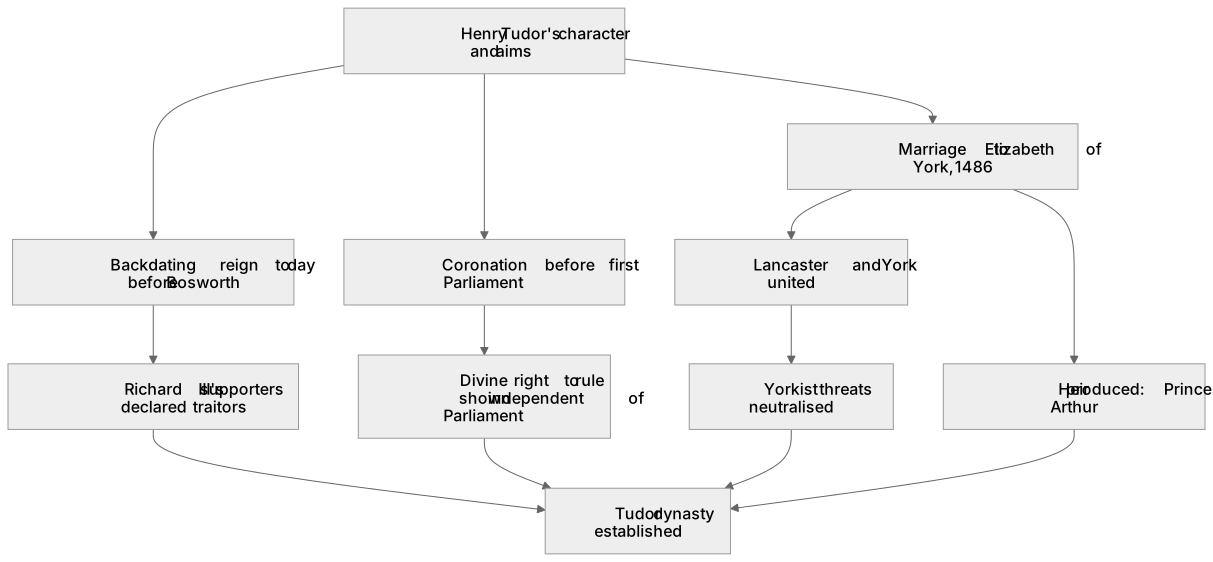
Label the diagram
Some boxes have lost their names. Pick the right name for each number.
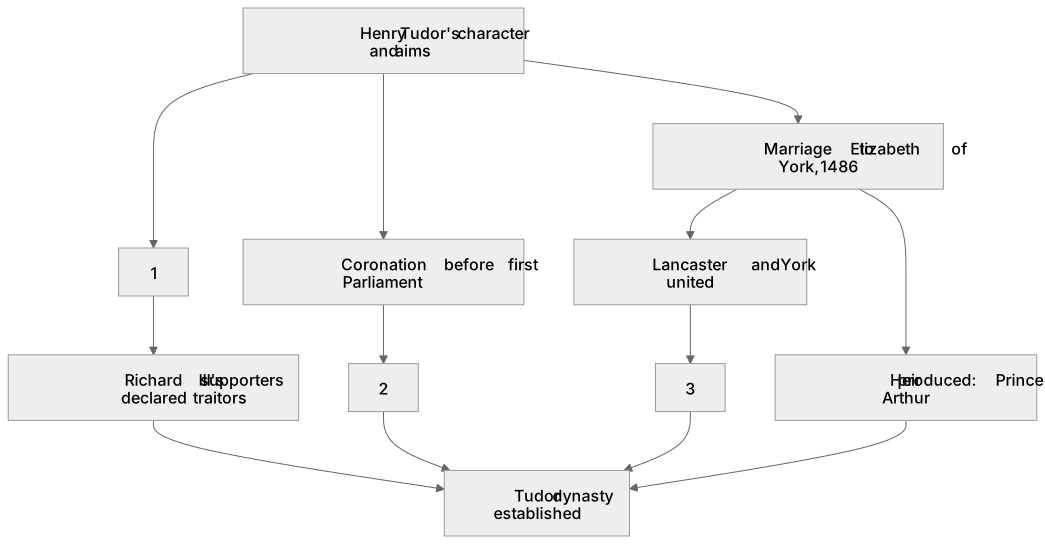
1Box 1
2Box 2
3Box 3
There is more to this lesson
The full lesson goes on to check your understanding and help you earn the marks. Create a free account to carry on, with your progress saved.
A week of Premium from your first lesson · Then the free plan continues · No card, no charge
Test your understanding of 1C The Tudors: England, 1485–1603 – Henry VII, 1485–1509: Henry Tudor’s consolidation of power: character and aims; establishing the Tudor dynasty
Active recall beats re-reading. Take an instant quiz now to test what you’ve learned and lock it into long-term memory.
A week of Premium from your first lesson · Then the free plan continues · No card, no charge