AQA · A-Level · History
Course version: 7042 · Version from Sept 2017
England, 1485–1603 – Henry VII, 1485–1509: Relationships with Scotland and…
Full specification wording
1C The Tudors: England, 1485–1603 – Henry VII, 1485–1509: Relationships with Scotland and other foreign powers; securing the succession; marriage alliances
Henry VII’s foreign policy prioritised national security, dynastic recognition, and securing the succession over expensive military glory.
Checked against the AQA 7042 specification (opens in a new tab) on .
- Point 3 of 6
- 4 key terms
Study notes
From the checked teaching notes for this specification point.
The idea
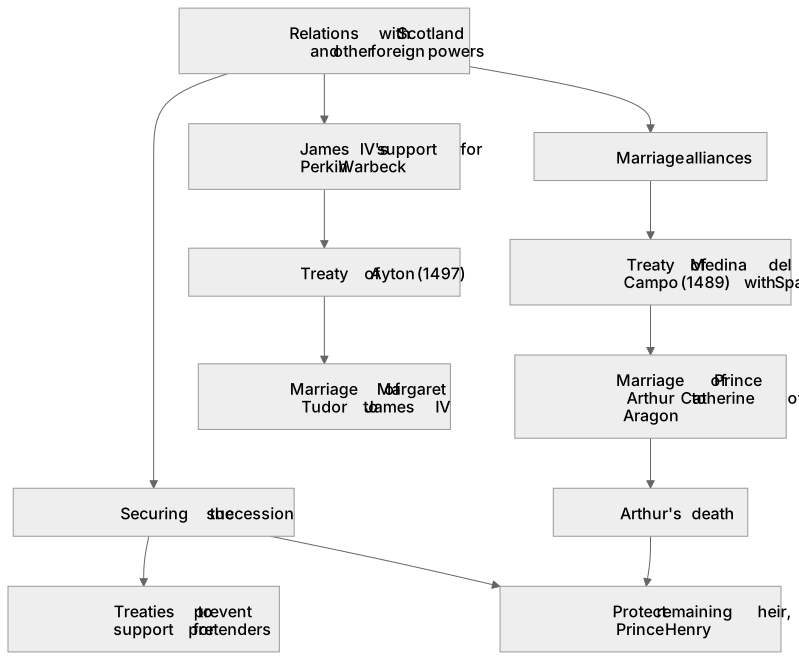
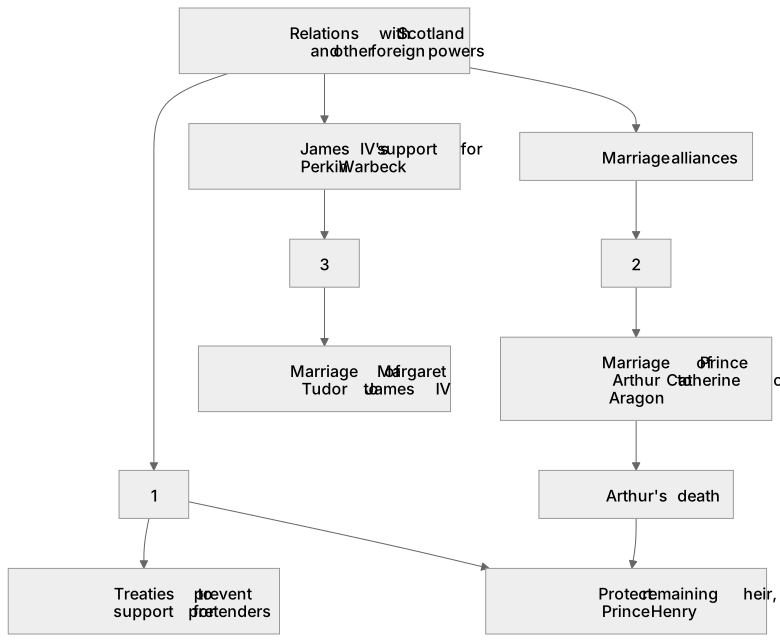
Henry VII’s foreign policy prioritised national security, dynastic recognition, and securing the succession over expensive military glory. His relationship with Scotland was initially tense, culminating in James IV’s support for Perkin Warbeck, but was neutralised by the Treaty of Ayton (1497) and the marriage of Margaret Tudor to James IV. With other foreign powers, Henry used treaties to prevent support for pretenders and build alliances. The Treaty of Medina del Campo (1489) with Spain secured international recognition and arranged the marriage of Prince Arthur to Catherine of Aragon. Following Arthur's death, Henry worked to maintain the Spanish alliance to protect his remaining heir, Prince Henry, ensuring the Tudor dynasty's survival.
What earns the marks
- Evaluate the effectiveness of the Treaty of Medina del Campo in securing international recognition and the Spanish marriage alliance.
- Analyse how Henry VII neutralised the Scottish threat through the Truce of Ayton and the subsequent Treaty of Perpetual Peace.
- Assess the impact of foreign support for pretenders, such as Margaret of Burgundy's backing of Perkin Warbeck, on Henry's diplomatic strategies.
- Explain how the deaths of Prince Arthur and Elizabeth of York forced Henry to adapt his foreign policy to protect the succession.
Common mistakes and how to put them right
Claiming Henry VII sought to conquer France.
Put it right: In reality, he launched a brief invasion in 1492 primarily to secure the Treaty of Etaples and a French pension, not territorial conquest.
Confusing the sequence of the Spanish marriage; students often forget that Catherine of Aragon married Prince Arthur first, and only after his death was she betrothed to Prince Henry.
Assuming relations with Scotland were permanently peaceful after 1502.
Put it right: Border raids continued and the underlying tension remained despite the Treaty of Perpetual Peace.
Exam tips
- Link foreign policy directly to domestic security, showing how treaties were primarily designed to stop foreign monarchs from harbouring Yorkist pretenders.
- Use specific treaty names and dates, such as the Treaty of Redon or the Treaty of Windsor, to substantiate arguments about Henry's diplomatic shifts.
- When evaluating success, distinguish between Henry's early reign, which focused on survival, and his later reign, which focused on dynastic consolidation and trade.
Try the lesson
The start of the 1C The Tudors: England, 1485–1603 – Henry VII, 1485–1509: Relationships with Scotland and other foreign powers; securing the succession; marriage alliances lesson, made from checked teaching notes for this specification point.
Have a go first
Which treaty, signed in 1502, sought to secure peace between England and Scotland through the marriage of Henry VII's daughter Margaret to James IV?
Listen
Henry VII’s foreign policy prioritised national security, dynastic recognition, and securing the succession over expensive military glory. His relationship with Scotland was initially tense, culminating in James IV’s support for Perkin Warbeck, but was neutralised by the Treaty of Ayton (1497) and the marriage of Margaret Tudor to James IV. With other foreign powers, Henry used treaties to prevent support for pretenders and build alliances. The Treaty of Medina del Campo (1489) with Spain secured international recognition and arranged the marriage of Prince Arthur to Catherine of Aragon. Following Arthur's death, Henry worked to maintain the Spanish alliance to protect his remaining heir, Prince Henry, ensuring the Tudor dynasty's survival. A strong answer earns marks for these points. Evaluate the effectiveness of the Treaty of Medina del Campo in securing international recognition and the Spanish marriage alliance. Analyse how Henry VII neutralised the Scottish threat through the Truce of Ayton and the subsequent Treaty of Perpetual Peace. Assess the impact of foreign support for pretenders, such as Margaret of Burgundy's backing of Perkin Warbeck, on Henry's diplomatic strategies. Explain how the deaths of Prince Arthur and Elizabeth of York forced Henry to adapt his foreign policy to protect the succession. Exam tip: Link foreign policy directly to domestic security, showing how treaties were primarily designed to stop foreign monarchs from harbouring Yorkist pretenders.
See it
Key words
Say what each word means before you turn the card.
Dynastic security
Try answering aloud or in your head before turning the card.
Diplomacy and treaties
Try answering aloud or in your head before turning the card.
National security
Try answering aloud or in your head before turning the card.
International relations
Try answering aloud or in your head before turning the card.
See every definition
- Dynastic security
- Protecting the Tudor dynasty's survival, including securing the succession, which Henry VII prioritised over expensive military glory.
- Diplomacy and treaties
- Using treaties with other foreign powers to prevent support for pretenders and build alliances.
- National security
- One of the priorities of Henry VII's foreign policy, alongside dynastic recognition and securing the succession.
- International relations
- Relationships with Scotland and other foreign powers, conducted through securing the succession and marriage alliances.
Label the diagram
Some boxes have lost their names. Pick the right name for each number.
1Box 1
2Box 2
3Box 3
There is more to this lesson
The full lesson goes on to check your understanding and help you earn the marks. Create a free account to carry on, with your progress saved.
A week of Premium from your first lesson · Then the free plan continues · No card, no charge
Test your understanding of 1C The Tudors: England, 1485–1603 – Henry VII, 1485–1509: Relationships with Scotland and other foreign powers; securing the succession; marriage alliances
Active recall beats re-reading. Take an instant quiz now to test what you’ve learned and lock it into long-term memory.
A week of Premium from your first lesson · Then the free plan continues · No card, no charge