AQA · A-Level · History
Course version: 7042 · Version from Sept 2017
Britain, c1851–1964 – consequence in this period through the following key…
Full specification wording
1G Challenge and transformation: Britain, c1851–1964 – consequence in this period through the following key questions:: How important was the role of key individuals and groups and how were they affected by developments?
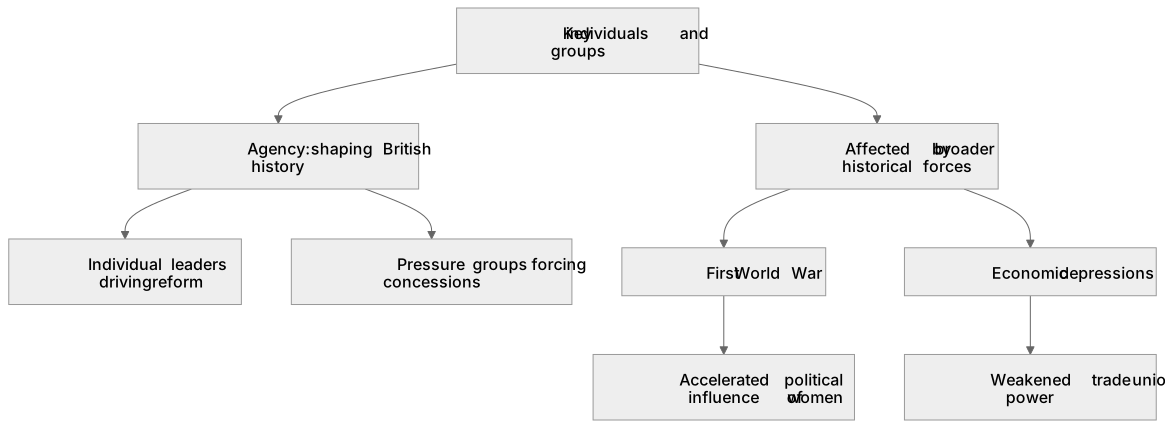
This theme requires evaluating the agency of prominent figures and collectives in shaping British history from 1851 to 1964, whilst also analysing how broader historical forces impacted them.
Checked against the AQA 7042 specification (opens in a new tab) on .
- Point 6 of 6
- 4 key terms
Study notes
From the checked teaching notes for this specification point.
The idea
This theme requires evaluating the agency of prominent figures and collectives in shaping British history from 1851 to 1964, whilst also analysing how broader historical forces impacted them. Equally, the role of groups such as the suffragettes, trade unions, and the Labour Party must be weighed against structural factors.
What earns the marks
- Evaluate the extent to which individual leaders, such as Lloyd George or Attlee, drove legislative change compared to broader socio-economic pressures.
- Assess the influence of pressure groups, such as the WSPU or the TUC, in forcing political concessions from the government.
- Analyse how major conflicts, particularly the First and Second World Wars, altered the status and political power of the working classes and women.
- Examine how economic developments, such as the 1930s Depression or post-1945 consensus, constrained or empowered political parties and trade unions.
Common mistakes and how to put them right
Providing a narrative biography of an individual.
Put it right by focusing strictly on their historical impact and how they responded to specific crises.
Ignoring the second part of the question regarding how they were affected.
Put it right: Ensure you discuss how external events like war or economic slumps changed the fortunes of groups.
Overstating the power of individuals.
Put it right by balancing the agency of leaders against structural factors like economic trends or public opinion.
Exam tips
- Always link the actions of individuals or groups back to the broader themes of challenge and transformation in British society.
- When assessing importance, establish clear criteria for success, such as legislative legacy, electoral impact, or shifts in public attitudes.
- Contrast the fortunes of different groups during the same development, such as how the inter-war economy affected traditional industrial workers versus new consumer classes.
Try the lesson
The start of the 1G Challenge and transformation: Britain, c1851–1964 – consequence in this period through the following key questions:: How important was the role of key individuals and groups and how were they affected by developments? lesson, made from checked teaching notes for this specification point.
Have a go first
How did the outbreak of the First World War in 1914 immediately affect the activities of the Women's Social and Political Union (WSPU), led by Emmeline Pankhurst?
Listen
This theme requires evaluating the agency of prominent figures and collectives in shaping British history from 1851 to 1964, whilst also analysing how broader historical forces impacted them. Equally, the role of groups such as the suffragettes, trade unions, and the Labour Party must be weighed against structural factors. A strong answer earns marks for these points. Evaluate the extent to which individual leaders, such as Lloyd George or Attlee, drove legislative change compared to broader socio-economic pressures. Assess the influence of pressure groups, such as the WSPU or the TUC, in forcing political concessions from the government. Analyse how major conflicts, particularly the First and Second World Wars, altered the status and political power of the working classes and women. Examine how economic developments, such as the 1930s Depression or post-1945 consensus, constrained or empowered political parties and trade unions. A common slip: Providing a narrative biography of an individual. Instead, focusing strictly on their historical impact and how they responded to specific crises. Exam tip: Always link the actions of individuals or groups back to the broader themes of challenge and transformation in British society.
See it
Key words
Say what each word means before you turn the card.
Political leadership and agency
Try answering aloud or in your head before turning the card.
Social movements and pressure groups
Try answering aloud or in your head before turning the card.
Impact of total war on society
Try answering aloud or in your head before turning the card.
Socio-economic transformation
Try answering aloud or in your head before turning the card.
See every definition
- Political leadership and agency
- Evaluating the agency of prominent figures in shaping British history, whilst balancing their importance against structural factors.
- Social movements and pressure groups
- Collectives whose role must be weighed against structural factors in forcing political concessions from the government.
- Impact of total war on society
- How major conflicts altered the status and political power of the working classes and women.
- Socio-economic transformation
- How economic developments constrained or empowered political parties and trade unions.
Label the diagram
Some boxes have lost their names. Pick the right name for each number.
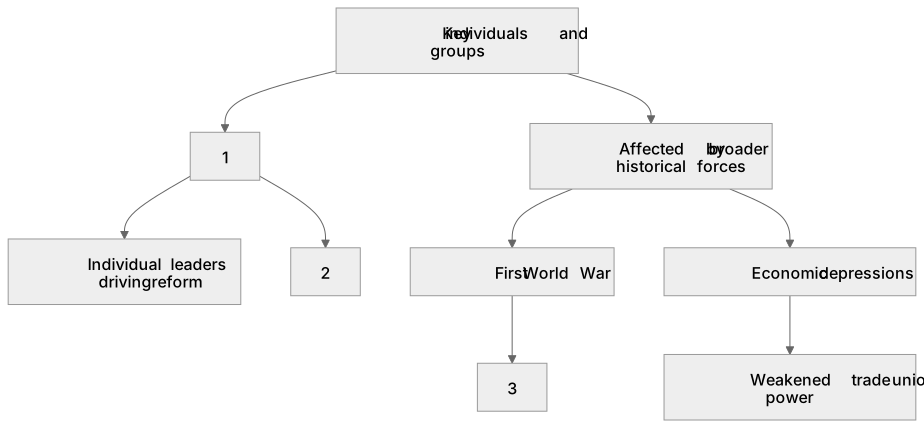
1Box 1
2Box 2
3Box 3
There is more to this lesson
The full lesson goes on to check your understanding and help you earn the marks. Create a free account to carry on, with your progress saved.
A week of Premium from your first lesson · Then the free plan continues · No card, no charge
Test your understanding of 1G Challenge and transformation: Britain, c1851–1964 – consequence in this period through the following key questions:: How important was the role of key individuals and groups and how were they affected by developments?
Active recall beats re-reading. Take an instant quiz now to test what you’ve learned and lock it into long-term memory.
A week of Premium from your first lesson · Then the free plan continues · No card, no charge