AQA · A-Level · History
Course version: 7042 · Version from Sept 2017
The consolidation and expansion of the British Empire in Africa
Full specification wording
1J The British Empire, c1857–1967 – Imperial consolidation and Liberal rule, c1890–1914: The consolidation and expansion of the British Empire in Africa
Between 1890 and 1914, British involvement in Africa shifted from informal influence to formal territorial control, driven by strategic imperatives and European rivalries during the Scramble for…
Checked against the AQA 7042 specification (opens in a new tab) on .
- Point 1 of 6
- 4 key terms
Study notes
From the checked teaching notes for this specification point.
The idea
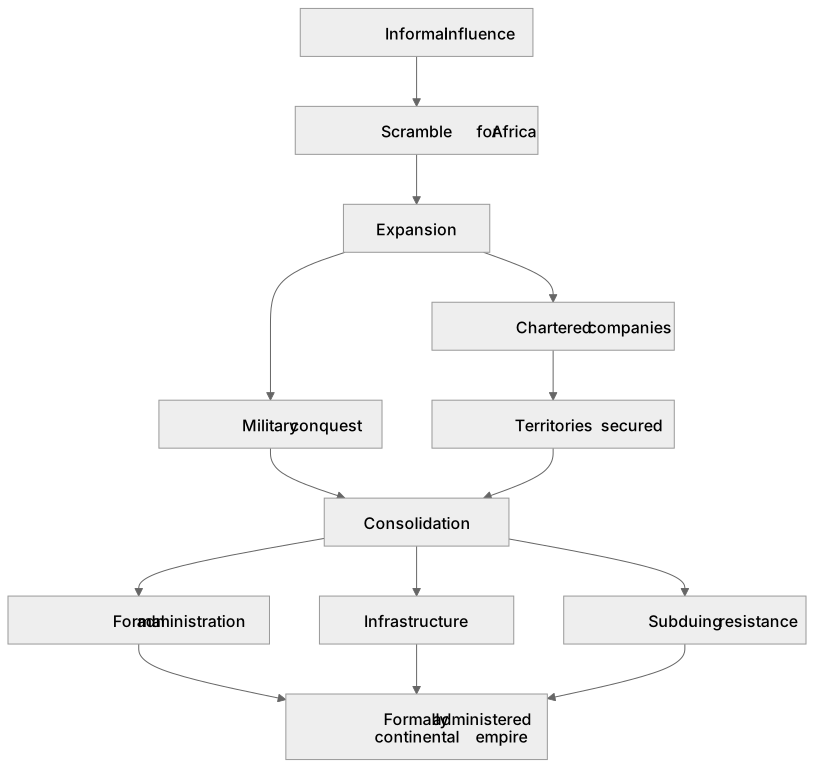
Between 1890 and 1914, British involvement in Africa shifted from informal influence to formal territorial control, driven by strategic imperatives and European rivalries during the Scramble for Africa. Expansion occurred through military conquest and the activities of chartered companies, such as Cecil Rhodes' British South Africa Company, which secured territories like Rhodesia. Consolidation involved establishing formal administrative structures, building infrastructure like the Uganda Railway to facilitate trade and troop movement, and subduing indigenous resistance, notably during the Second Boer War (1899–1902). This period transformed a patchwork of coastal enclaves and trading posts into a vast, formally administered continental empire, securing vital routes to India and extracting raw materials.
What earns the marks
- Identify key drivers of expansion, including strategic concerns such as protecting the Suez Canal, economic motives like gold in the Transvaal, and the broader 'Scramble for Africa'.
- Evaluate the role of 'men on the spot' and chartered companies, such as the Royal Niger Company and British South Africa Company, in acquiring territory on behalf of the Crown.
- Explain methods of consolidation, including infrastructure development like railways and telegraphs, and the transition from company rule to formal Crown administration.
- Assess the impact of the Second Boer War on British imperial confidence and the subsequent consolidation of South Africa into a Union in 1910.
Common mistakes and how to put them right
Confusing informal empire with formal empire.
Put it right: Clearly distinguish between early economic influence, which was informal, and the post-1890 establishment of direct political and military control, which was formal.
Treating Africa as a single, uniform colonial experience.
Put it right: Differentiate between the settler colonies in South Africa and the administrative or extractive colonies in West and East Africa.
Assuming expansion was always directed by the government in London.
Put it right: Acknowledge the significant autonomy and aggressive expansionism of 'men on the spot' like Cecil Rhodes and Lord Lugard.
Exam tips
- Use specific examples of chartered companies, such as the Imperial British East Africa Company, to illustrate how expansion was initially outsourced before being consolidated by the Crown.
- Link the consolidation of African territories to broader strategic goals, particularly the protection of the sea route to India via the Suez Canal and the Cape of Good Hope.
- When discussing the Boer War, focus on its consequences for imperial policy, national efficiency and territorial consolidation rather than just the military narrative.
Try the lesson
The start of the 1J The British Empire, c1857–1967 – Imperial consolidation and Liberal rule, c1890–1914: The consolidation and expansion of the British Empire in Africa lesson, made from checked teaching notes for this specification point.
Have a go first
Which diplomatic confrontation effectively secured British dominance in the Sudan by forcing the withdrawal of a rival European expedition?
Listen
Between 1890 and 1914, British involvement in Africa shifted from informal influence to formal territorial control, driven by strategic imperatives and European rivalries during the Scramble for Africa. Expansion occurred through military conquest and the activities of chartered companies, such as Cecil Rhodes' British South Africa Company, which secured territories like Rhodesia. Consolidation involved establishing formal administrative structures, building infrastructure like the Uganda Railway to facilitate trade and troop movement, and subduing indigenous resistance, notably during the Second Boer War (1899–1902). This period transformed a patchwork of coastal enclaves and trading posts into a vast, formally administered continental empire, securing vital routes to India and extracting raw materials. A strong answer earns marks for these points. Identify key drivers of expansion, including strategic concerns such as protecting the Suez Canal, economic motives like gold in the Transvaal, and the broader 'Scramble for Africa'. Evaluate the role of 'men on the spot' and chartered companies, such as the Royal Niger Company and British South Africa Company, in acquiring territory on behalf of the Crown. Explain methods of consolidation, including infrastructure development like railways and telegraphs, and the transition from company rule to formal Crown administration. Assess the impact of the Second Boer War on British imperial confidence and the subsequent consolidation of South Africa into a Union in 1910. A common slip: Confusing informal empire with formal empire. Instead, Clearly distinguish between early economic influence, which was informal, and the post-1890 establishment of direct political and military control, which was formal. Exam tip: Use specific examples of chartered companies, such as the Imperial British East Africa Company, to illustrate how expansion was initially outsourced before being consolidated by the Crown.
See it
Key words
Say what each word means before you turn the card.
Formal versus Informal Empire
Try answering aloud or in your head before turning the card.
Strategic and Economic Imperialism
Try answering aloud or in your head before turning the card.
The Role of the 'Man on the Spot'
Try answering aloud or in your head before turning the card.
Indigenous Resistance and Pacification
Try answering aloud or in your head before turning the card.
See every definition
- Formal versus Informal Empire
- The distinction between early economic influence, which was informal, and the post-1890 establishment of direct political and military control, which was formal.
- Strategic and Economic Imperialism
- Expansion driven by strategic concerns such as protecting the Suez Canal and economic motives like gold in the Transvaal.
- The Role of the 'Man on the Spot'
- The significant autonomy and aggressive expansionism of individuals who acquired territory on behalf of the Crown.
- Indigenous Resistance and Pacification
- The subduing of indigenous resistance, notably during the Second Boer War.
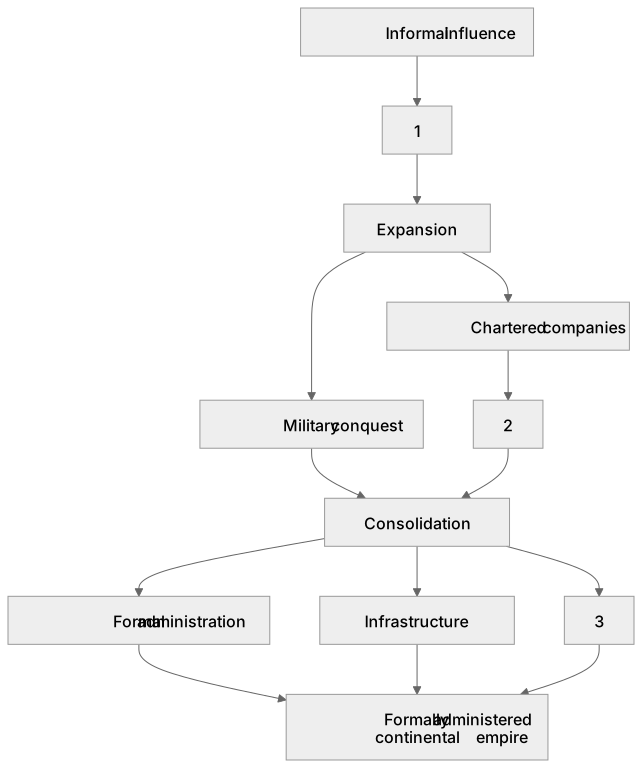
Label the diagram
Some boxes have lost their names. Pick the right name for each number.
1Box 1
2Box 2
3Box 3
There is more to this lesson
The full lesson goes on to check your understanding and help you earn the marks. Create a free account to carry on, with your progress saved.
A week of Premium from your first lesson · Then the free plan continues · No card, no charge
Test your understanding of 1J The British Empire, c1857–1967 – Imperial consolidation and Liberal rule, c1890–1914: The consolidation and expansion of the British Empire in Africa
Active recall beats re-reading. Take an instant quiz now to test what you’ve learned and lock it into long-term memory.
A week of Premium from your first lesson · Then the free plan continues · No card, no charge